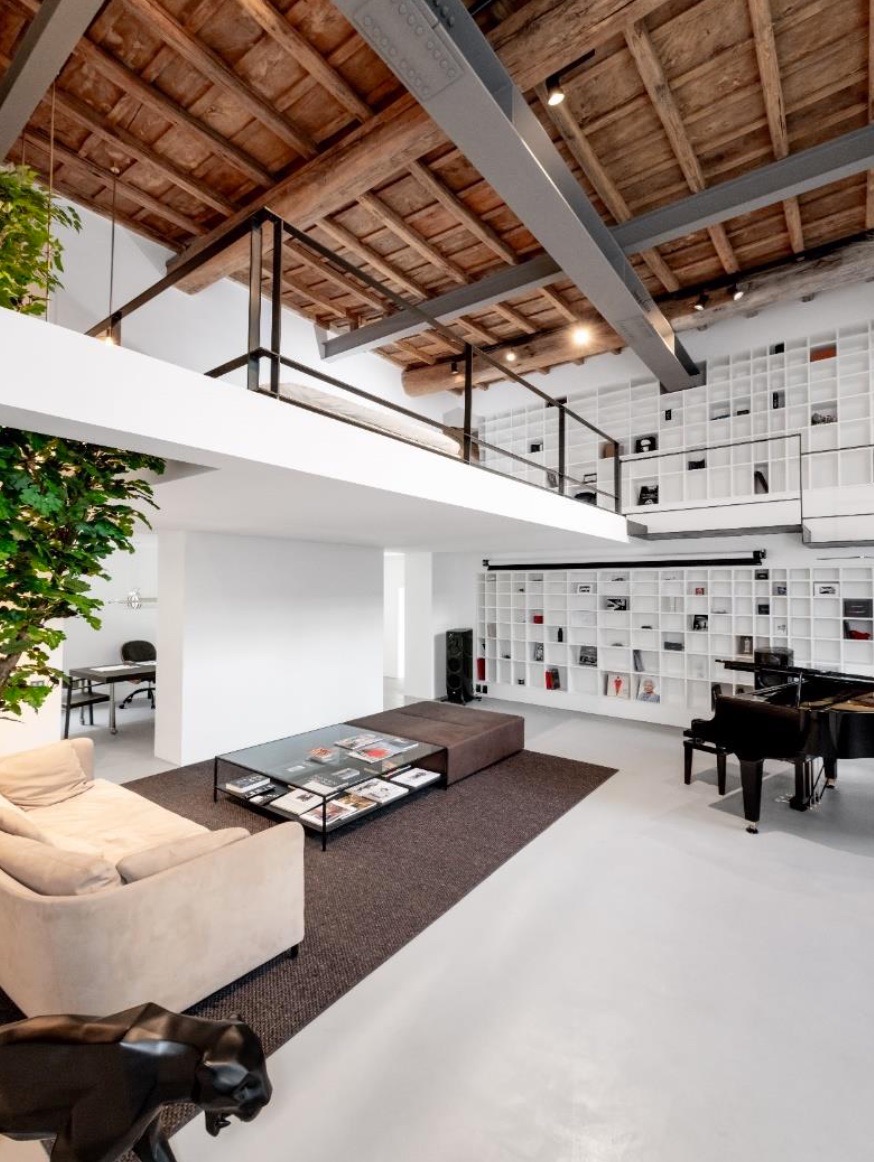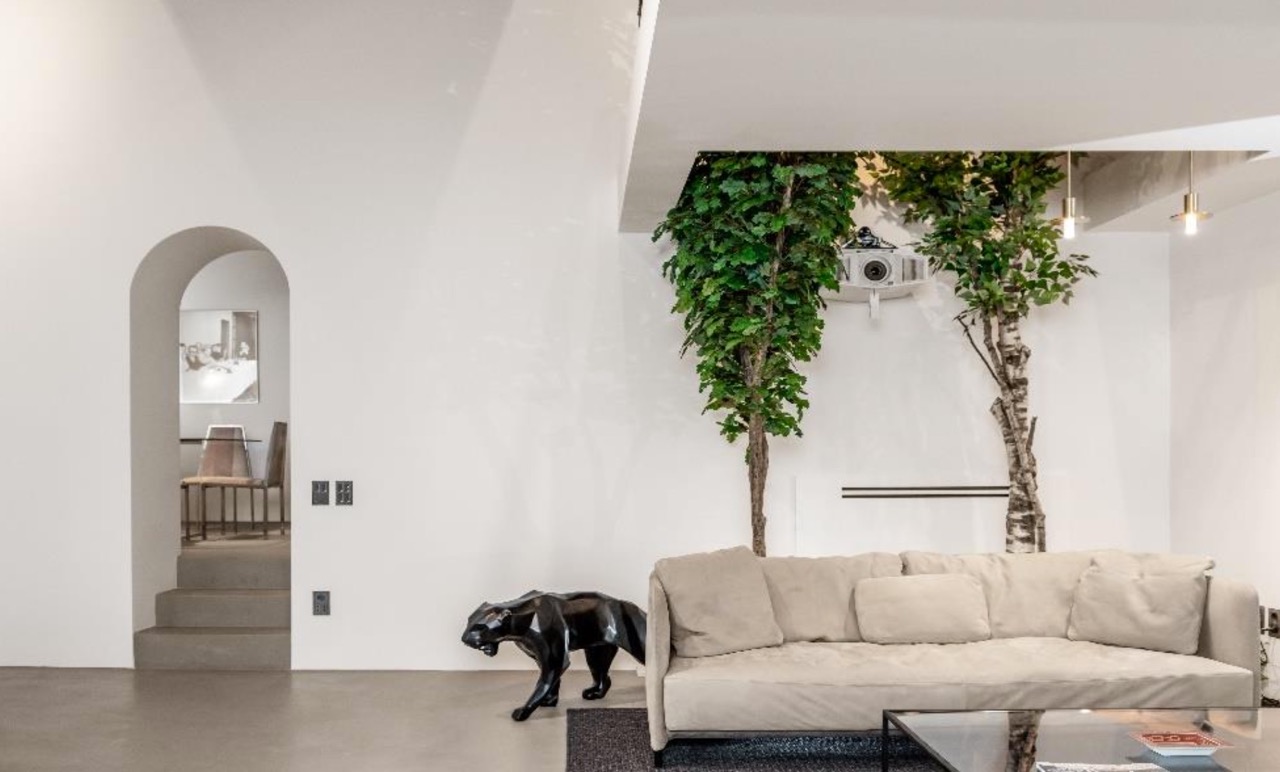

In Rome, along Via Margutta, the studio MarguttArchitetture, led by Enzo di Claudio, transforms a former artist’s atelier into a private residence, A Single Man House, restoring the domestic space to its original vertical and luminous dimension. The intervention engages with an architectural typology deeply connected to the history of this street: the artist’s studios, spaces of life and work characterized by generous ceiling heights, large openings, and a privileged relationship with light.
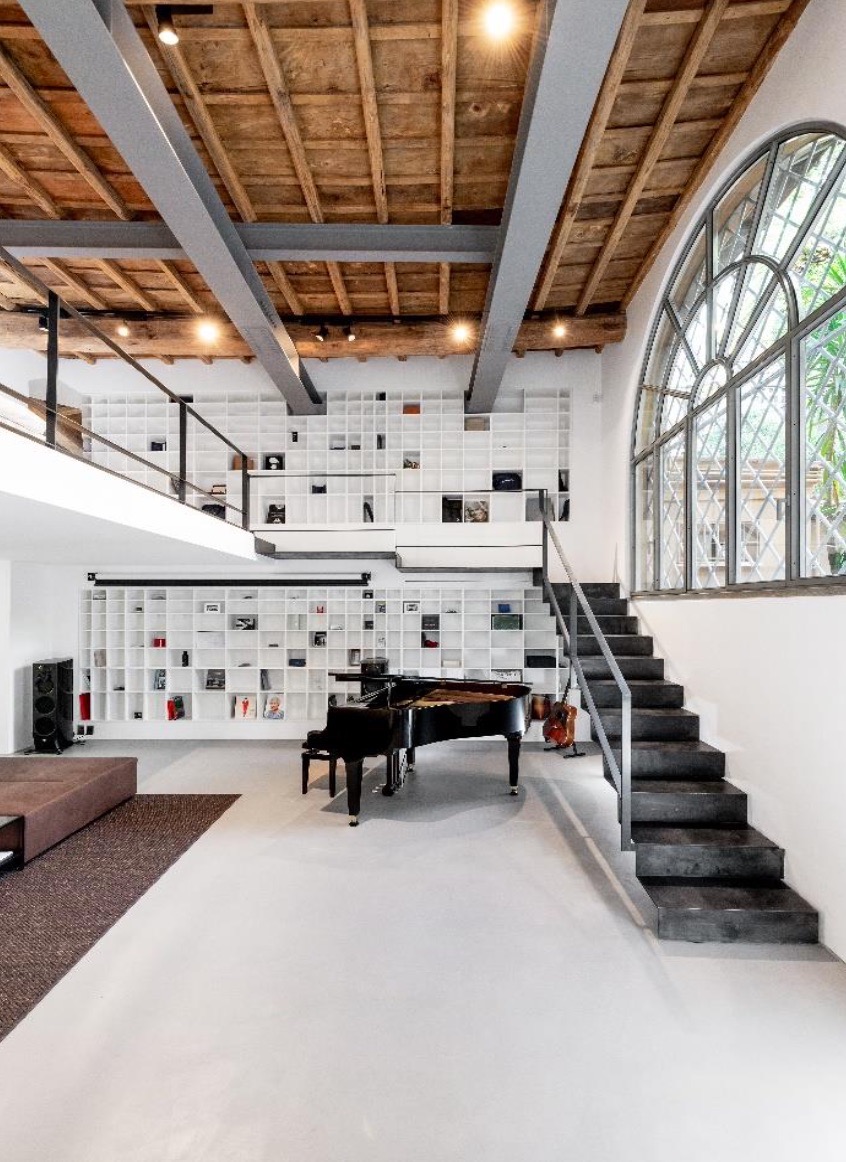
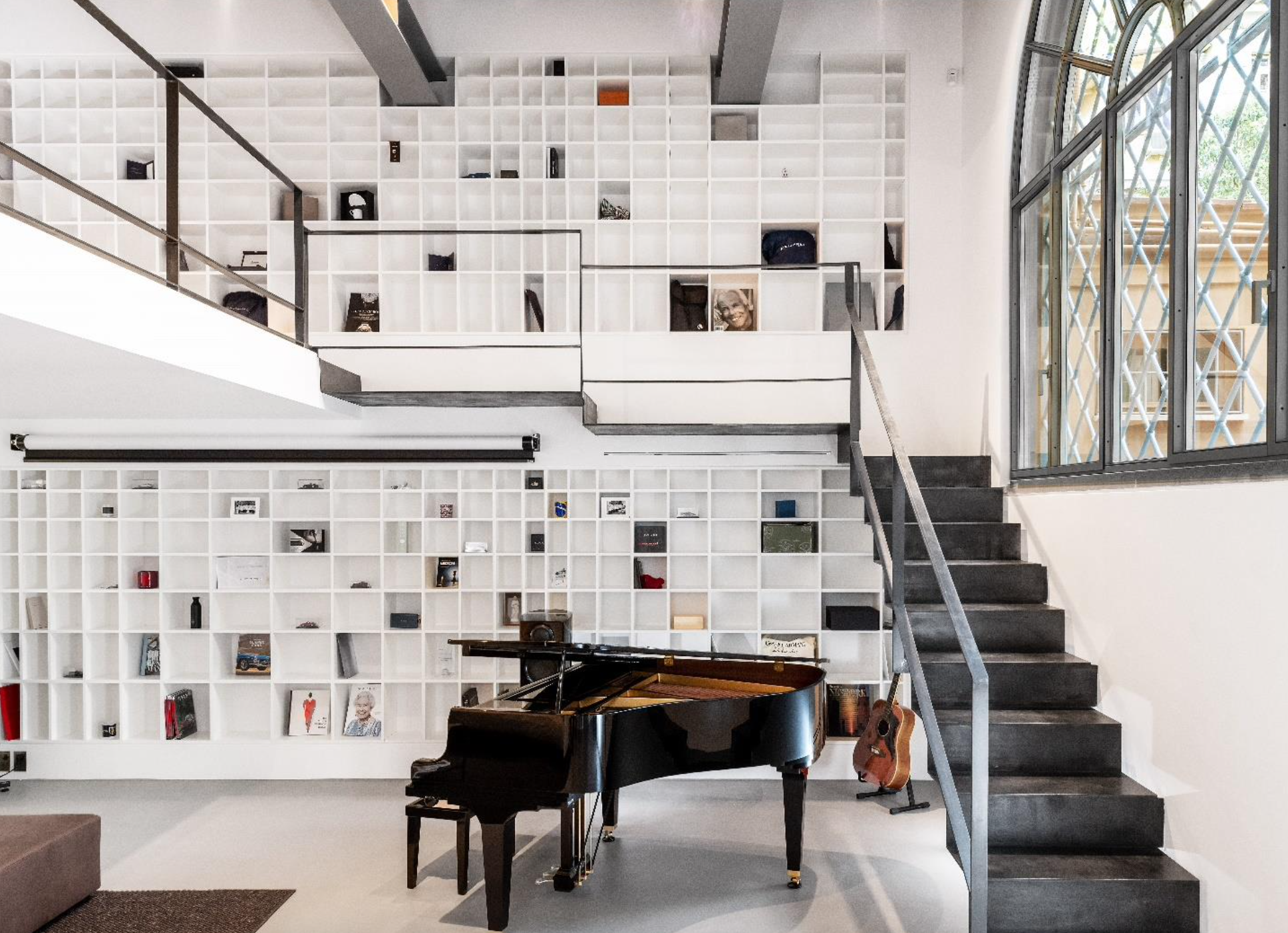
The renovation begins with a gesture of revelation. The project starts with the structural consolidation of the building in order to uncover what time had partially concealed: the original wooden ceilings and the large arched window overlooking the inner garden are reopened and returned to the space. The house once again breathes according to its original vocation, establishing a double relationship with the city and with the quiet intimacy of the garden facing the Pincio.
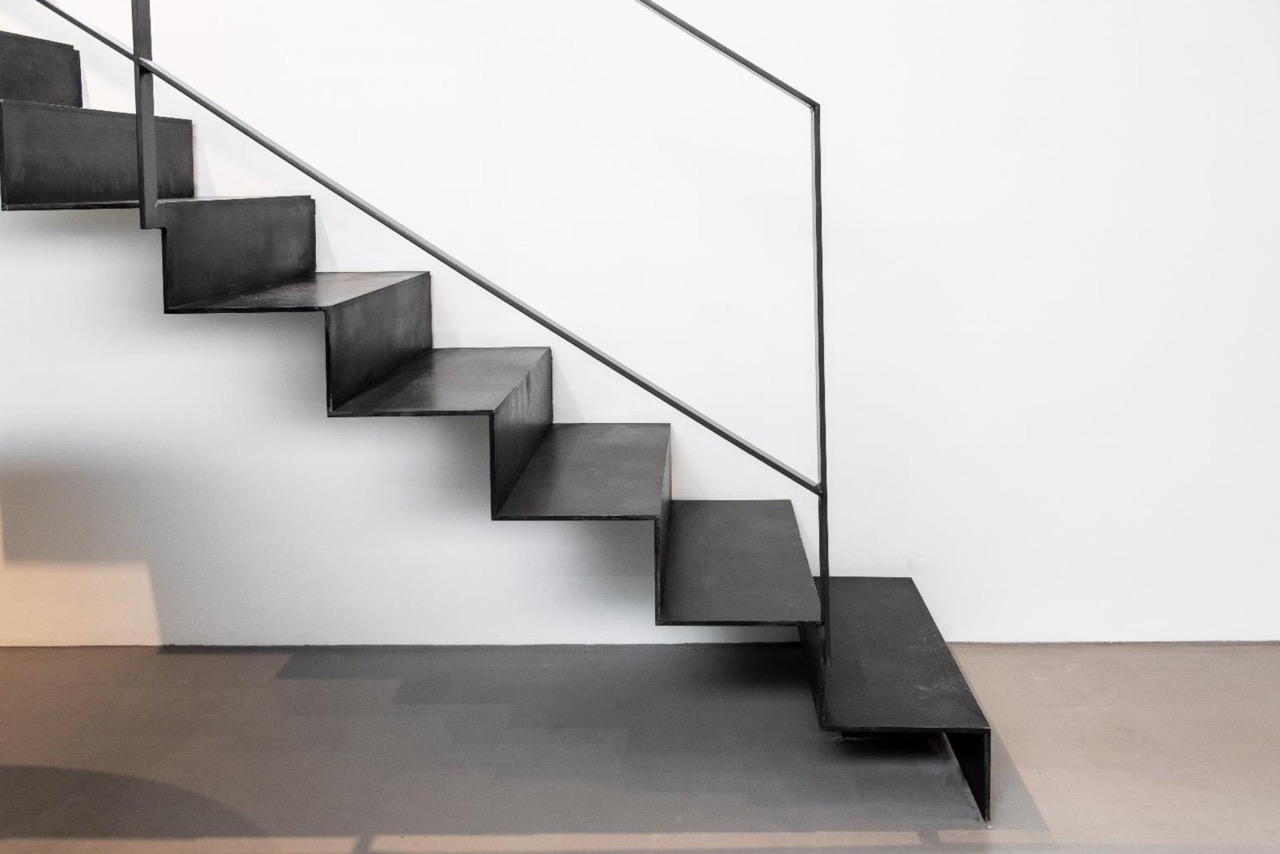
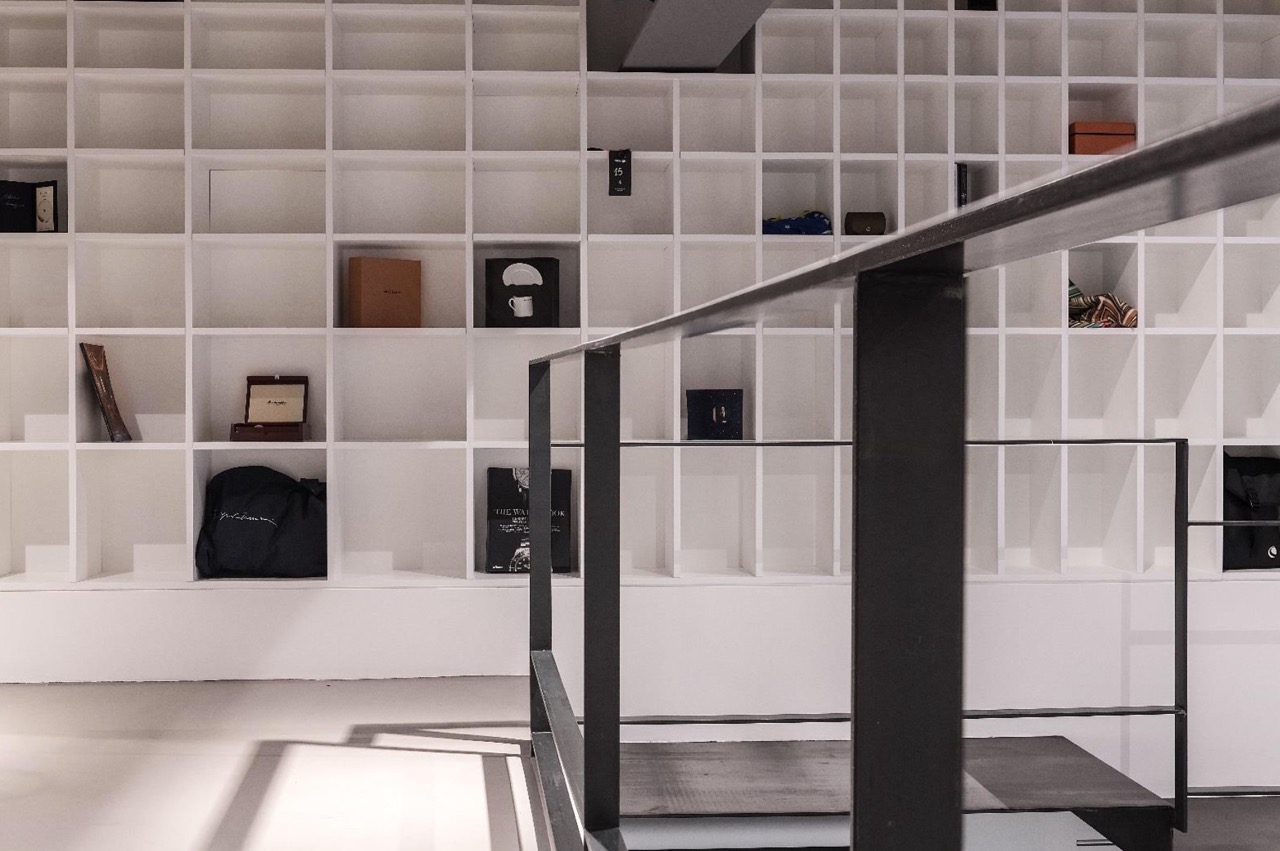
The living room becomes the core of the domestic composition, a space nearly six meters high where verticality is not only a dimensional condition but a spatial quality that organizes the experience of living. Within this inhabited void, an iron staircase-walkway is inserted, a light gesture that crosses the space and leads to the upper level. The staircase does not simply connect two floors; it acts as a device that measures the distance between levels, introduces a new line of movement, and intensifies the depth of the space.
One wall of the living room is entirely occupied by a full-height bookshelf, conceived as a true architecture within the architecture. Its design follows a modular system based on the golden ratio, creating a compositional rhythm that orders the space while visually expanding it. The reference to the work of Japanese designer Shiro Kuramata appears as a discreet trace, almost a silent quotation, transforming furniture into structure and structure into a domestic landscape.
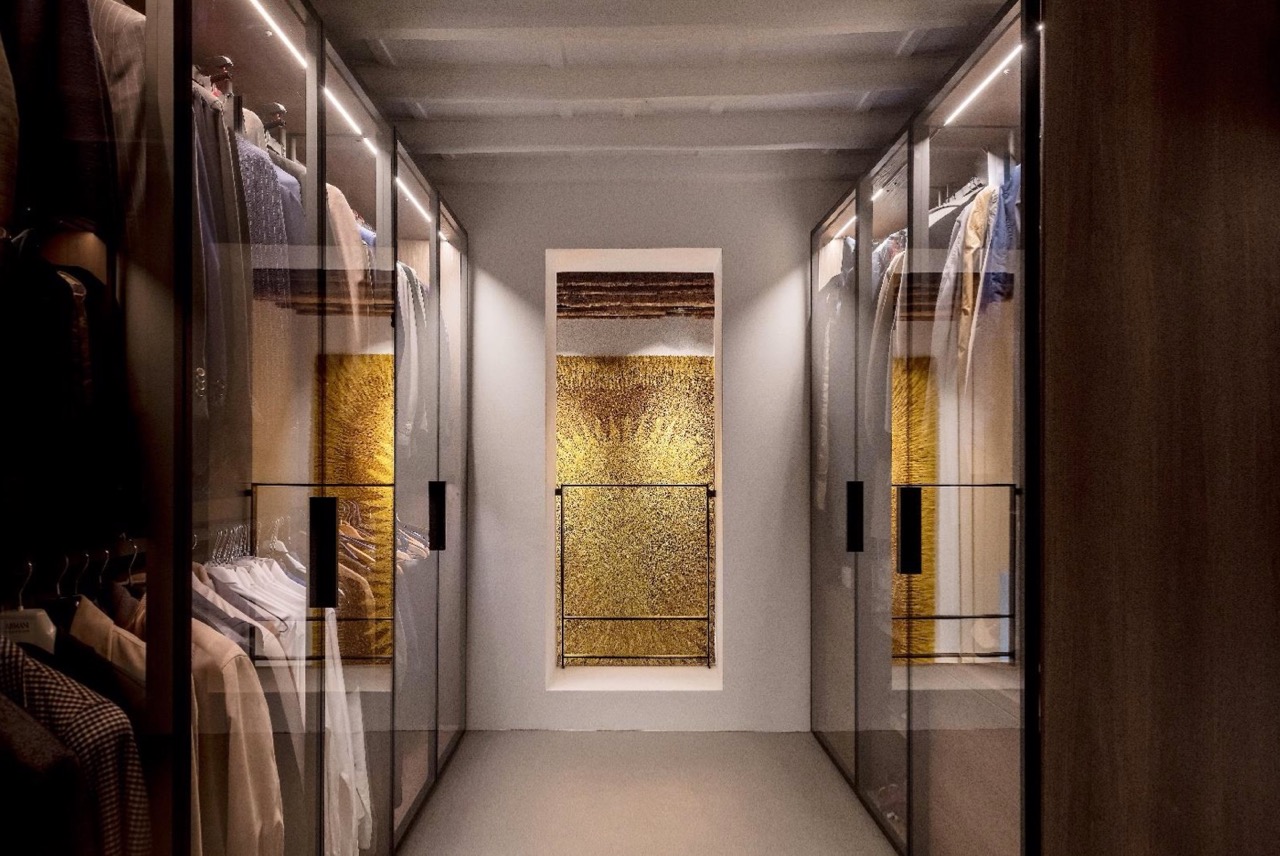
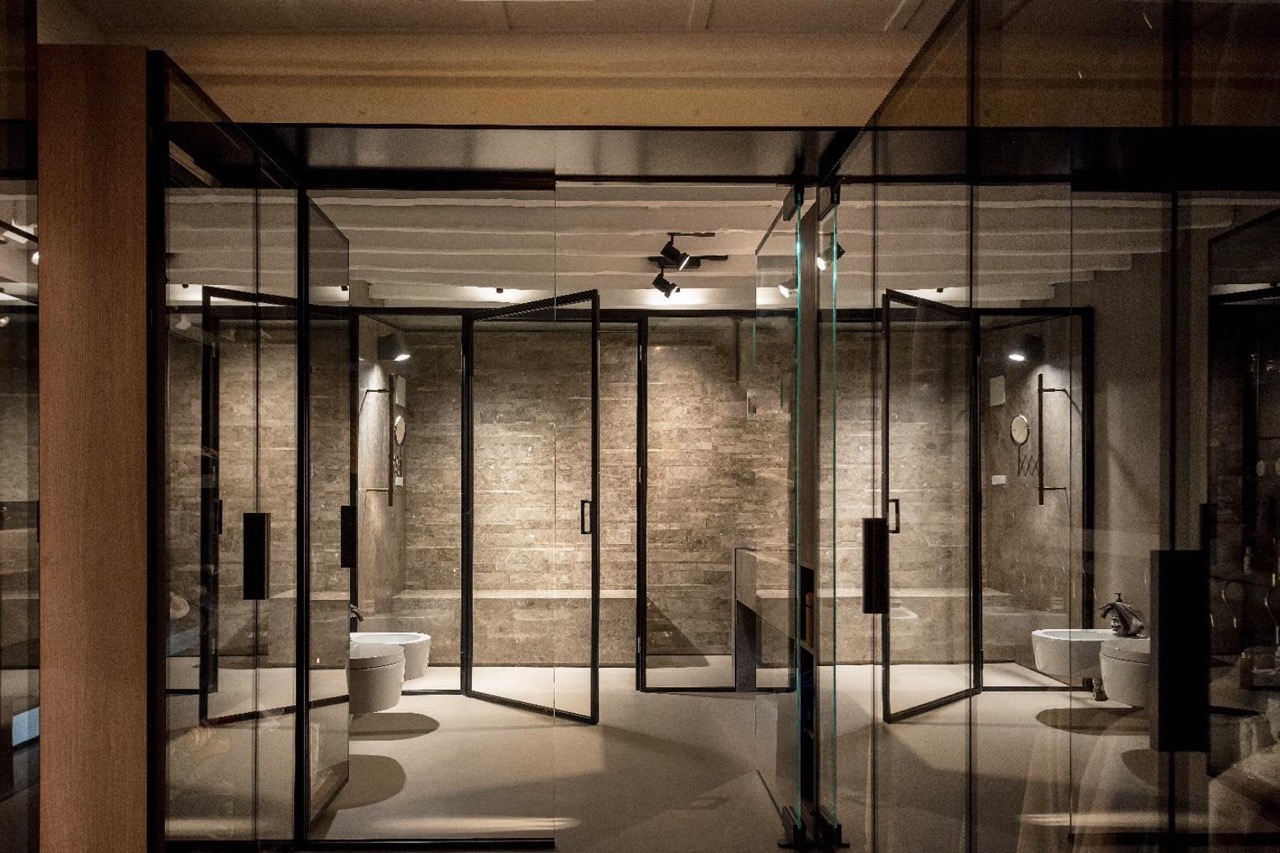
The upper floor hosts the more private dimension of the house through a sequence of transparent and interconnected spaces. Here a fully glazed bathroom, complete with a Turkish bath, becomes a luminous room that serves as the backdrop to a large transparent walk-in wardrobe. The visual continuity between these spaces creates a fluid perception of the interior, where the boundaries between rooms dissolve into a system of relationships.
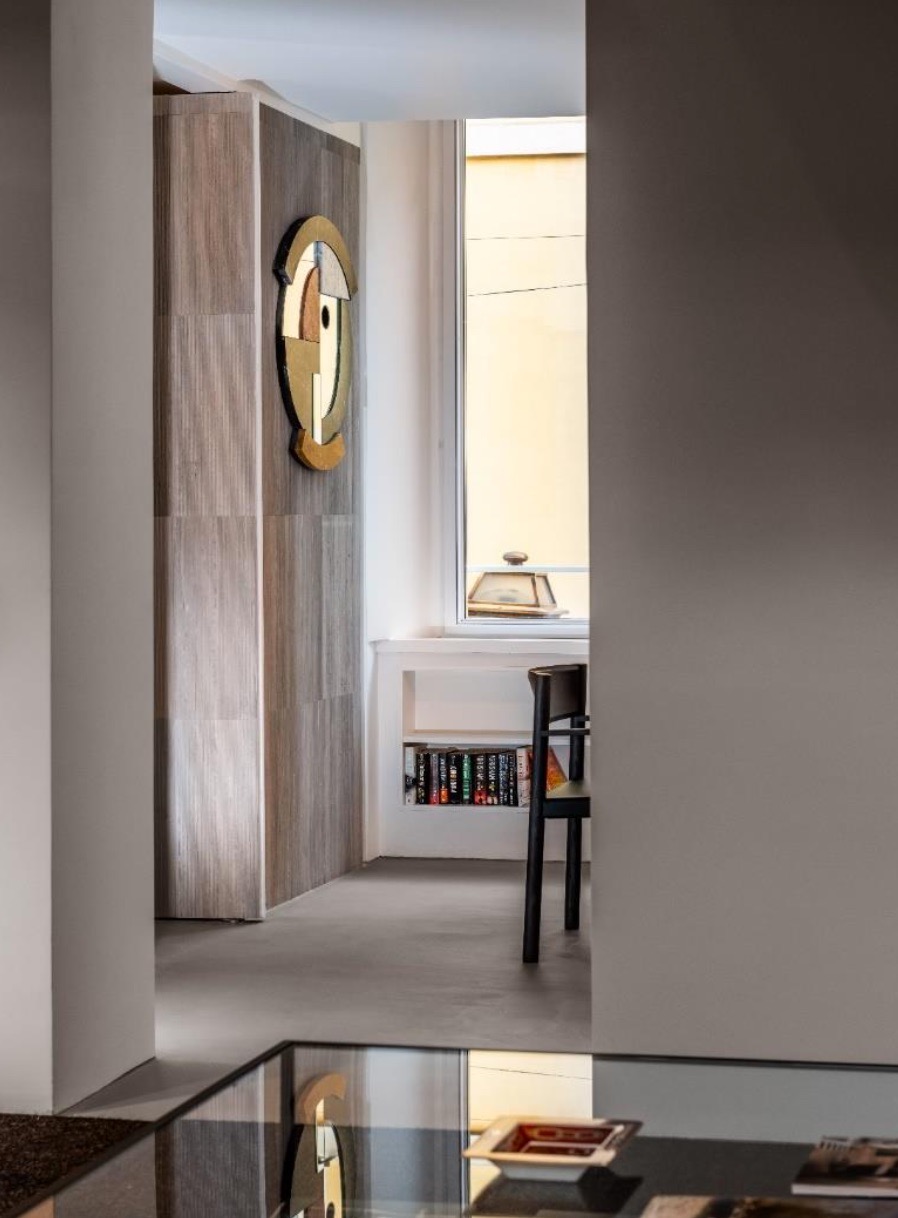
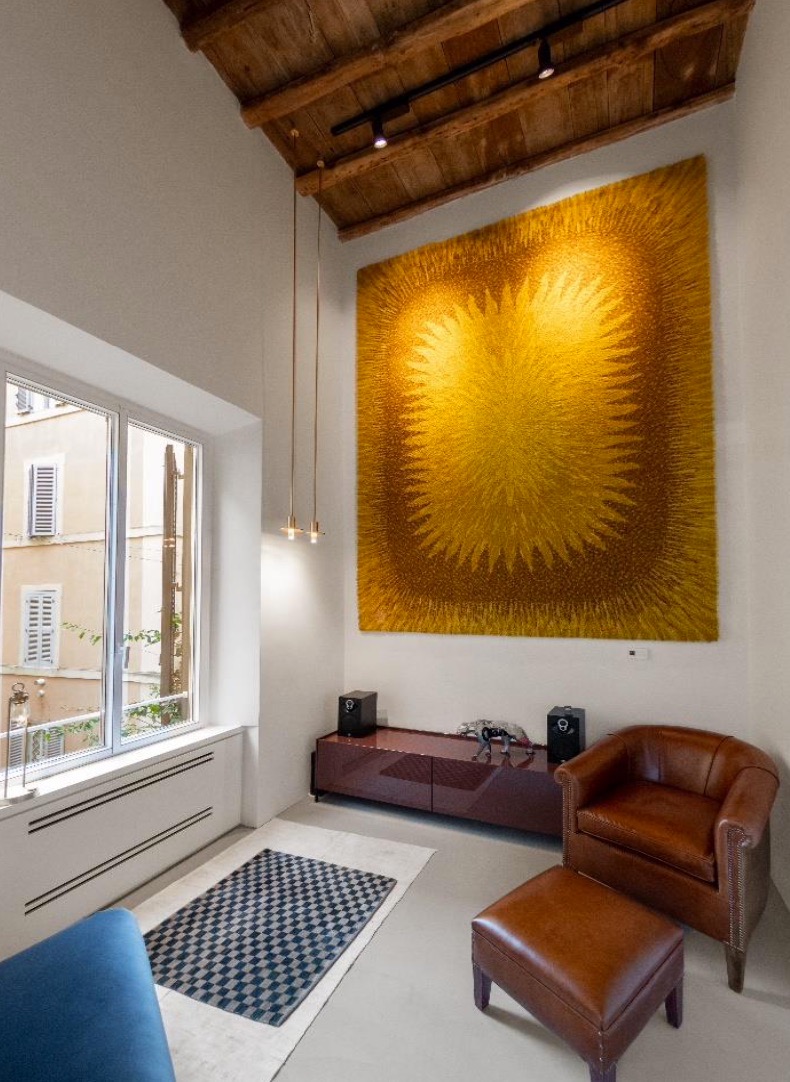
Among all the spaces in the house, one in particular stands out for its almost meditative character. It is the room named the “campanile”, so called for its unusual proportions: a small floor area contrasted by a height reaching six meters. Here the restored wooden ceiling returns a suspended and intimate atmosphere, transforming the room into a place of introspection dedicated to reading, music, and the slow time of thought.
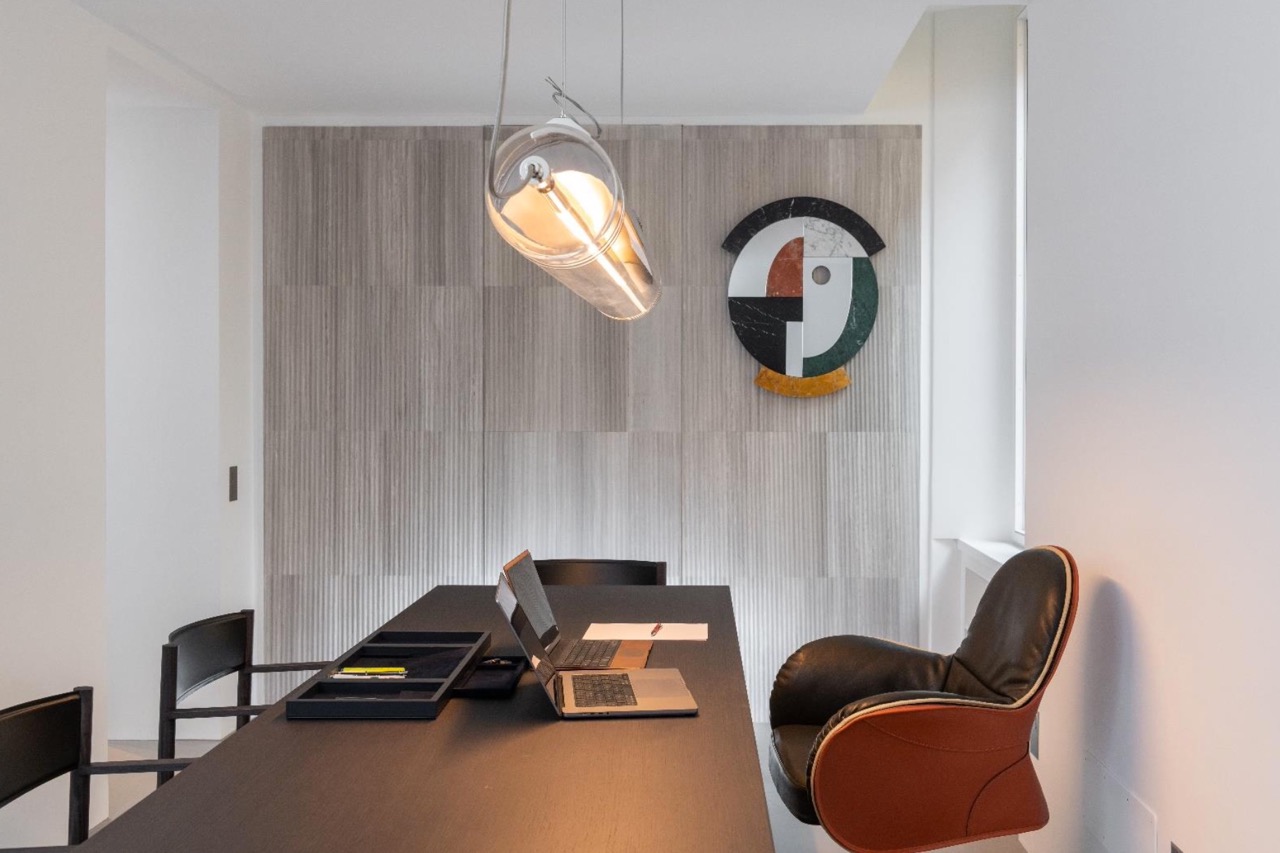
Light itself becomes a design material. The height of the rooms and the presence of exposed structural elements required a lighting system capable of accompanying the verticality of the space without flattening it. Lighting fixtures are integrated directly onto the steel beams through discreet spotlights, while suspended lamps descend gently from the ceiling, bringing the light source down to approximately 230 centimeters from the floor. It is a calibrated light, one that does not invade the space but rather measures it.
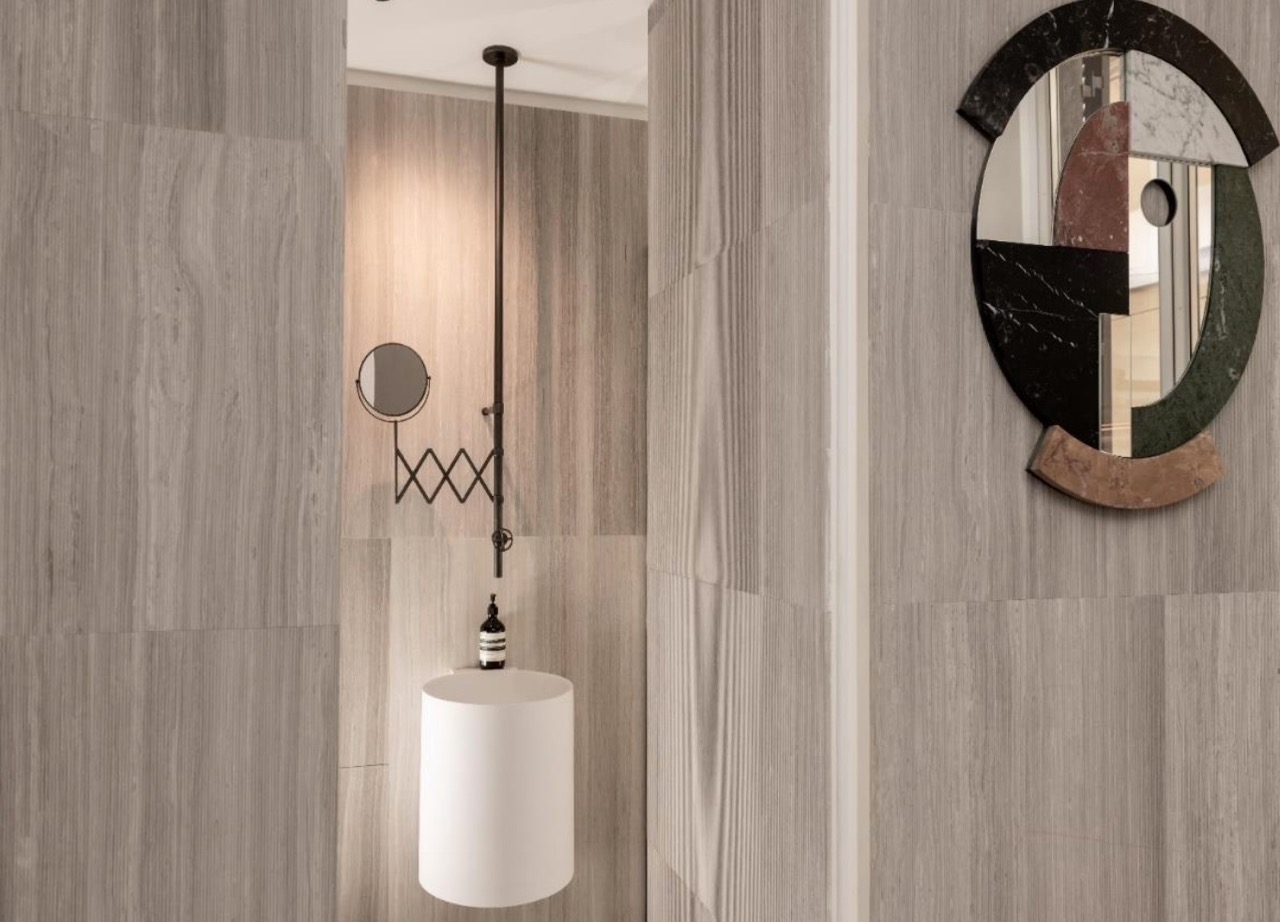
Materials and surfaces ultimately construct an essential and refined domestic landscape. Microcement floors dialogue with black steel window frames, while Salvatori marble claddings introduce a precise and controlled material dimension. Rather than imposing a new identity on the building, the intervention amplifies its original nature: that of a space born for art, now transformed into a home that preserves the same tension toward light, height, and silence.
CREDITS
Project: A Single Man House
Architects: MarguttArchitetture – Enzo di Claudio
Location: Rome (RM), Italy
Year: 2023
Photography: Carbonelli & Seganti