
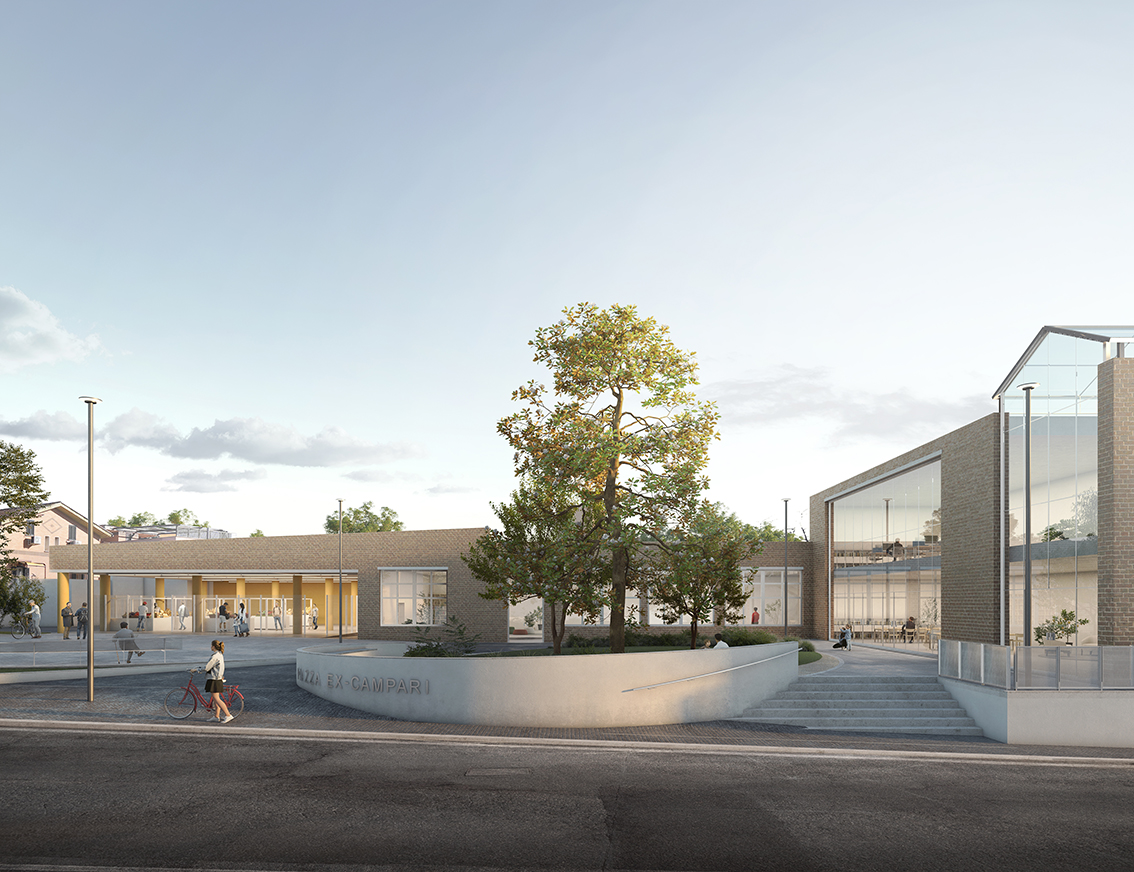
Public space represents one of the fundamental civic infrastructures through which the city constructs its collective dimension. It is not merely an empty void between buildings, but a field of relationships where everyday practices, movements, pauses, and forms of mutual recognition among citizens take place. It is within this perspective that the project for the new Piazza Giuseppe Meroldi, designed by Alvisi Kirimoto in the Montespaccato neighborhood of Rome’s XIII Municipality, can be understood.
The intervention is part of the “15 Roma” urban regeneration program, promoted by the Municipality of Rome and developed through a series of masterplans for the different districts of the capital. The initiative is inspired by the concept of the “15-minute city”, theorized by urbanist Carlos Moreno, and promotes an urban vision in which services, public spaces, and everyday functions are easily accessible within a dimension of proximity. In this framework, the redevelopment of the square in Montespaccato represents one element of a broader strategy aimed at regenerating Rome’s peripheral neighborhoods, reducing territorial inequalities, and improving the overall quality of urban life.
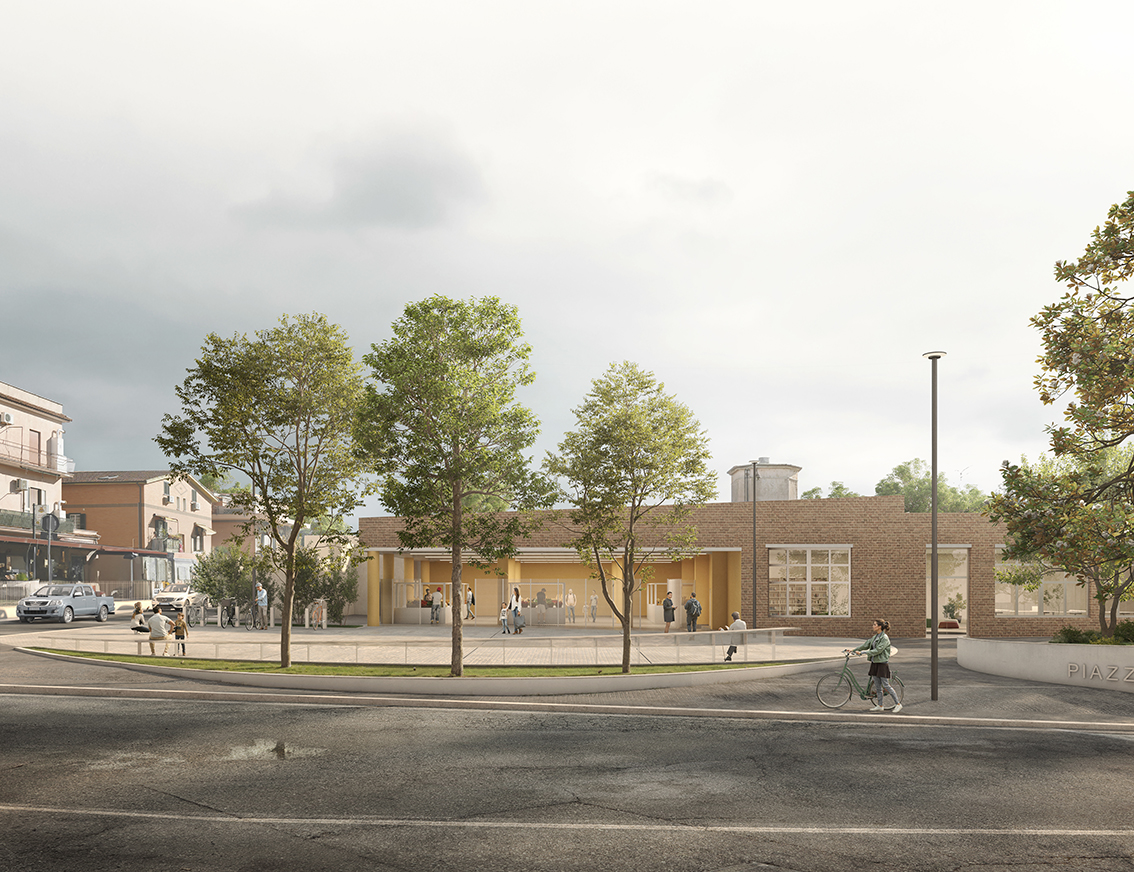
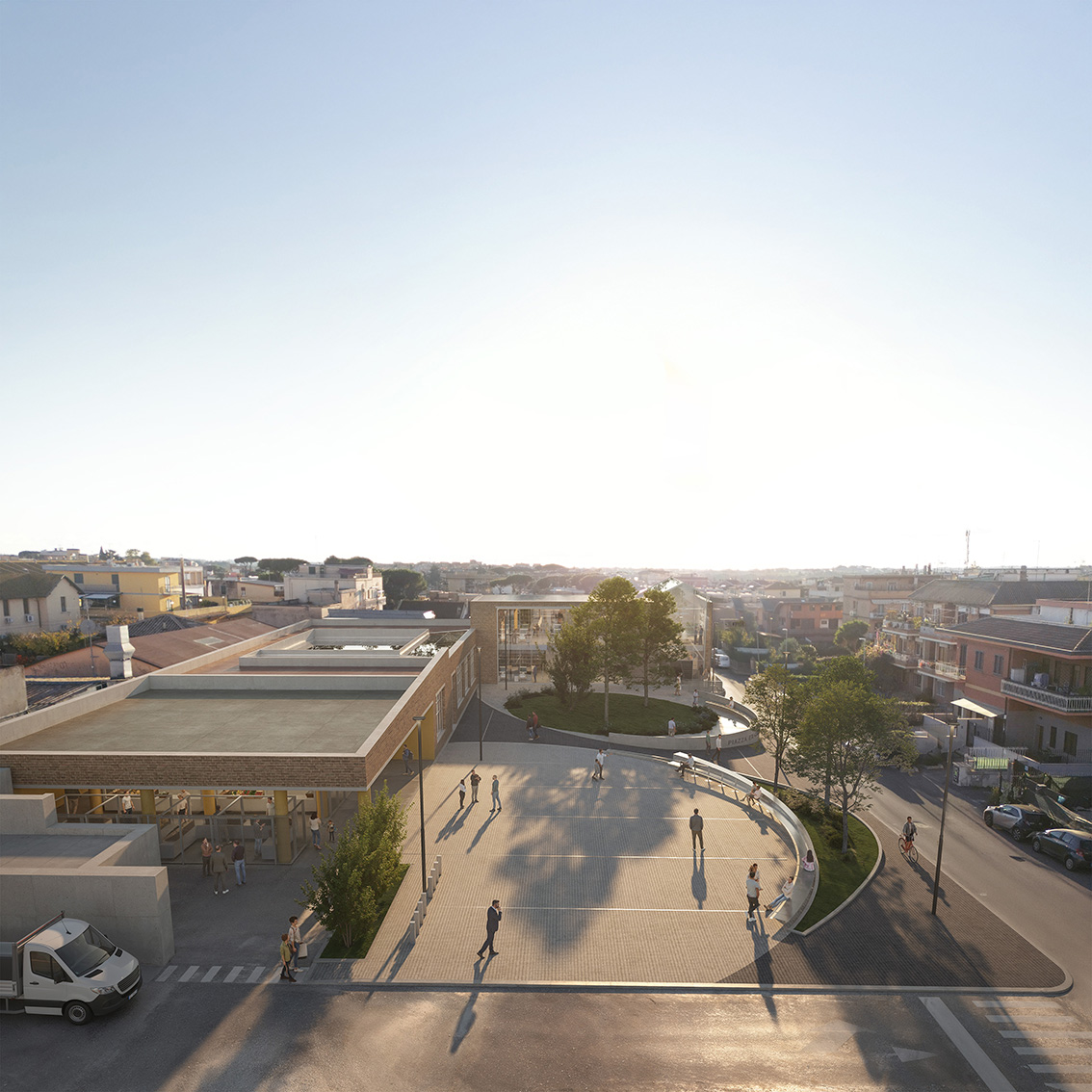
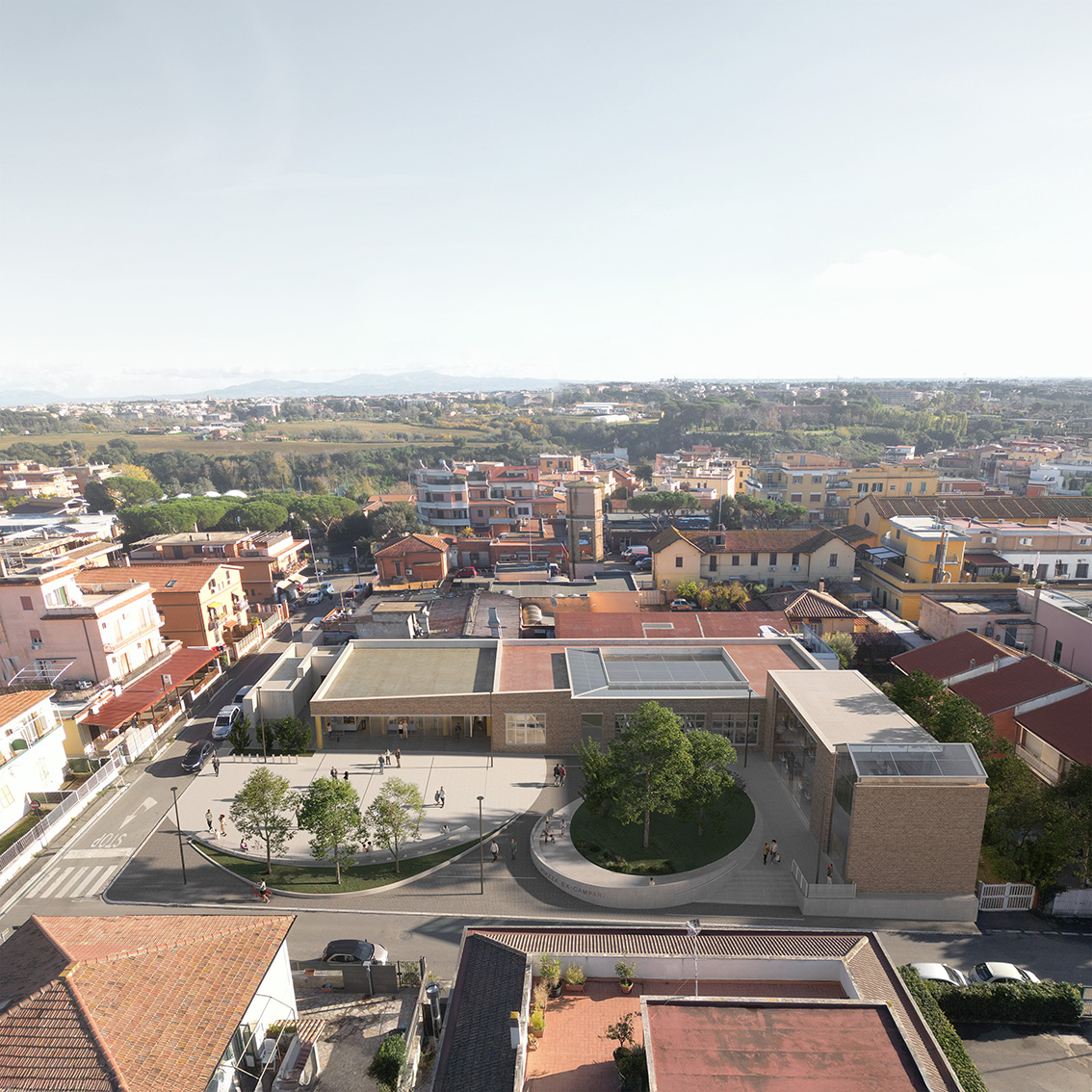
Located along Via Gaetano Mazzoni, the area was previously used as a parking lot and as the site of the weekly market. The project radically redefines its urban role, transforming an anonymous and identity-less space into a new civic place for the neighborhood. The square thus becomes a device connecting public functions with everyday life, also thanks to the recent renovation of the building that borders the square, now home to the Cornelia Library, which offers spaces for study, co-working, and community activities.
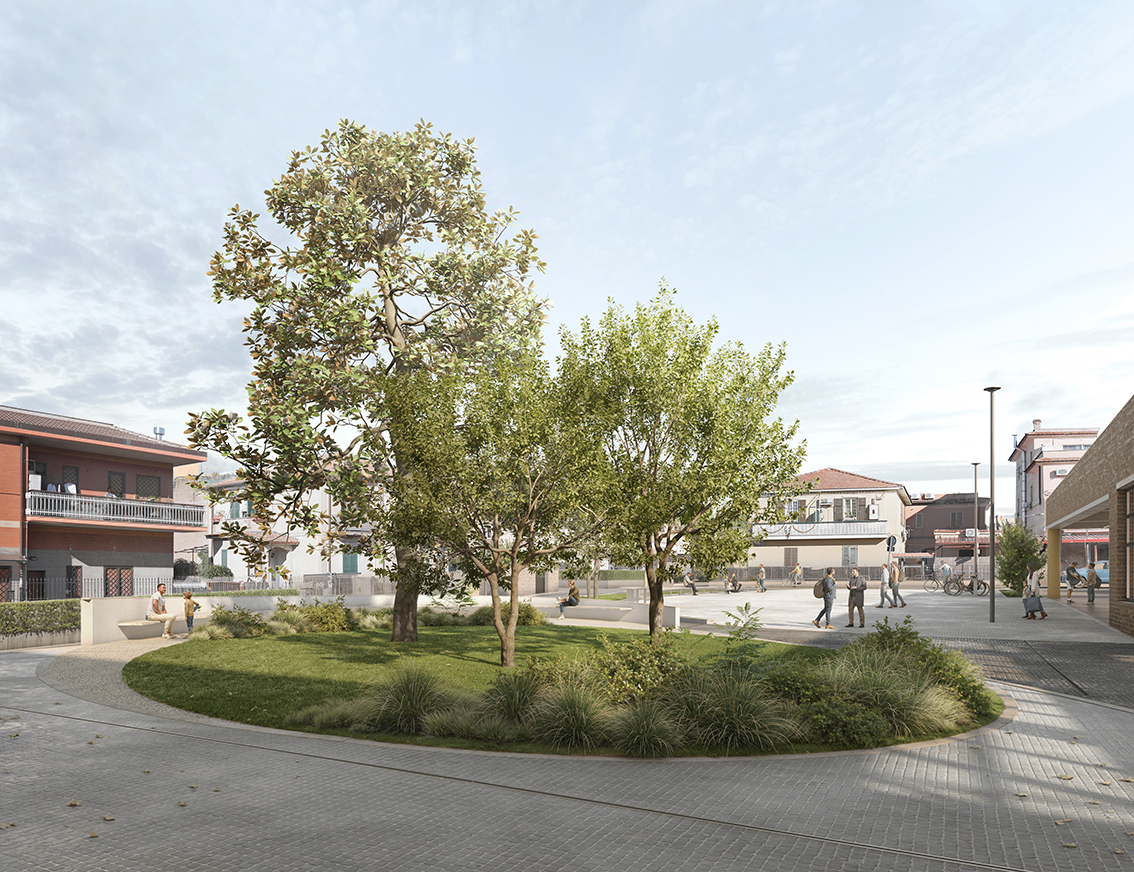
The design is based on a clear architectural gesture that organizes the space into two distinct yet complementary areas: the Green Square and the Mineral Square. The first, covering approximately 300 square meters, is conceived as a permeable and shaded space characterized by planted tree beds that interact with the surrounding green system and provide sheltered resting areas. The second, measuring about 460 square meters, is a paved and versatile surface designed to host collective activities, events, and moments of social interaction.
This spatial articulation introduces a duality that is not only functional but also perceptual: on one side the natural and contemplative dimension of the green area, on the other the urban vitality of the paved square. The two spaces are connected through a unified pavement design characterized by a chromatic gradient ranging from white to grey and marble borders that emphasize the geometry of the layout, creating visual continuity between the different areas of the square.
A key element of the project is the custom-designed seating system, made of steel clad in perforated white metal sheets, which precisely follows the curvilinear lines of the square. A long bench accompanies the gentle slope of the Mineral Square, functioning as a device for rest and observation of public life, while a second seating element runs along the retaining wall of the Green Square, creating more intimate areas for gathering and social interaction.
Alongside the spatial redesign, the project also addresses infrastructural and environmental aspects of the public space. The elimination of level differences improves overall accessibility, ensuring a smooth connection with the surrounding buildings and streets, while the renewal of lighting systems and water drainage infrastructure contributes to making the square more efficient and sustainable.
Through this intervention, the new Piazza Giuseppe Meroldi takes on the role of an urban device capable of activating social relationships and local identity. In a neighborhood marked by informal urban growth during the 1950s and 1960s, the project restores quality and recognizability to a central public space, transforming it into a place for meeting, exchange, and collective life. The square thus becomes not only a physical element of the city, but an open platform for the construction of new forms of community.
For more information: www.alvisikirimoto.it