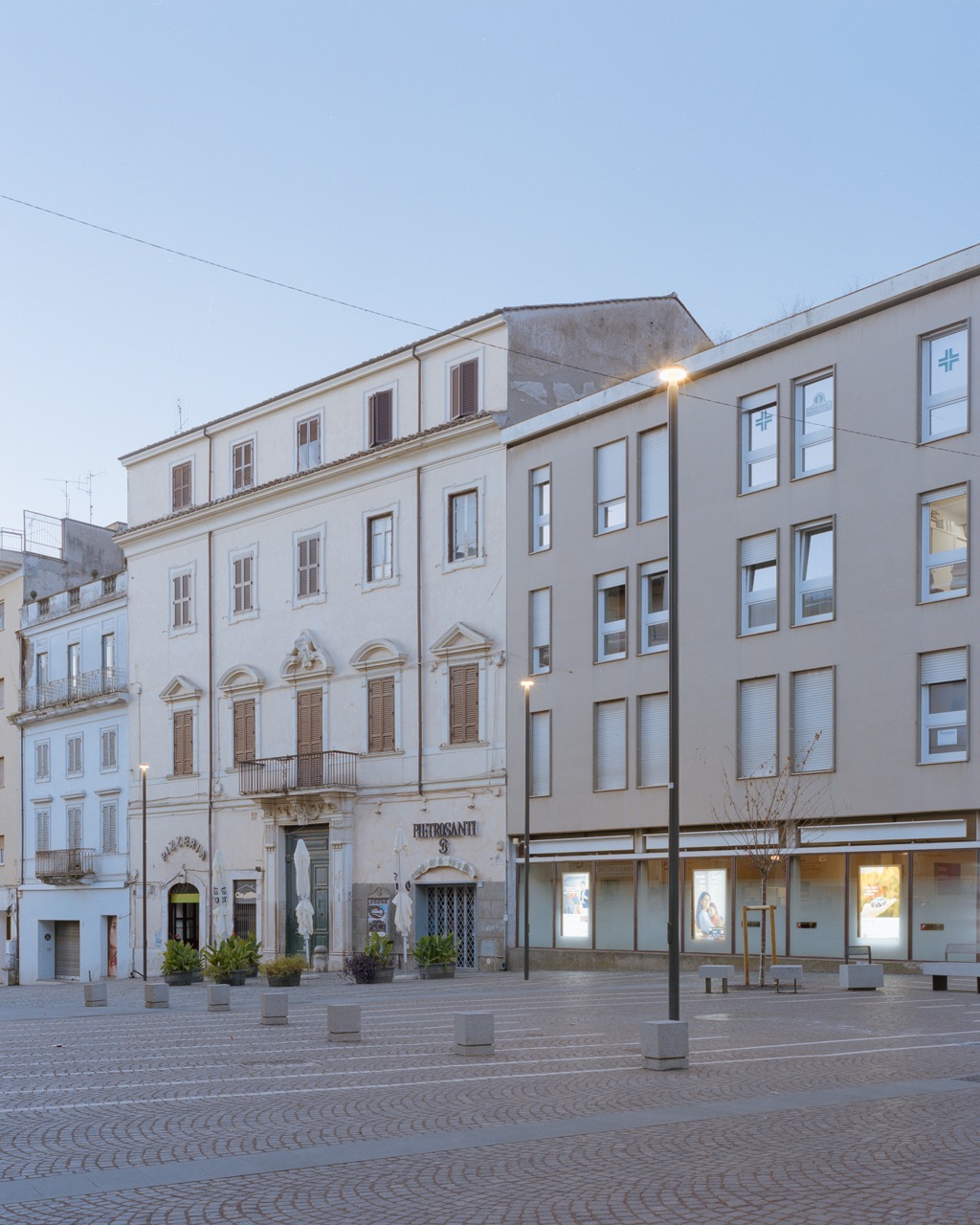

Henri Lefebvre, in Le droit à la ville, brings urban space back to its most radical dimension: not as a mere physical support, but as a place of recognition, appropriation, and collective presence. The right to the city is exercised precisely in those spaces where a community can appear, pause, move through, and recognize itself as such. From this perspective, the square takes on a central role—not as a residual void between buildings, but as a civic space par excellence and a social device. It is from this idea of public space as a common good that the redevelopment project of Piazza Cairoli in Velletri, designed by expandstudio, can be read.
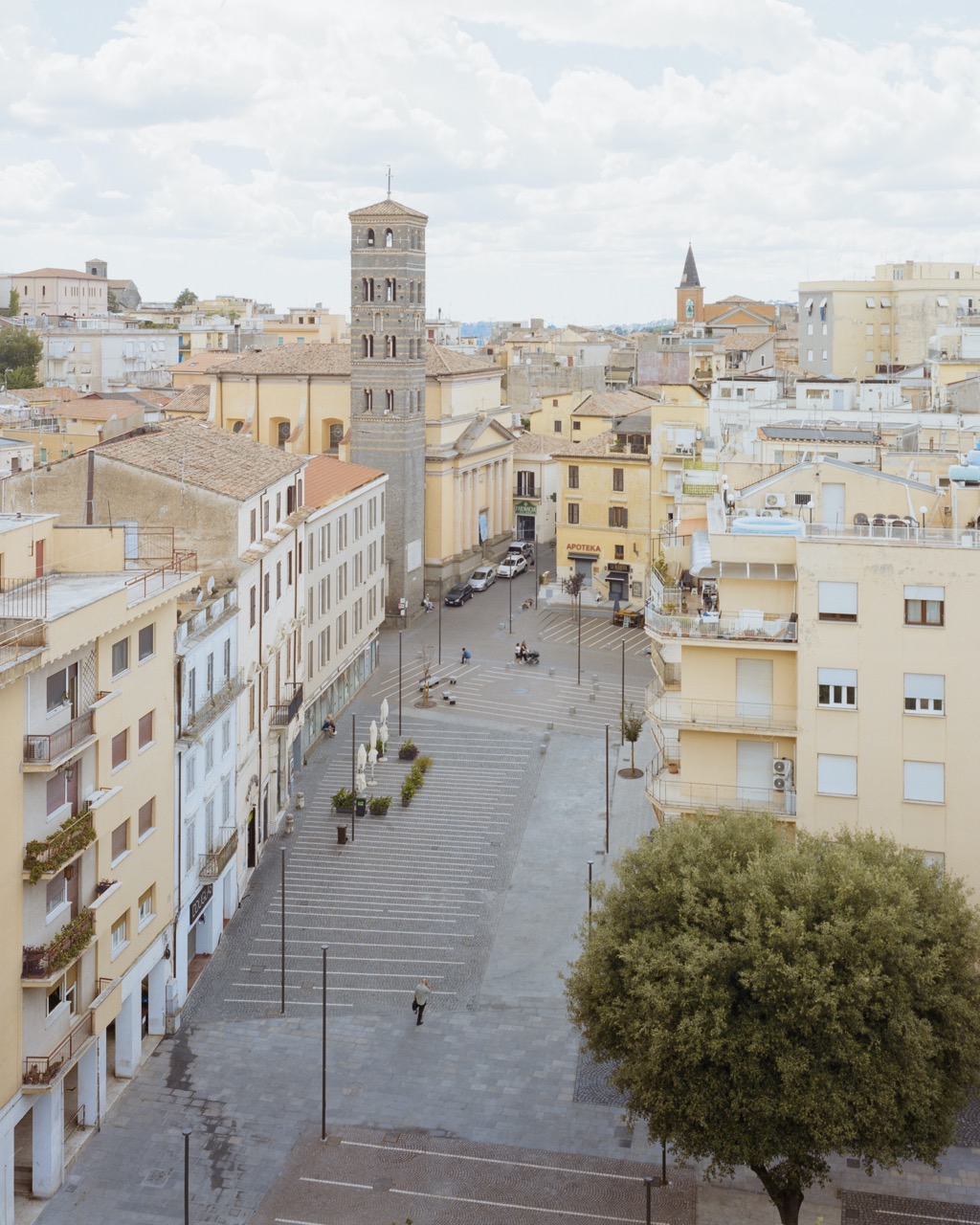
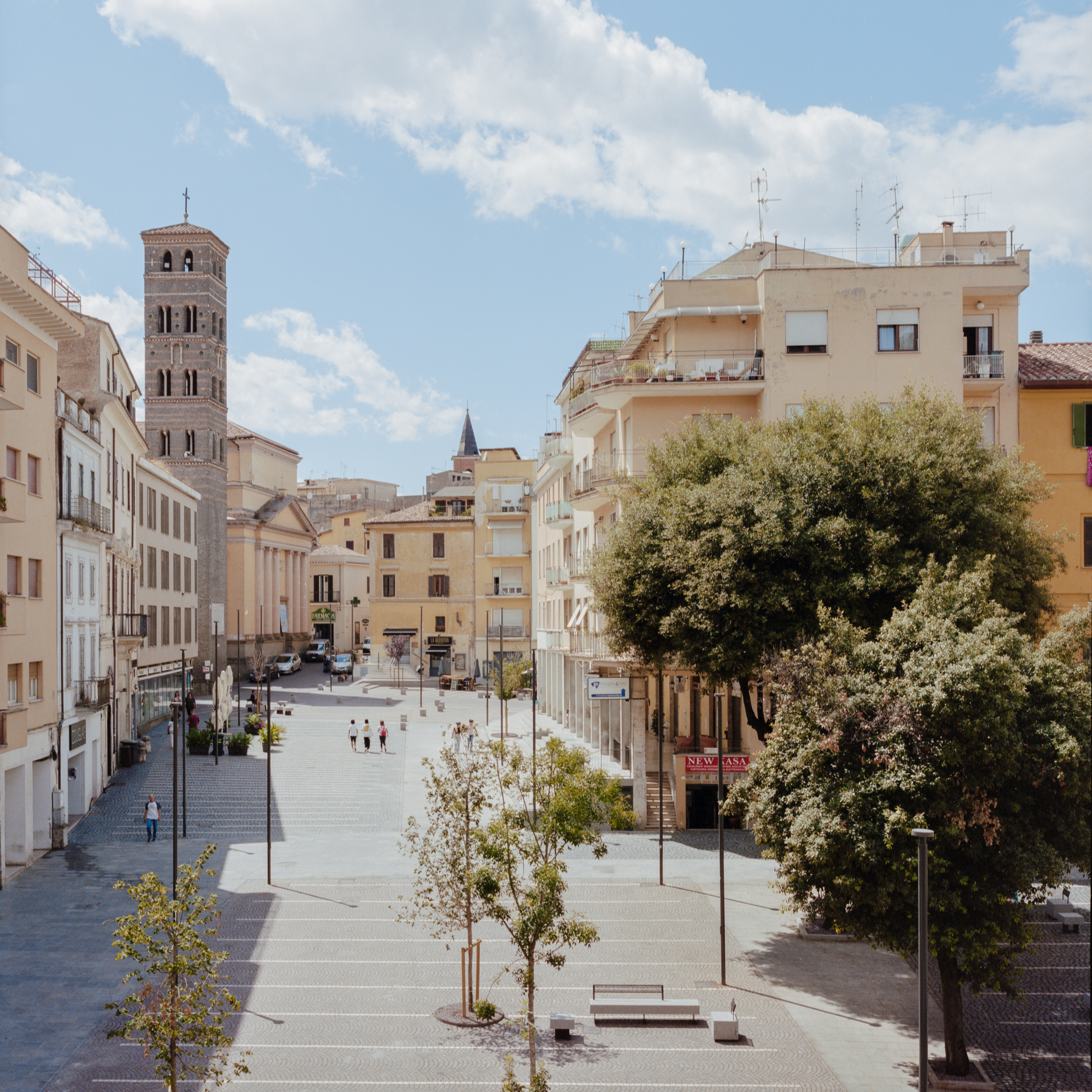
The intervention, winner of the design competition promoted by the Municipality in November 2022, is part of a broader strategy for the regeneration of the historic center, positioning the square as a key place for redefining the relationship between urban memory, public space, and everyday use. Piazza Cairoli occupies a strategic position within Velletri’s urban fabric, at the intersection between the city’s main axis and its development directions. It represents a point of contact between the historic cardo and the future decumanus, destined to become one of the main pedestrian accesses to the historic center. In this threshold condition, the project does not introduce new volumes but instead works through subtraction and recomposition, restoring continuity and legibility to public space.
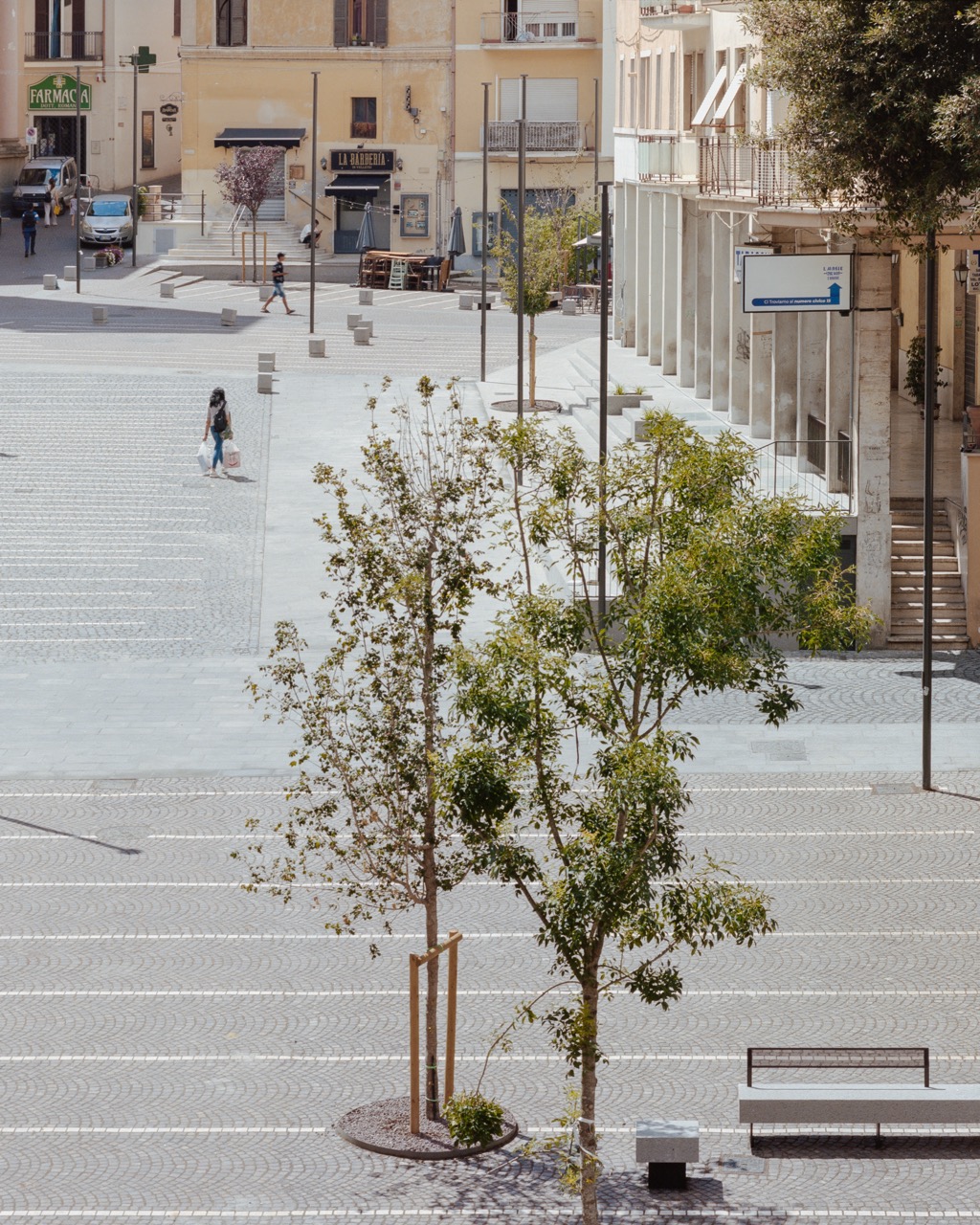
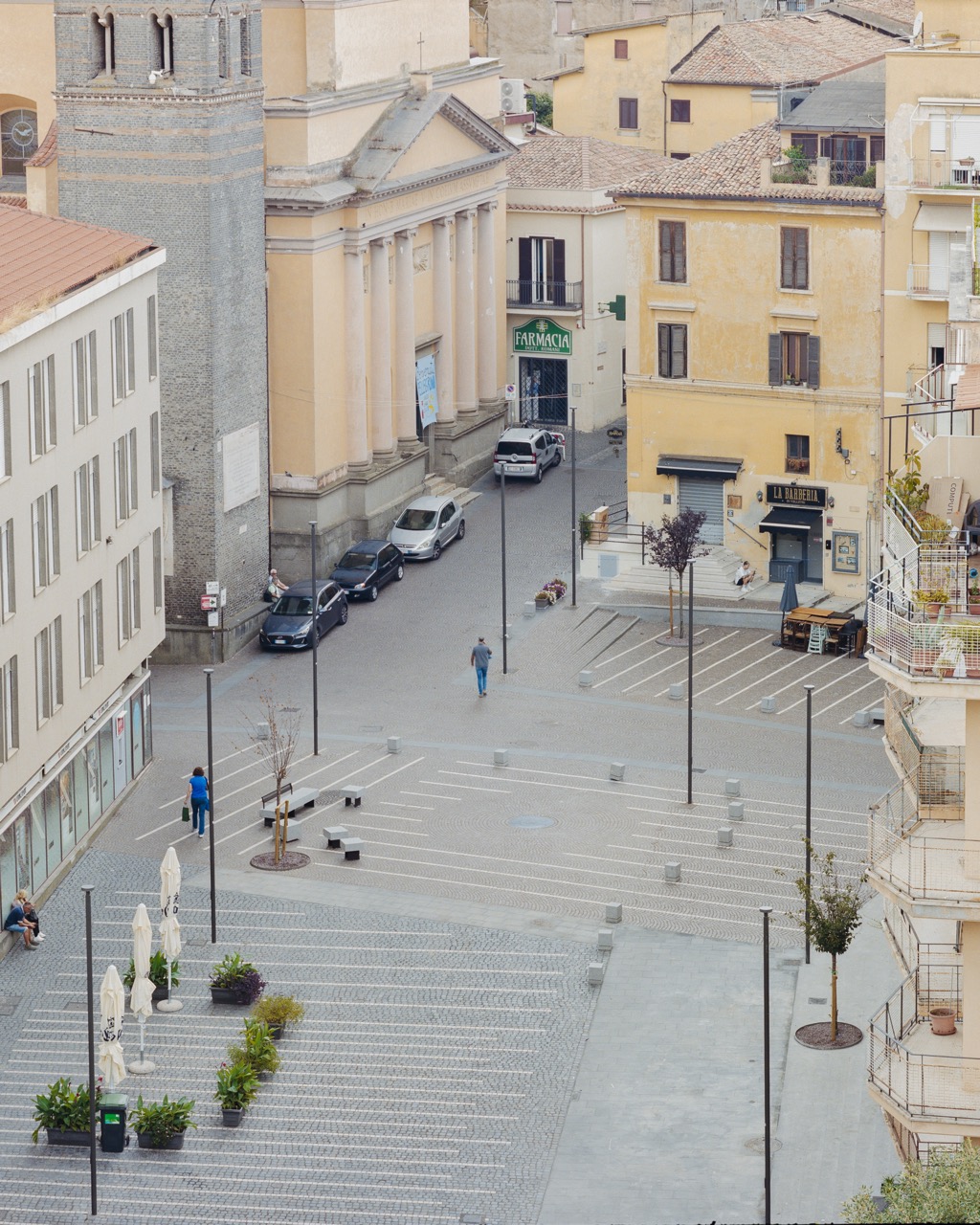
Before the intervention, the area was entirely occupied by cars, with an almost total loss of its urban and social function. Full pedestrianization therefore represents a foundational gesture: freeing the ground means reactivating possibilities of use, but also rebuilding a relationship between space and community. The project takes the existing morphology as its working material. The natural slope of the site, approximately 5%, is not neutralized but rather embraced and transformed into an ordering principle. The square is conceived as a continuous urban plane, accessible at every point, free of barriers and rigid hierarchies, where bodily movement becomes a tool for reading space. Changes in elevation are integrated into the overall design, accompanying movement across the site.
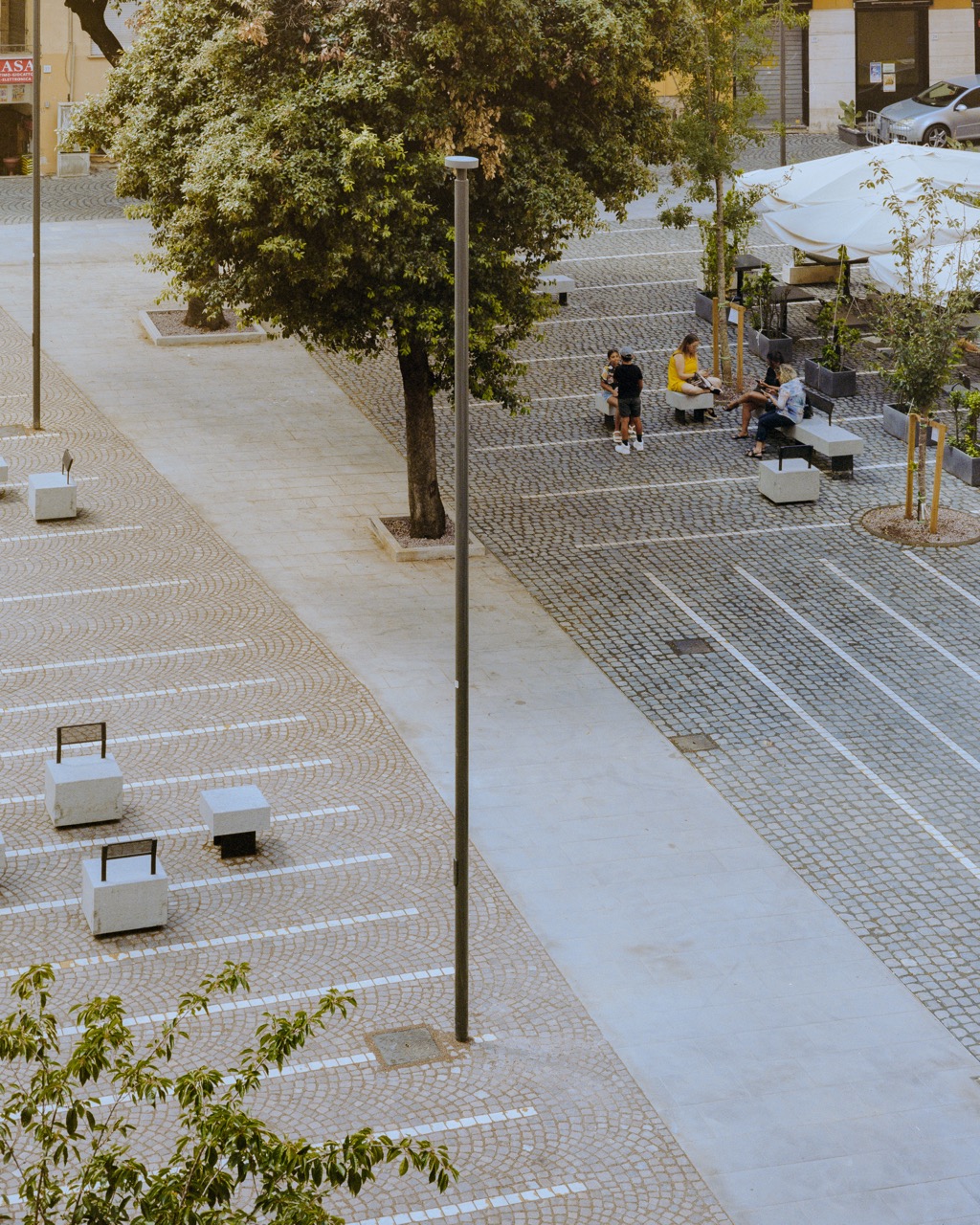
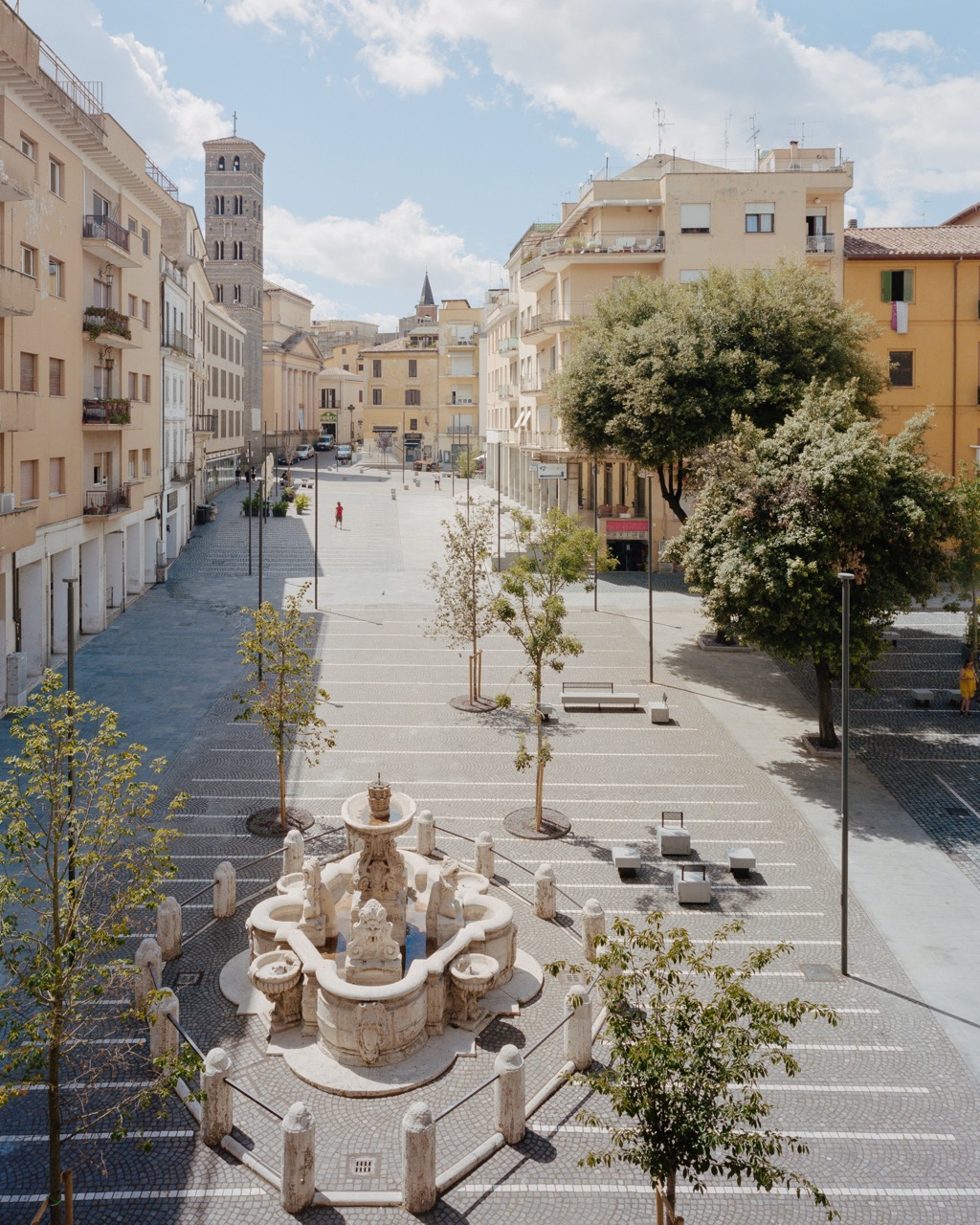
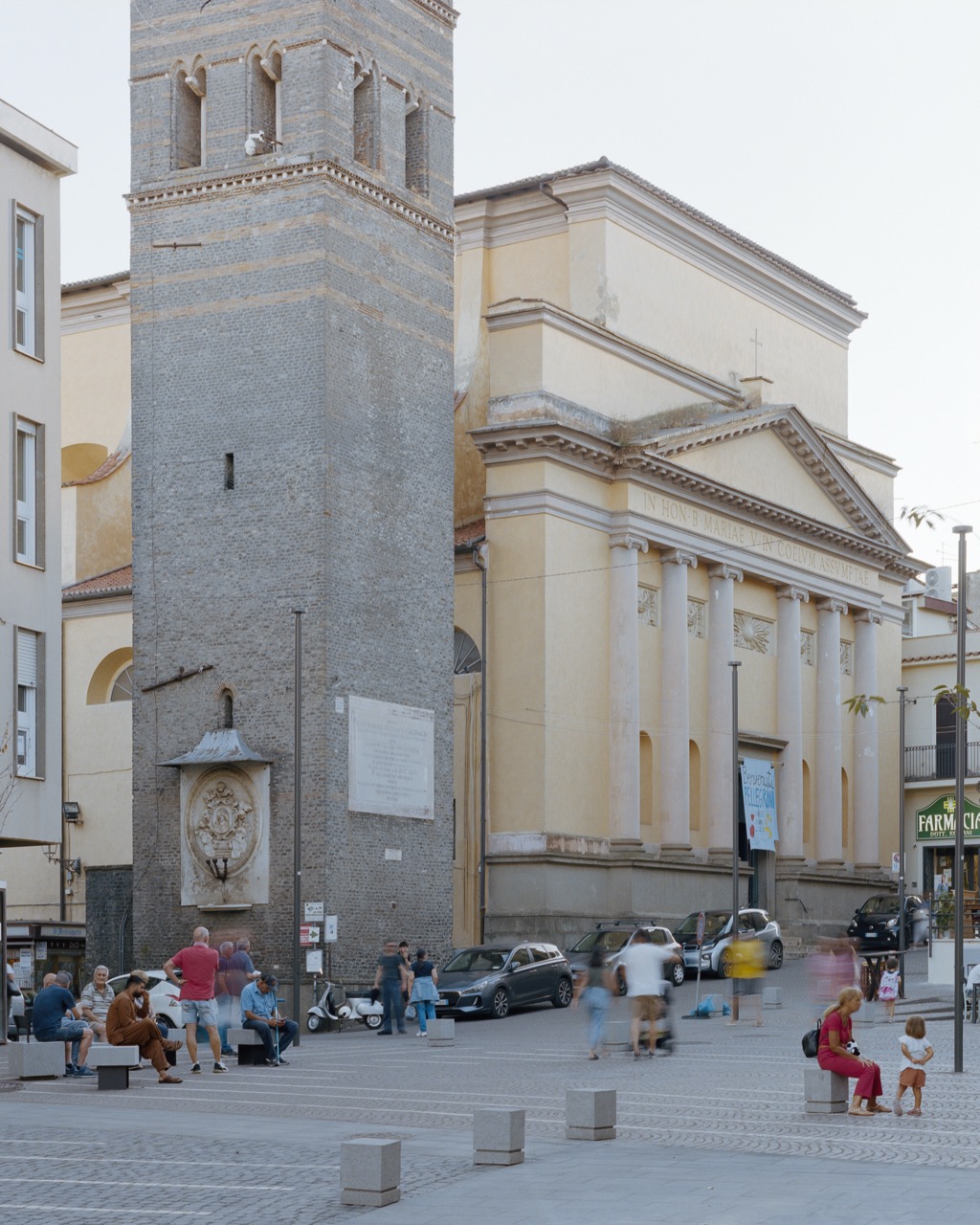
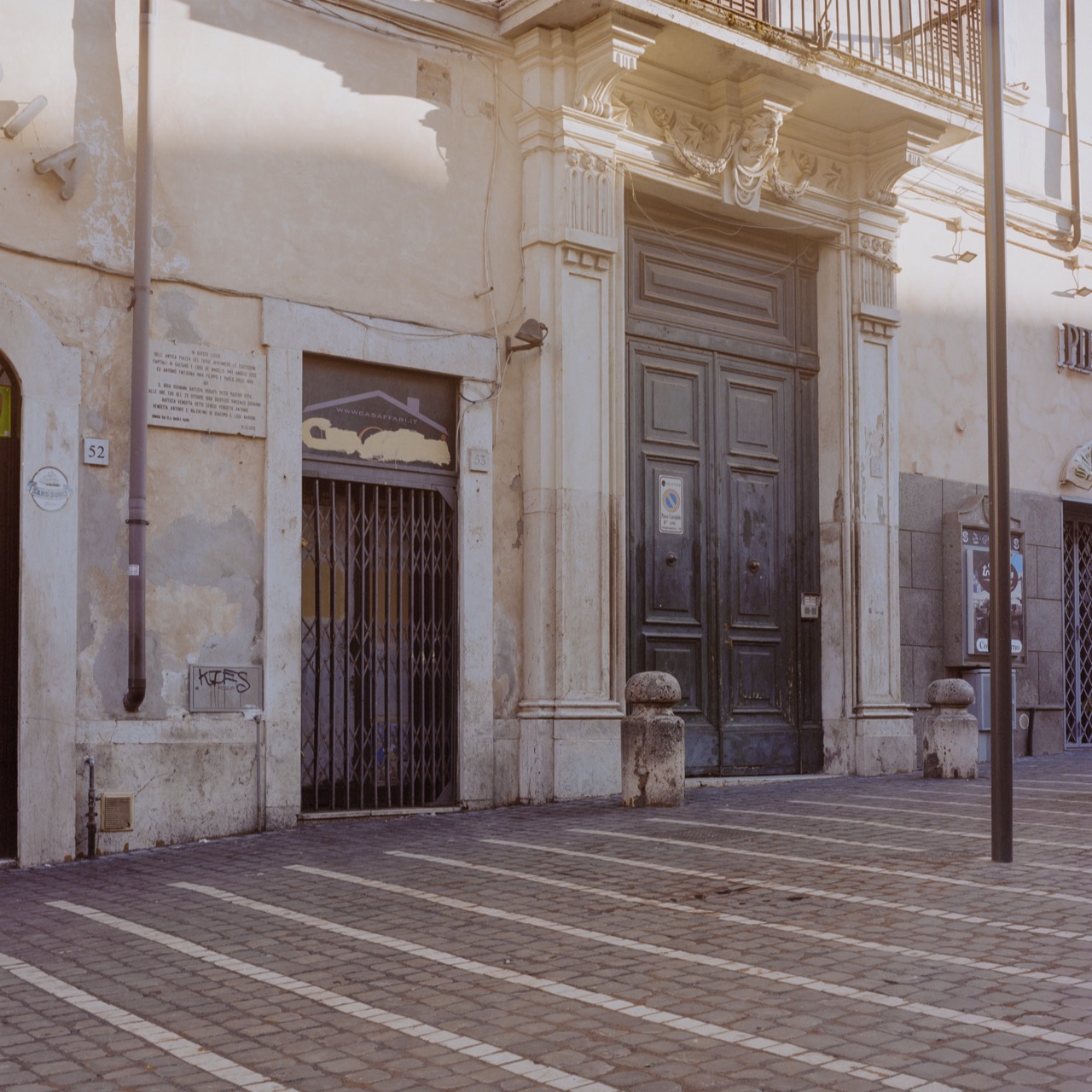
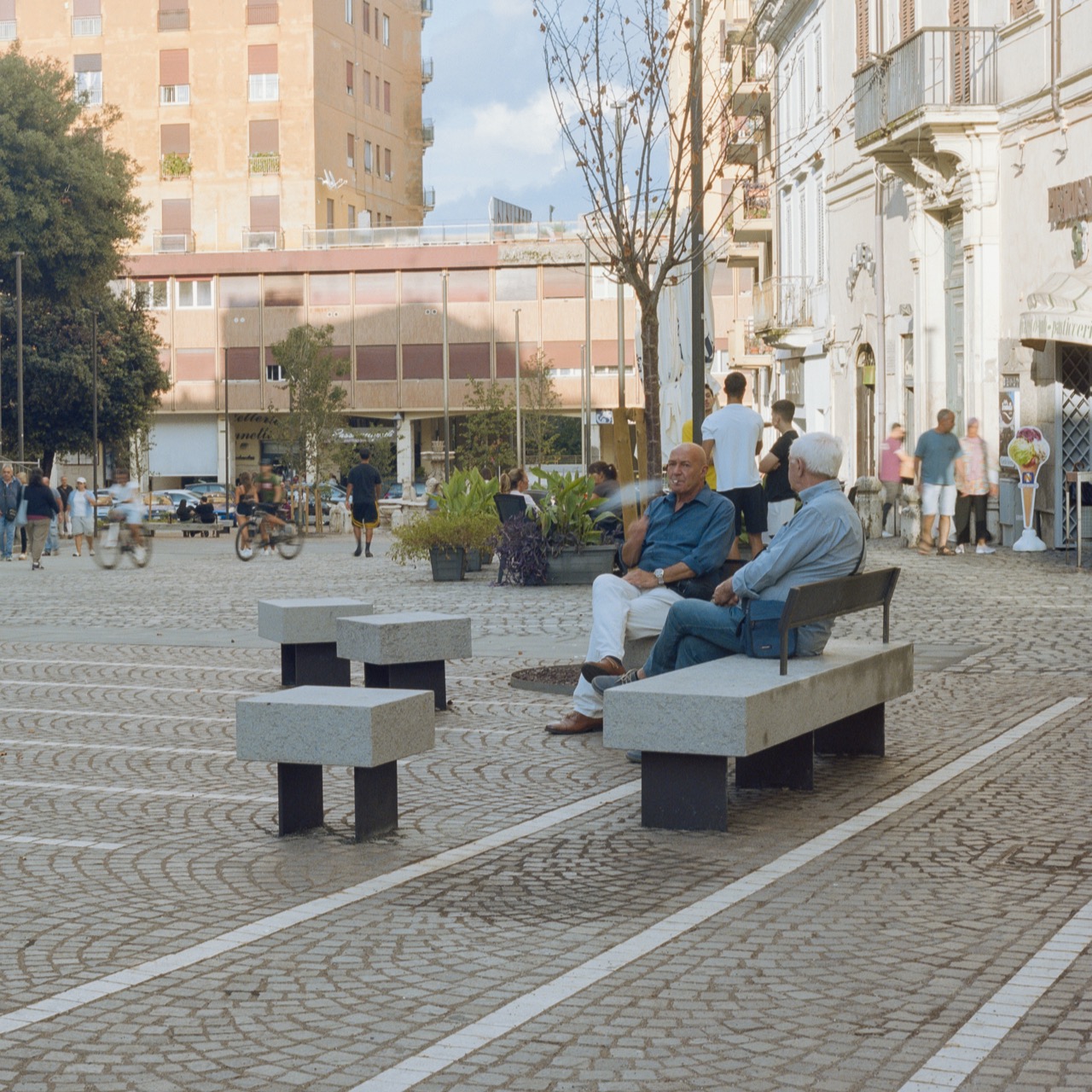
The paving design constitutes the main architectural device of the project. Reclaimed porphyry and basalt setts—materials deeply rooted in local construction traditions—are reorganized into a new geometric pattern, articulated by bands of light-colored limestone. The layout is not ornamental; instead, it follows the alignments of existing architectural elements such as the tower and the fountain, defining their areas of influence and constructing a field of relationships between elements, paths, and voids. The reuse of approximately 380 cubic meters of stone material, accounting for 85% of the total surface area, becomes an integral part of the project strategy, transforming existing matter into an instrument of continuity and reinterpretation.
In the lower part of the square, the planting of sixteen new tall trees introduces an urban garden that engages in dialogue with the historic fountain. Shade and water act as climatic devices, improving micro-environmental conditions and encouraging lingering. The resulting resting areas are not isolated episodes but parts of a unified spatial system, designed to support everyday, informal, and collective uses, restoring an inhabitable dimension to public space.
A staircase directly connects the northern portico to the main level of the square, reinforcing continuity between existing architecture and the new urban ground. The ramp, entirely clad in lava stone, has a measured yet incisive presence, while the same material is used for the urban furnishings distributed across the project area. The result is a coherent language in which each element seems to emerge from the ground itself, without discontinuity between infrastructure, architecture, and open space.
CREDITS
Project: Redevelopment of Piazza Cairoli
Architects: expandstudio
Location: Velletri (RM), Italy
Year: 2025
Photographs: Federico Farinatti