
Hosted at Rimadesio Paris Flagship store, on 21 January 2026, #ParisBreeze, initiative by Platform architecture and design, will showcase a new journey, exploring through prominent architects and interior designers how the city’s style is evolving and influencing their works.
Paris has always been a city of interiors. Beyond its boulevards and façades, it is within its rooms, salons, ateliers, and apartments that the real experiments take place, where lifestyle is not simply lived but carefully choreographed. Today, a new generation of architects and designers is reshaping these inner worlds, dissolving the old boundaries between commerce and culture, work and hospitality, domesticity and display. The projects selected share no single aesthetic, yet they speak a similar language: one of tactility, transformation, and emotionality. They privilege experience, movement over monumentality. Materials are no longer chosen for effect alone, but for the stories they tell: of craftsmanship, memory, time. Spaces unfold gradually. They invite lingering.
From a jewelry boutique conceived as a sculptural landscape, to a Parisian loft that interacts like a narrative in motion, from office environments that feel closer to private clubs than corporate headquarters, to a hybrid curatorial workspace hidden inside the legendary Paul Bert market, and finally, to an office building along the Seine which elegantly reinterprets traditional Parisian codes, yet environmentally attuned: these projects describe a new spatial sensibility. One that replaces spectacle with refinement, luxury with intimacy, and permanence with adaptability. Together, they form a portrait of contemporary design not as an object, but as a condition: fluid, atmospheric, and deeply human.
Clément Blanchet Architecture [CBA] — Mansano Paris
A boutique as a landscape made of touch, light and memory.
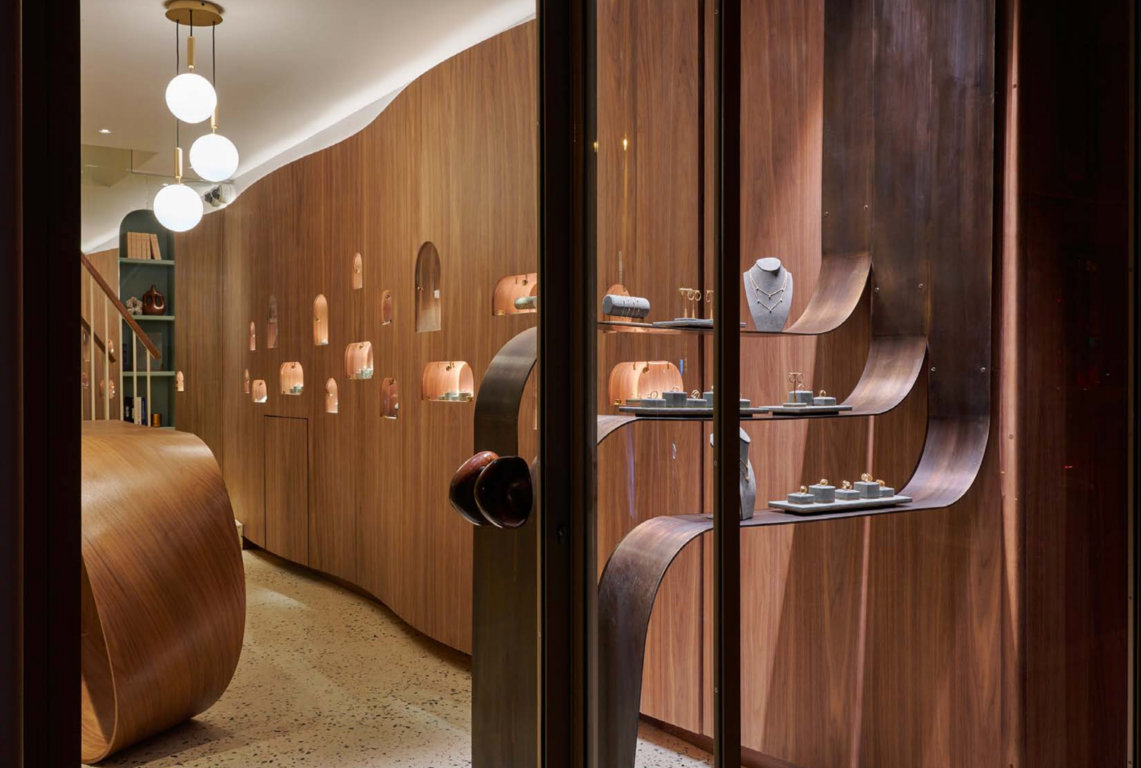
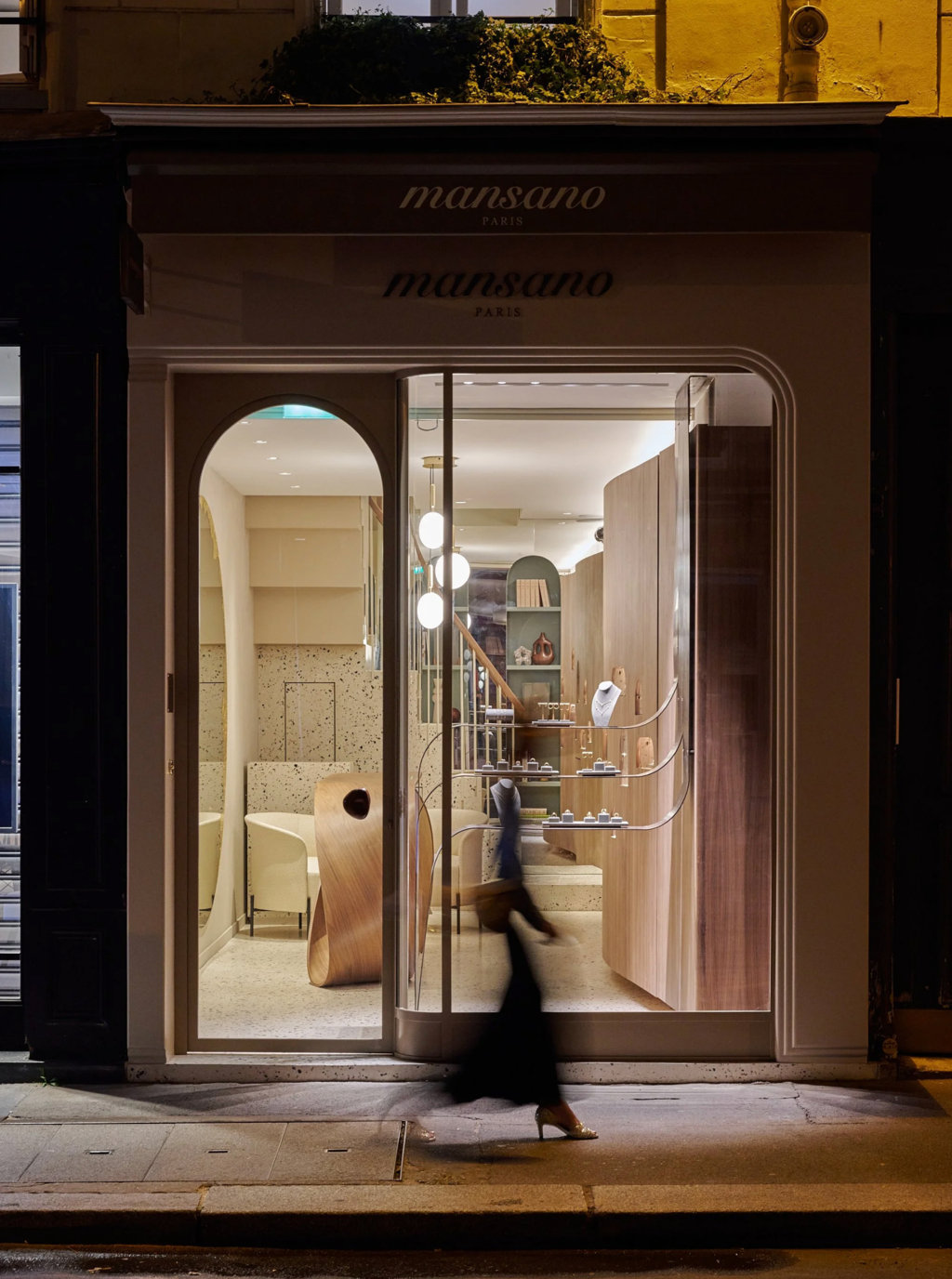
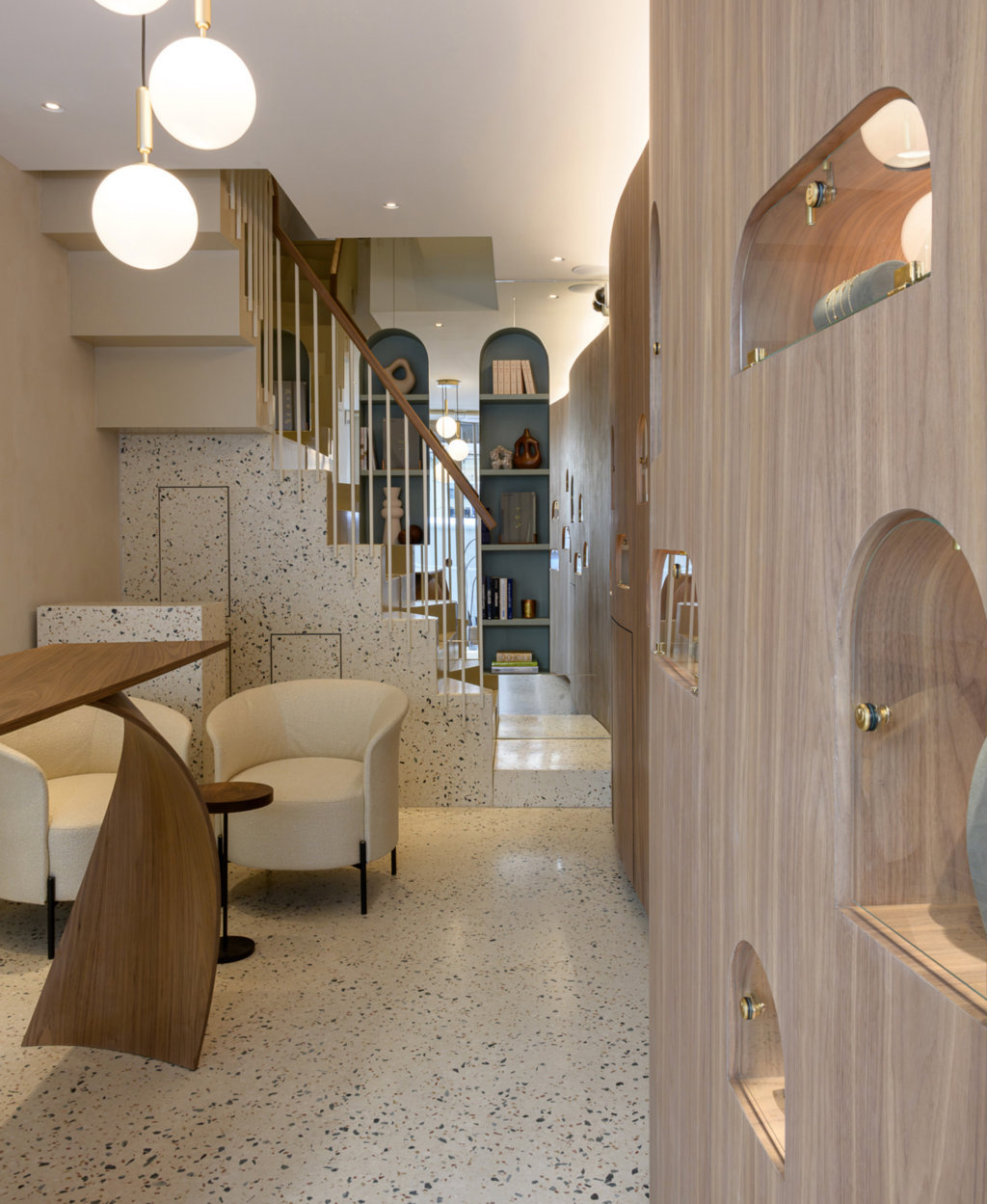
Located at 81 Rue du Bac, the Mansano boutique doesn’t announce itself loudly. It reveals itself slowly, like a secret. Designed by Clément Blanchet Architecture, the space, defined by the organic freedom of its forms, feels like an architectural extension of the jewelry it houses.
Adopting a reversal of the usual design process, the intervention privileges materials, terrazzo, walnut, and brass, allowing materiality to guide spatial expression, anchoring the result to the exaltation of the brand’s tactility and exclusivity through excellence in craftsmanship, durability, tradition, and modernity. A wave-like walnut wall unfolds rhythmically alternating a fluid composition of curves and countercurves, welcoming the exhibited pieces into its carved niches, echoing their soft geometries and creating a synergistic dialogue between object and environment. The gesture resonates with the curves of a central sculptural piece by Pierre Renart. Mirrors amplify depth blurring the boundary between inside and outside, between spectacle and intimacy. The city outside is absorbed, refracted, and reintroduced. A monolithic terrazzo staircase leads to an upper floor, where soft lighting and enveloping furnishings define a more intimate and cozy world. Works of art punctuate the space, not as decoration, but as moments of respite. They introduce surprise, companionship, and narrative layers, complementing the exclusivity and exquisite originality that distinguish the collection.
ABACO — Sliding Doors
A loft as a flexible narrative.
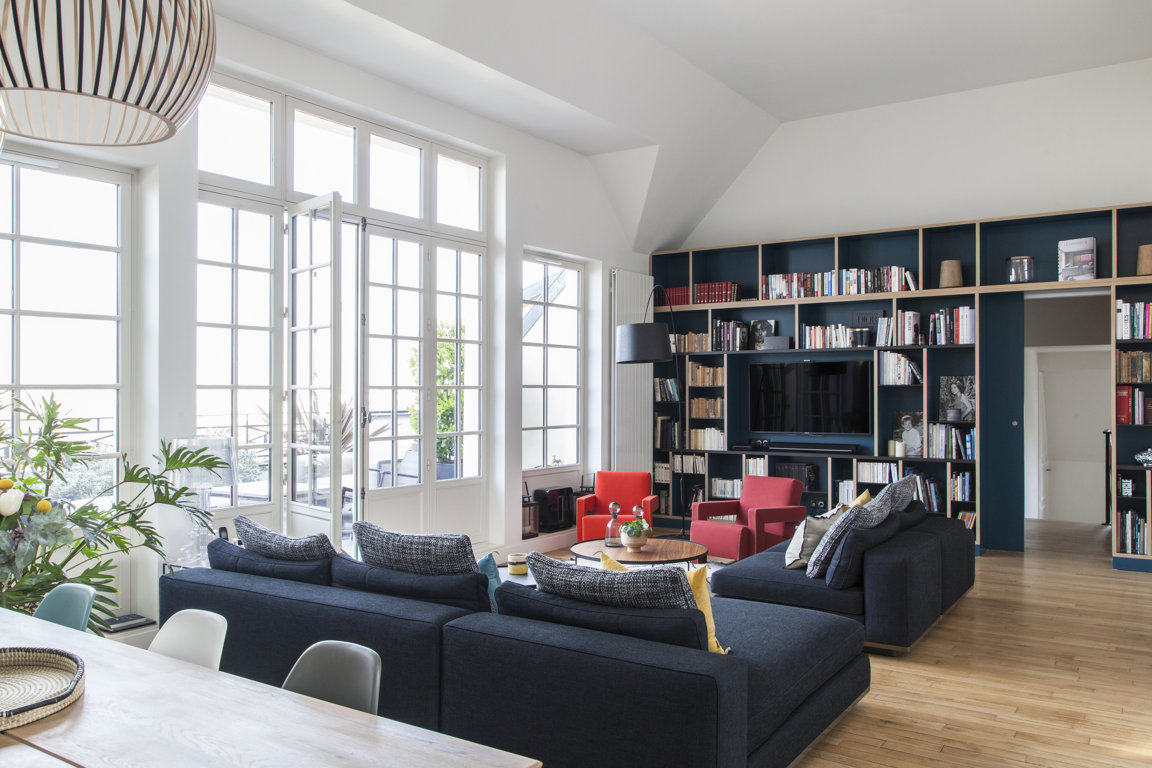
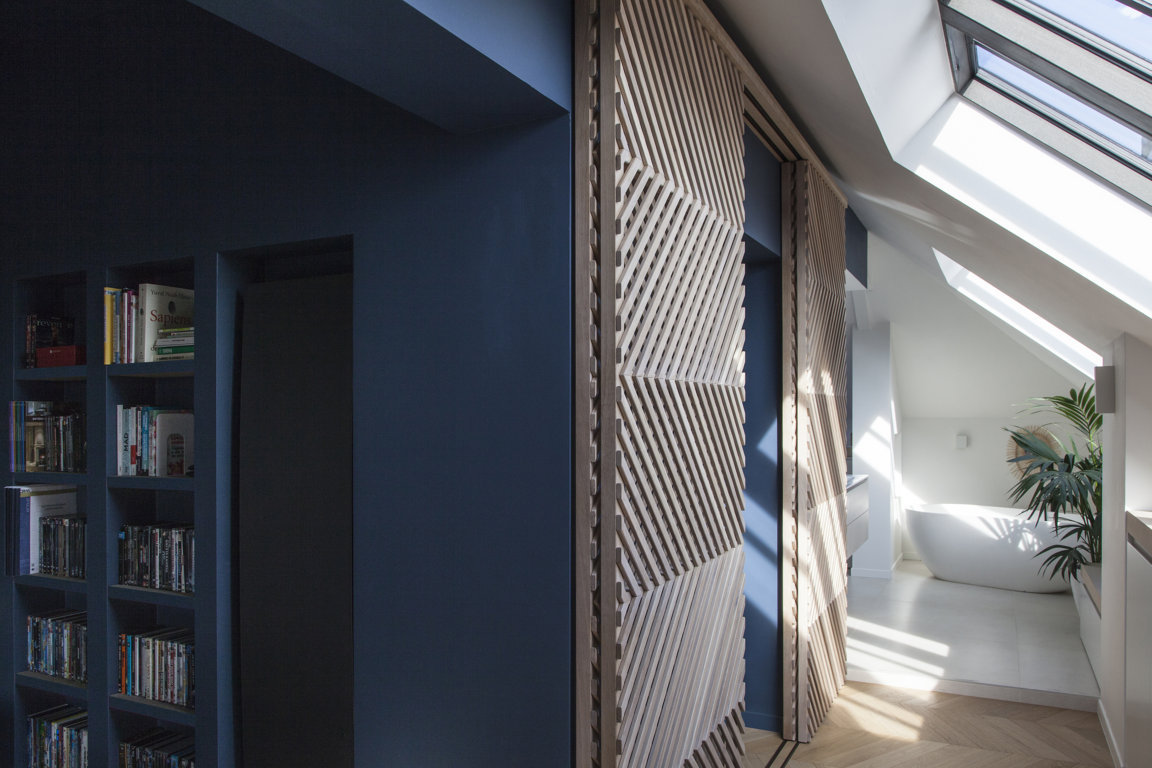
Perched atop a luxury residential building in Neuilly-sur-Seine, a 310 m² duplex loft, conceived by ABACO studio, unfolds as a luminous, open landscape overlooking La Défense. Large French windows and a generous terrace expand the interior towards the horizon. From the outset, the project rejects the idea of a fixed and static layout. Instead it develops progressively through a sequence of thresholds, level changes, and visual tensions. ABACO explores domestic space as a field of possibilities, where architecture becomes a tool for transformation, a device of choice rather than a prescription. Light, movement, and perception are the primary design drivers, shaping an experience that evolves throughout the day. From the idea that a minimal gesture can generate multiple realities, custom sliding elements, integrated into architectural volumes, allow spaces to open, overlap, or disappear, making privacy and continuity adjustable rather than rigidly imposed. A double-height volume, at the heart of the apartment, acts as a spatial hinge, permitting daily life to expand, contract, and circulate around it. The home becomes a flexible narrative, reversible, adaptable and shaped by everyday gestures rather than fixed boundaries.
Studio Vincent Eschalier — Gustave-Collection
“Haute couture work experience”.
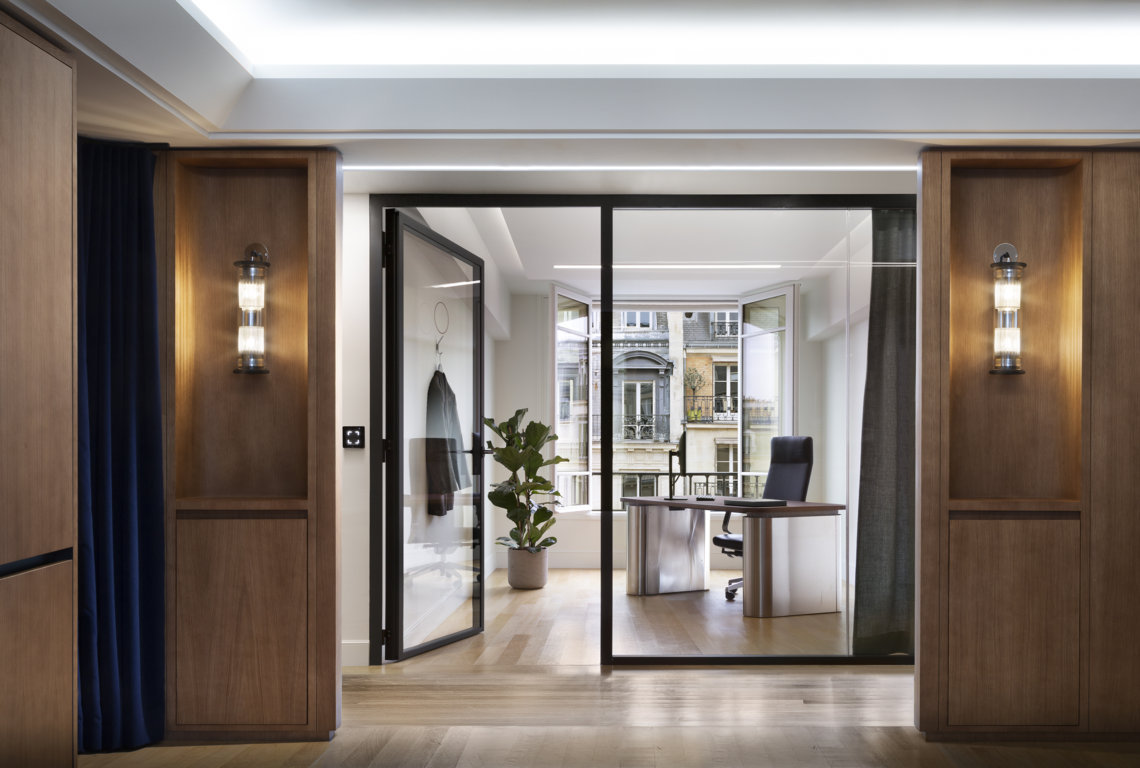
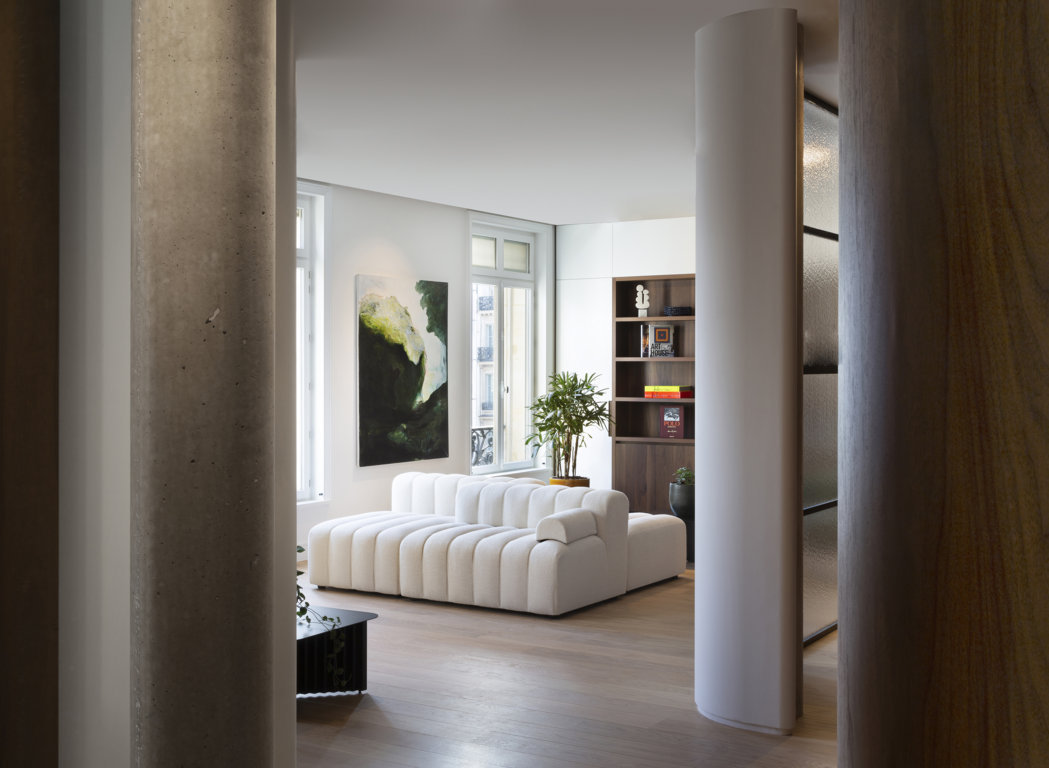
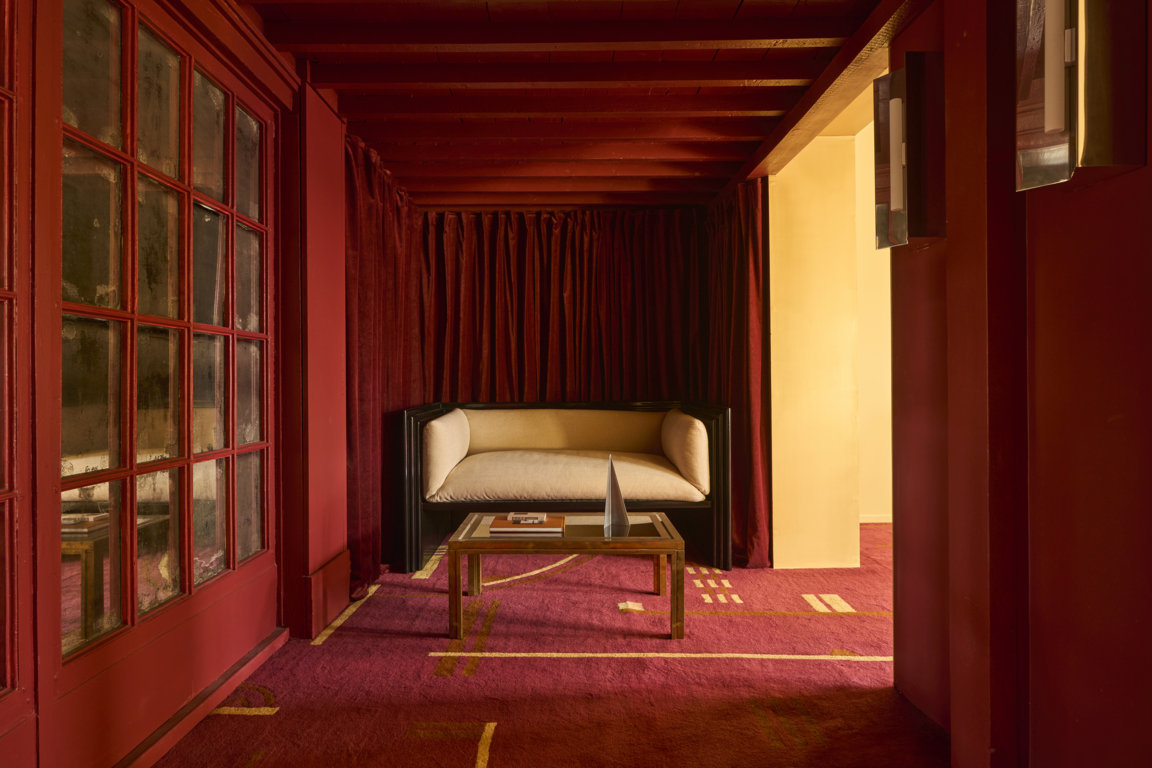
Gustave-Collection reimagines the workplace through the lens of luxury hospitality, proposing a new art of living at work where well-being, elegance, and service are central. Designed entirely by Studio Vincent Eschalier, these exceptional office environments are conceived as immersive, high-end settings that open up all possibilities, not simply accommodating work, but stimulating and enhancing everyone’s commitment and experience. Located in prestigious Parisian addresses, near Place Vendôme and the Opéra Garnier, the three sites, with two more planned soon (one in Milan), offer spaces that appeal to a demanding clientele for whom luxury is not an ostentatious statement, but a naturally lived experience. The locations embody the French art of hospitality: a balance of conviviality and discretion, generosity and care – a “haute couture work experience” in flattering, excellence-driven environments. The concept is based on the belief that employee engagement and performance stem from comfort, inspiration, and caring. Each ambience combines workspaces with lounges, libraries, restaurants, bars, terraces, and wellness relaxation areas, dissolving the boundaries between office, hotel, and private residence. Flexibility is the priority for professional furniture and workstations, and the Studio therefore specifically conceives the Gustave desk, an adjustable key piece which, combining simplicity and versatility, fully satisfies the needs. The design language is warm, domestic, and refined, emphasizing bespoke carpentry, noble materials, curated artworks, and soft atmospheres. Spatial sequences are inspired by apartments and hospitality interiors rather than conventional offices, creating environments that feel intimate, generous, and adaptable. The result is a new model of professional space: sensorial, dynamic, and deeply human-centered.
Cléo Interior Design — Paul Bert Market
A hybrid concept for a traditional office space.
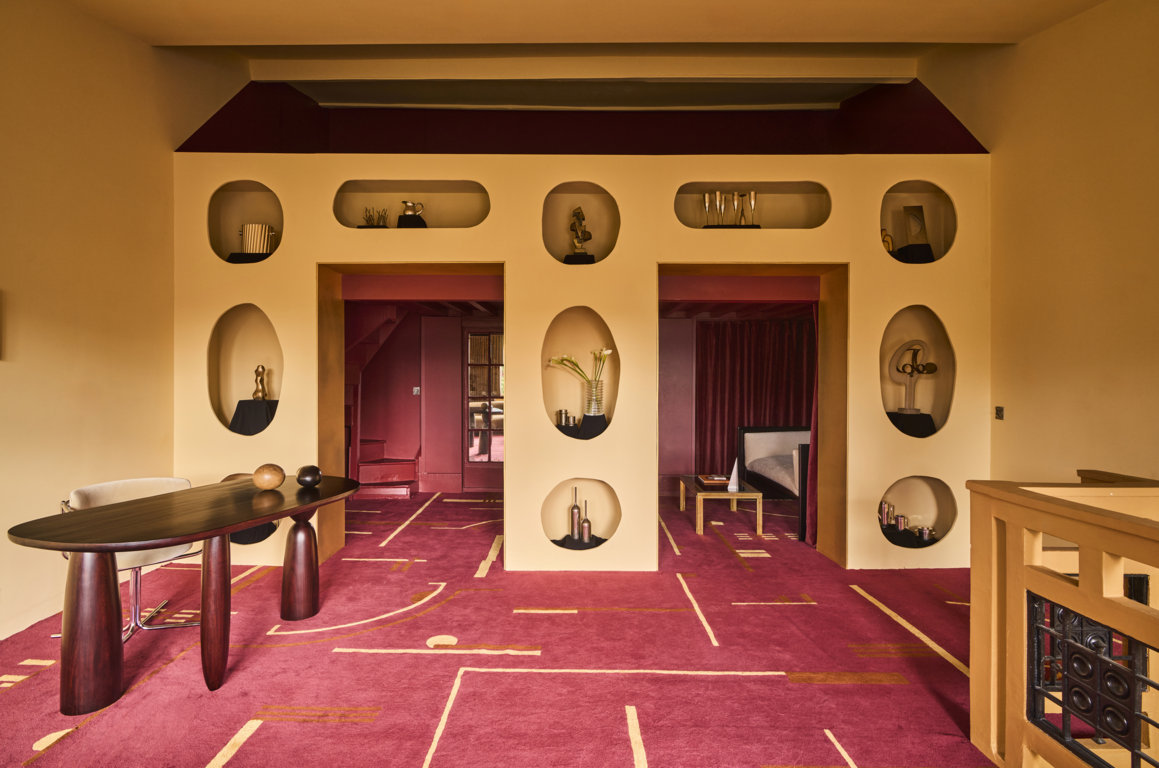
For WEL Fine Art, an international packaging and shipping company, Cléo Interior Design proposed a radical departure from the traditional office typology, reimagining the space as a hybrid curatorial showroom. Situated within the vibrant ecosystem of Paul Bert Market, the project reflects both the group’s involvement in fine art logistics and the cultural richness of the surrounding context. Dissolving the boundaries between workplace, gallery, and market, Cléo and her team create an interior that is not fixed but constantly evolving, an environment that embodies the spirit of discovery intrinsic to the flea market. The space is arranged as a living exhibition, featuring a rotating selection of collectible furniture and design pieces loaned by nearby merchants and gallerists. As the items are sold, new ones take their place, ensuring the interior remains constantly evolving. This dynamic arrangement is complemented by custom-designed elements. The result is a layered, narrative interior where contemporary and vintage pieces coexist, a living gallery influenced by the surrounding vibrant energy that transforms daily work into an experience embedded in cultural exchange and creative circulation.
Wilmotte & Associés — 38 Cours Albert Iᵉʳ
A refined dialogue between historical heritage and contemporary architecture.
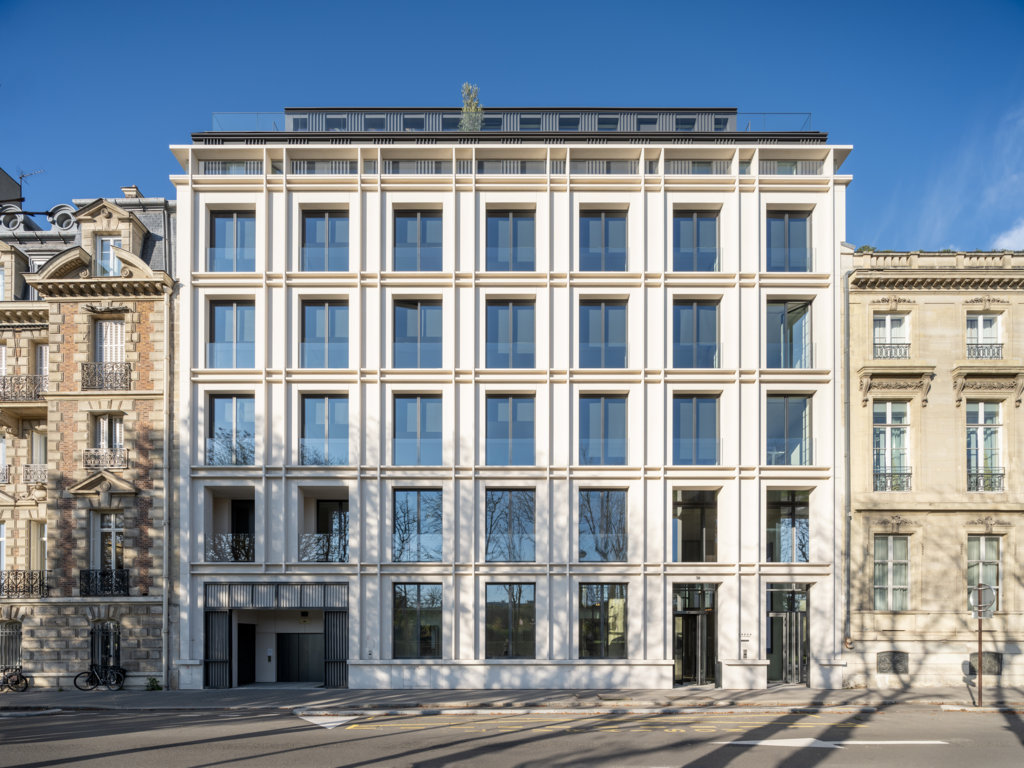
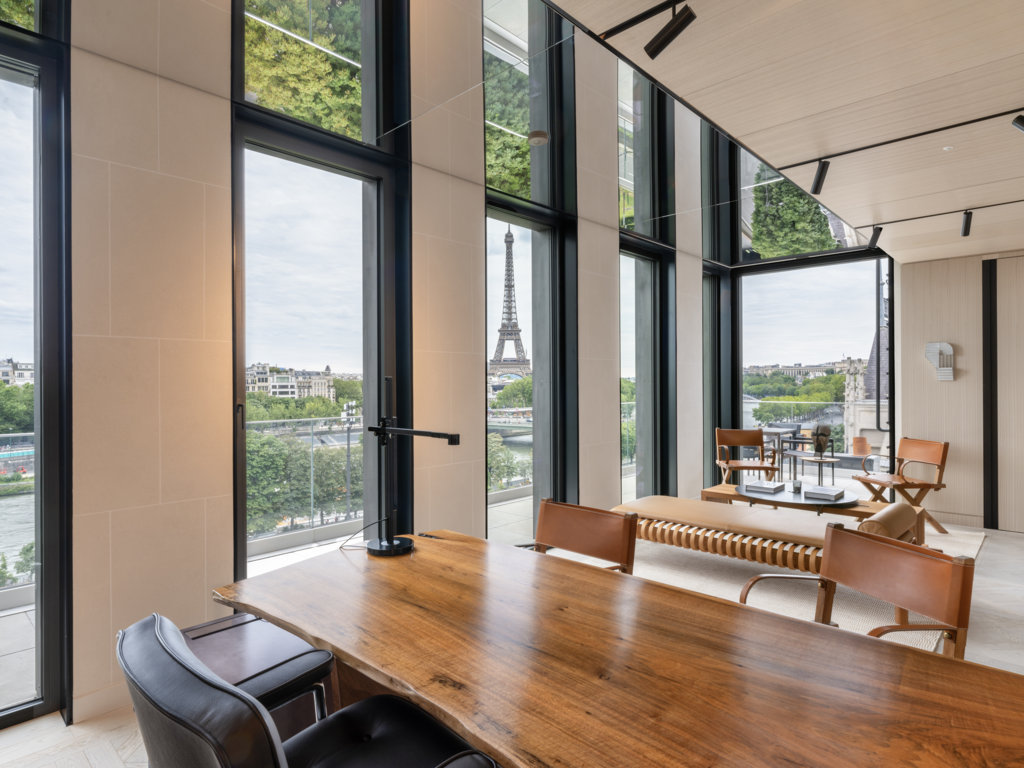
Located along the Seine in Paris’s 8th arrondissement, the 38 Cours Albert Iᵉʳ project, realized by Wilmotte & Associés, embodies a refined dialogue between historical heritage and contemporary architecture. Built on the site of a former hôtel particulier, the new office building reinterprets classic Parisian codes with a modern sensibility, respectfully integrating into the urban context while simultaneously establishing itself as a visual landmark. The façade draws inspiration from Haussmannian rhythms through pilasters, cornices, and generous openings, yet is executed using highly innovative techniques. The use of Portuguese limestone on lightweight honeycomb panels creates a continuous, monolithic appearance, while ensuring precision, durability, and structural efficiency. Inside, the same principles of clarity, elegance, and generosity define the spatial experience. Natural light, noble materials, and carefully designed circulation spaces shape a calm and welcoming atmosphere, both relaxing and convivial. The building follows a flexible office logic, allowing adaptable layouts, supported by shared amenities, meeting areas, and landscaped terraces. Nature plays a central role, from interior gardens to panoramic rooftop terraces overlooking Paris. Strongly committed to sustainability, the project integrates bio-based materials, photovoltaic panels, and high-level environmental certifications. More than just an office building, it proposes a new vision of workspaces, where architectural identity, environmental responsibility, and user well-being coexist seamlessly.
Credits:
Cover – ParisBreeze
1-2: Boutique Mancano Paris, photographs by Frans Parthesius, courtesy of Clément Blanchet Architecture
3-4: Sliding Doors, photographs by Bertrand Fompeyrine, courtesy of ABACO
5-6: Gustave-Collection, photographs by Jean-Pierre Vaillancourt, courtesy of Studio Vincent Eschalier
7-8: Paul Bert Market, photographs by Alexandre Tabaste, courtesy of Cléo Interior Design
9-10: 38 Cours Albert Iᵉʳ, photographs by Martin Argyroglo, courtesy of Wilmotte & Associés