
With stations inspired by Turin’s porticoes, sustainable materials, and a strong focus on the urban context, the team led by UNS reimagines the future of the city.
By joining the winning team in the international competition for the architecture, design, and visual identity of the new Metro Line 2, Settanta7 – an international architecture studio – strengthens and renews its connection with Turin, contributing to a project that marks a key step toward the development of a new metropolitan axis.
The international jury, chaired by renowned architect and urban planner Dominique Perrault, awarded the proposal led by UNS, in collaboration with Settanta7, Mijksenaar, Frigorosso, 3BA, and WSP. The project was recognized for its refined elegance and coherence, the careful selection of materials and technologies, and the high quality of its interior spaces.
The concept stems from a reflection on Turin’s intrinsic duality — a city defined by refined contrasts. Its architectural language embodies this condition: austere and rigorous exteriors conceal richly decorated interiors, where Baroque elements unfold in layers of detail. This duality informs the design of the new metro line, conceived as a spatial sequence that transitions from formal restraint to welcoming, identity-rich environments, where tradition and contemporaneity coexist in continuity with the city’s character.
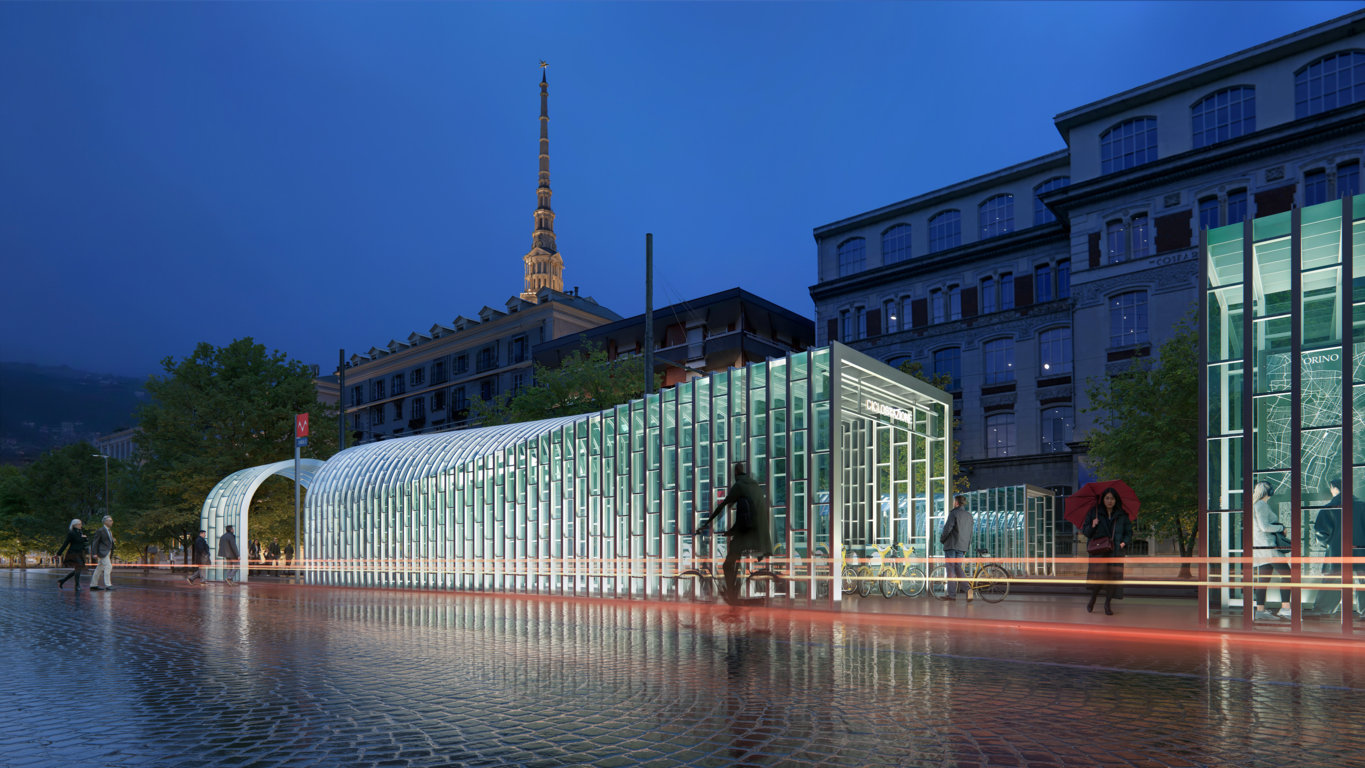
The proposal focuses on three key stations, Mole-Giardini, San Giovanni Bosco, and Carlo Alberto, unified by an architectural system inspired by a contemporary reinterpretation of Turin’s porticoes. The canopy structures evolve from the archetype of the arch to that of the portal, echoing the rhythm and compositional logic of the city’s historic façades.
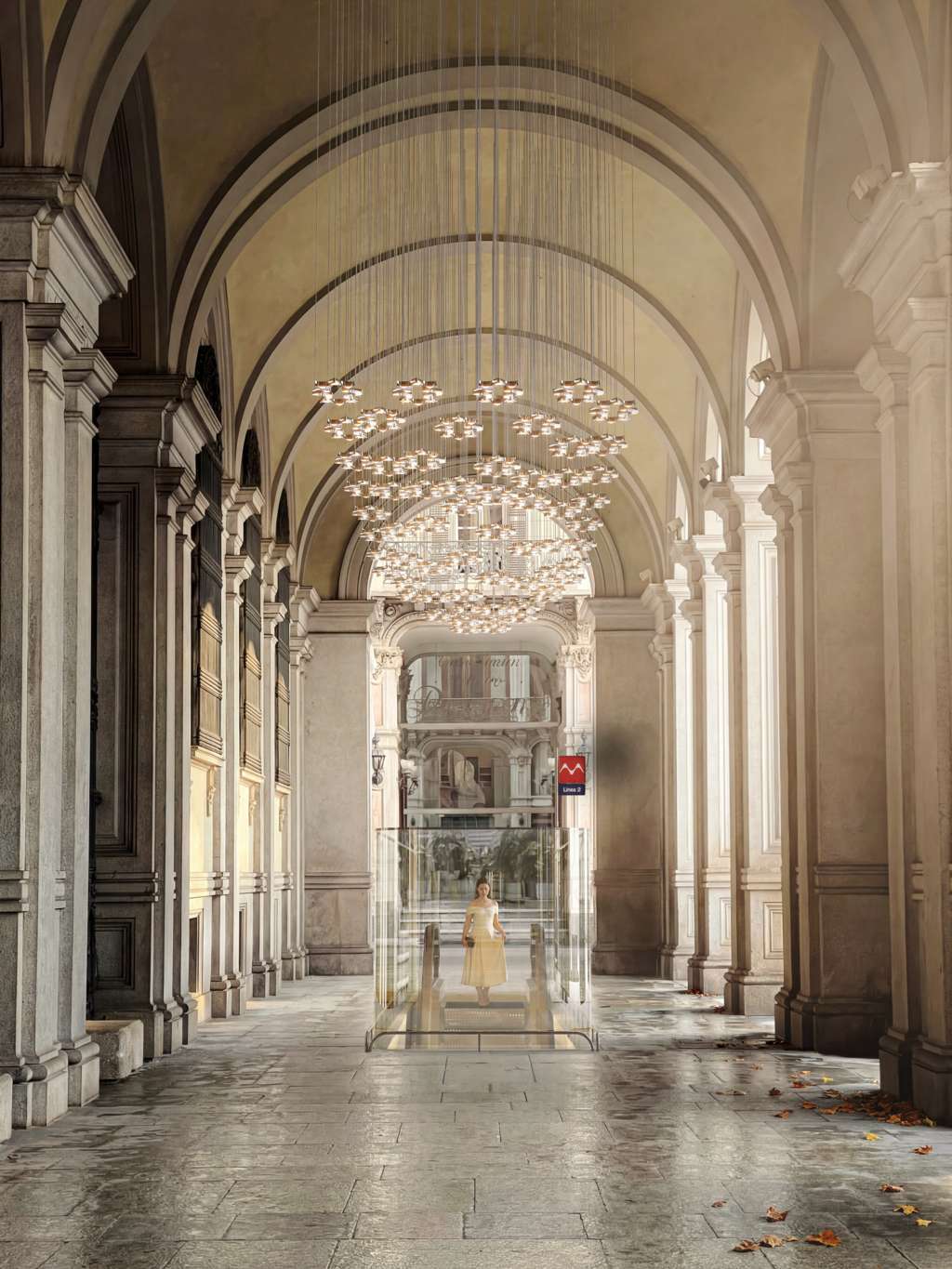
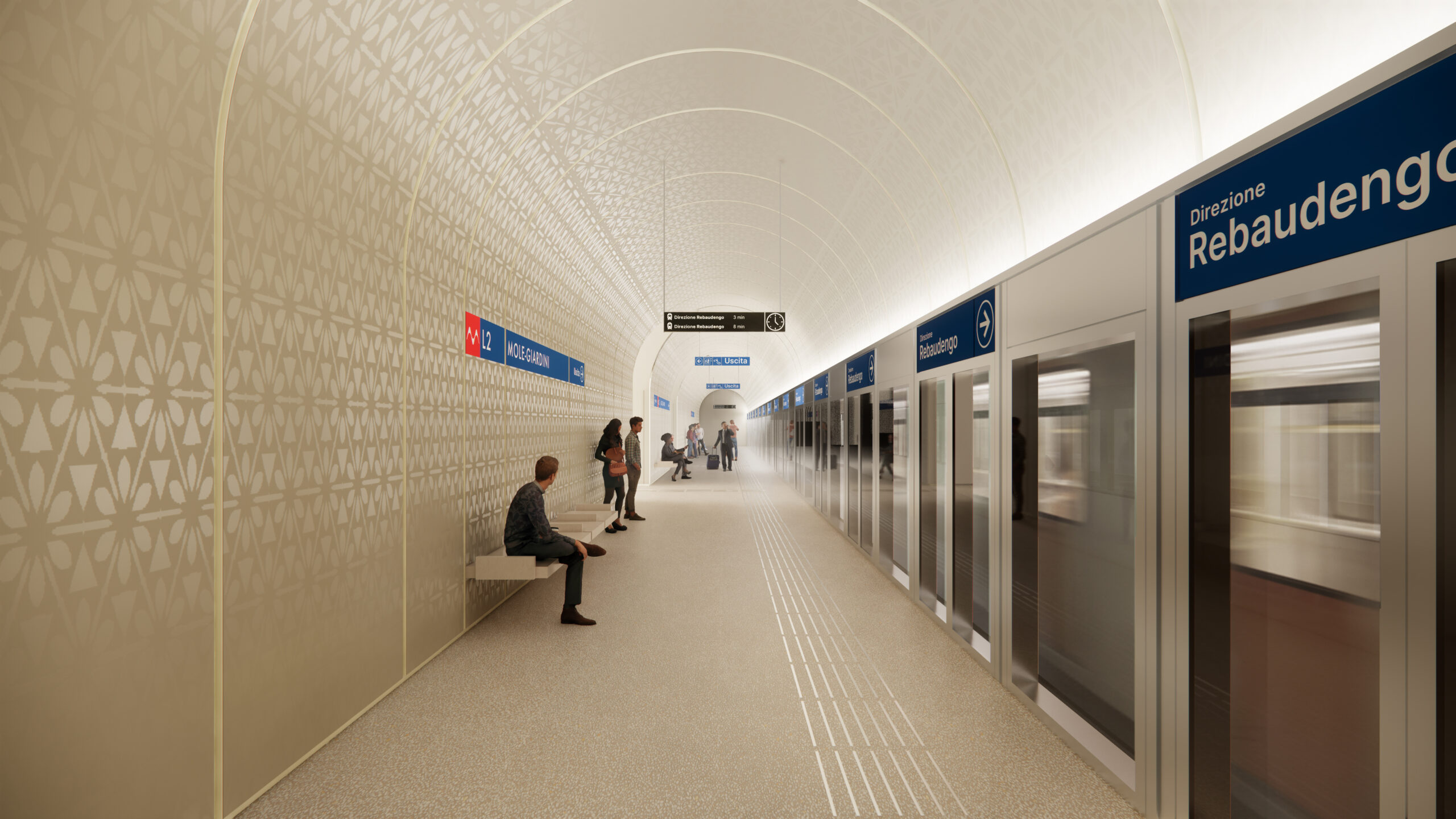
Adjacent to the Mole Antonelliana, the Mole-Giardini station is conceived as a light and transparent urban landmark, carefully integrated into a highly sensitive historical context. It acts as an intermodal hub that enhances last-mile mobility, while light and graphic elements contribute to a distinctive identity inspired by the water lilies of the nearby Giardino di Levante.
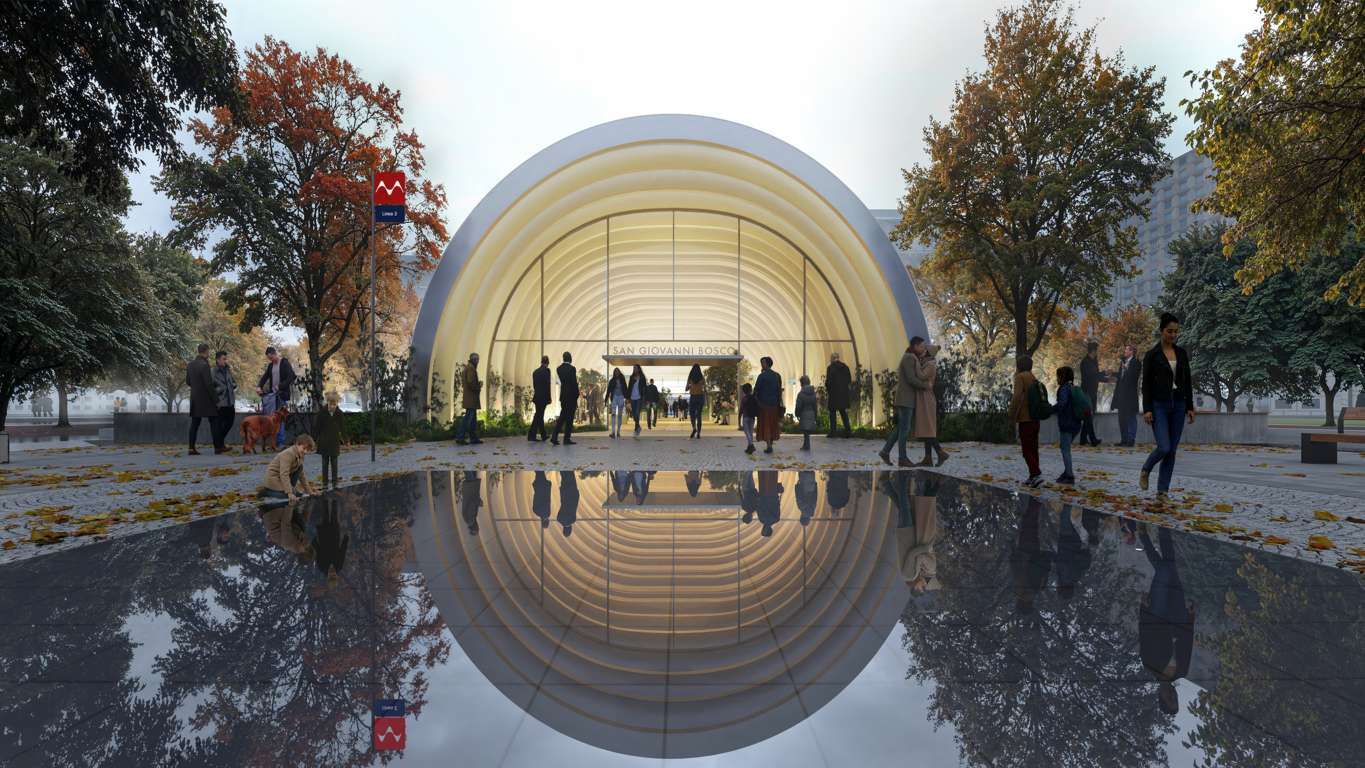
San Giovanni Bosco station, located along the new linear park of the former Trincerone, takes the form of a pavilion within the landscape — an above-ground, permeable, and accessible structure that functions both as transport infrastructure and public space. Its interior identity is defined by a pattern inspired by the cross, referencing the nearby hospital and reinforcing the relationship between architecture, function, and context.
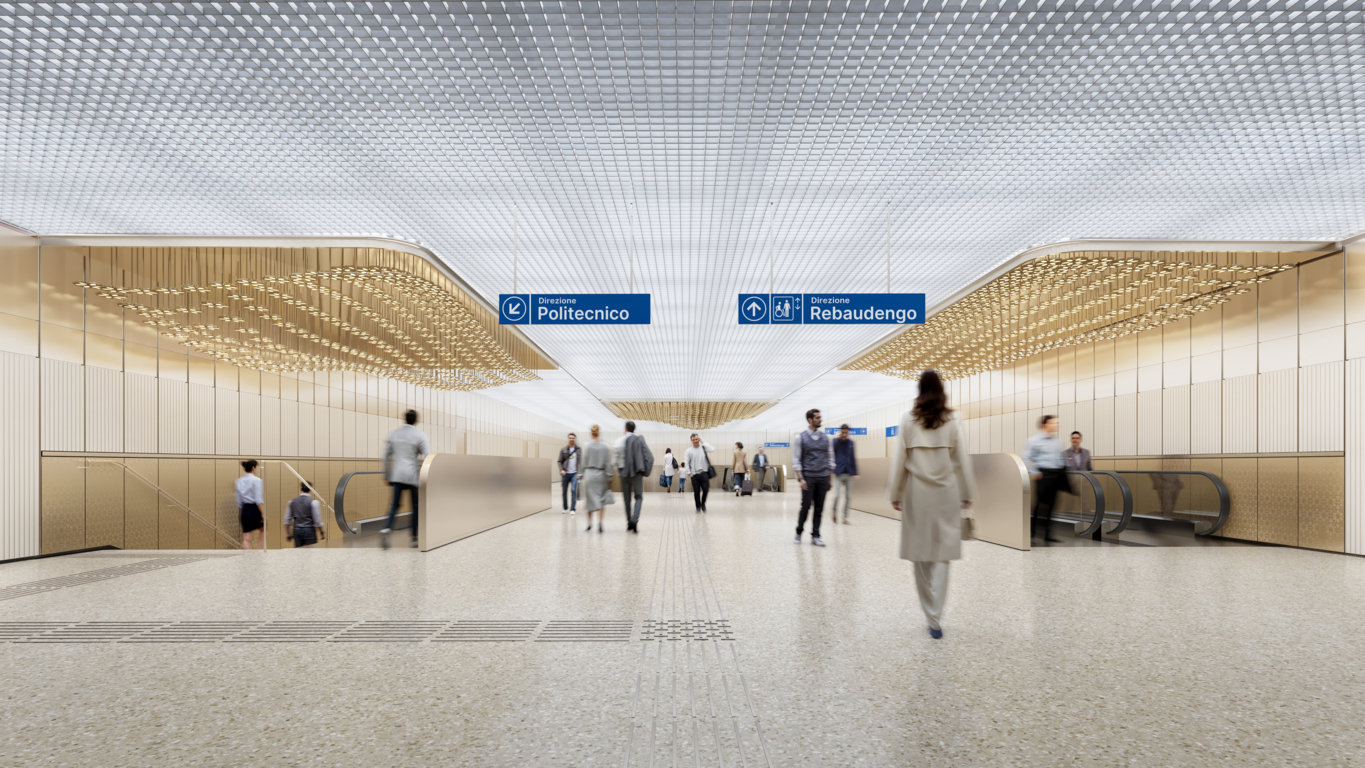
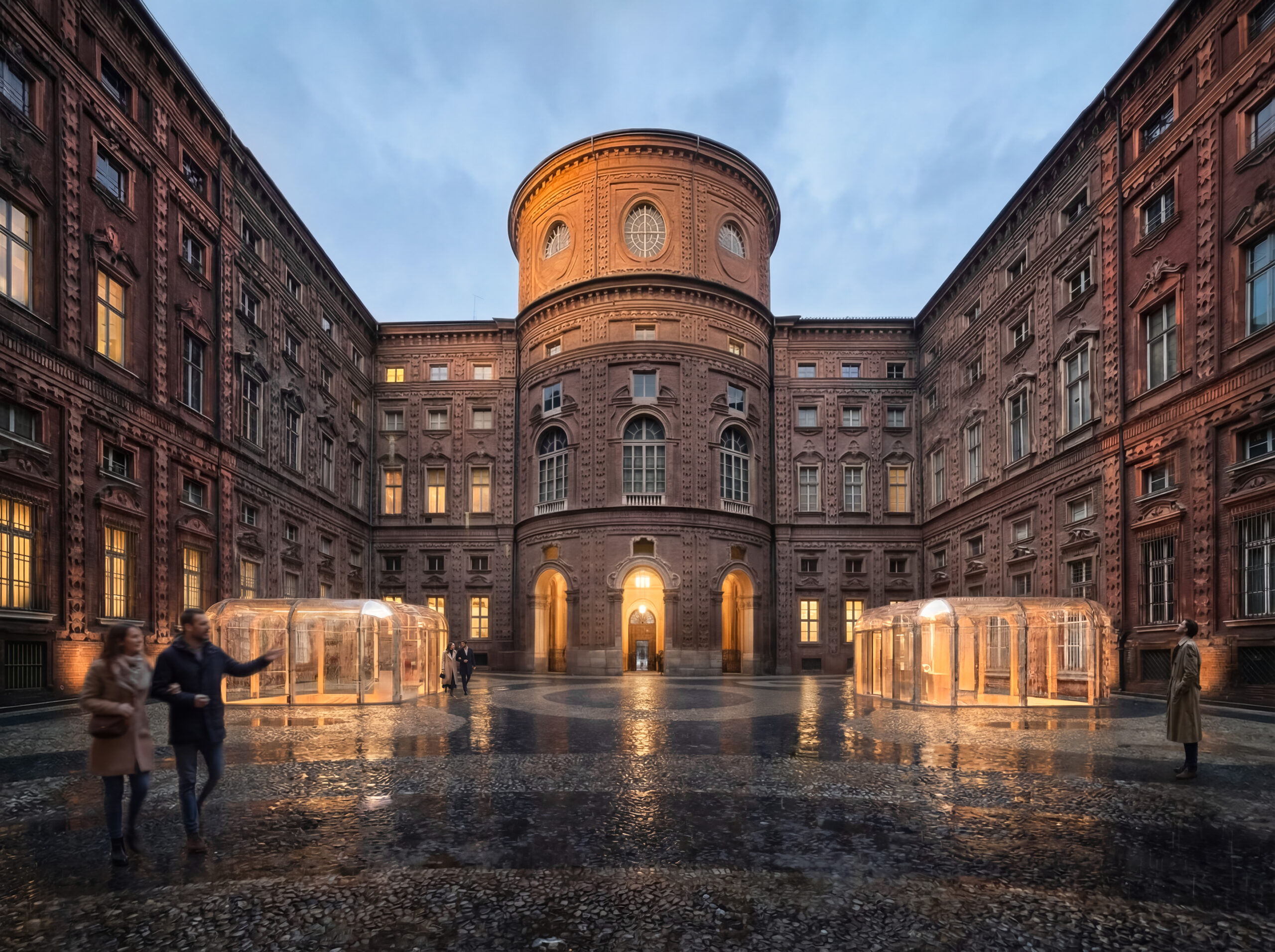
In the heart of the Museum District, the Carlo Alberto station – located beneath the square of the same name – is envisioned as a gateway to Turin’s historic centre. Its entrances adapt to the existing urban fabric and porticoes, while the main hall incorporates a central exhibition display showcasing archaeological finds uncovered during construction. The station also hosts the Teatro delle Residenze, a flexible cultural space designed for talks, performances, and events, and establishes a direct connection with the underground spaces of Palazzo Carignano, following the model of “art stations” seen in cities such as Naples, Rome, and Athens.
The stations are conceived as flexible and modular architectures, capable of adapting to diverse urban conditions and evolving over time. The canopy system, designed as an expandable typology, allows for future integration of new services, supporting the development of an infrastructure in constant transformation.
The identity of the line is further reinforced through branding and wayfinding: a coherent visual system guides users throughout the journey, integrating seamlessly with architecture and interior elements. Colours, typography, and information devices are designed to ensure clarity, enhance orientation, and make navigation intuitive.
Materiality plays a central role in defining the stations’ identity, combining tradition and innovation. Aluminium, ceramic, terrazzo, and local stones such as porphyry and Luserna establish a language rooted in durability, performance, and sensory quality. At the same time, sustainability drives the selection of recyclable, low-emission materials with long life cycles, balancing technological innovation with references to craftsmanship and local heritage.
CREDITS
Project: Turin Metro Line 2
Studio: UNS, Settanta7, Mijksenaar, Frigorosso, WSP, 3BA
Location: Turin, Italy
Year: ongoing
Images: Produced by HISM, © Extraordinary Commissioner Chiaia