
Every house holds a story, but some seem to be born directly from a tale. Once upon a time, there was a small apartment in the historic center of Rome, located within a late nineteenth-century building: a fragmented space, shaped by a previous subdivision, waiting to be rewritten through design. Imagining this new domestic narrative is Studio RIDE Architettura, led by architects Irene Romano and Enrica Di Toppa, who with the project titled “Once Upon a Time” transform a two-room apartment into a flexible living device, capable of adapting to different rhythms and uses.
The apartment was purchased by a musician and entrepreneur with the intention of using it as a Roman pied-à-terre, a small office, and—during periods of absence—a space available for short-term rentals. The request addressed to the architects was clear: allow the two rooms to function independently so that different modes of use could coexist. Starting from the original layout — entrance, living room with kitchenette, bedroom and bathroom — the project therefore introduces a radical transformation, creating a second bathroom and reorganizing both rooms so that each can accommodate overnight stays.
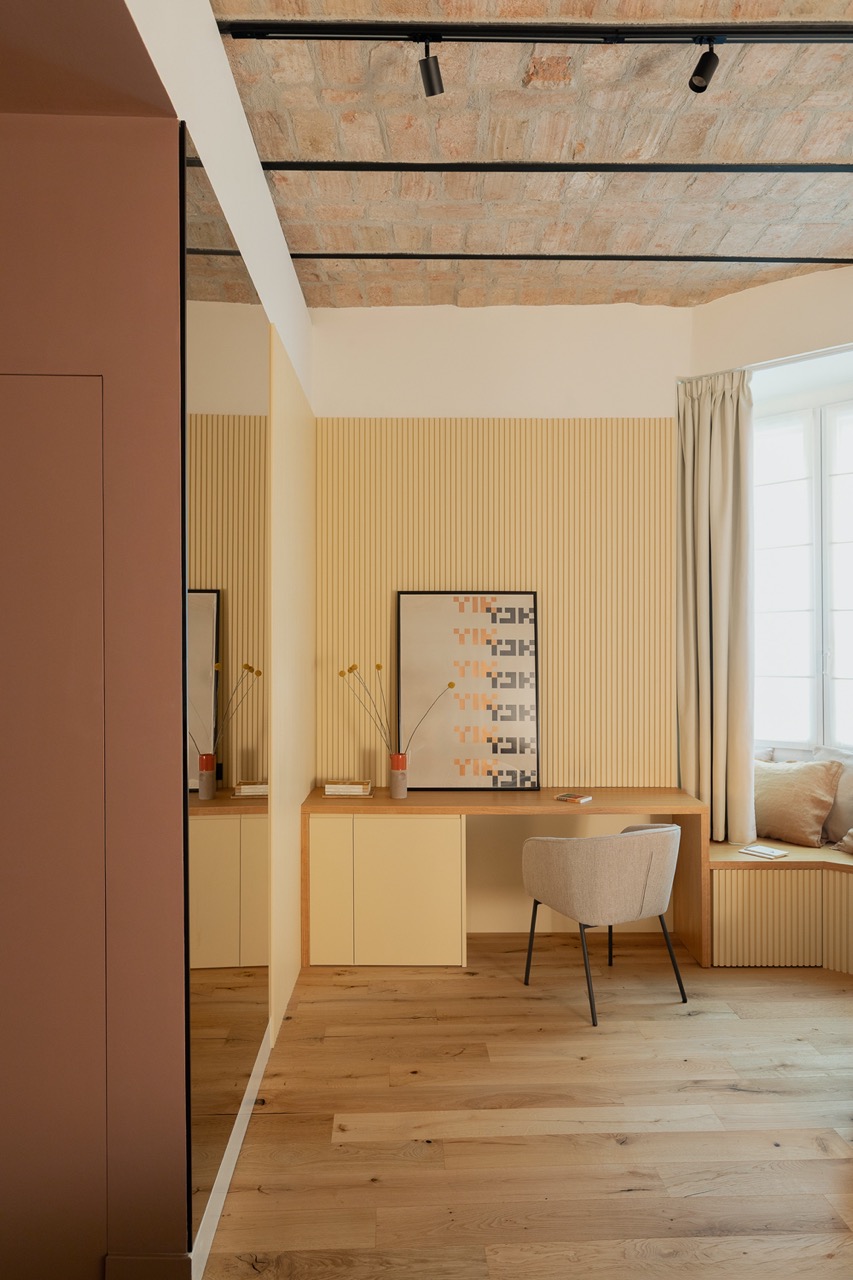
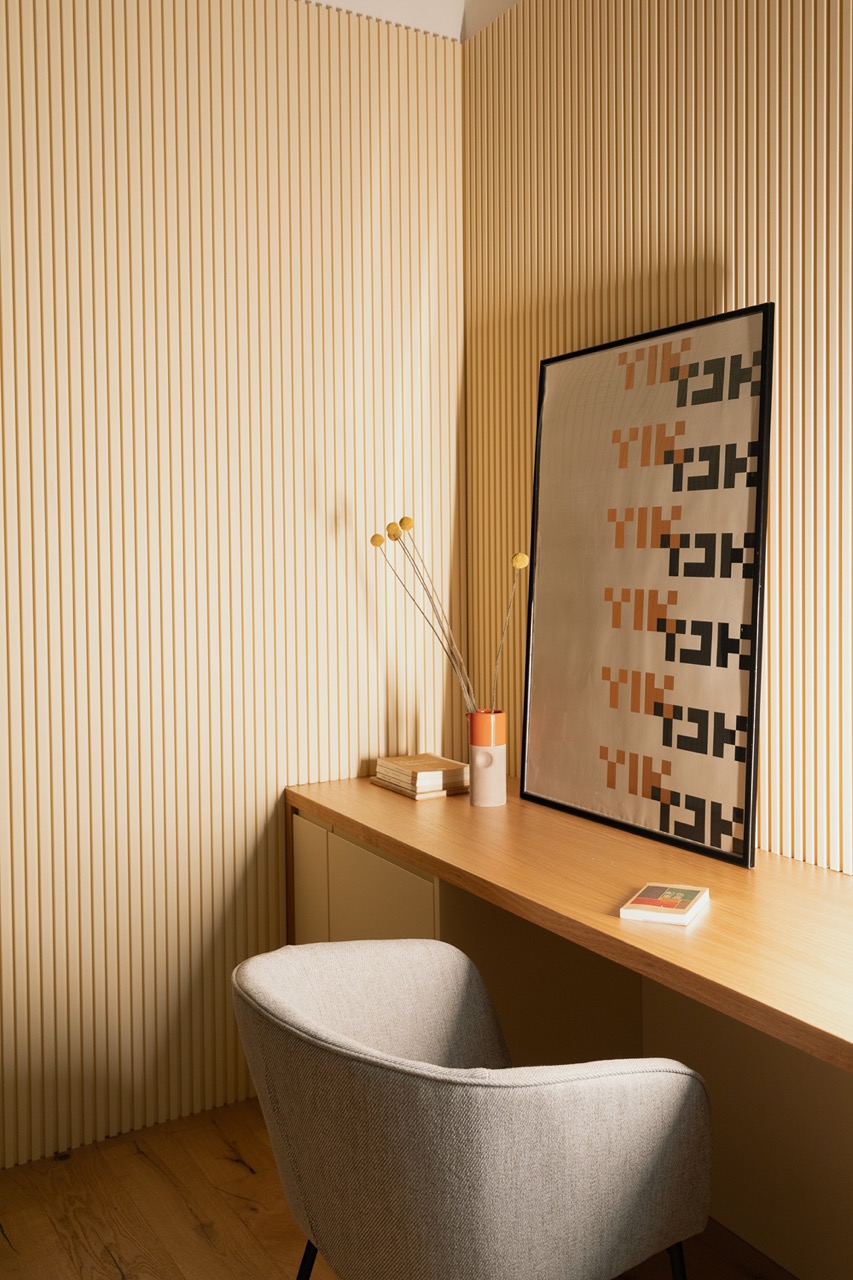
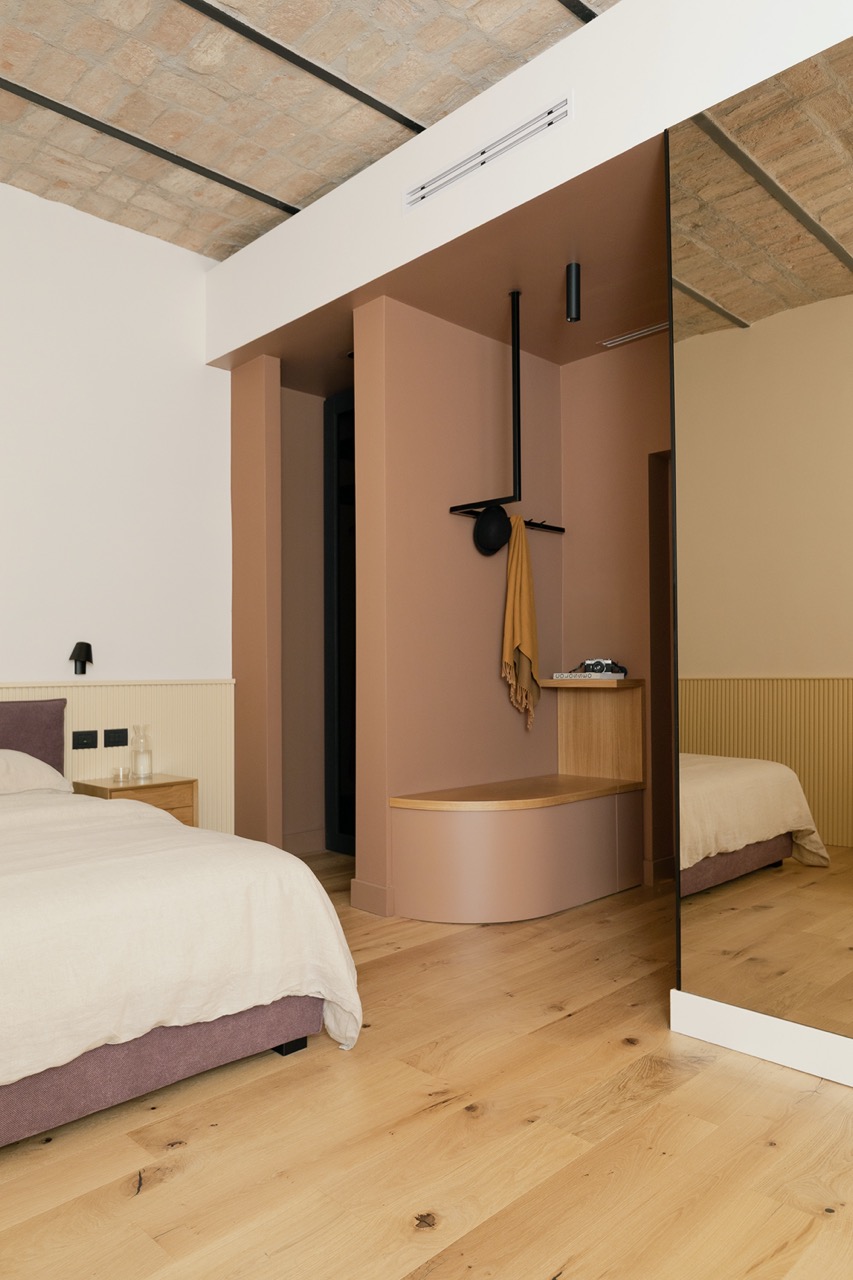
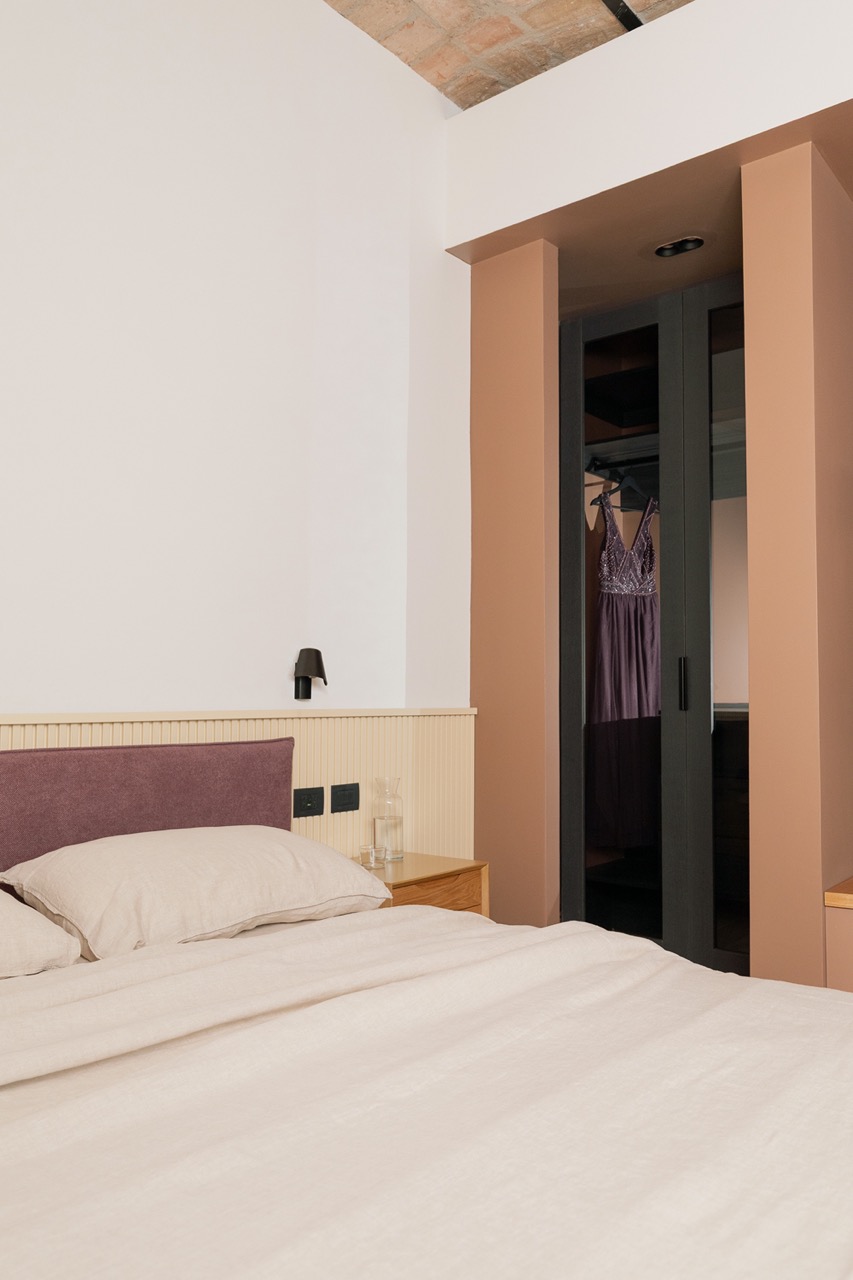
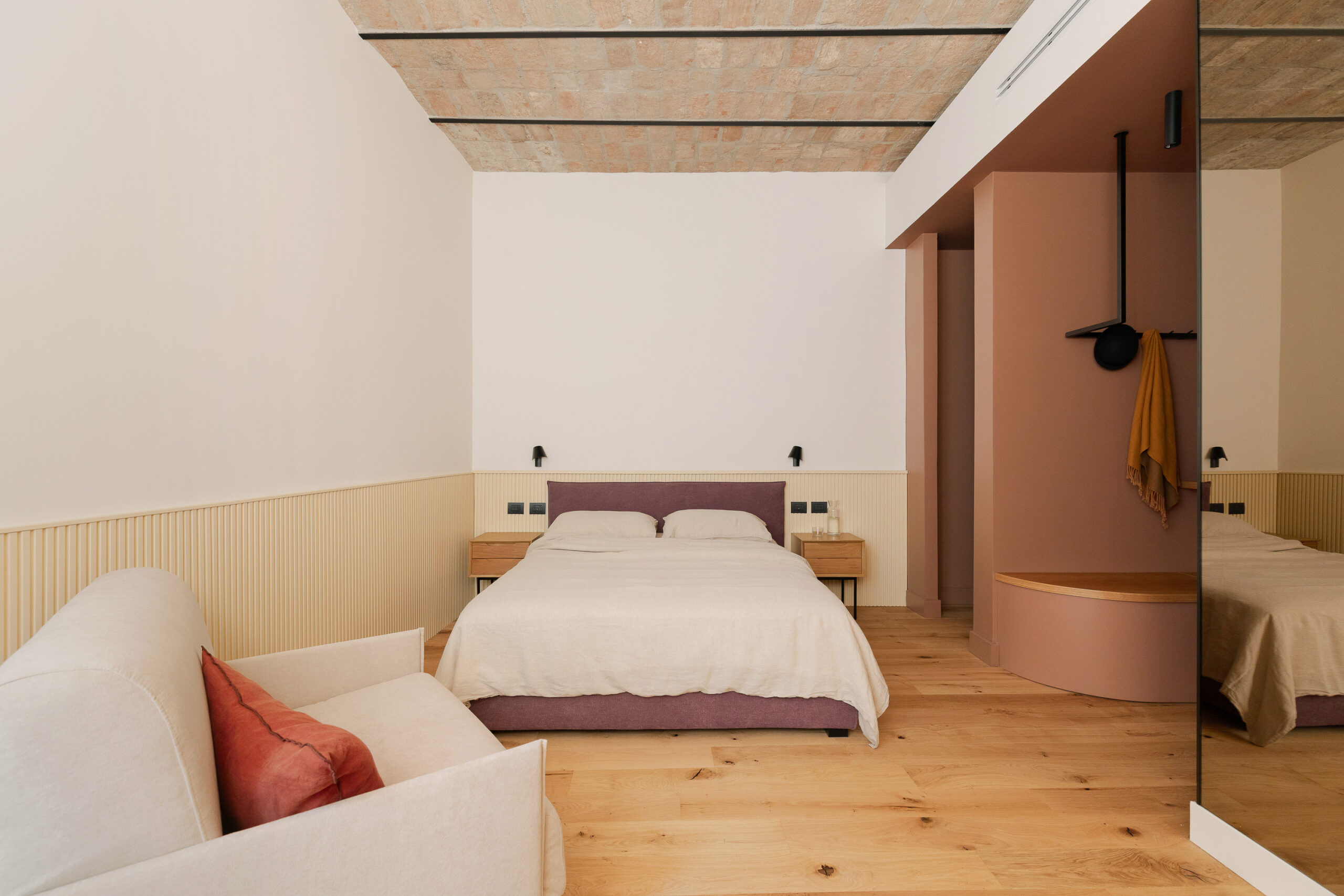
The intervention focuses in particular on the largest room of the apartment, the former living area with kitchen, which is converted into a master bedroom complete with private bathroom and walk-in closet. The original bedroom instead takes on the character of a multifunctional space, capable of hosting a small kitchenette, a working area and an occasional sleeping space. The result is a flexible domestic system in which each room possesses its own functional autonomy while remaining part of a single spatial organism.
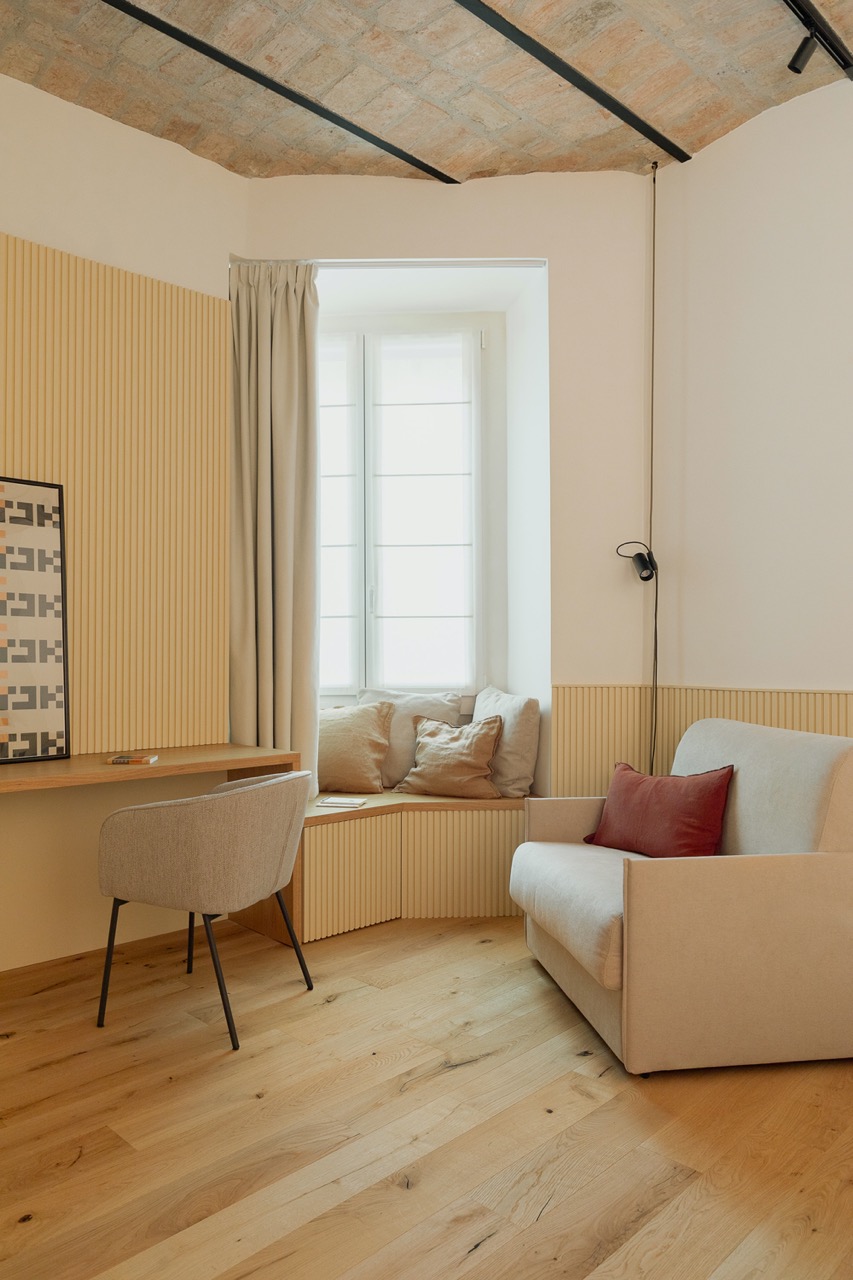
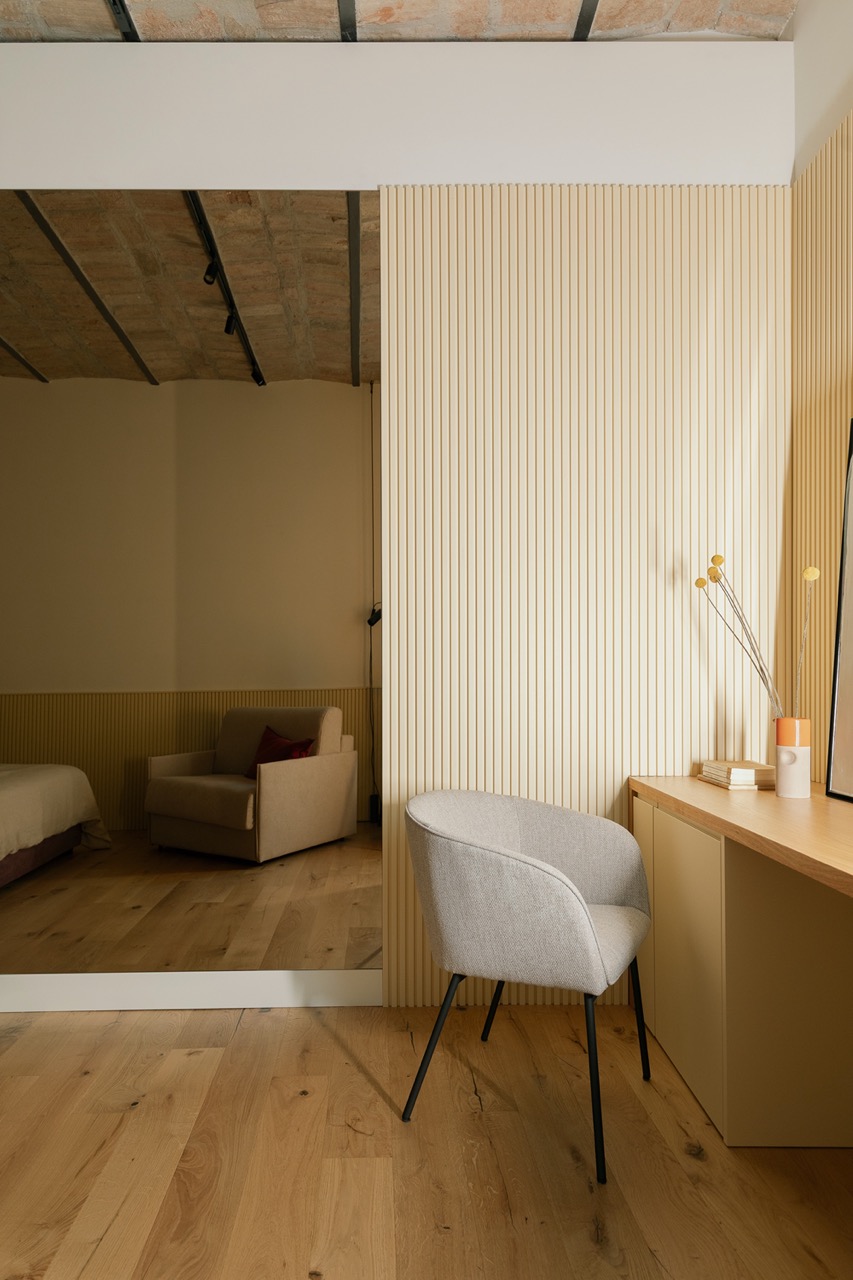
One of the main design challenges concerned the quality of natural light. The apartment has only two large windows overlooking a courtyard with little visual value. In response to this condition, the architects construct an interior landscape through a sequence of domestic “facades” that symbolically compensate for the absence of external views. Colors and materials evoke the imagery of historic Rome, with terracotta and ivory tones, warm shades of burgundy, oak parquet that enhances brightness, and mirrors and wallpapers introducing optical depth and spatial expansion.
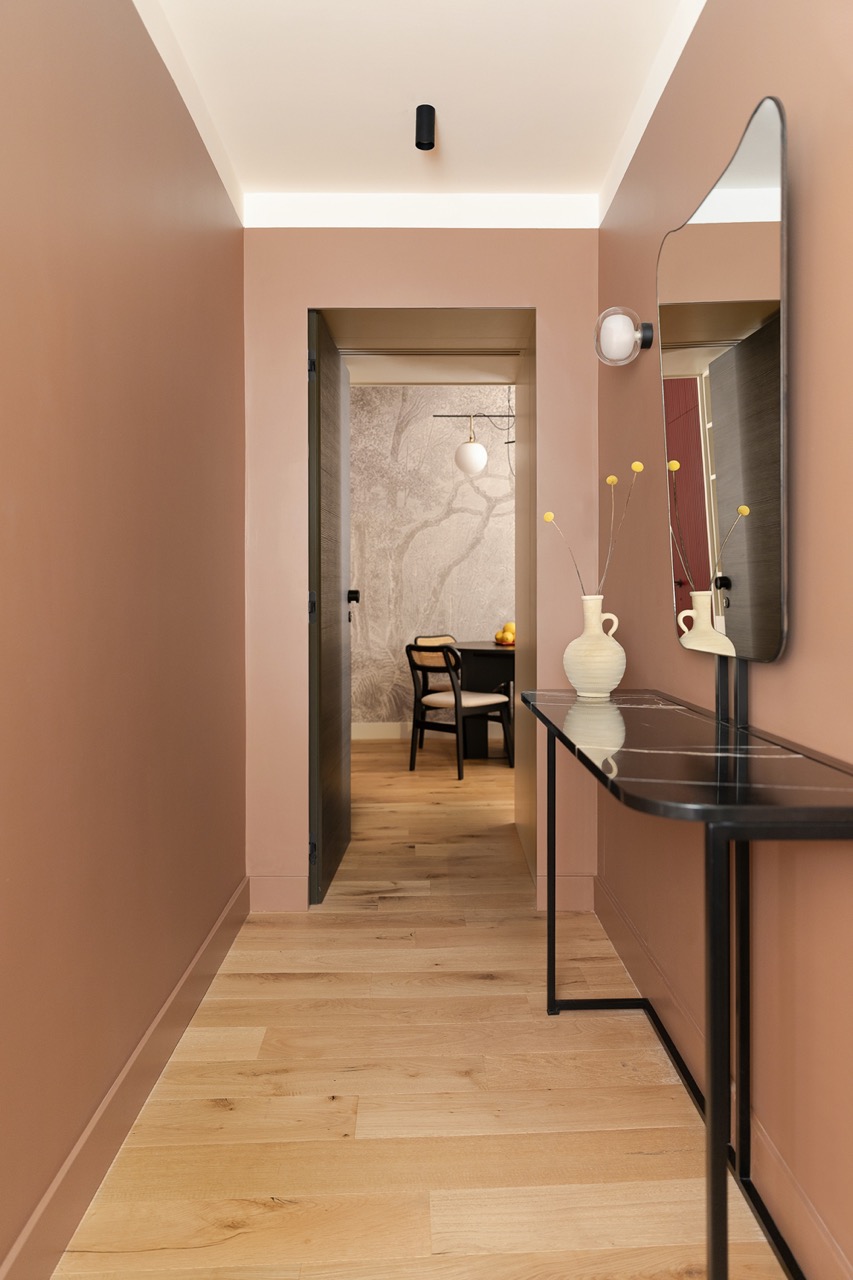
The entrance remains largely unchanged and functions as a distribution corridor leading to the two rooms. The walls are finished with terracotta enamel that visually widens the space, while two glass wall lamps frame a custom-designed console in powder-coated iron with a marble top.
In the new bedroom, the same terracotta tone envelops a small vestibule perceived as a carved-out volume within the service core. Here, the bathroom and walk-in closet are inserted as a compact nucleus inside the room. The original ceiling with beams and brick vaults has been restored and left exposed, becoming the dominant material feature of the space.
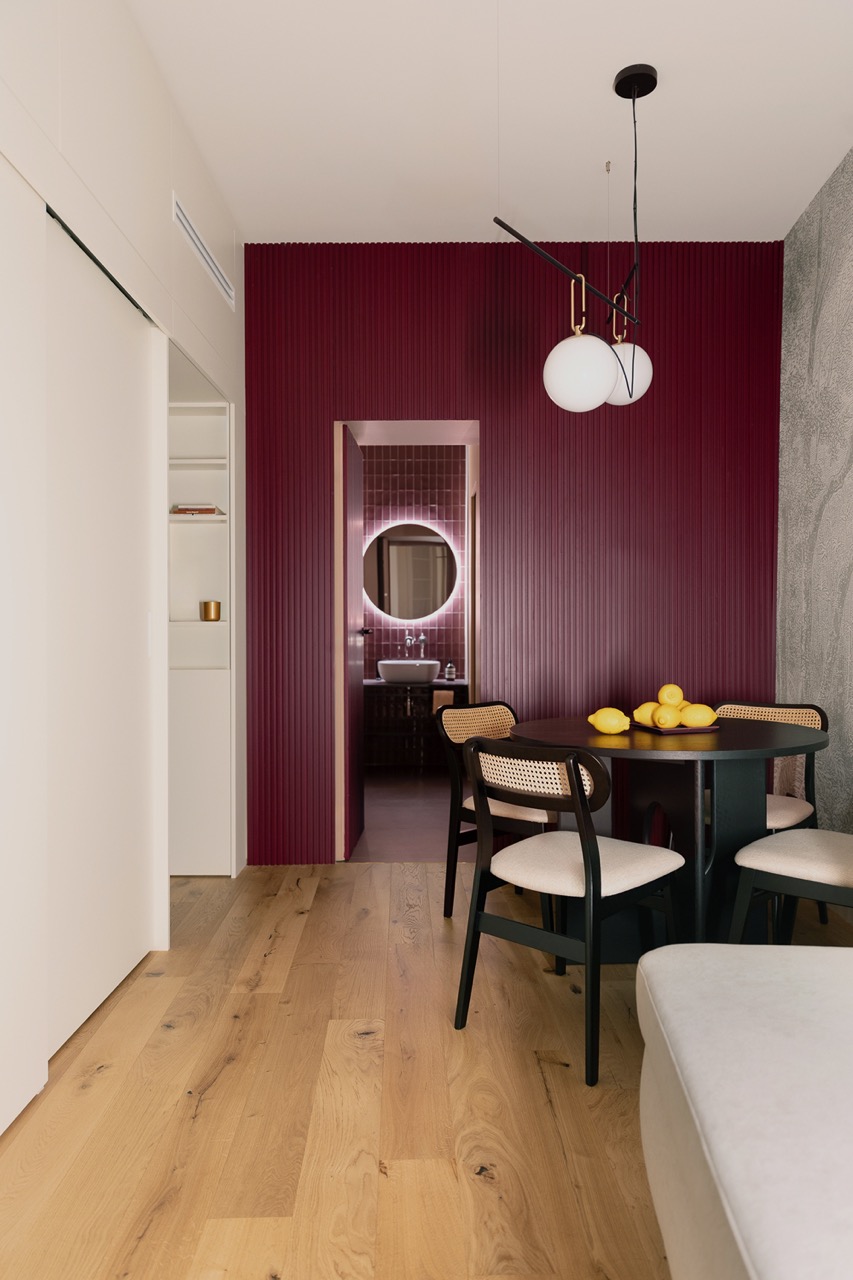
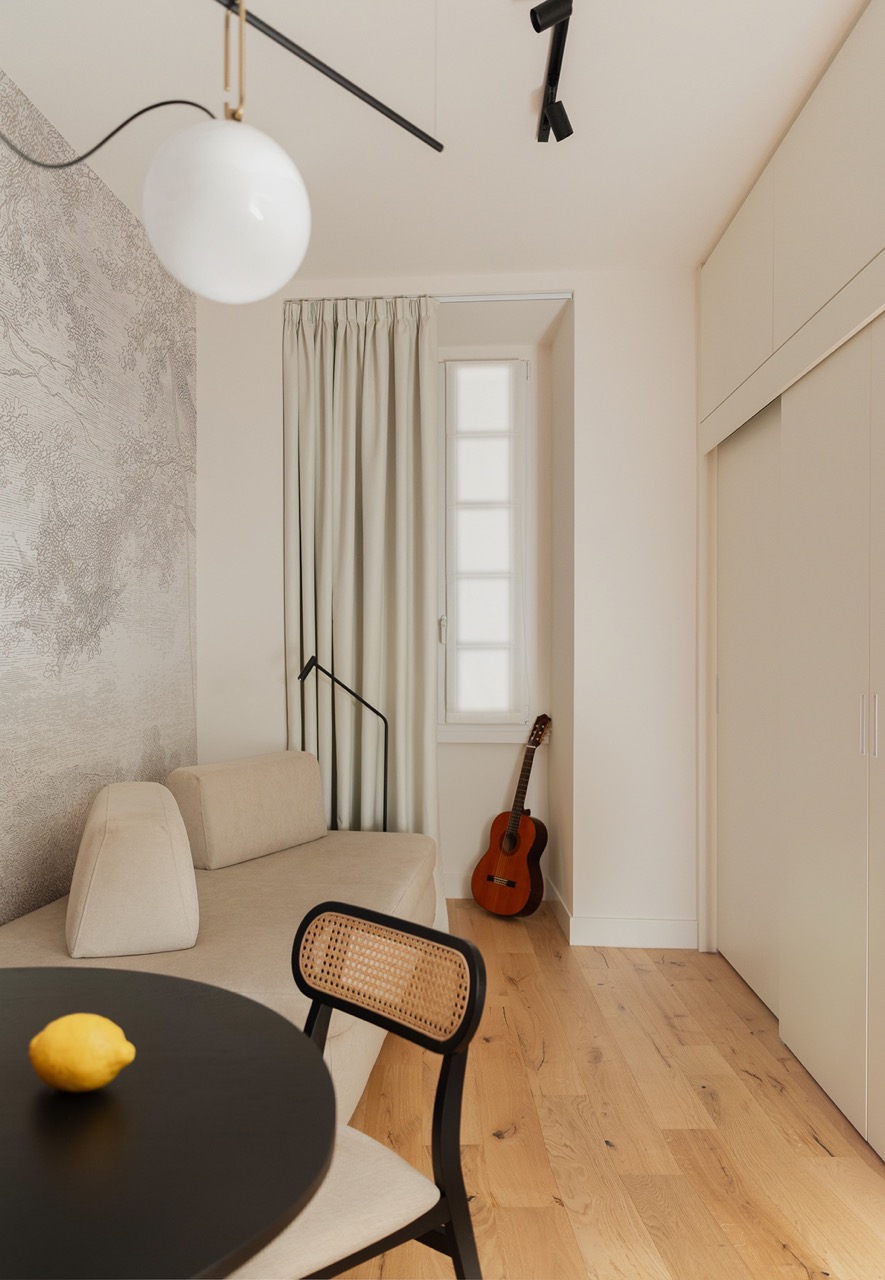
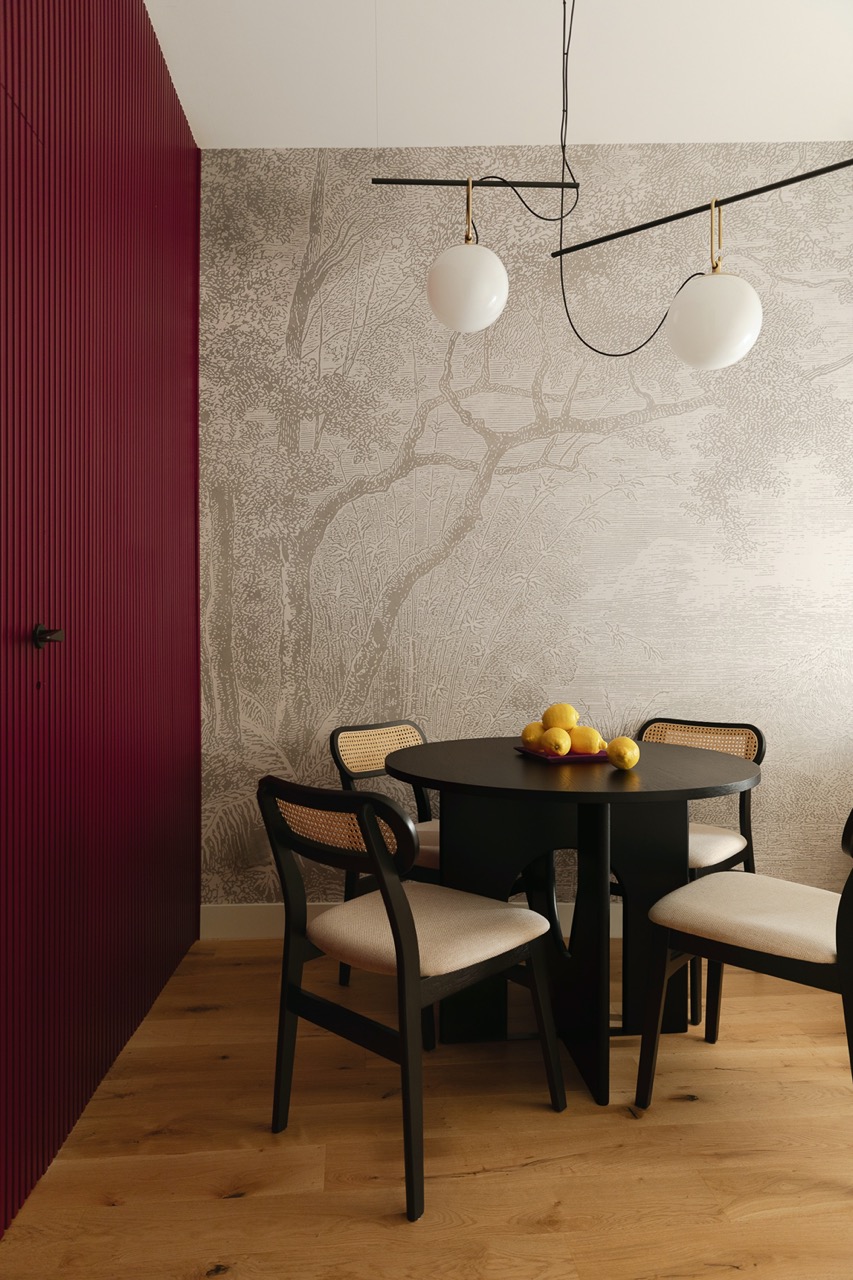
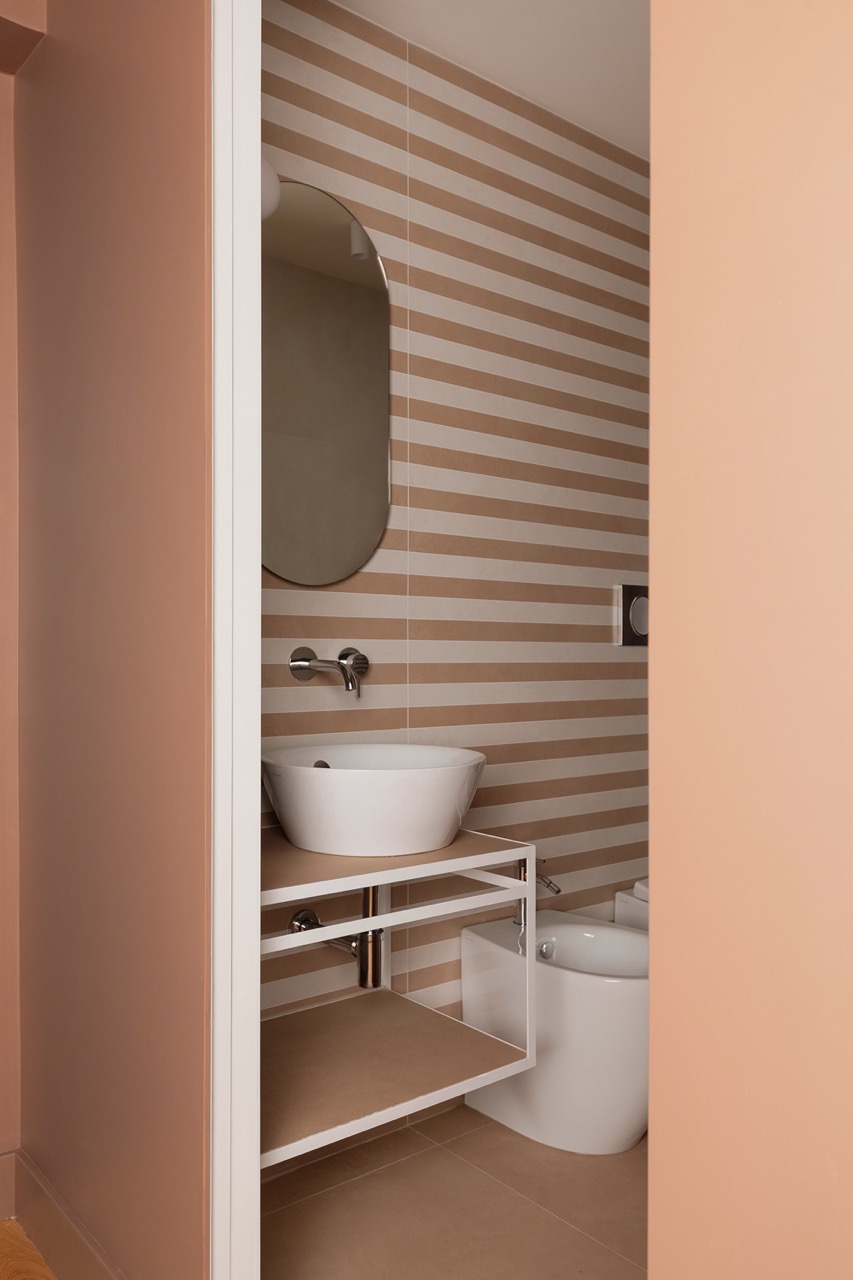
The second room is conceived as a highly transformable environment. All service functions are concentrated within a large white wardrobe with sliding doors containing the kitchenette, laundry, wardrobe, and technical elements. Freed from permanent fixtures, the room can host meetings around the round table or accommodate two guests thanks to a sofa bed. A trompe-l’œil wallpaper depicting a bucolic landscape of the Roman countryside lightens the presence of the wardrobe and introduces a narrative dimension that resonates with the title of the project. A deep burgundy boiserie conceals the access to the bathroom, which opens to reveal an antechamber lined with glazed tiles of the same shade.
The intervention is completed by a careful design of custom-made furnishings: consoles, bathroom cabinets, coat racks and several carpentry elements contribute to shaping a coherent environment in which architecture and furniture participate in the same domestic story. And, just like in fairy tales, the project seems to suggest its natural epilogue — a small domestic world where one might imagine that they lived happily ever after.
CREDITS
Project: Once Upon a Time Apartment
Architects: Studio RIDE Architettura – Irene Romano, Enrica Di Toppa
Location: Rome (RM), Italy
Year: 2025
Photographs: Edi Solari