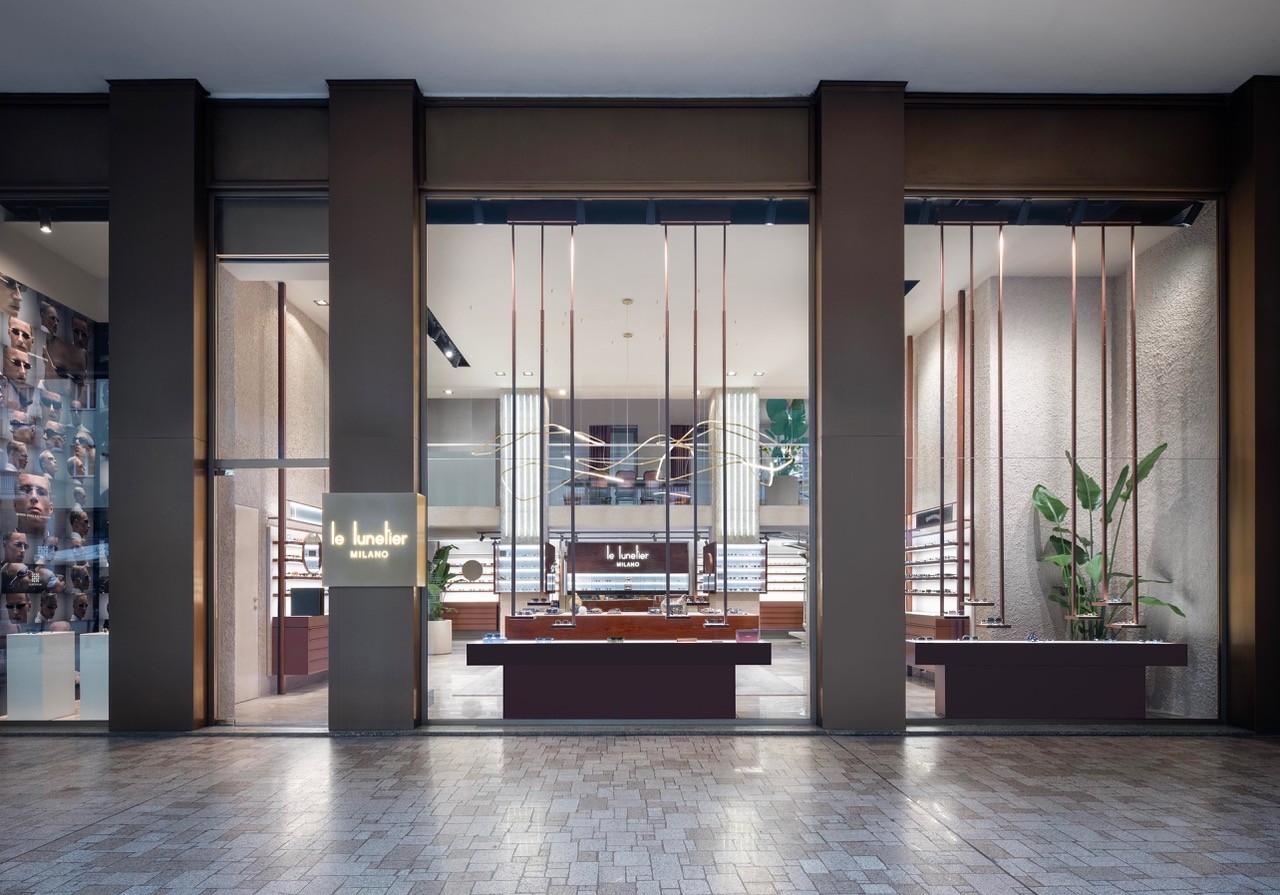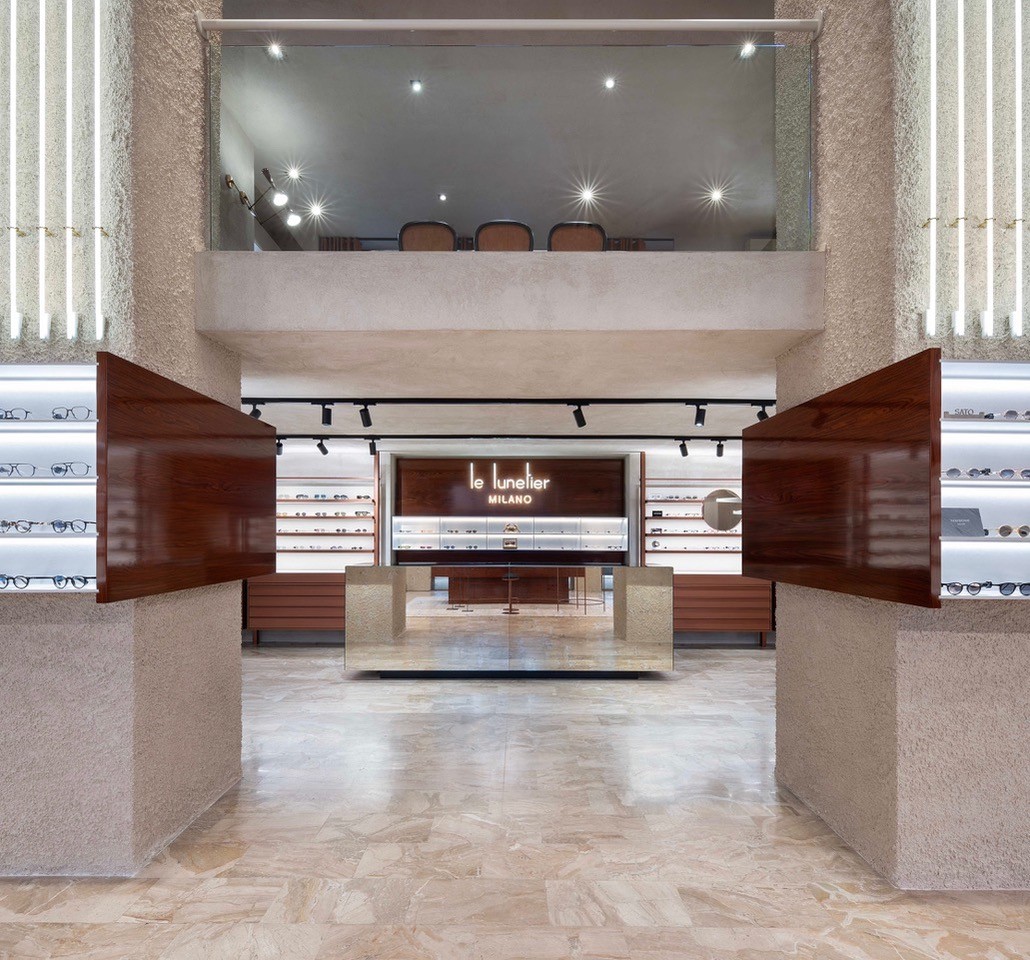

Within the urban context of Milan, the Le Lunetier Milano boutique takes shape as an exercise in subtraction and precision, where architectural design constructs a measured, sensory, and deeply material environment. The intervention, designed by Studio Mabb, interprets the theme of luxury through a minimalist language, entrusting materials, light, and spatial relationships with defining the identity of the place.
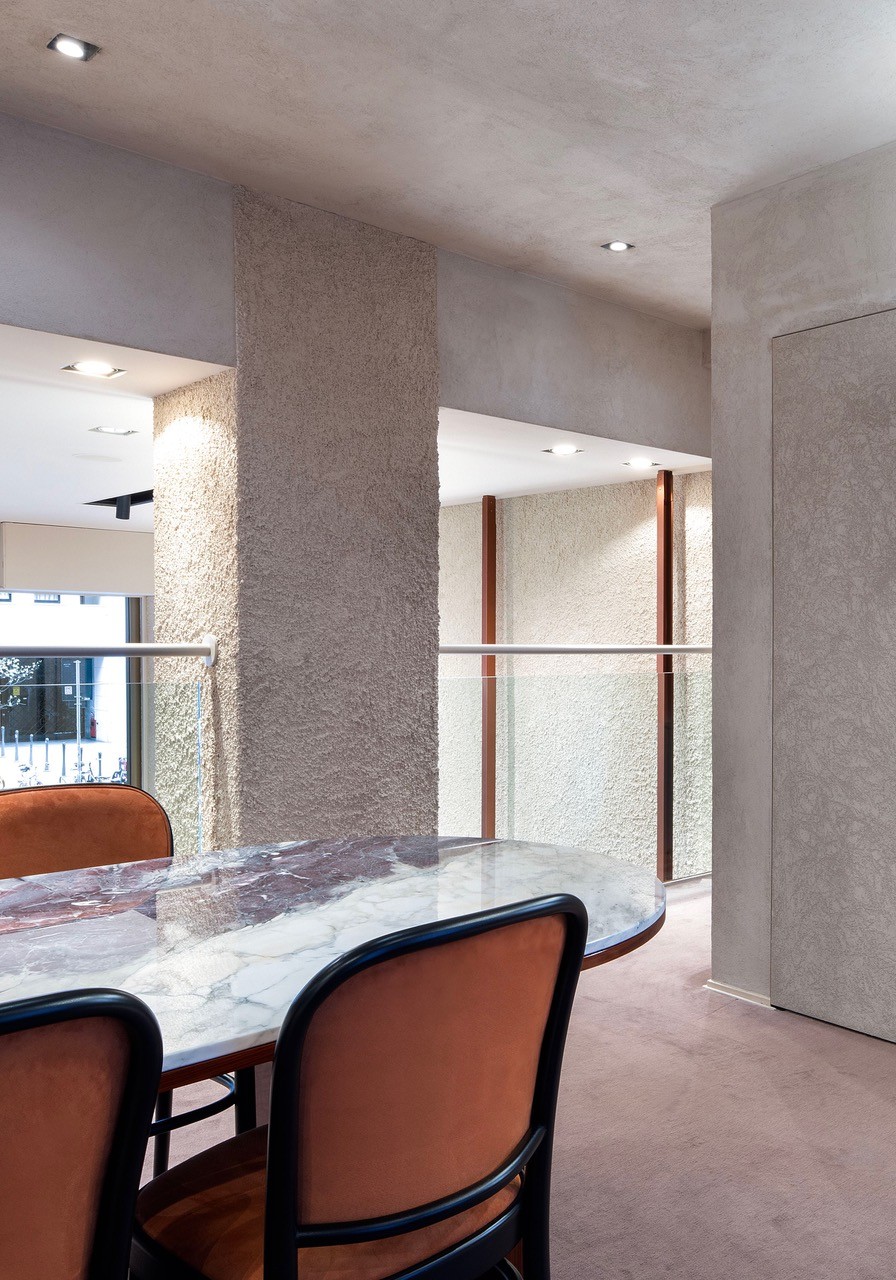
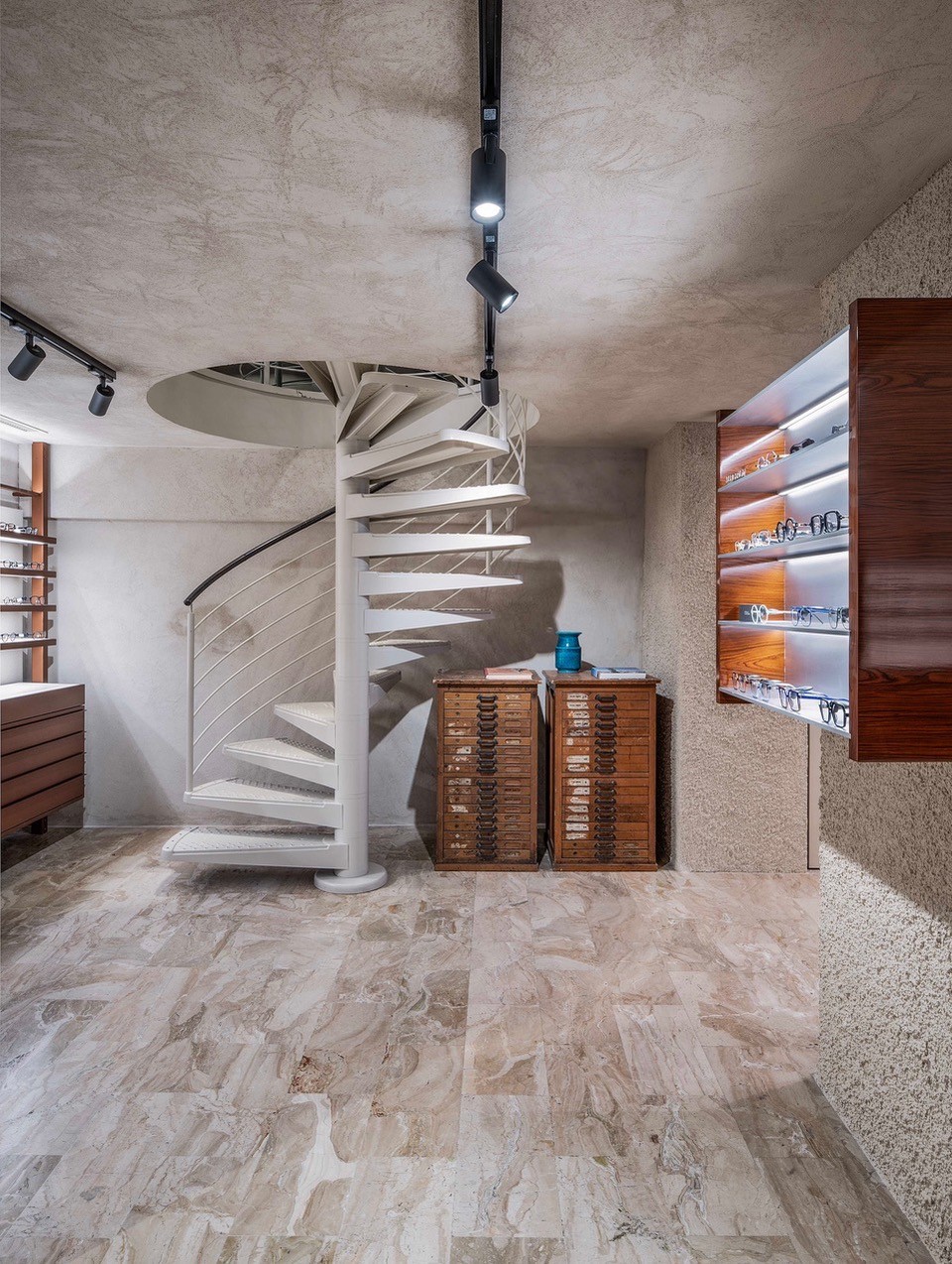
The space unfolds as a controlled sequence of surfaces and volumes, in which the architectural envelope plays a central role. Walls clad in natural lime and strollato plaster reveal a vibrant, irregular materiality that engages in dialogue with the untreated Spanish wool felt display panels. The contrast between hard and soft, reflective and absorptive surfaces creates a muted atmosphere, where tactile perception becomes an integral part of the experience.
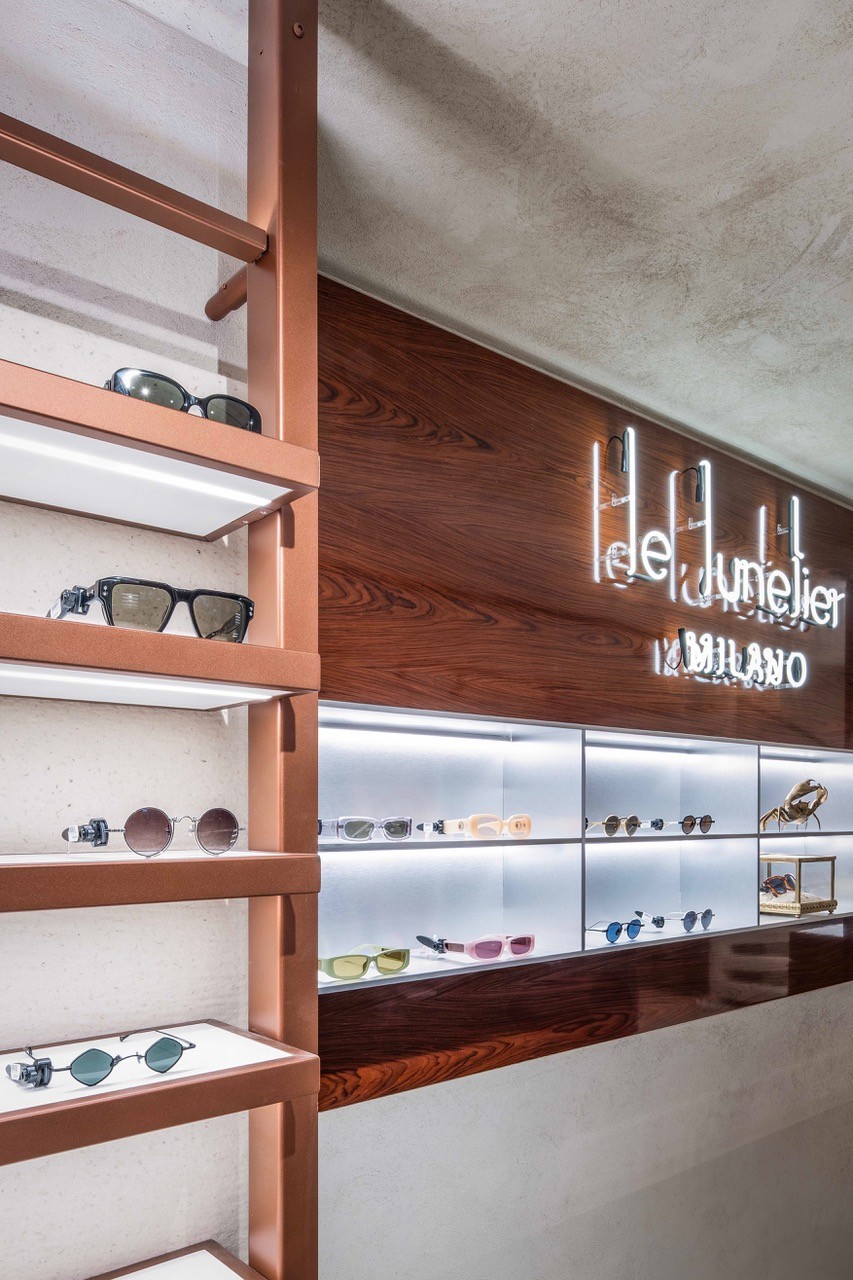
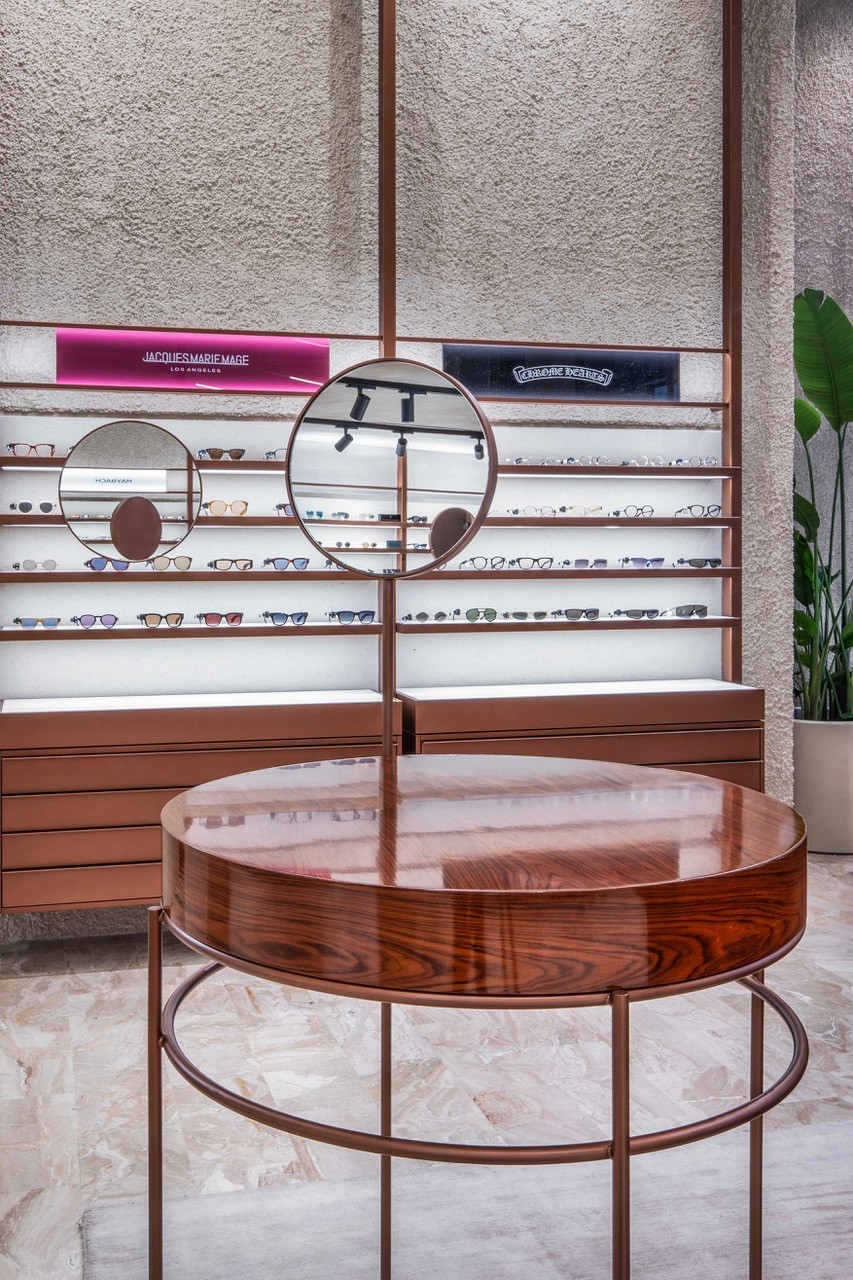
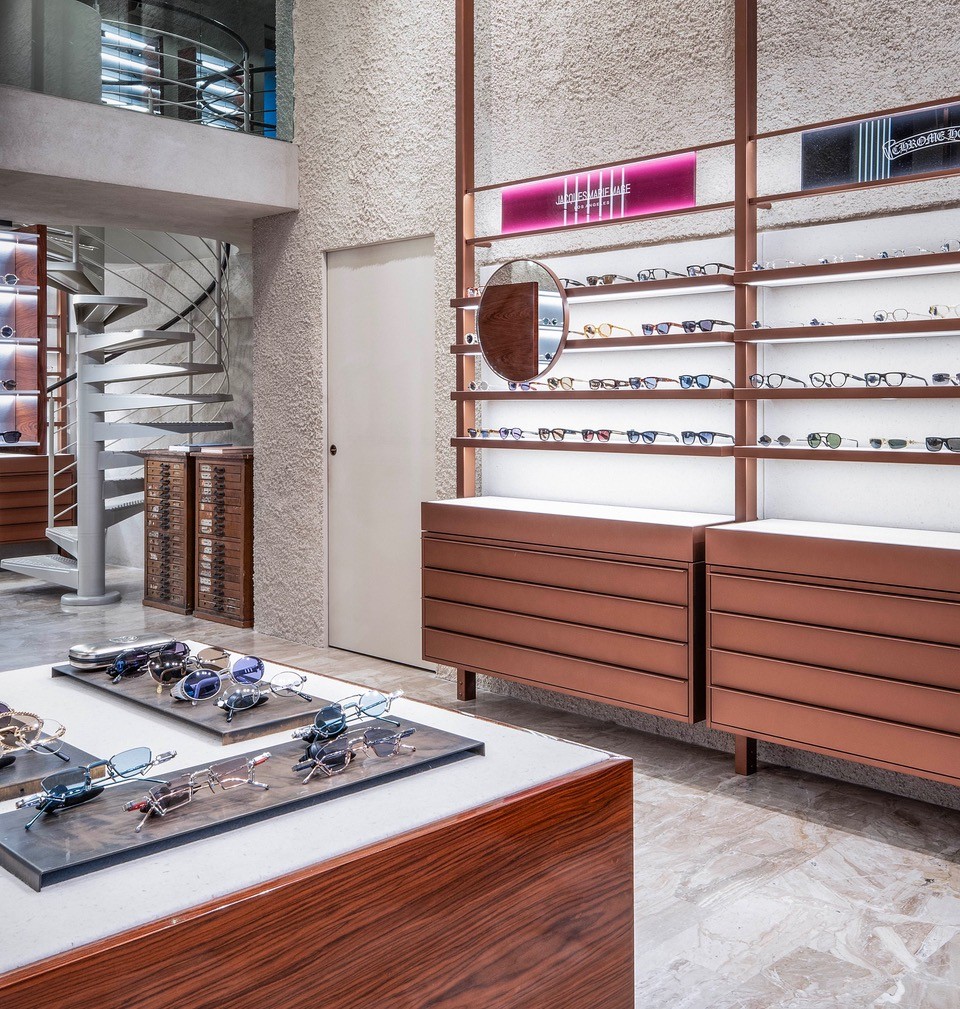
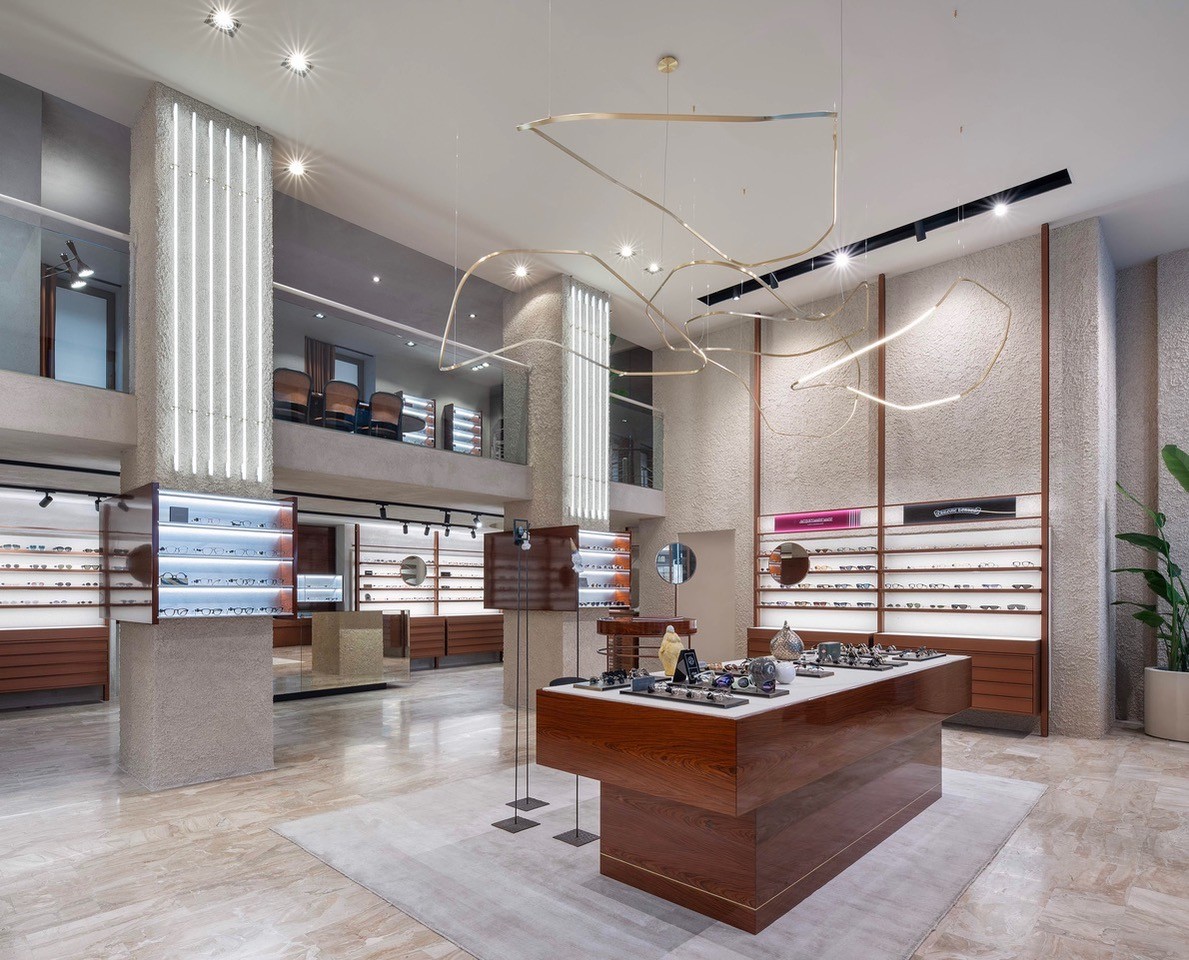
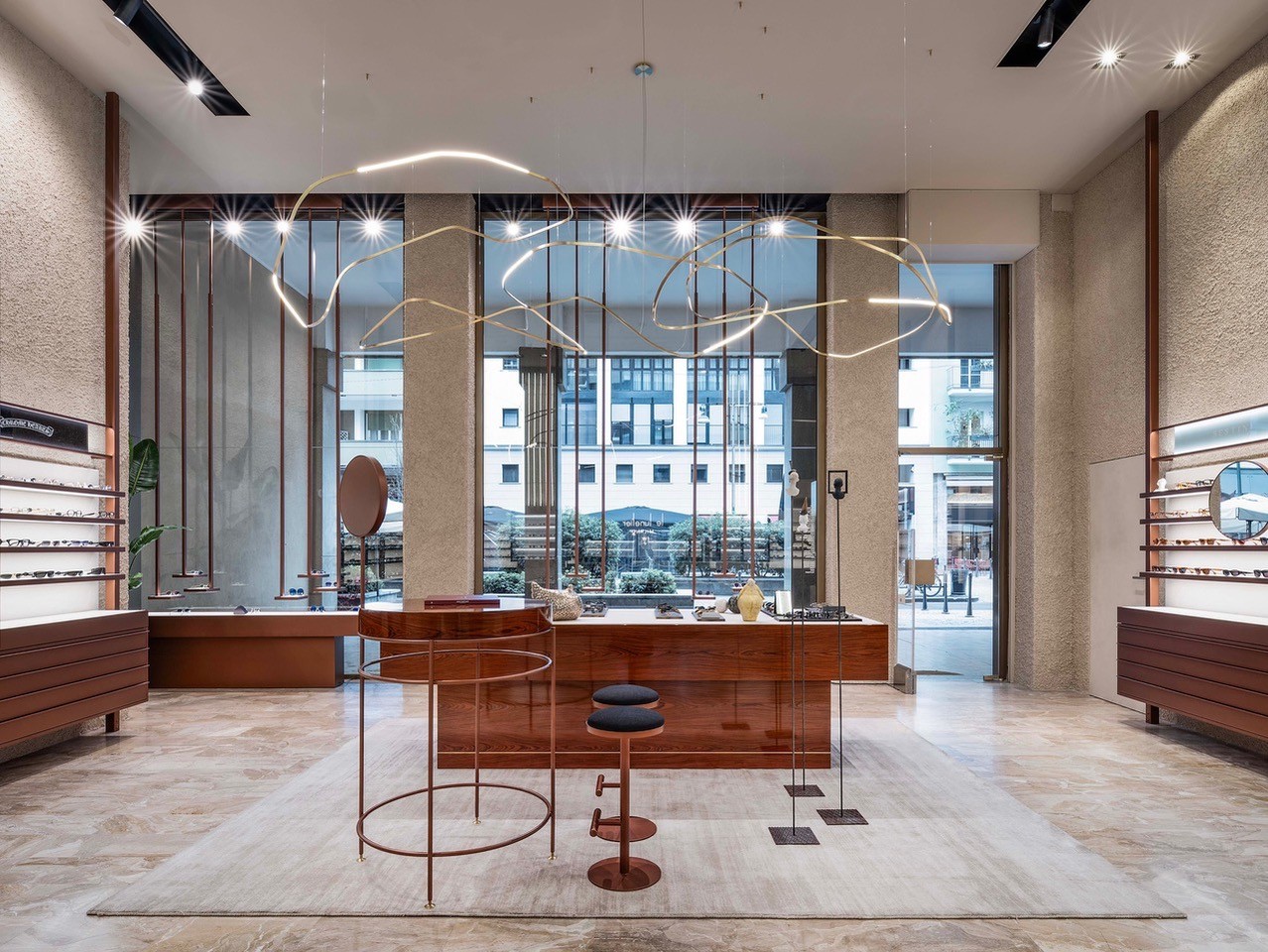
The original vintage marble flooring is preserved as an element of historical continuity, serving as a neutral and precious base for the insertion of furnishings with a strong character. Monolithic volumes in glossy lacquered rosewood interact with brushed aluminum tops, while bronze-painted metal display structures define a rigorous grid designed to enhance the objects without overshadowing them.
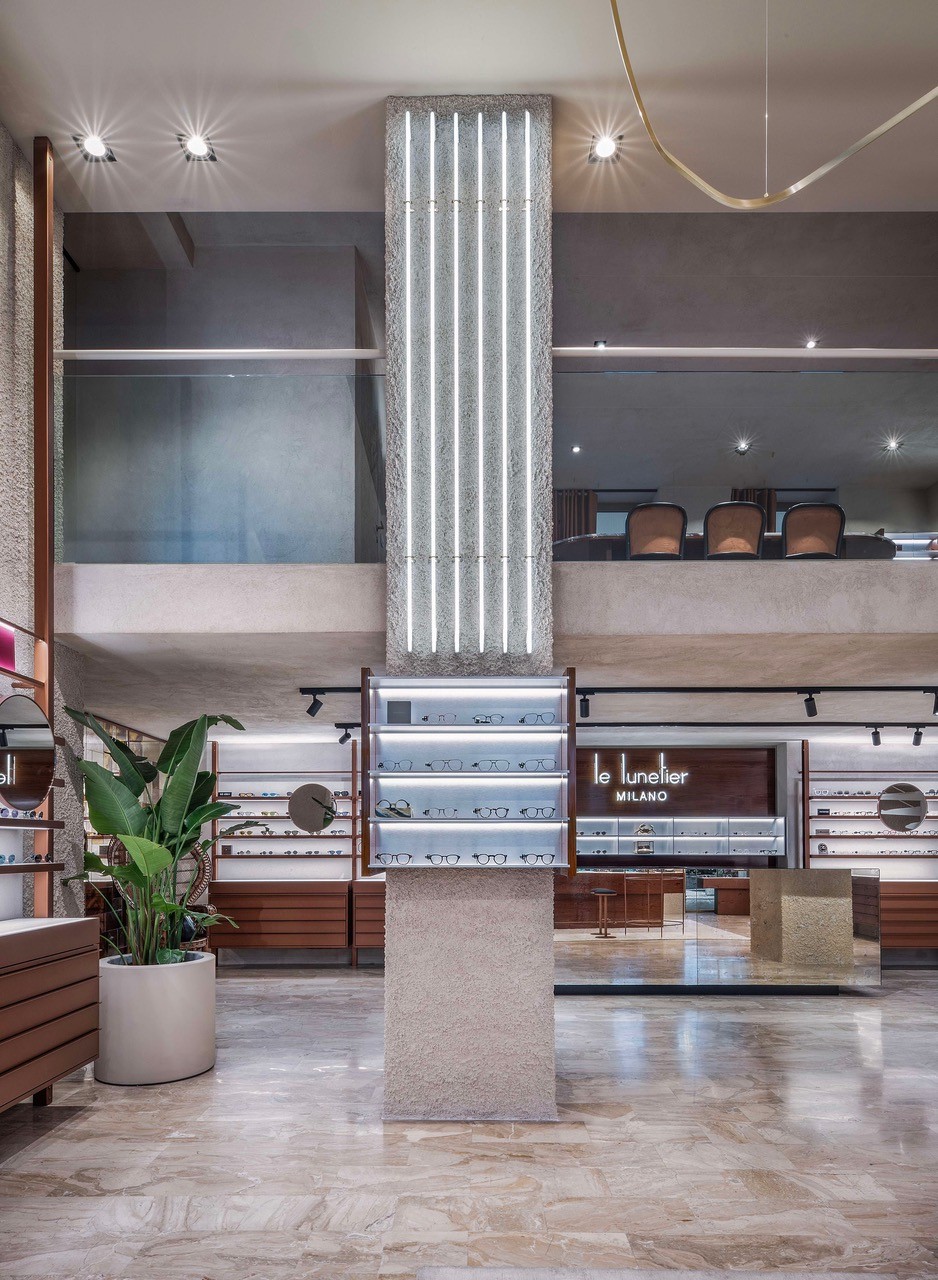
The focal point of the space is the double-height area, dominated by a custom brass chandelier designed by Morghen Studio. Here, light takes on an almost architectural dimension, becoming an organizing element of the space. Below, a display desk with a natural felt top introduces a more intimate and restrained dimension, transforming the act of purchase into a slow and measured ritual.
A second scenographic element is the cashier desk: an austere volume clad in antique mirror, lifted from the floor by a recessed plinth. The resulting sense of suspension lightens the mass and introduces a perceptual interplay of reflections and visual depth.
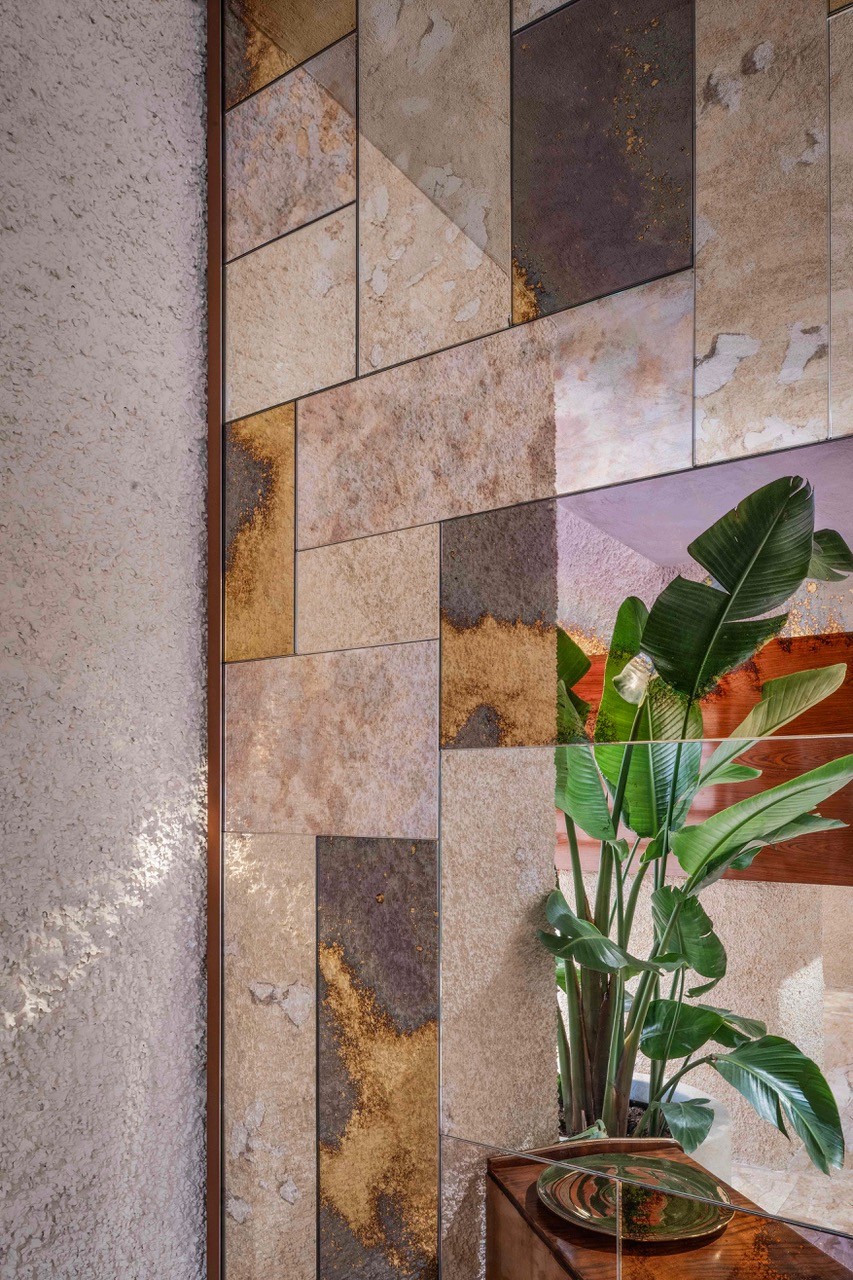
Artistic intervention plays a structural role within the project. Along one of the side walls, a composition of antique decorative mirrors recalls the sculptural language of Paul Evans, creating a fragmented surface that multiplies viewpoints and amplifies spatial perception. Works by Alessandro D’Aquila and Andrea Albanese appear as autonomous presences, contributing to an expressive dimension that goes beyond mere display.
On the pillars, a light installation by Neon Art, inspired by the research of Dan Flavin, introduces an immaterial and dynamic component, contrasting with the overall material density of the space.
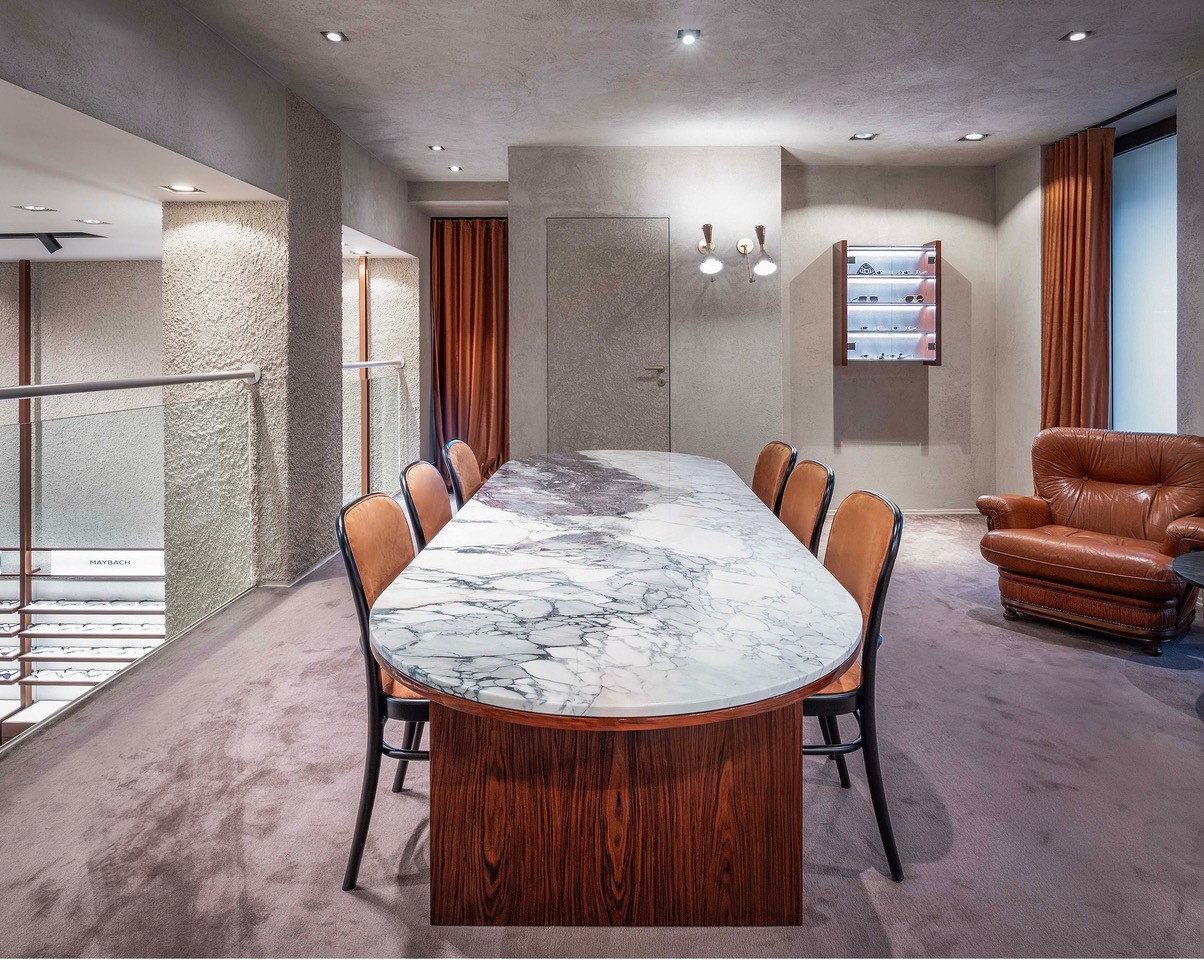
On the upper level, the mezzanine fully carpeted in vinaccia-colored moquette houses the private sales area. A quiet and intimate space conceived for more personal interaction, where a custom table in glossy rosewood and Breccia Capraia marble becomes the central element in the relationship between architecture, object, and user.
For more information, visit www.studiomabb.it
CREDITS
Project: Le Lunetier Milano, Garibaldi
Studio: Studio Mabb
Location: Milan, Italy
Year: 2025