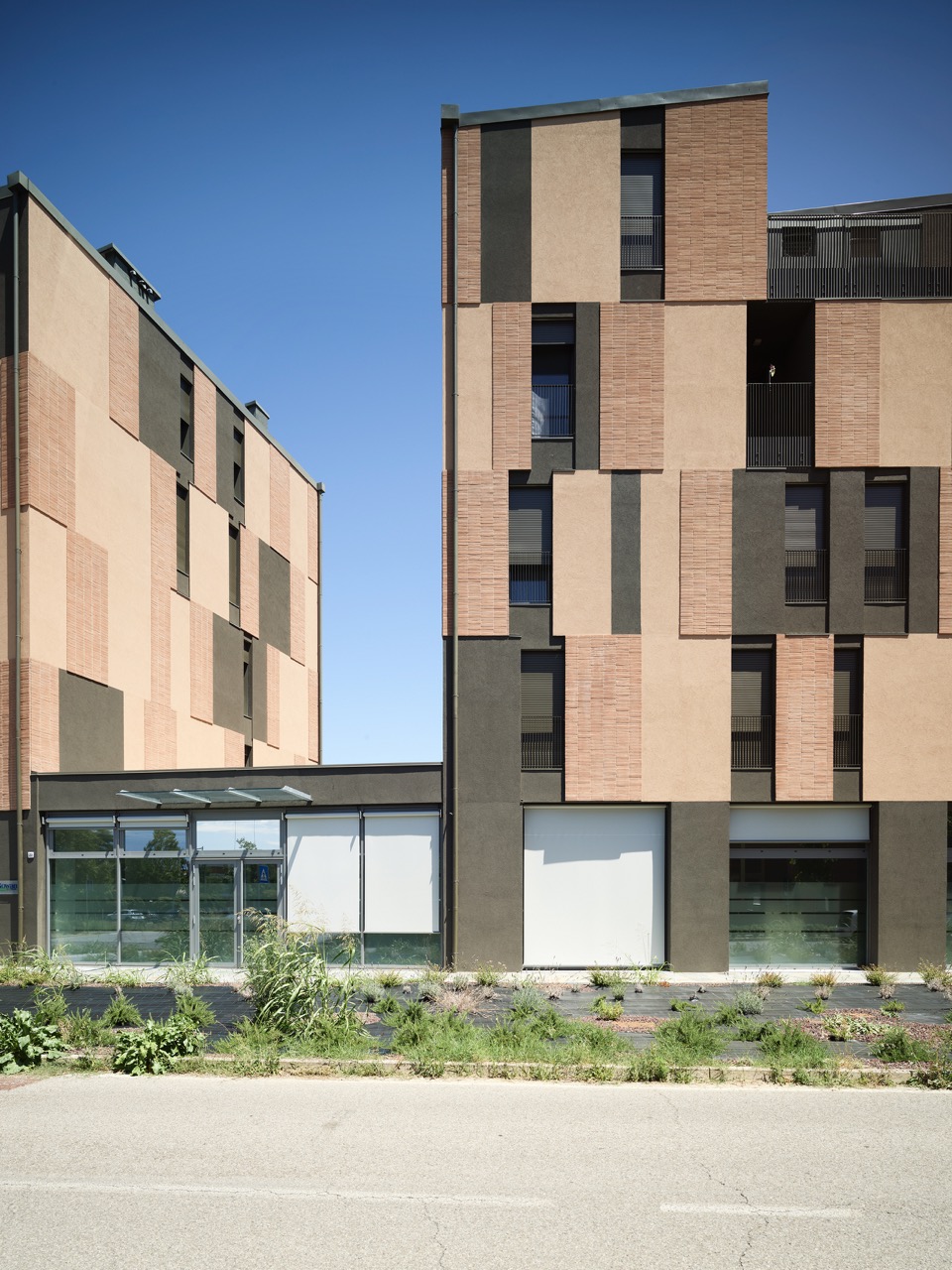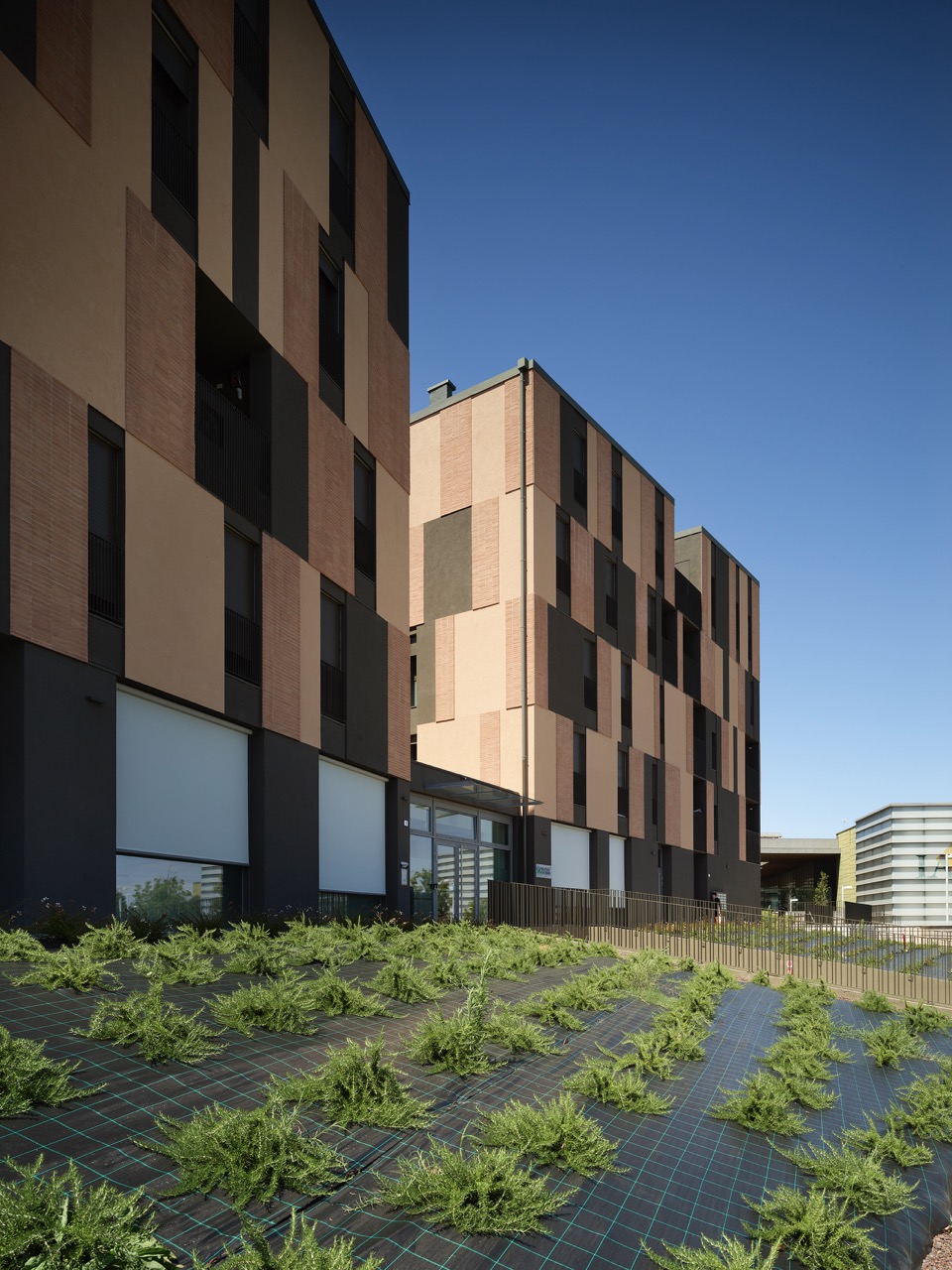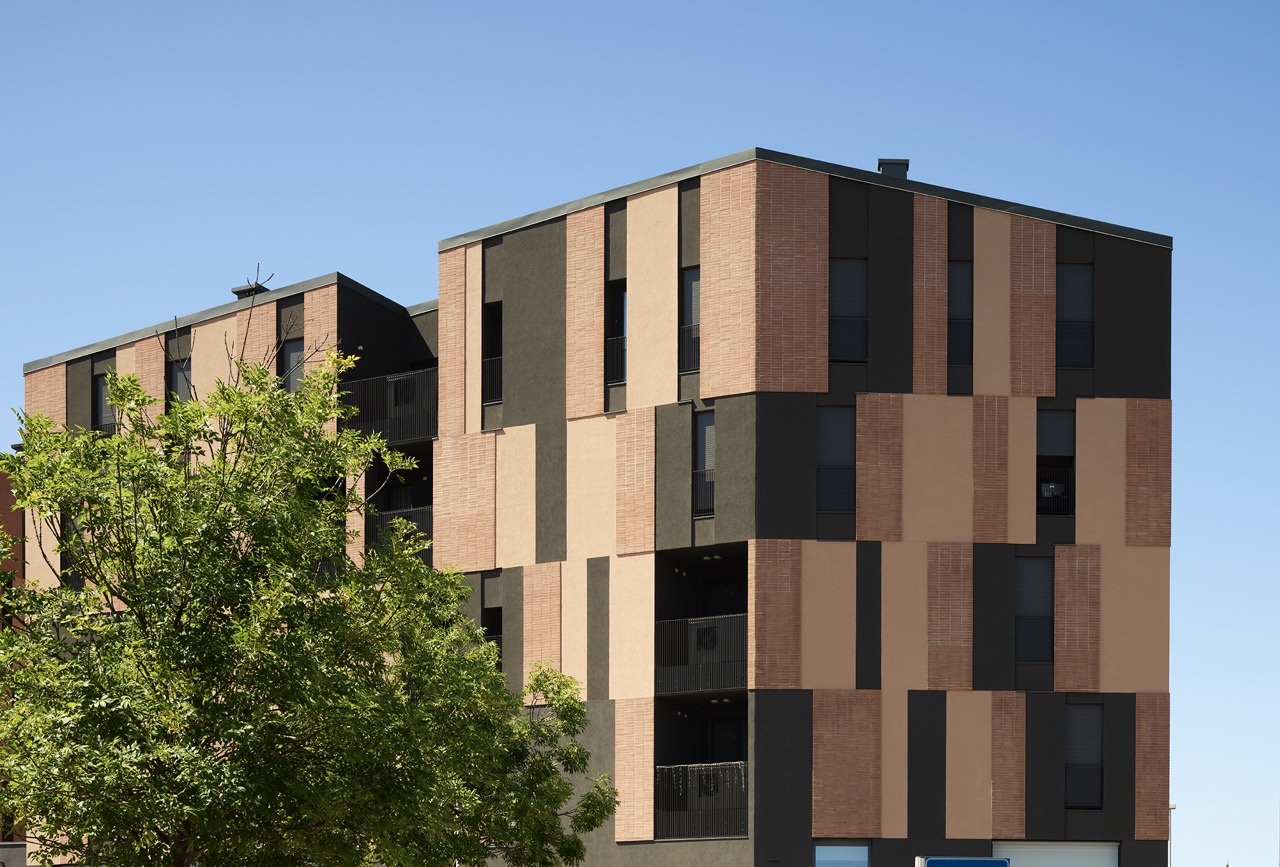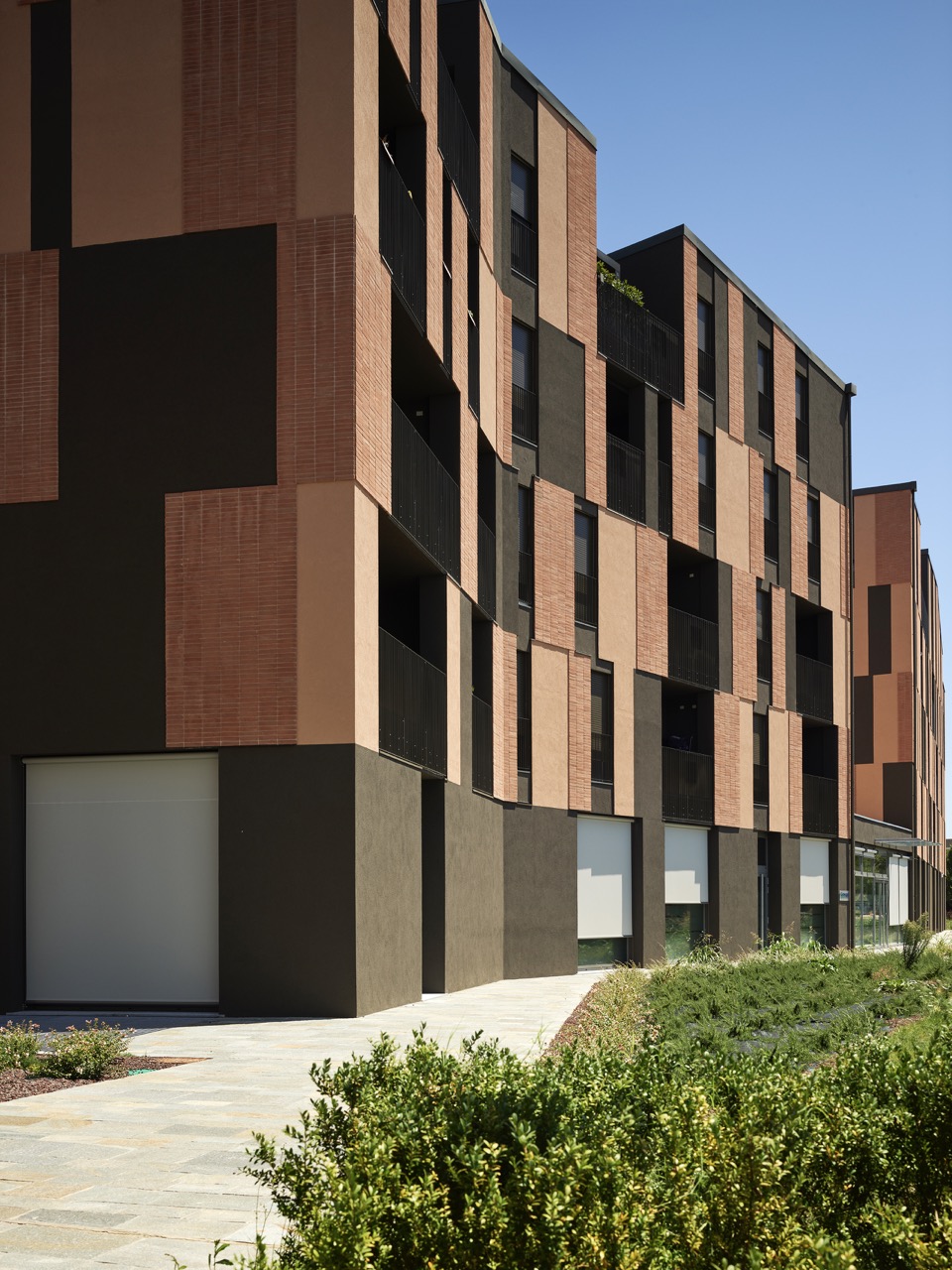

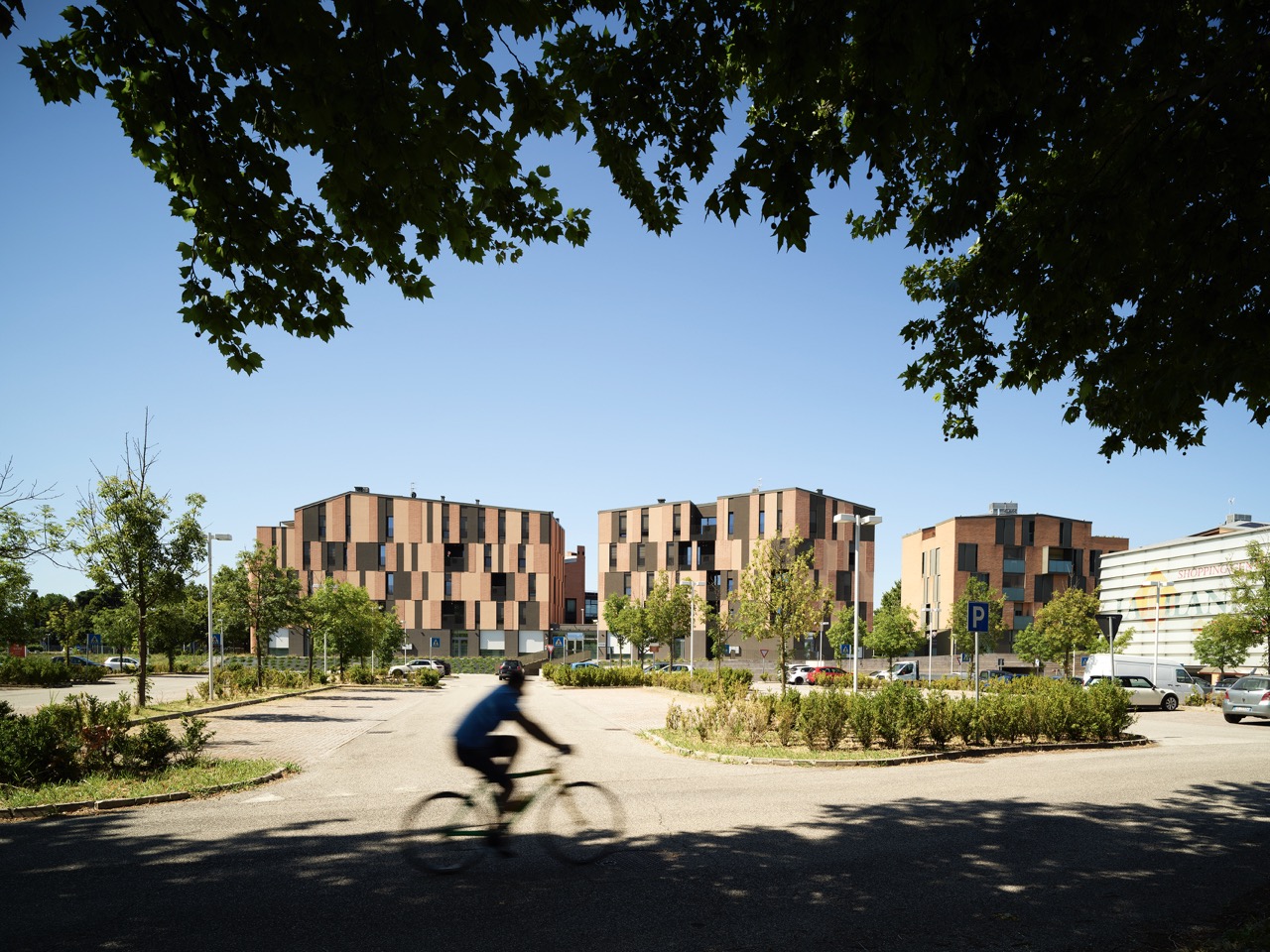
The architectural meaning of the F1–F2 residential buildings is constructed beginning from the urban frontage. Along Via della Costituzione, the façade does not present itself as a neutral surface or as the mere outcome of compositional choices, but as a device capable of defining an urban edge, measuring the scale of the street, and restoring continuity to a portion of the city undergoing transformation. The frontage thus becomes a site of design: a space of mediation between urban order and the complexity of dwelling, between the unity of the whole and the controlled fragmentation of the individual buildings.
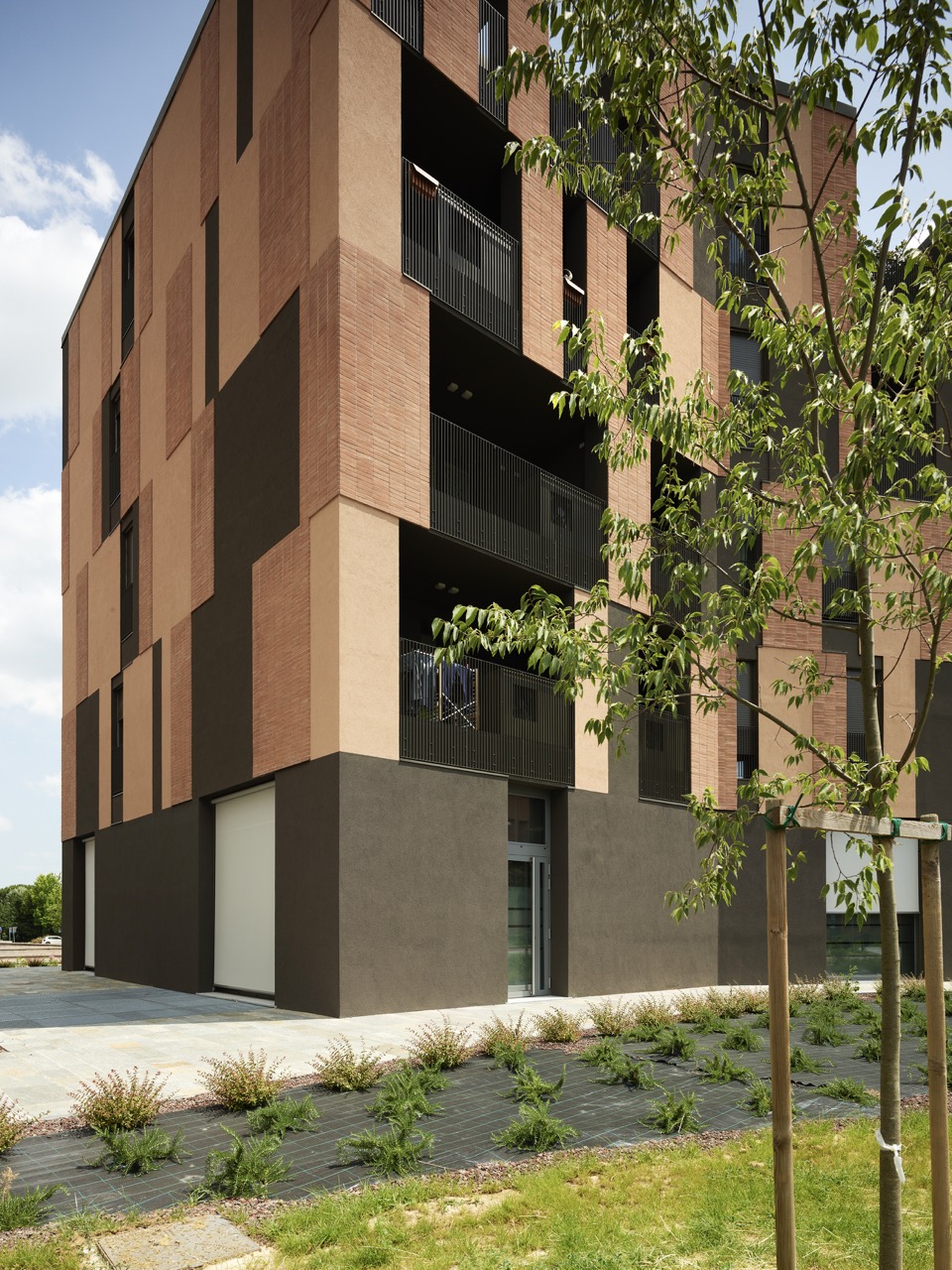
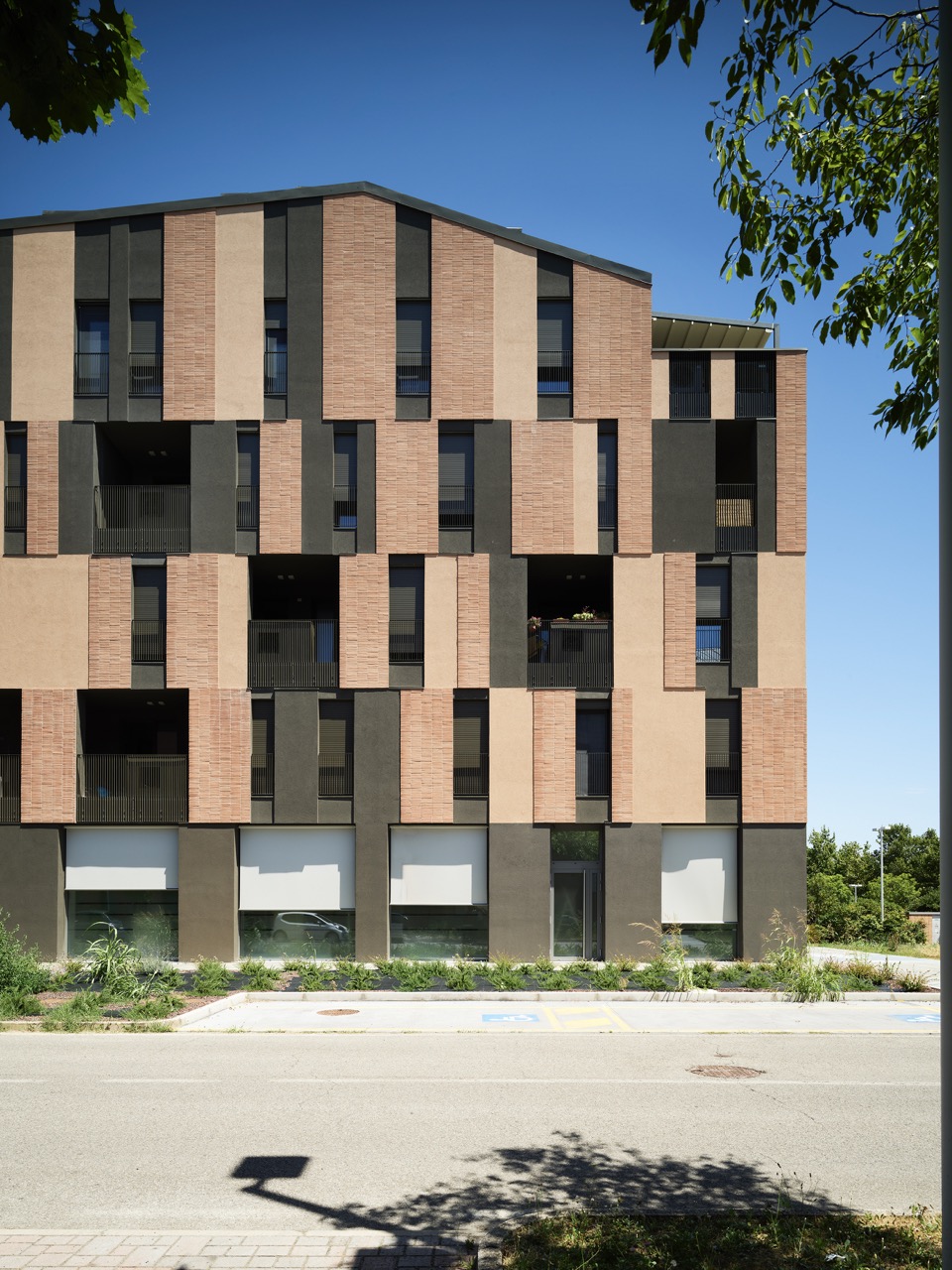
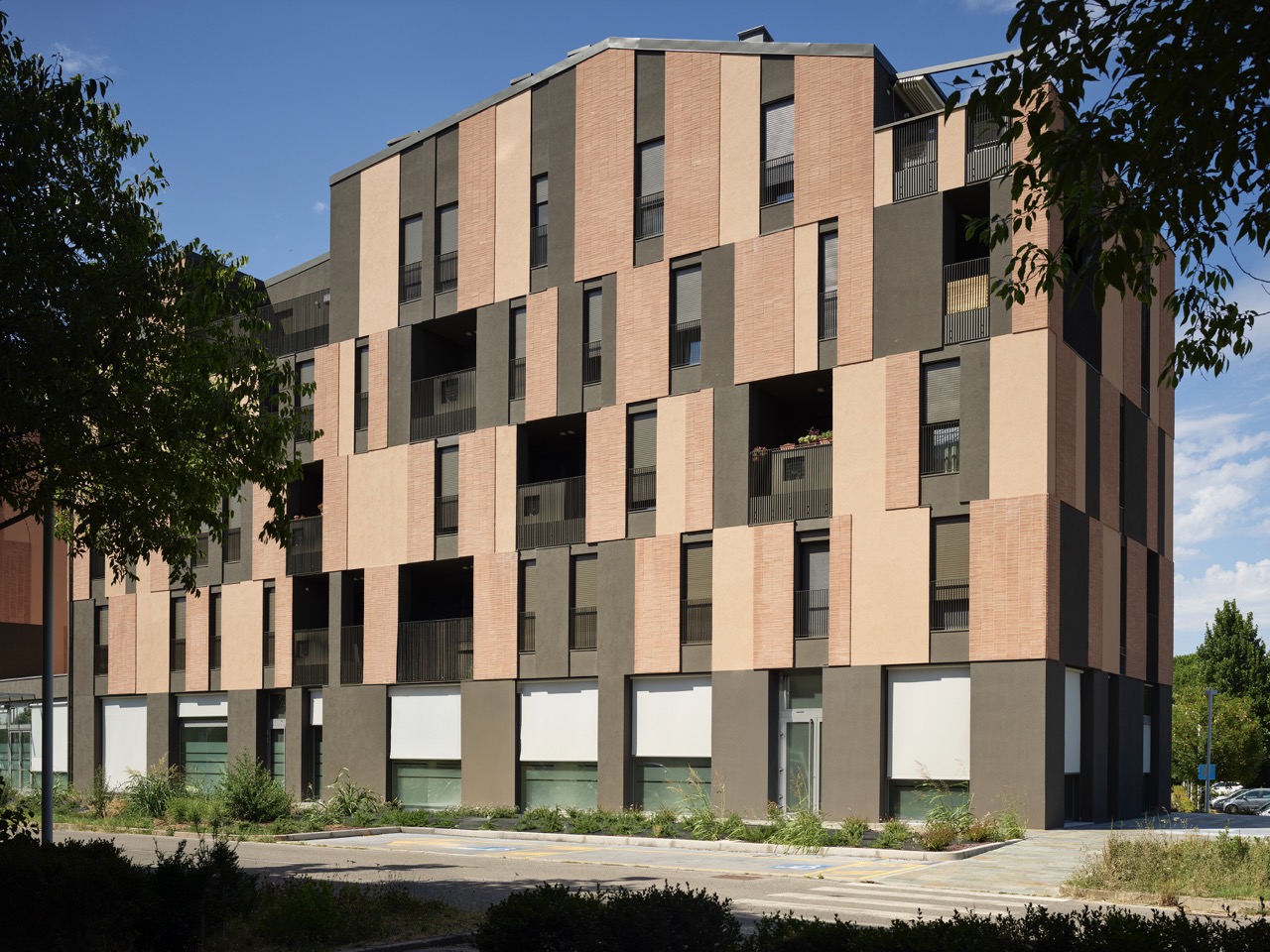
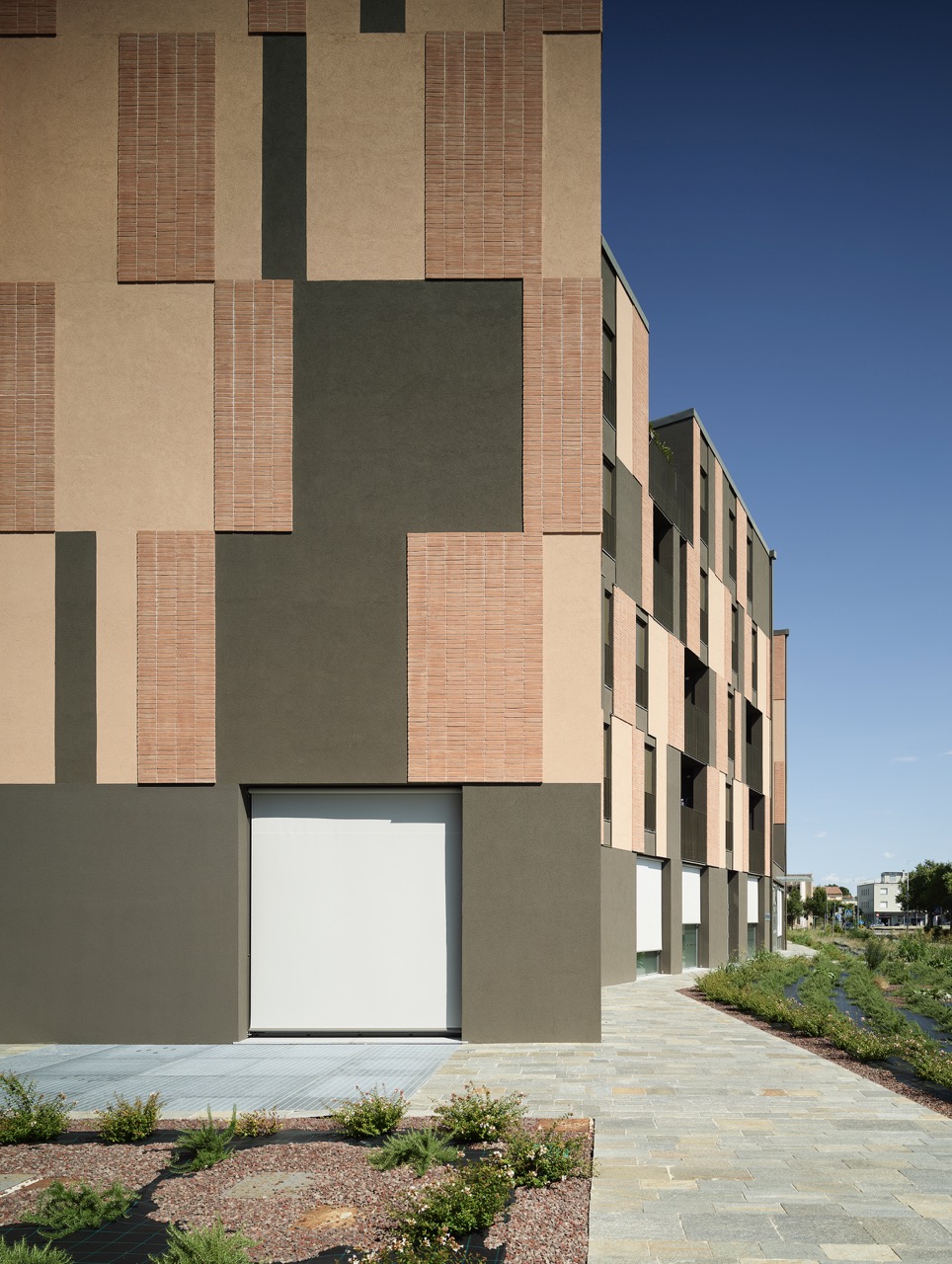
The texture of the façade results from a process of material stratification and calibrated decomposition. The alternation between rendered surfaces, exposed brick cladding, and metal inserts does not respond to a decorative logic; rather, it constructs a thick architectural skin capable of generating depth, rhythm, and perceptual variation. Window openings, arranged according to a non-rigid serial order, together with recessed loggias that carve into the volume, transform the elevation into an active field in which light and shadow, solid and void, surface and depth interact, producing a continuous vibration in the urban image.
Within this research on the urban frontage lies the F1–F2 project, designed by Alessandro Bucci Architetti in Faenza as the concluding phase of a broader urban regeneration process within the former Neri industrial area. The intervention concerns a 13-hectare site, occupied until the late 1990s by an industrial complex and progressively transformed, beginning in 2010, into a new predominantly residential district complemented by commercial, office, and service functions. In this context, architecture assumes the task of reconstructing a piece of city, working through spatial continuity, permeability, and the definition of new urban margins.
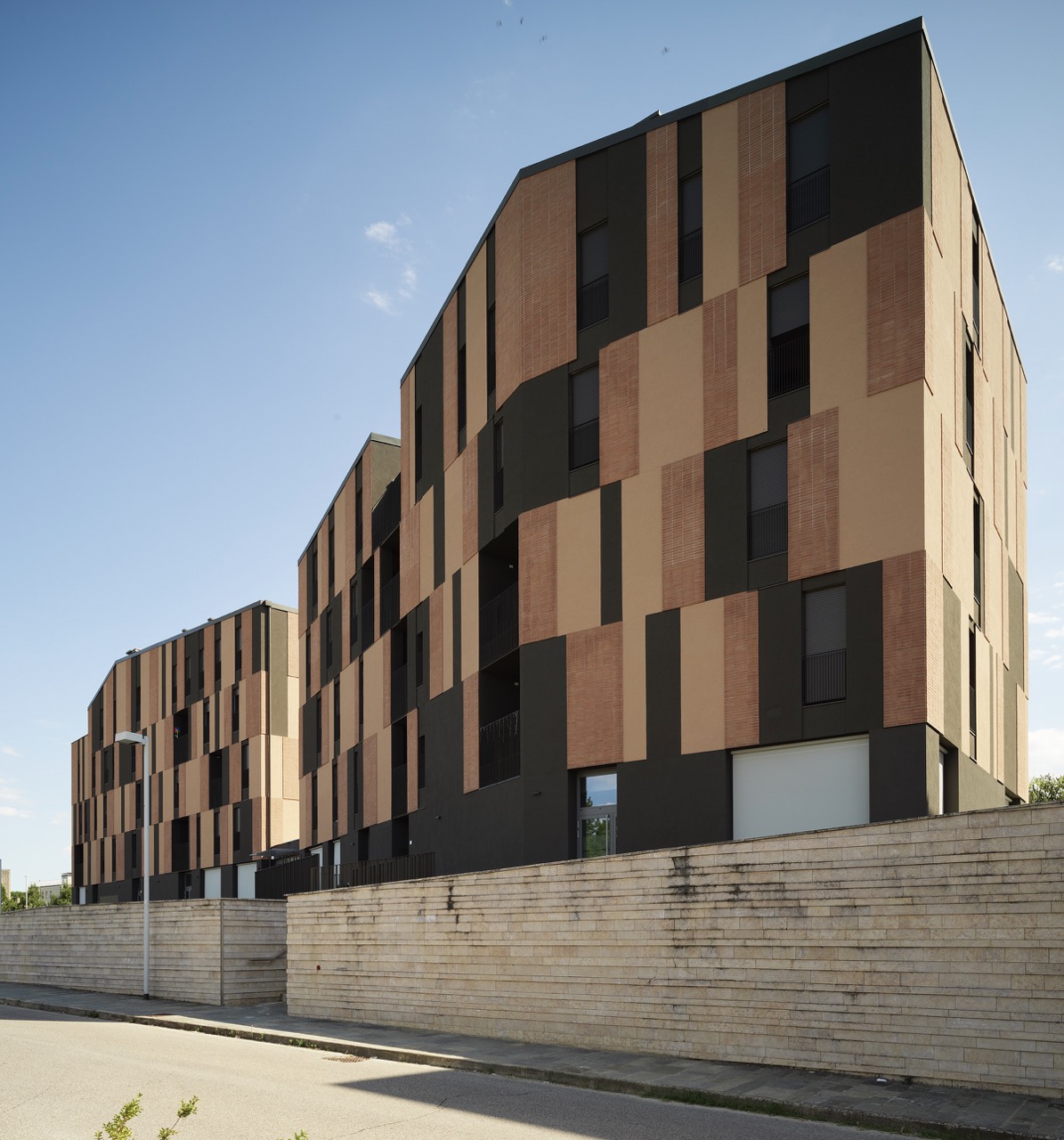
The F1–F2 buildings complete the residential axis along Via della Costituzione, reinforcing the unity of the frontage and consolidating the overall image of the intervention. Continuity is not achieved through typological repetition, but through linguistic coherence capable of absorbing differences and temporal stratifications within the project. The volumes succeed one another as parts of a single urban aggregation, interrupted only by pedestrian passages that connect the street to the internal commercial gallery, configuring threshold spaces that enhance urban permeability.
From a compositional standpoint, the project rejects the idea of a rigidly aligned façade. The ground-level articulation and the broken, variable roofline introduce a dynamic quality that avoids monotony and restores a more complex and urban measure to the building. The façade becomes a regulated yet non-rigid system, capable of adapting to the scale of the street and establishing an active relationship with public space.
The material palette is deliberately limited. Painted insulation render, exposed brick, and coated aluminum constitute a restrained vocabulary deployed in non-repetitive combinations. Terracotta slats applied over the rendered surface in variable modules generate a vibrating plane in which matter engages directly with light. The chromatic treatment—darker at ground level and more articulated on the upper floors—reinforces the horizontal reading of the building and anchors it within the urban context, ensuring continuity with the buildings realized in earlier phases of the development.
The project’s poetics are grounded in a balance between order and variation, between recognizability of the whole and specificity of its parts. This approach is mirrored in the internal organization of the apartments, conceived as differentiated units in terms of size, orientation, and layout. The absence of a repeated typology affirms a vision of dwelling as a plural and non-standardized experience, coherent with the broader idea of city that informs the entire intervention.
CREDITS
Project: Ex Neri Area Residences, Buildings F1–F2
Architects: Alessandro Bucci Architetti
Location: Faenza (RA), Italy
Year: 2024
Photography: Pietro Savorelli