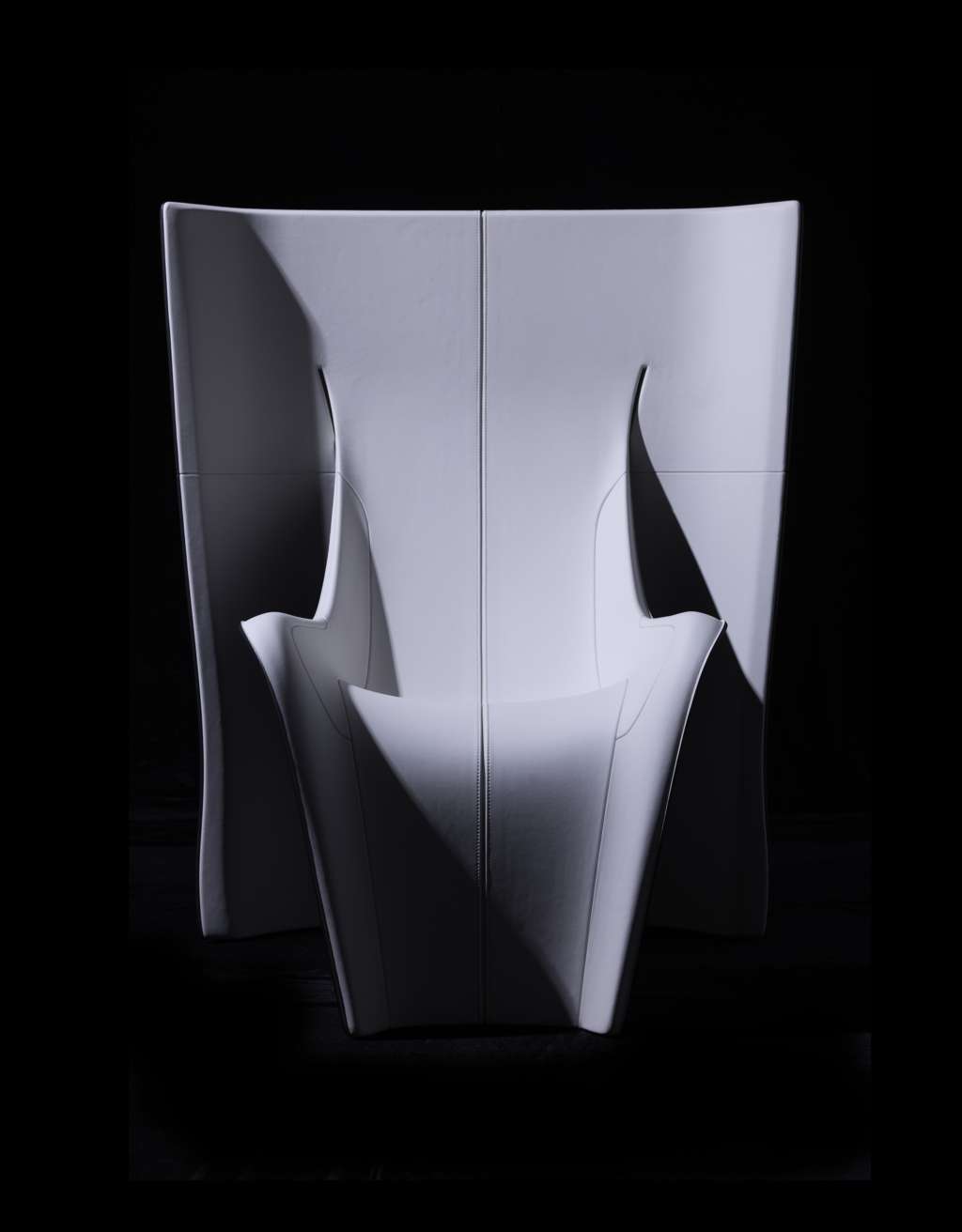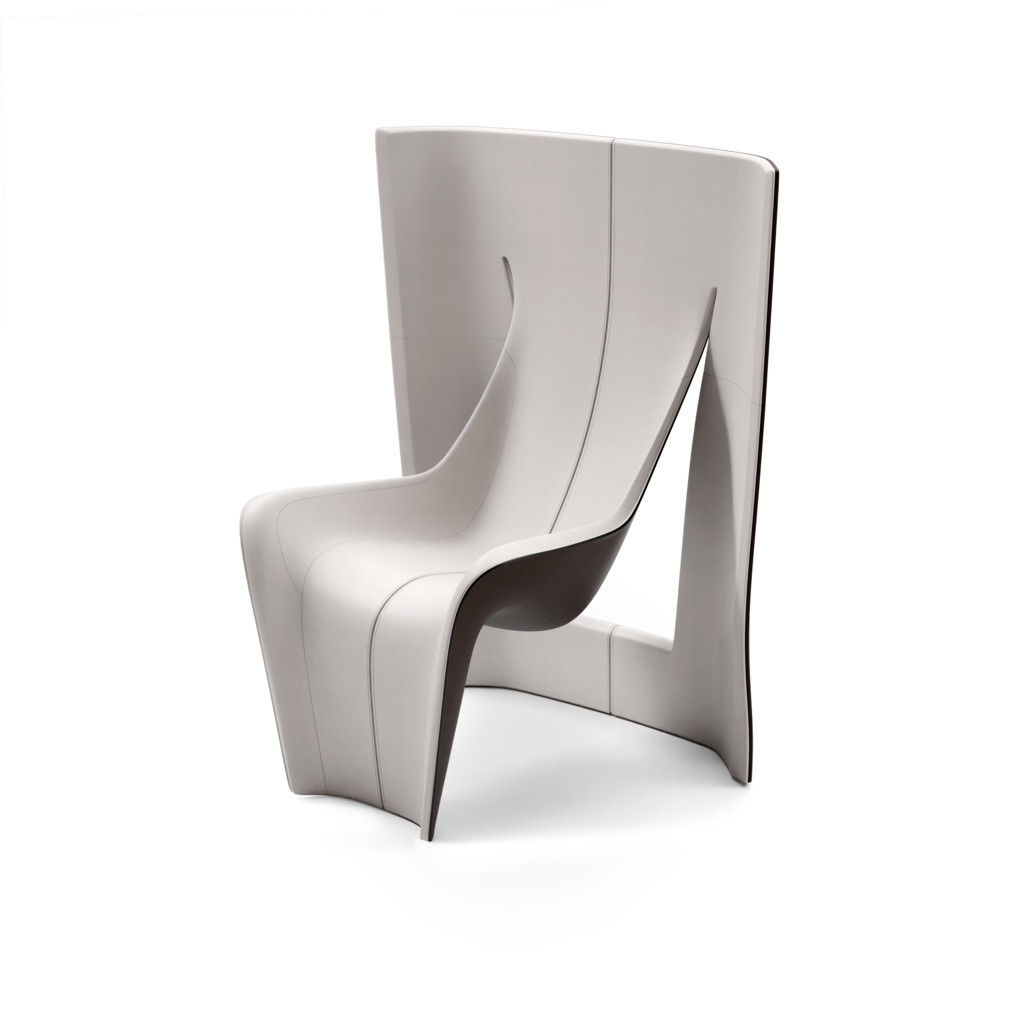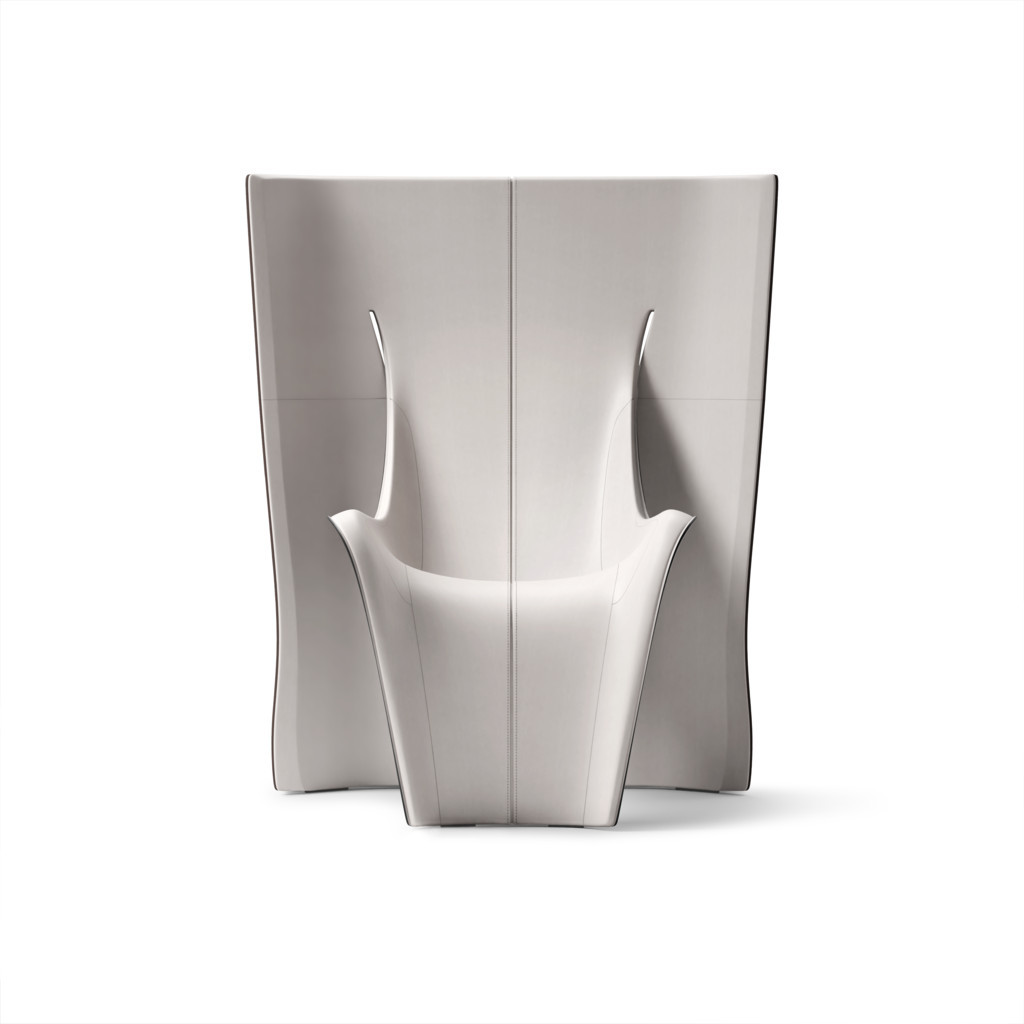

For the upcoming Milan Design Week, the designer Satoshi Kan, founder of Tokyo-based studio Indigo Design has realised GRAVITY, a chair that investigates the relationship between body, space, and one of the most fundamental yet invisible forces: gravity. Conceived as a translation of a physical phenomenon into form, the project explores how weight, balance, and perception can define a spatial and sensory experience.
Indigo Design operates at the intersection of product design, technology, and research. ‘Indigo’, a term evoking a deep and ancestral blue associated with natural pigment, intuition, and the cosmos, reflects a conceptual approach, rooted in sensitivity, experimentation, and the exploration of intangible dimensions. Drawing on a multidisciplinary background spanning luxury design and technological development, Kan established the atelier adopting a strongly research-driven methodology, initially developing speculative projects for imagined clients as a way to pursue design freedom and innovation. Today, the studio works across furniture, product design, graphics, and creative direction, maintaining a focus on the intrinsic value of objects and their capacity to establish meaningful relationships with users.
Within this framework, GRAVITY emerges not simply as a functional object but as a conceptual investigation. The chair originates from a process of precise cuts applied to a flat surface, subsequently shaped through controlled curvatures that generate a minimal yet expressive volume. Reduced to essential geometries, the form balances structural presence and visual lightness, articulating a dialogue between physical weight and perceived suspension.
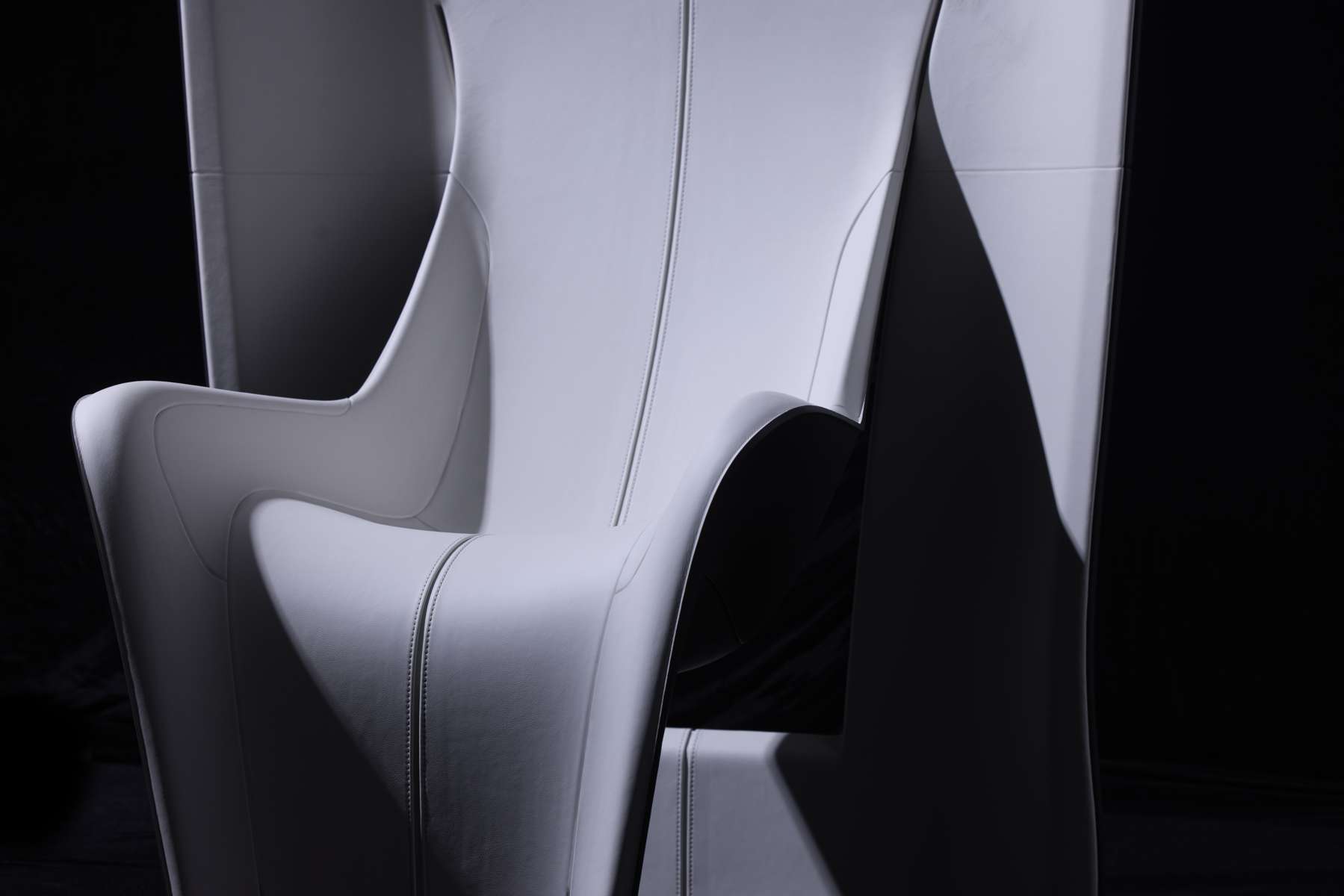
A key element of the project is the two-tone leather upholstery, differentiated between front and back. The chromatic duality reflects the ambivalent nature of gravity, a force that simultaneously anchors and releases, translating opposing conditions such as tension and relaxation, stability and counterbalance into material expression. The leather finish emphasises thickness and curvature, highlighting the tactile relationship between body and object.
The seating experience is conceived as a dynamic interaction in which weight is received and redistributed, producing a sensation of controlled suspension. Clean geometries interact with fluid curves in a continuous interplay between fullness and void, transforming gravity from a physical constraint into a perceptible design condition that shapes spatial awareness.
The project reflects Indigo Design’s broader philosophy, where craftsmanship and technological research operate as complementary tools for developing objects intended to endure over time. Sustainability is understood as an intrinsic quality of the design process, grounded in responsibility, longevity, and the creation of lasting relationships between user and product. At the same time, the studio actively explores emerging technologies as expressive media, as demonstrated by its participation in Milan Design Week 2025 with an immersive virtual reality installation presenting a series of speculative and experimental projects, offering a multitude of narrative possibilities.
Balancing conceptual rigour with a subtle playful dimension, Indigo Design conceives technology not as an end but as a means to expand the expressive possibilities of design and generate new forms of interaction. In GRAVITY, this approach materialises in an object that reconsiders the role of fundamental forces in shaping everyday experience, positioning design as a tool for investigating the relationship between body, matter, and space.
Photo Credits: GRAVITY, Courtesy of Designer Satoshi Kan. Indigo Design