
The dynamics of skiing, skating and jumping — that energy suspended between gravity and momentum — provide the starting point for an architectural reflection on movement as a generative principle of space. It is not a matter of imitating the form of speed, but of internalizing its logic through trajectory, rhythm, acceleration and pause. Architecture thus becomes the spatial translation of a physical tension, a device capable of making perceptible the intensity of athletic action.
Within this framework, IT’S’s intervention for Casa Italia at the 25th Winter Olympic Games of Milan Cortina 2026 develops a system of installations capable of interpreting Italian identity through a unified architectural device, articulated across three distinct contexts: Milan, Cortina d’Ampezzo, and Livigno. Casa Italia Milan Cortina 2026 is a project promoted by CONI, coordinated by Lorenzo Pellicelli, CONI Marketing Manager. The exhibition project for all three venues was developed by Beatrice Bertini and Benedetta Acciari.The project translates the theme “Musa,” selected by CONI, into a spatial configuration that connects sport, culture, and representation, defining Casa Italia as both a symbolic and functional infrastructure.
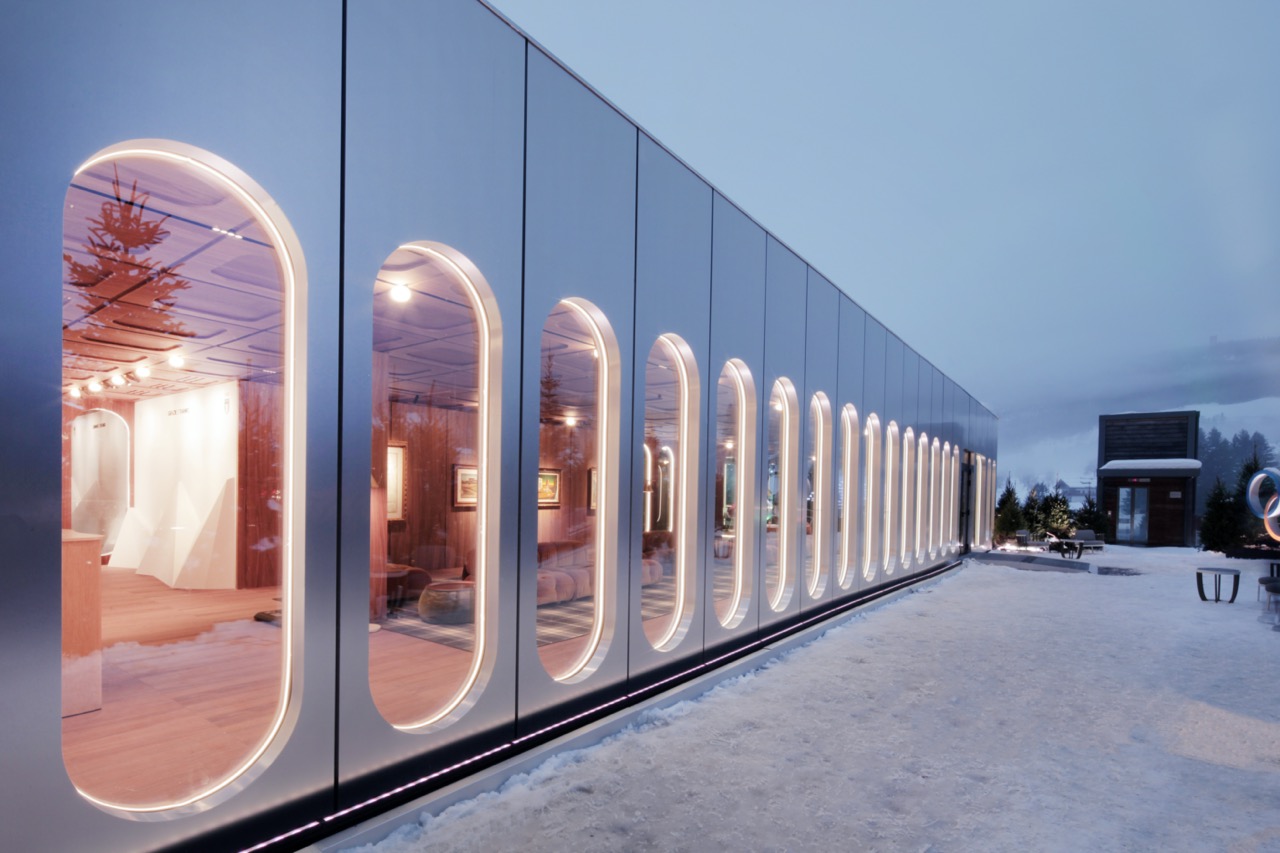
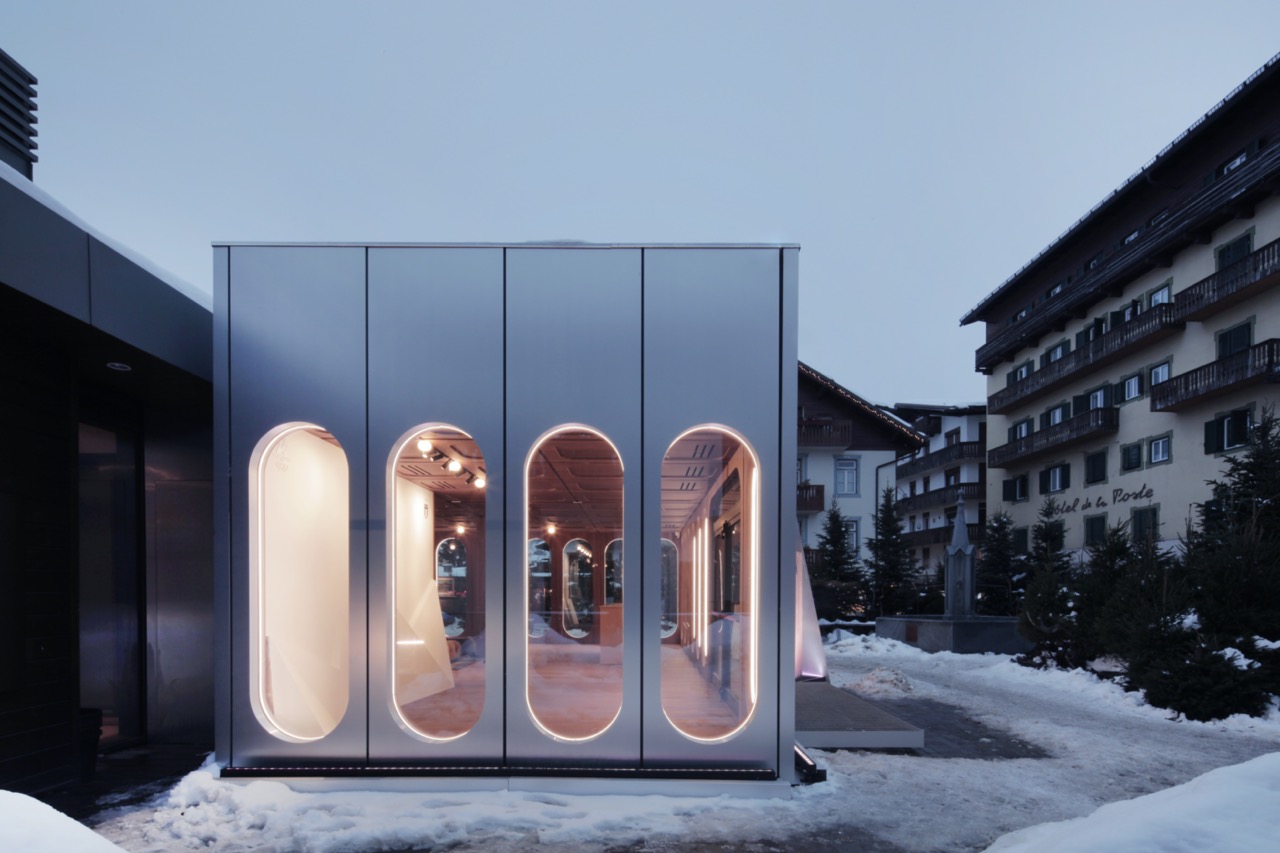
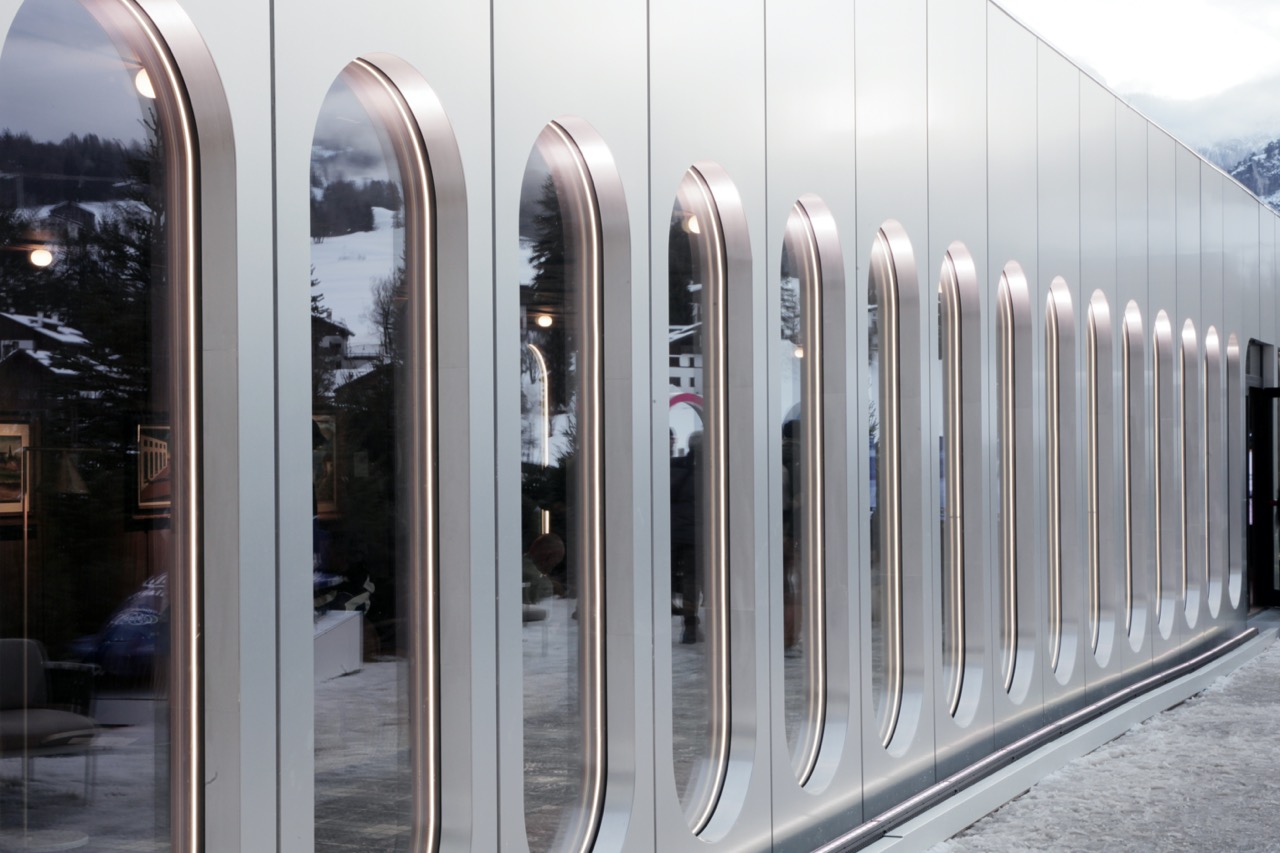
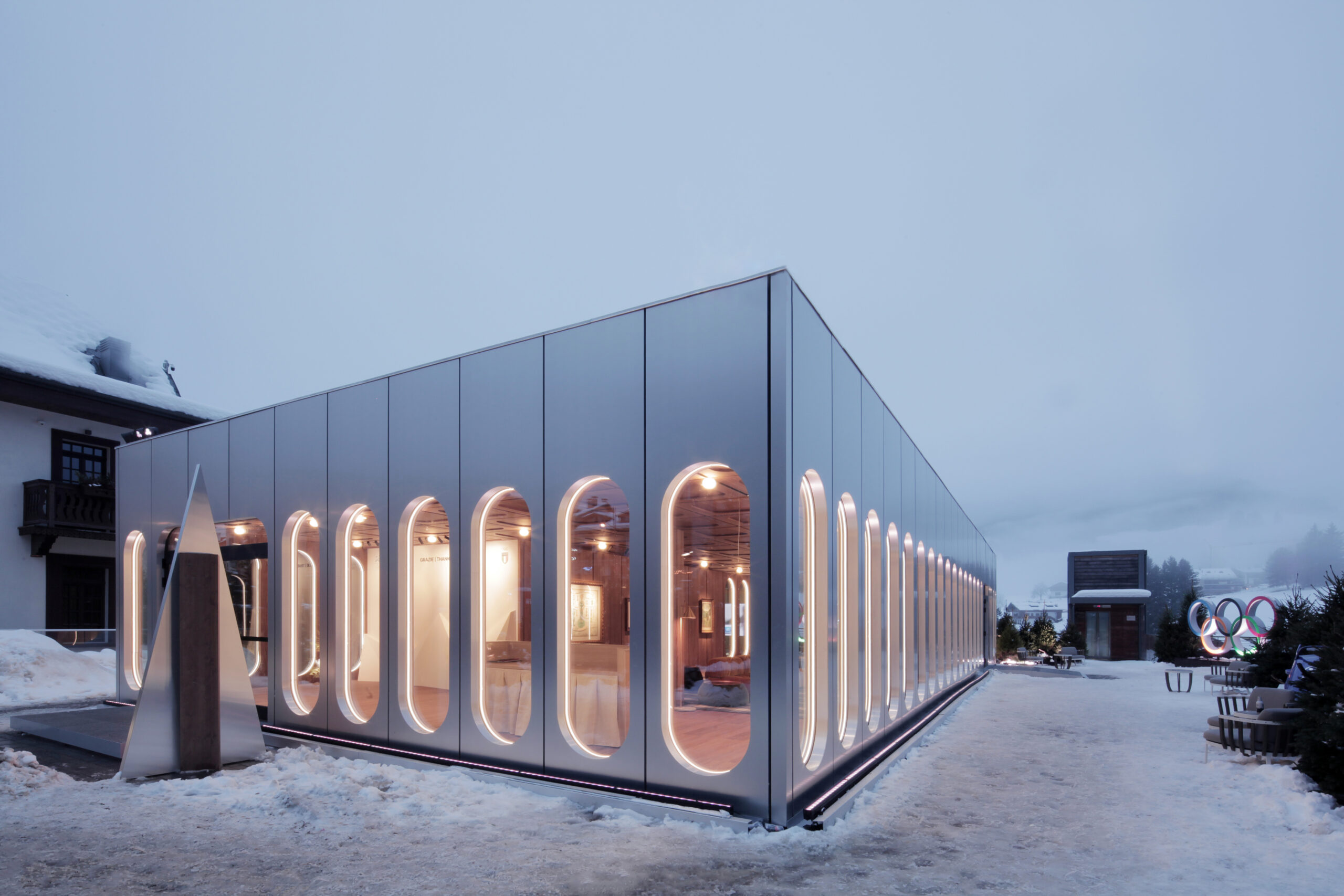
Under the design direction of IT’S, the project adopts the mountain imaginary as its conceptual matrix and reinterprets it through a contemporary language of modularity, prefabrication and lightness. Brushed aluminum and wood become narrative materials before they are constructive elements. The former evokes alpine bivouacs, durability and transportability; the latter introduces a warm, domestic atmosphere capable of balancing the institutional dimension of the Olympic event. Curved, aerodynamic lines, serial repetition and the clarity of prefabricated systems formally translate the dynamism of winter sports.
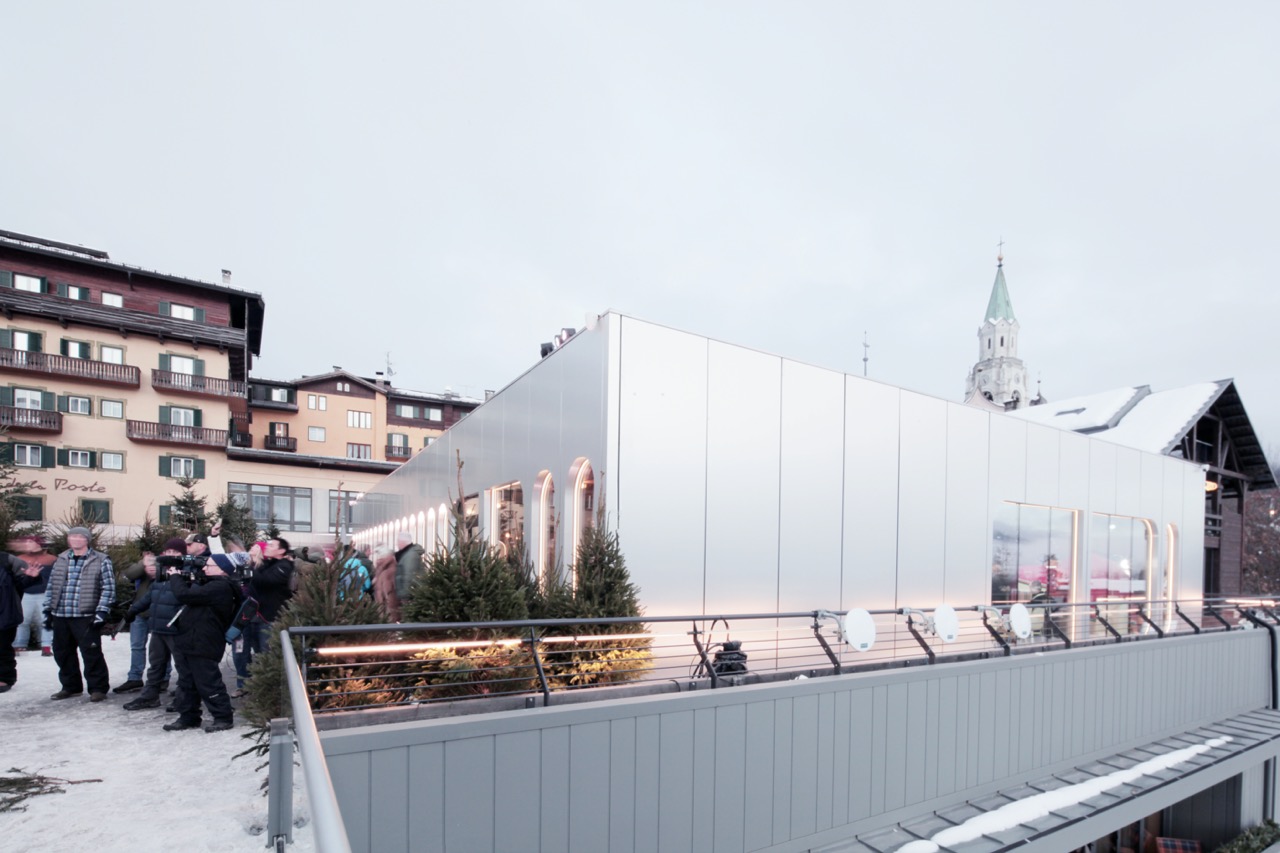
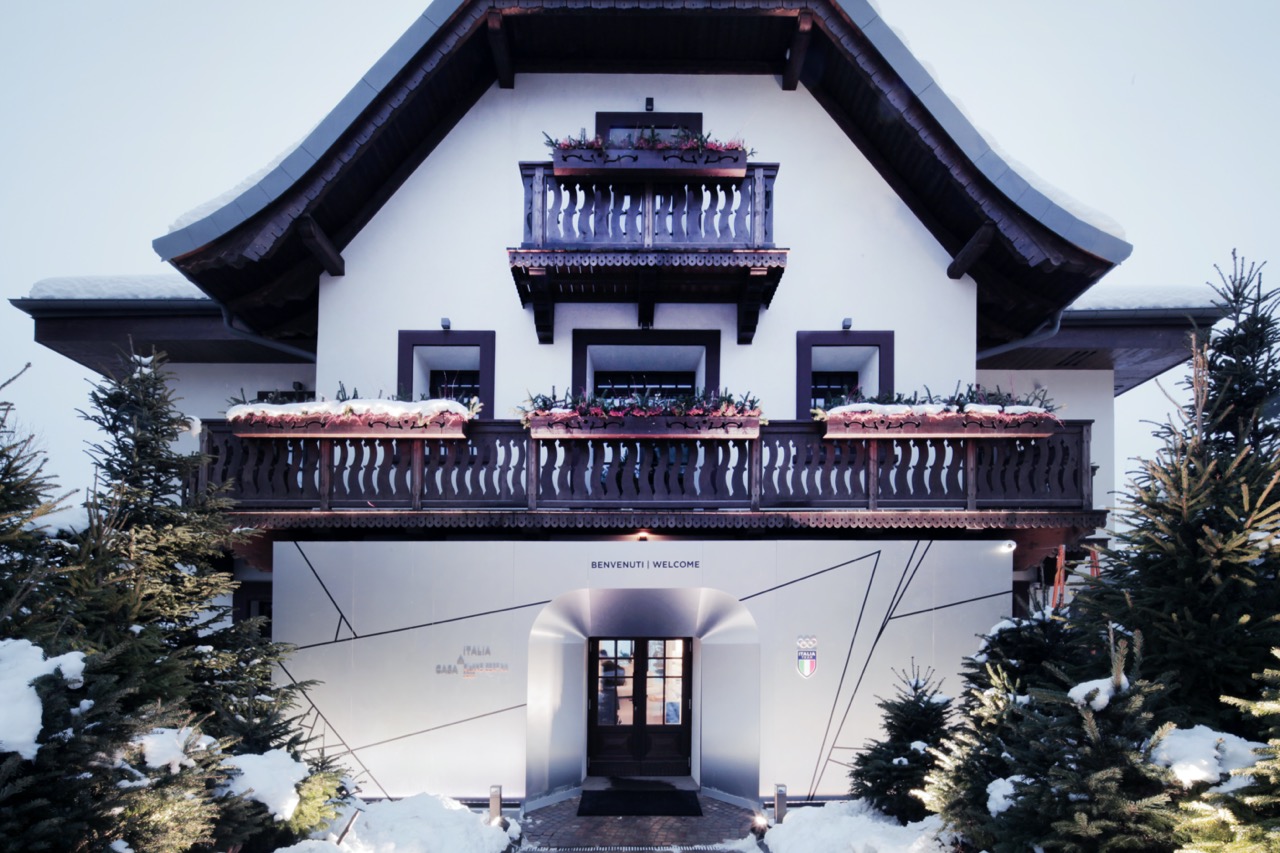
In Cortina, Casa Italia is hosted at Farsettiarte, a building born from the conversion of the former Belvedere–Pocol cable car departure station. Here the intervention engages with a layered context, at once urban and landscape-oriented, facing the historic town hall and the Basilica of Saints Philip and James, yet above all the Tofane mountain range.
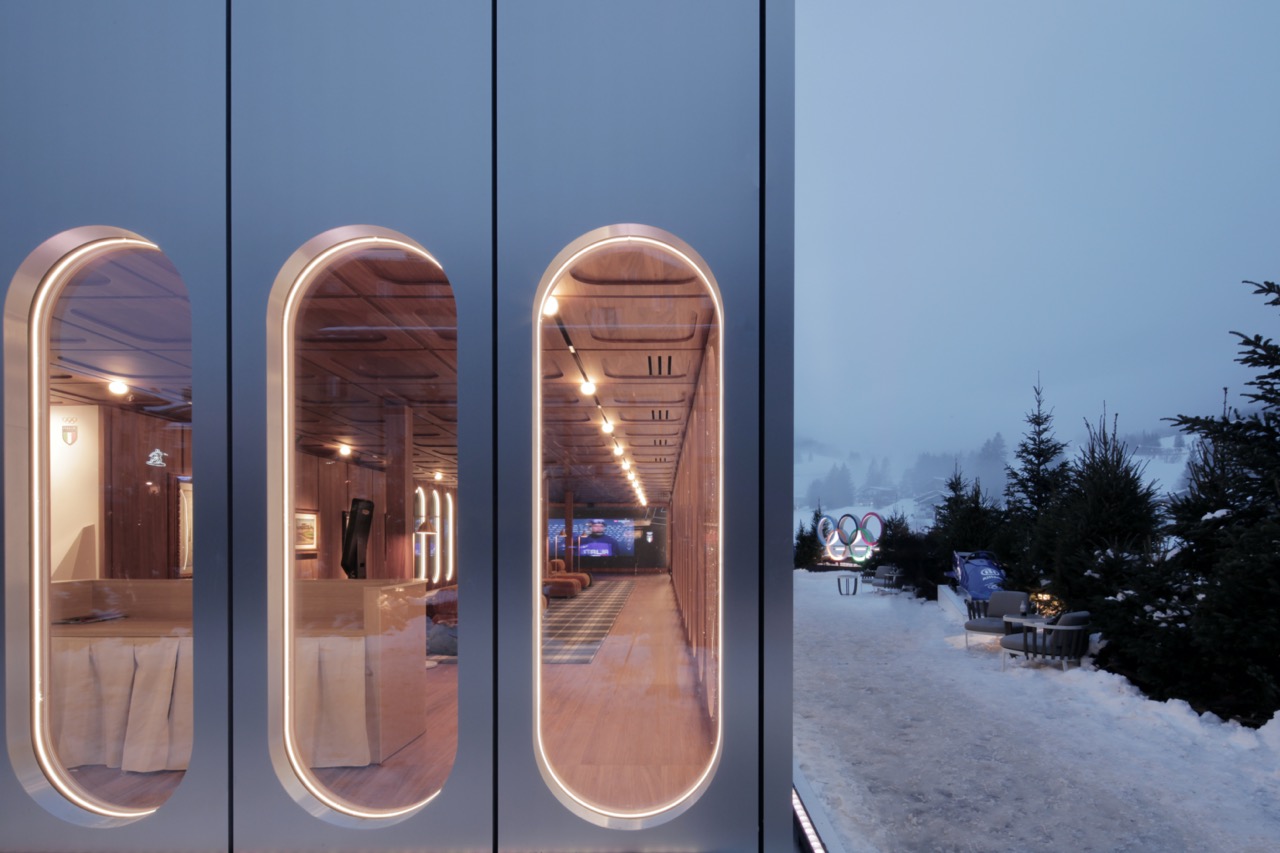
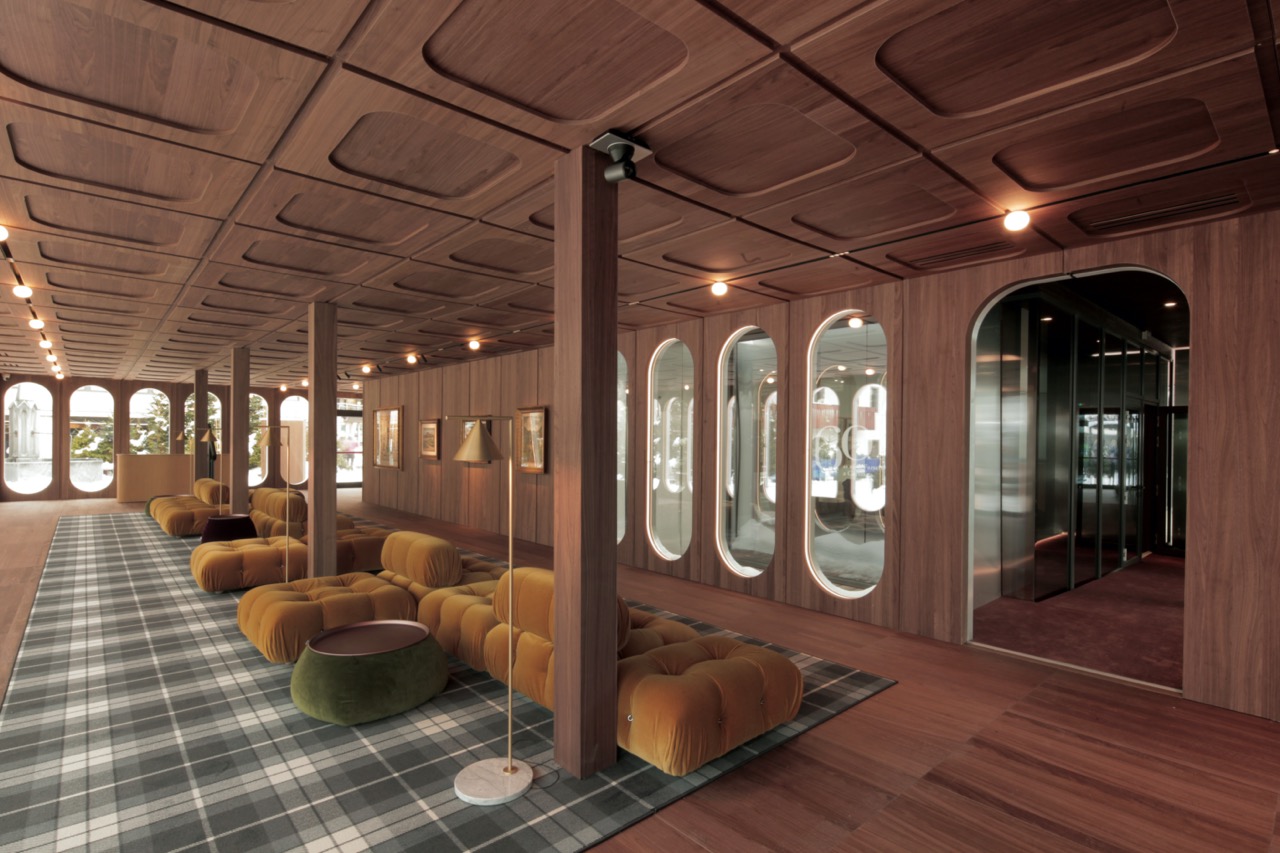
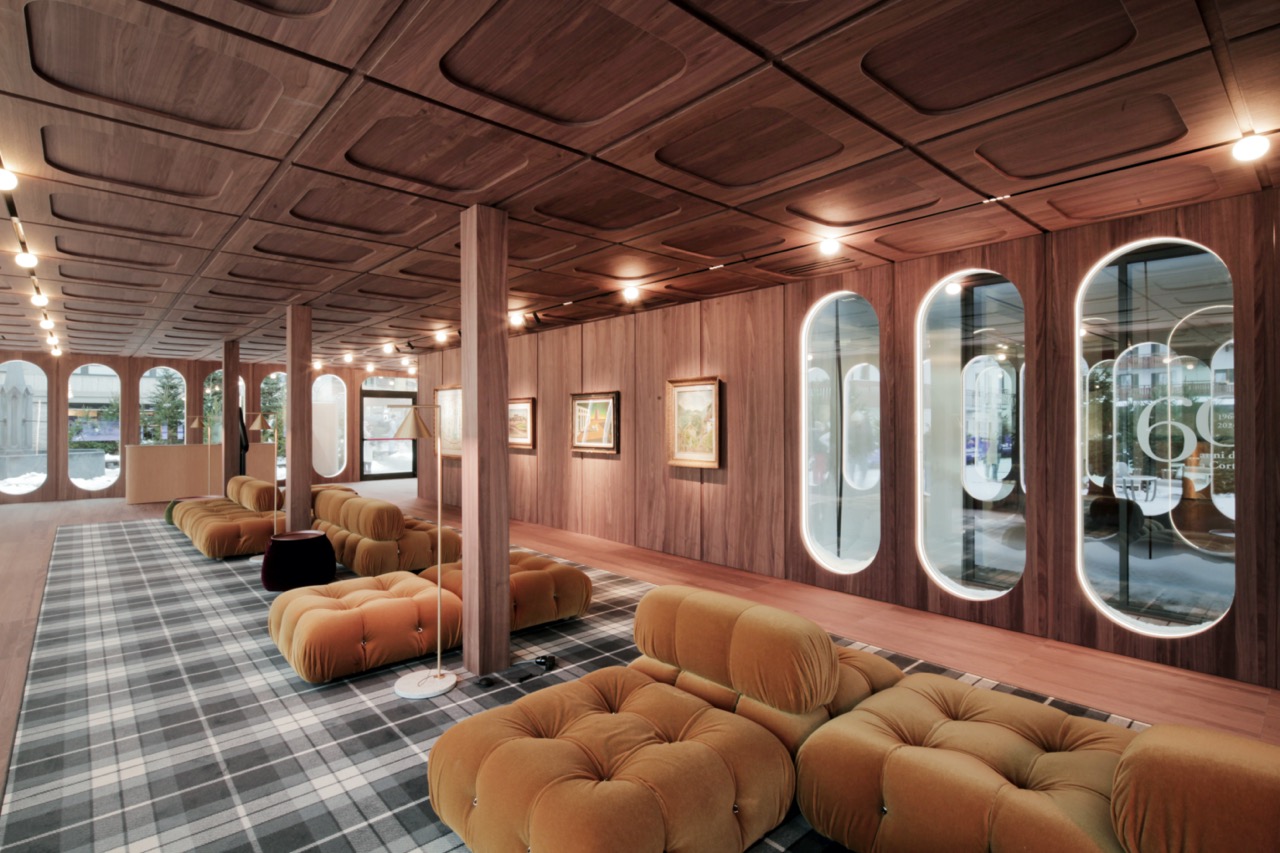
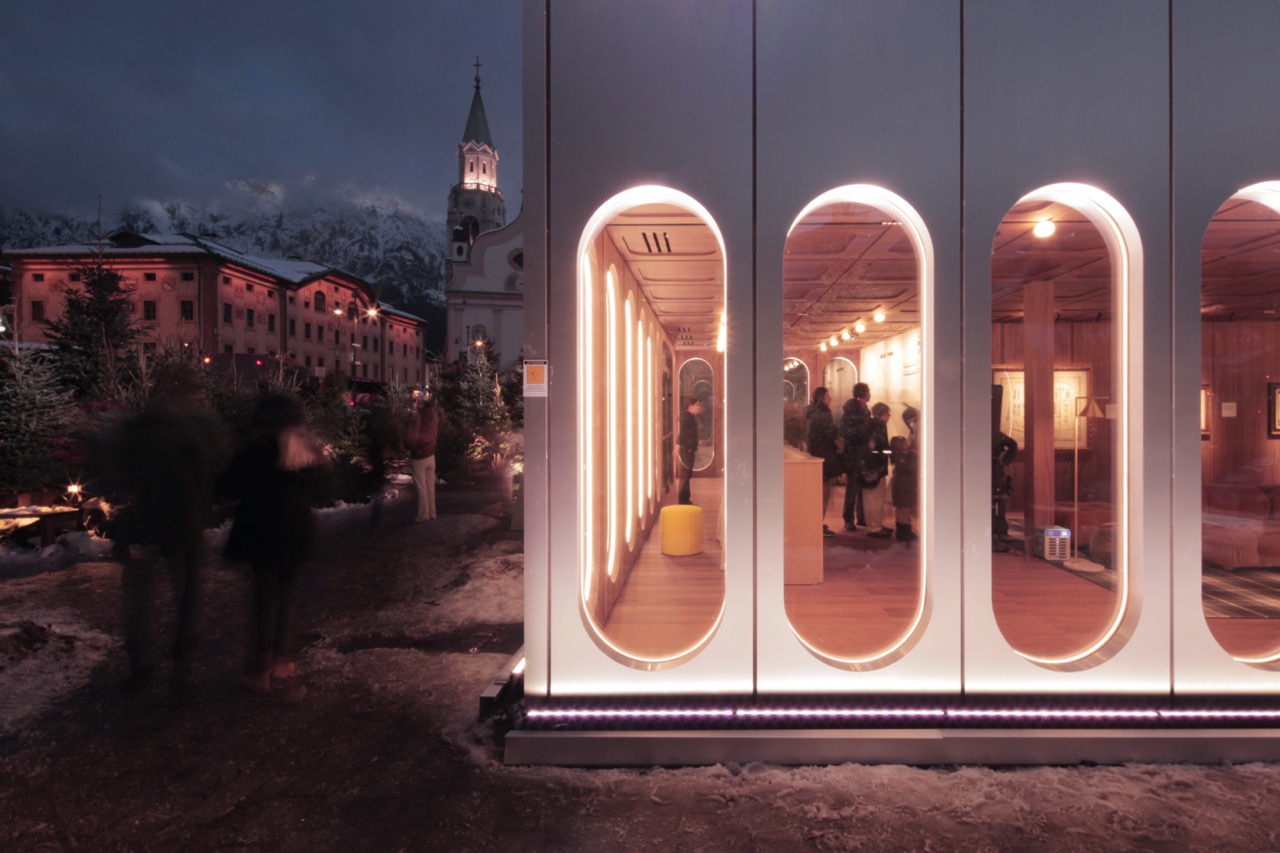
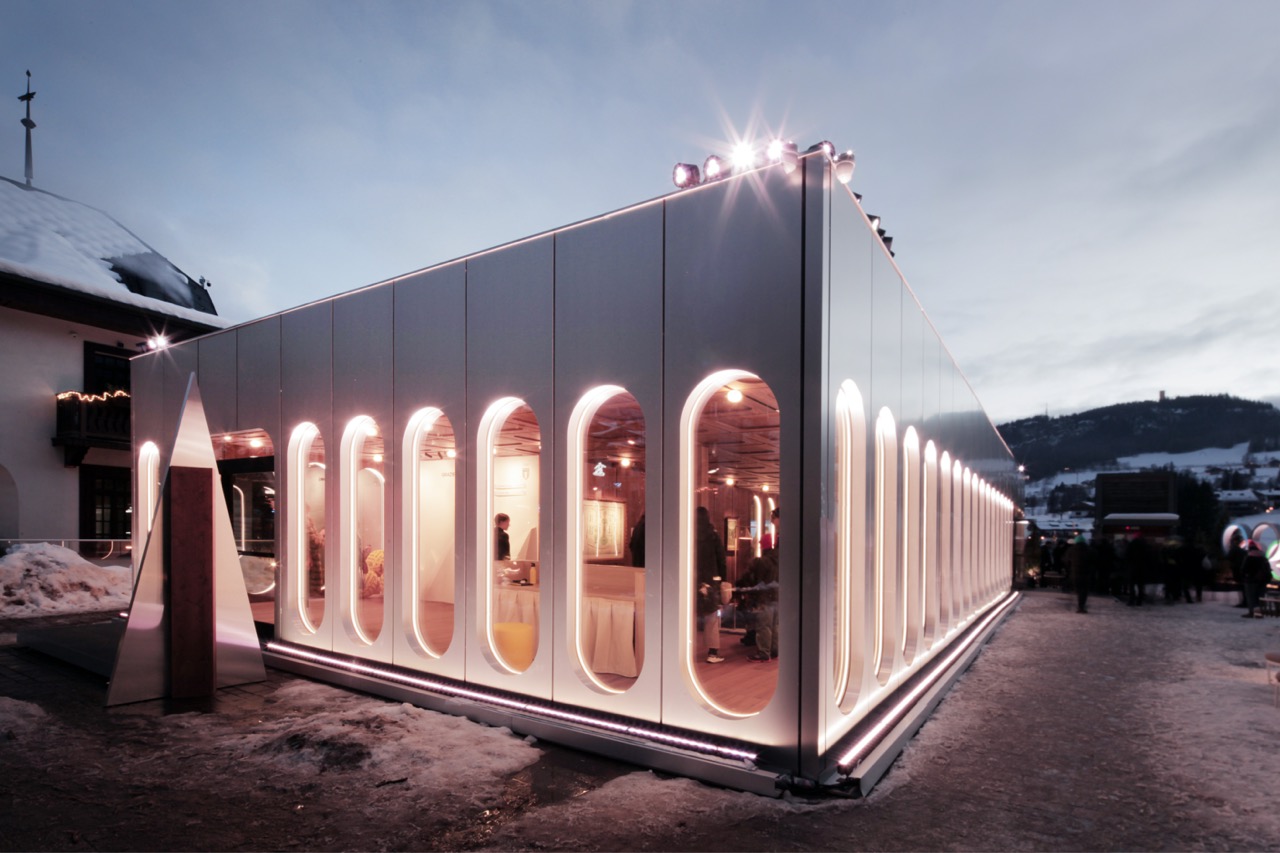
The project introduces a new temporary pavilion dedicated to the athletes’ lounge, celebration and interview areas, together with a metal portal marking the main entrance. The C-shaped layout occupies part of the square, embracing and partially covering the extension of the existing gallery in a gesture of spatial continuity. The sequence unfolds narratively: from the portal, visitors cross exhibition spaces reconfigured with movable furnishings, ascend a ramp into the pavilion, and culminate in the unveiling of panoramic views toward the Tofane, framed by elongated porthole openings that define the architectural identity.
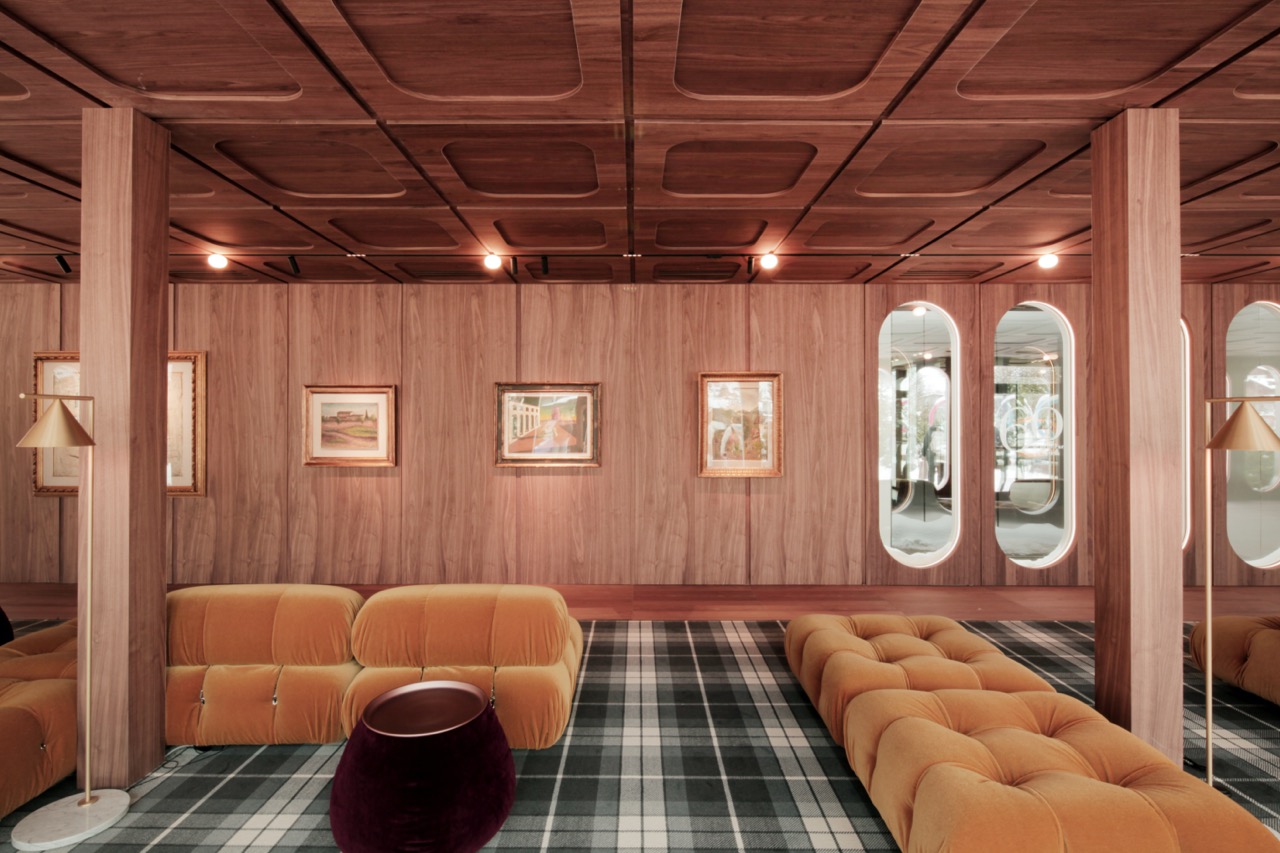
The choice of modular prefabricated elements assembled dry responds to sustainability and optimization criteria, while introducing a perspective of reuse: the pavilion is designed to be dismantled and reassembled, transforming Olympic ephemerality into durable infrastructure. Externally, brushed aluminum reflects the snowy landscape, dematerializing the volume; internally, walnut cladding with reddish hues constructs an intimate, almost domestic atmosphere. Visual continuity between lounge and square, ensured by wide glazing, allows the celebratory moment to be shared publicly, dissolving the boundary between reserved and collective space.
In Milan, the intervention inhabits the monumental spaces of Triennale Milano, articulating an exhibition path across nine sections dedicated to as many muses: language, architecture, visual arts, landscape, taste, music, drama, innovation and sport. Each section is represented by an iconic Olympic object from the Olympic Museum in Lausanne, underscoring the shared and international values of the Olympic movement.
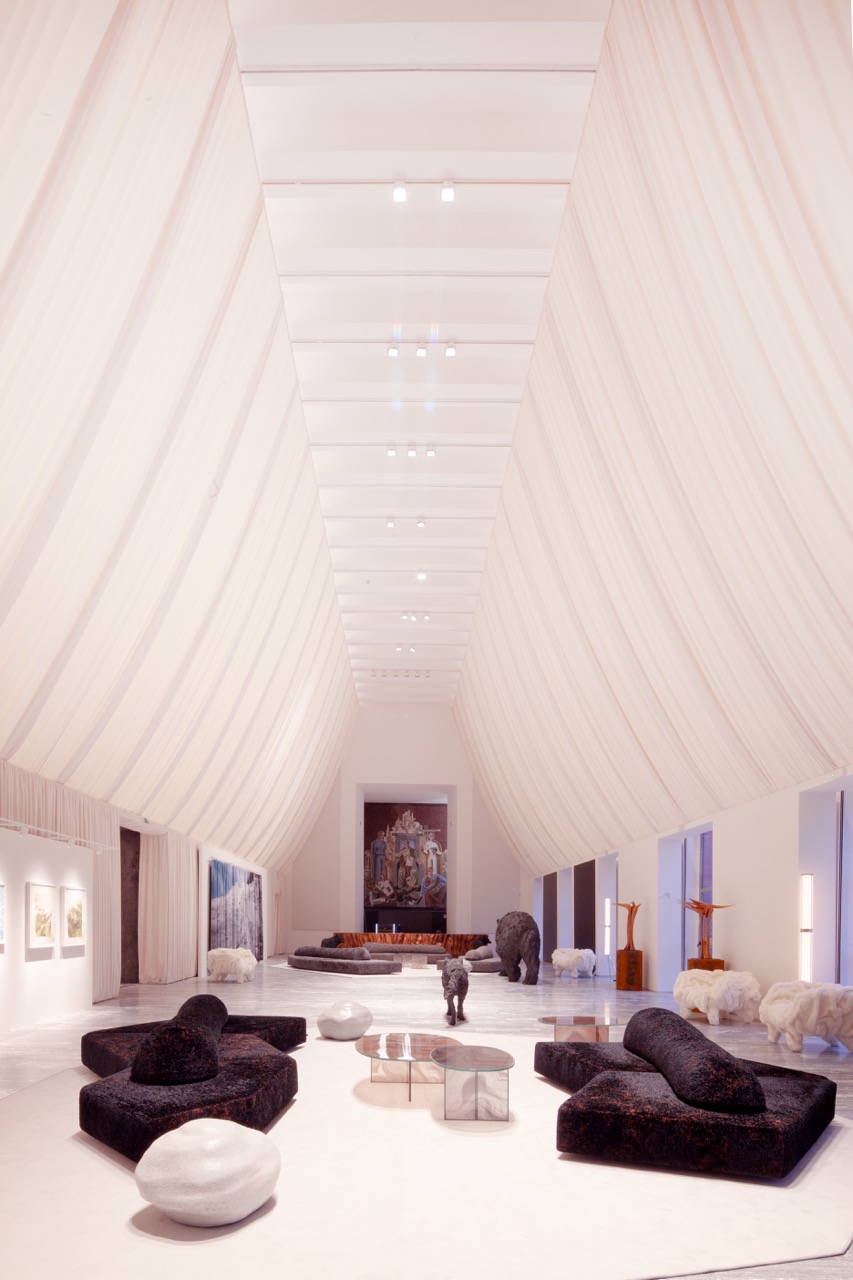
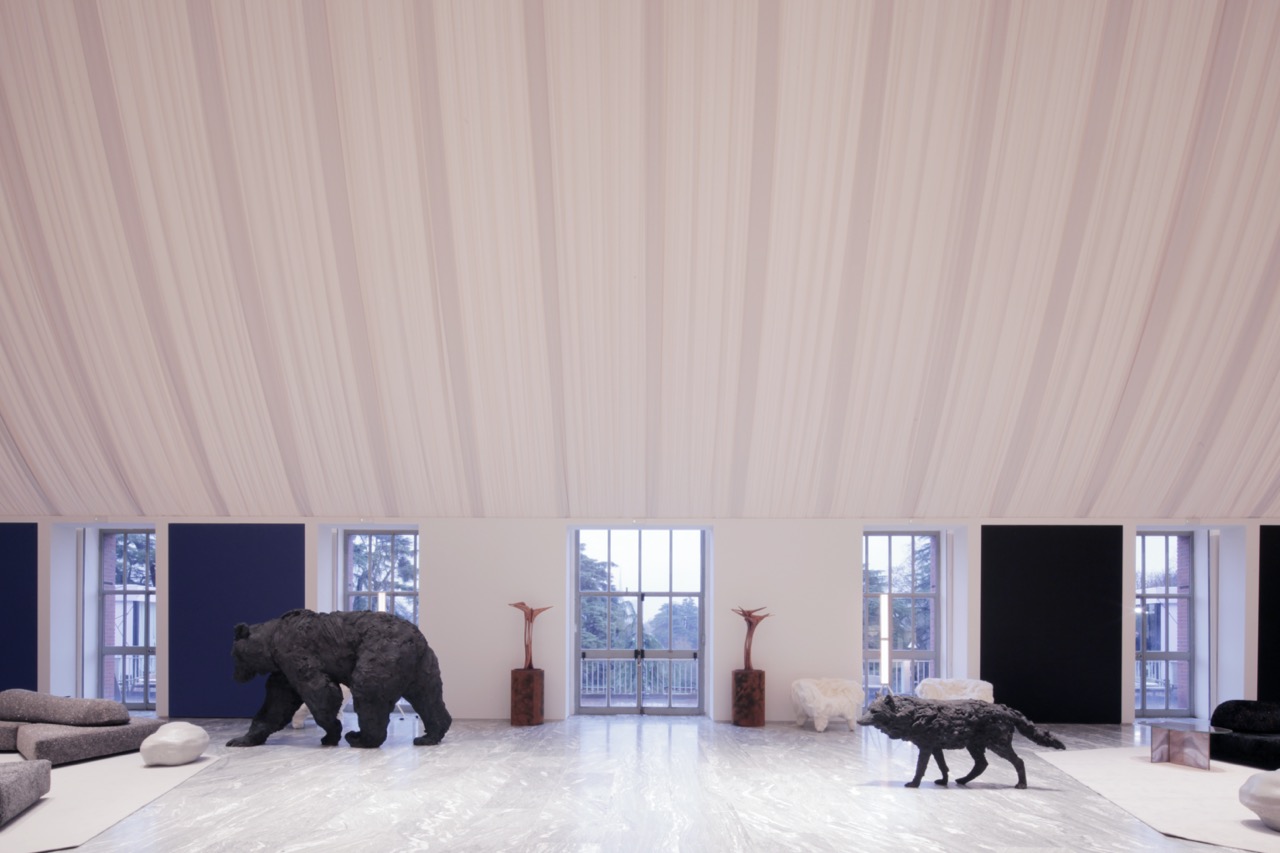
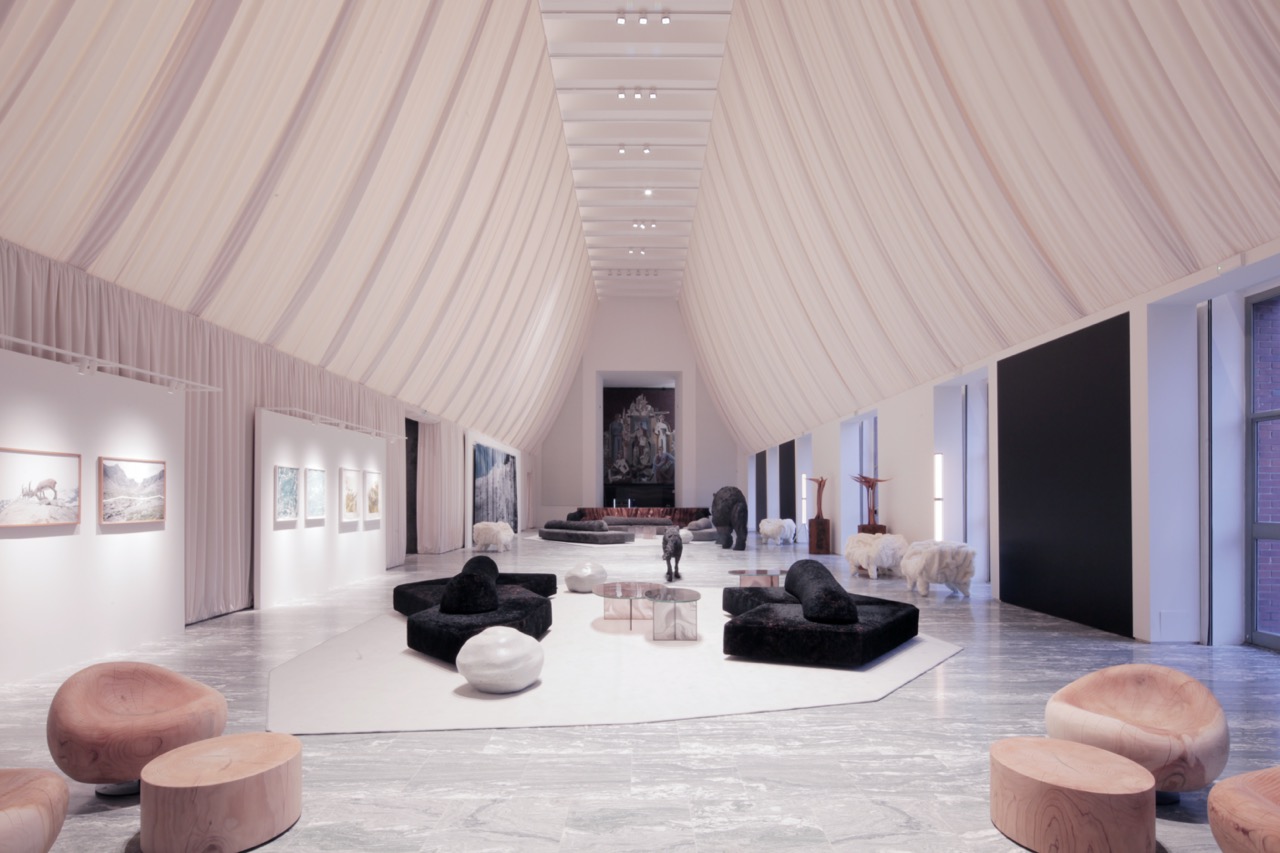
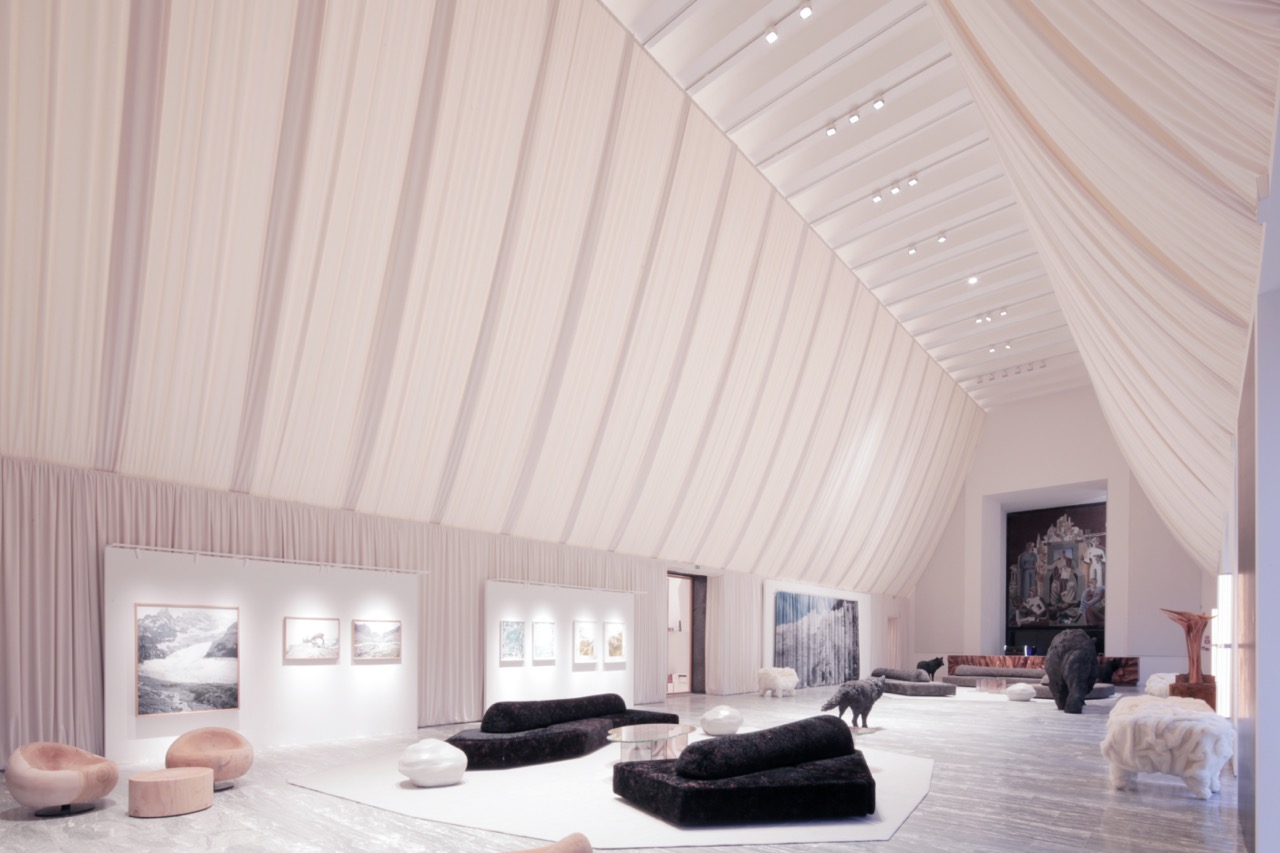
In the Salone d’Onore, an inclined white velvet drapery reshapes the perception of height, bringing the monumental scale back to a more intimate dimension. A neutral palette of white, grey and black is animated by artworks and design pieces that construct an interior landscape of sculptures, carpets, seating and tables in dialogue with natural materials. The portal granting access to the “Musa” exhibition echoes the forms and materials of the other venues, establishing continuity among the three Casa Italia locations. In the glazed restaurant overlooking Milan’s skyline, furnishings and ceiling drapes are replaced, and recycled-fiber carpeting is introduced, evoking winter landscapes through material and chromatic choices.
In Livigno, the installation integrates into the Aquagranda Olympic Training Center, intervening within a complex architectural organism. The entrance portal overlays the existing volumetric and stylistic diversity with the clarity of a modular system of prefabricated aluminum panels, accompanied by a zig-zag wall that defines the reception area.
Three gyms are converted into lounges, the café is transformed into a restaurant, and a new temporary structure is grafted onto the outdoor terrace to host a public après-ski area and a second dining space. The aluminum panel system and porthole openings — here reinterpreted as display vitrines — accommodate exhibition cases, accreditation desks and cloakrooms, while recycled-fiber carpeting overlays existing surfaces to delineate temporary areas without permanently altering the building.
Through the reiteration of materials, details and spatial devices, the project constructs a coherent and recognizable identity, capable of adapting to diverse contexts while maintaining a unified framework. Casa Italia thus emerges as a narrative architecture, a temporary infrastructure and a representational device in which celebration intertwines with sustainability, reuse and the continuity between the ephemeral and the permanent.
CREDITS
Project: Casa Italia “Musa” – Milan Cortina 2026
Location: Milan; Cortina d’Ampezzo (BL); Livigno (SO), Italy
Year: 2026
Project Direction: Lorenzo Pellicelli, CONI Marketing Manager
Concept: CONI Marketing and Beatrice Bertini
Artistic Project: Beatrice Bertini and Benedetta Acciari
Architectural and Set Design: IT’S
Interior Design: Bianca E. Patroni Griffi
Photography: Francesco Mattuzzi Courtesy: IT’S, Henoto