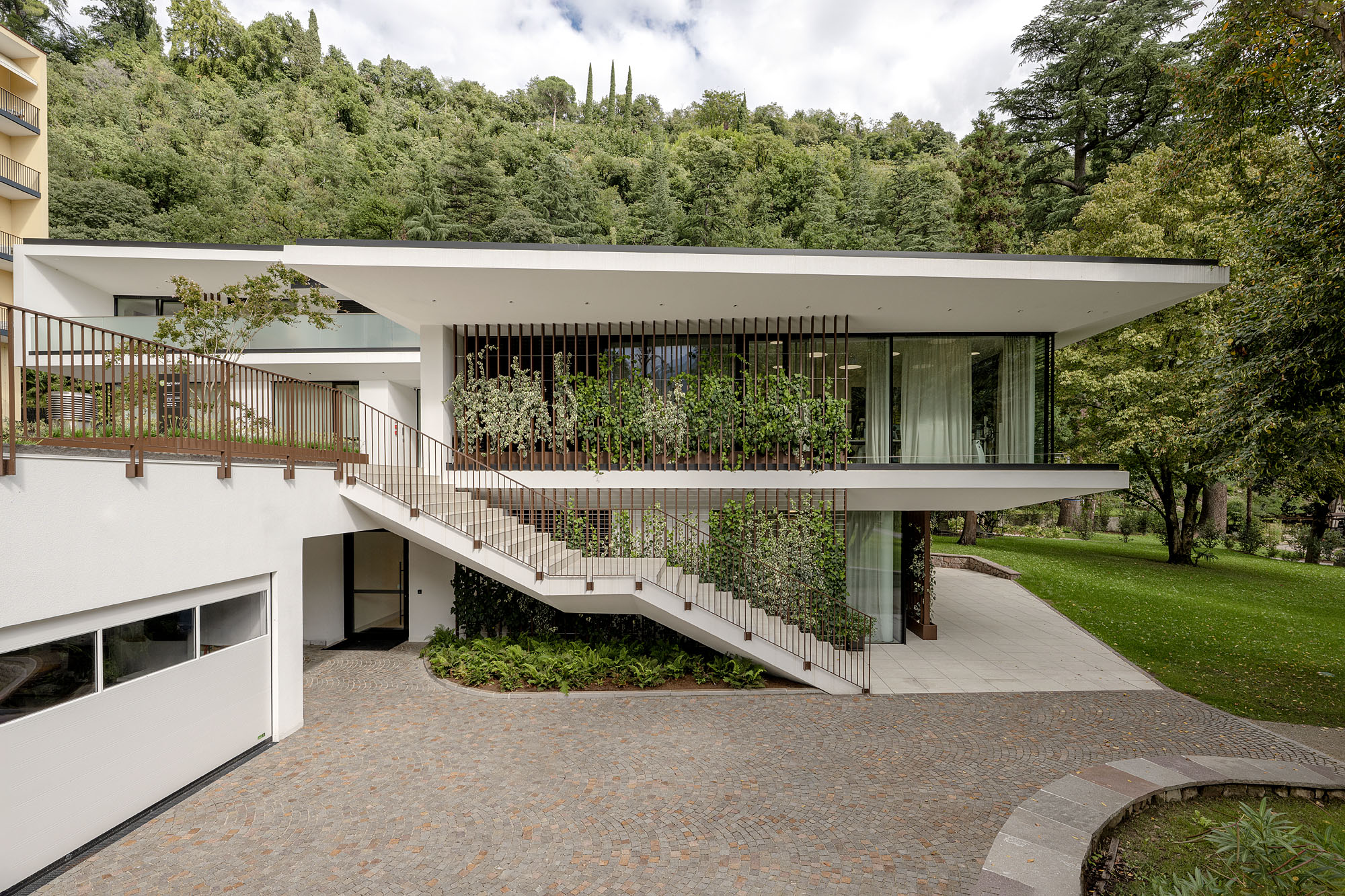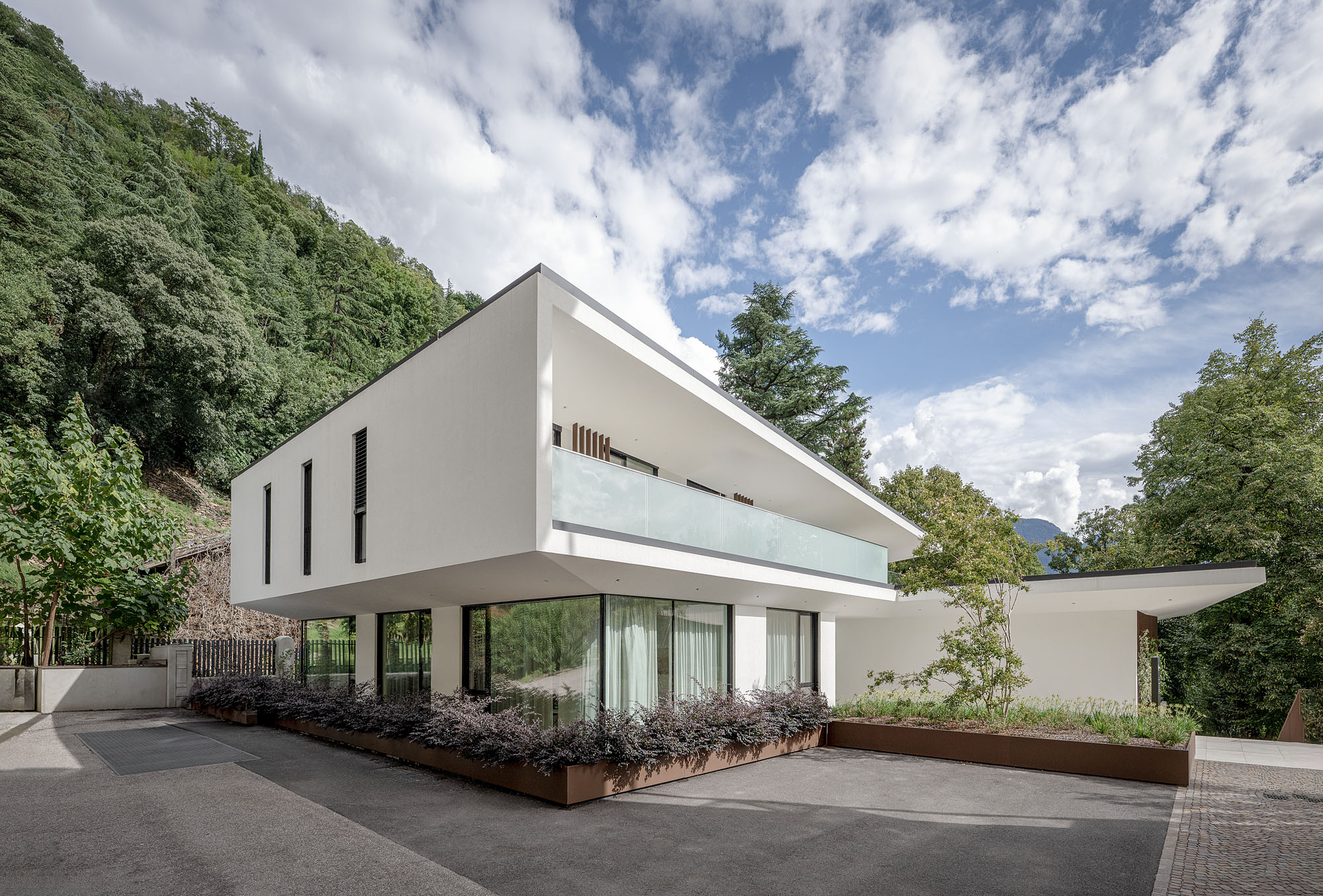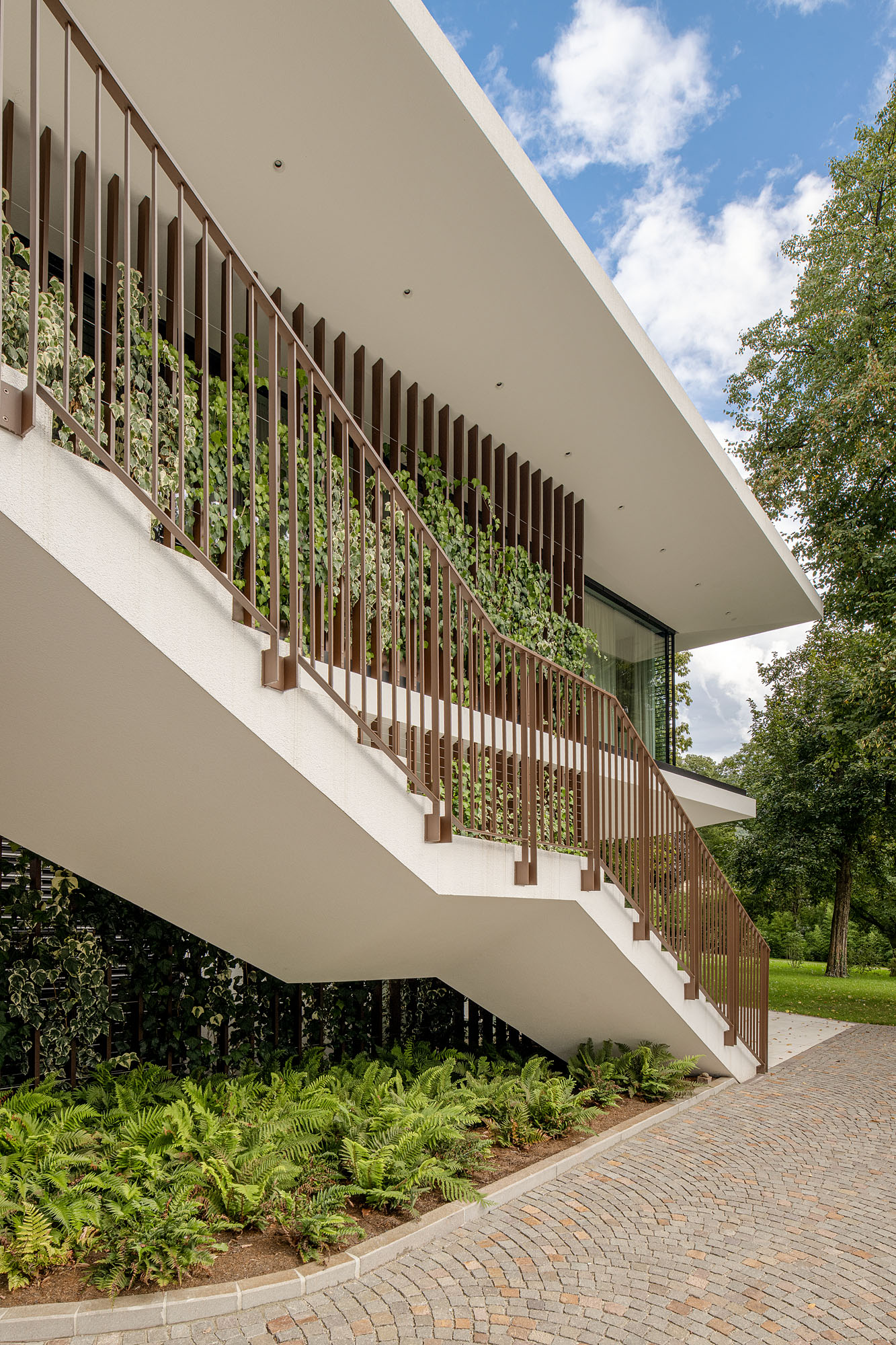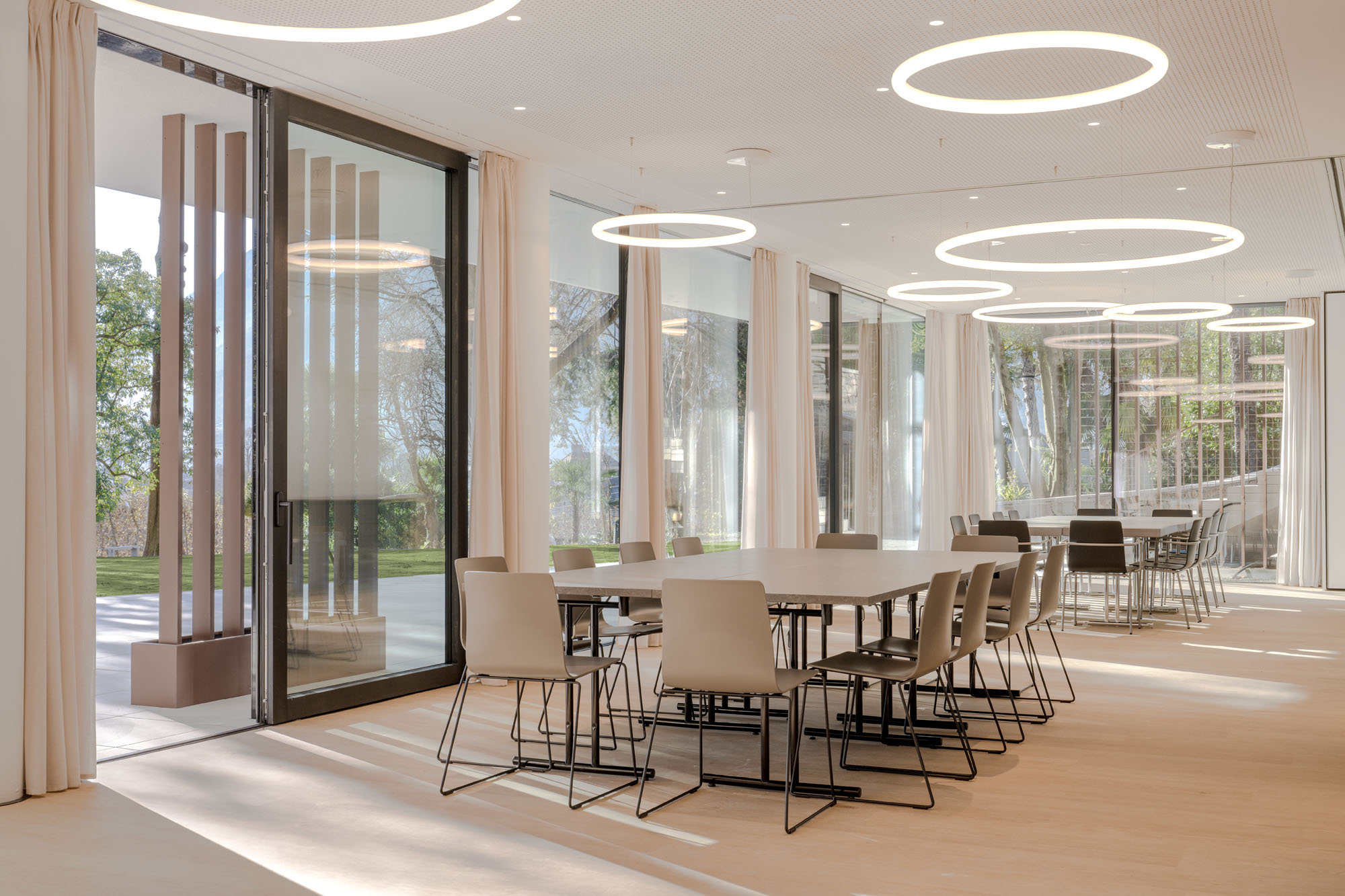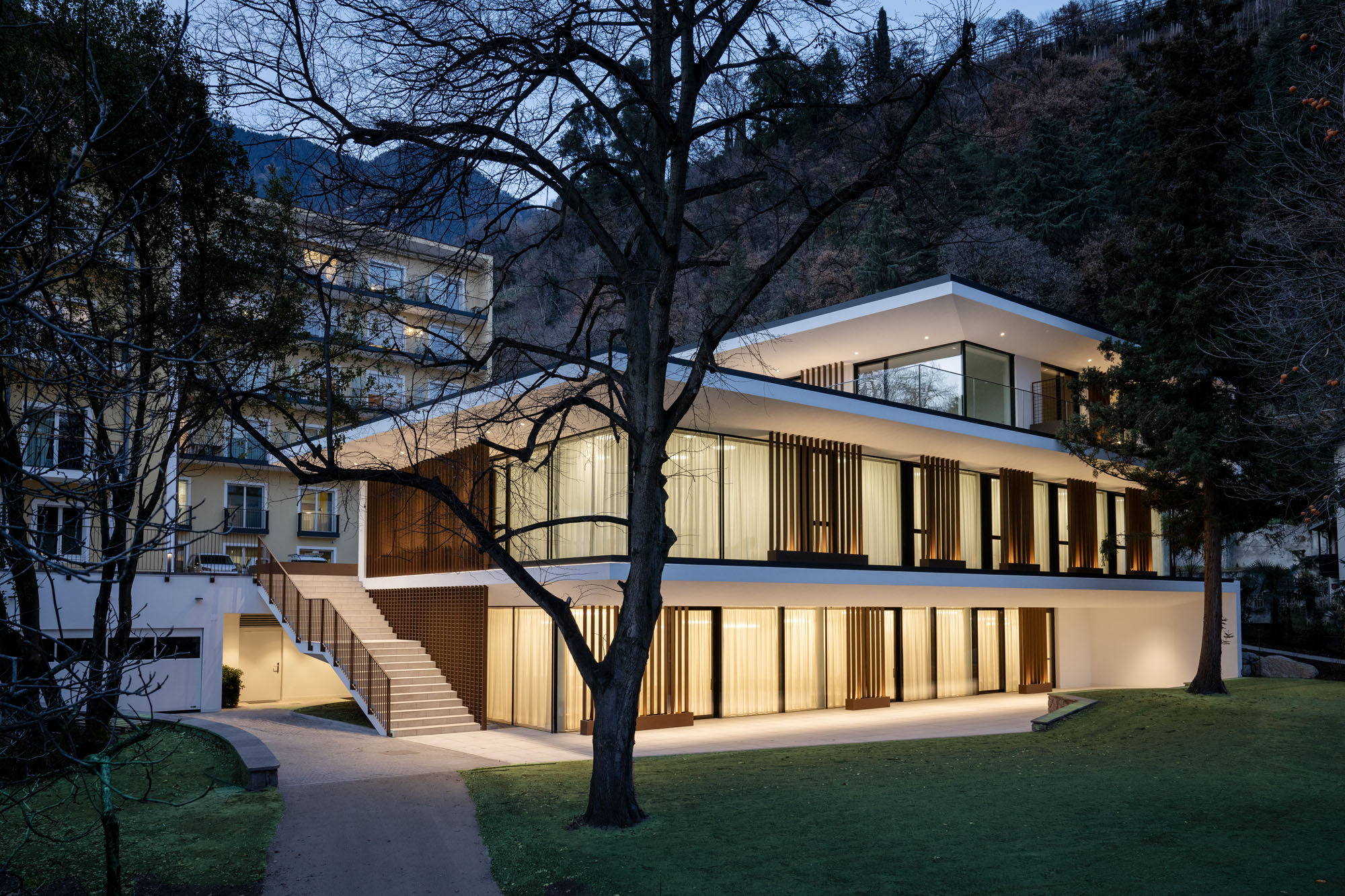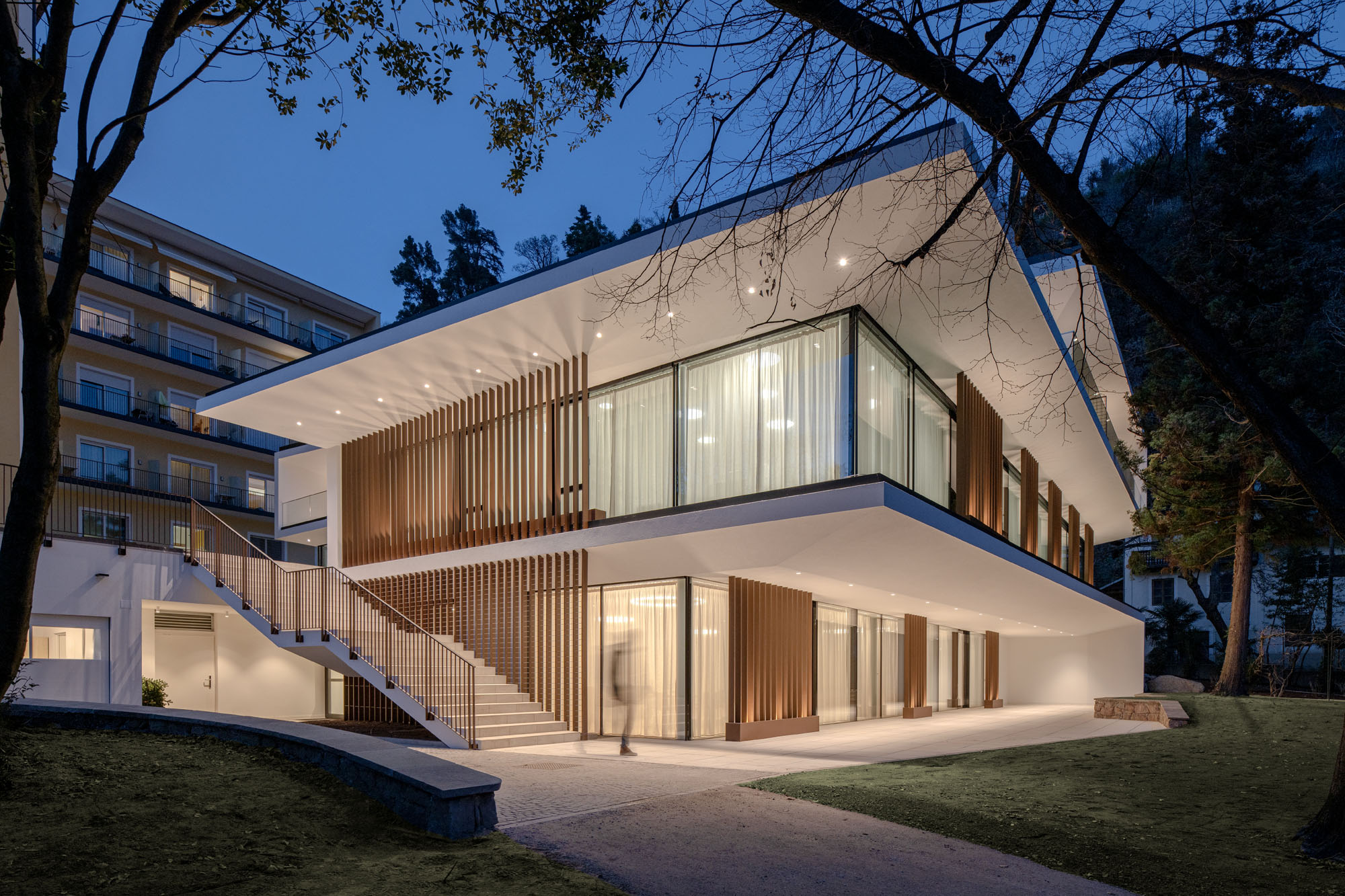

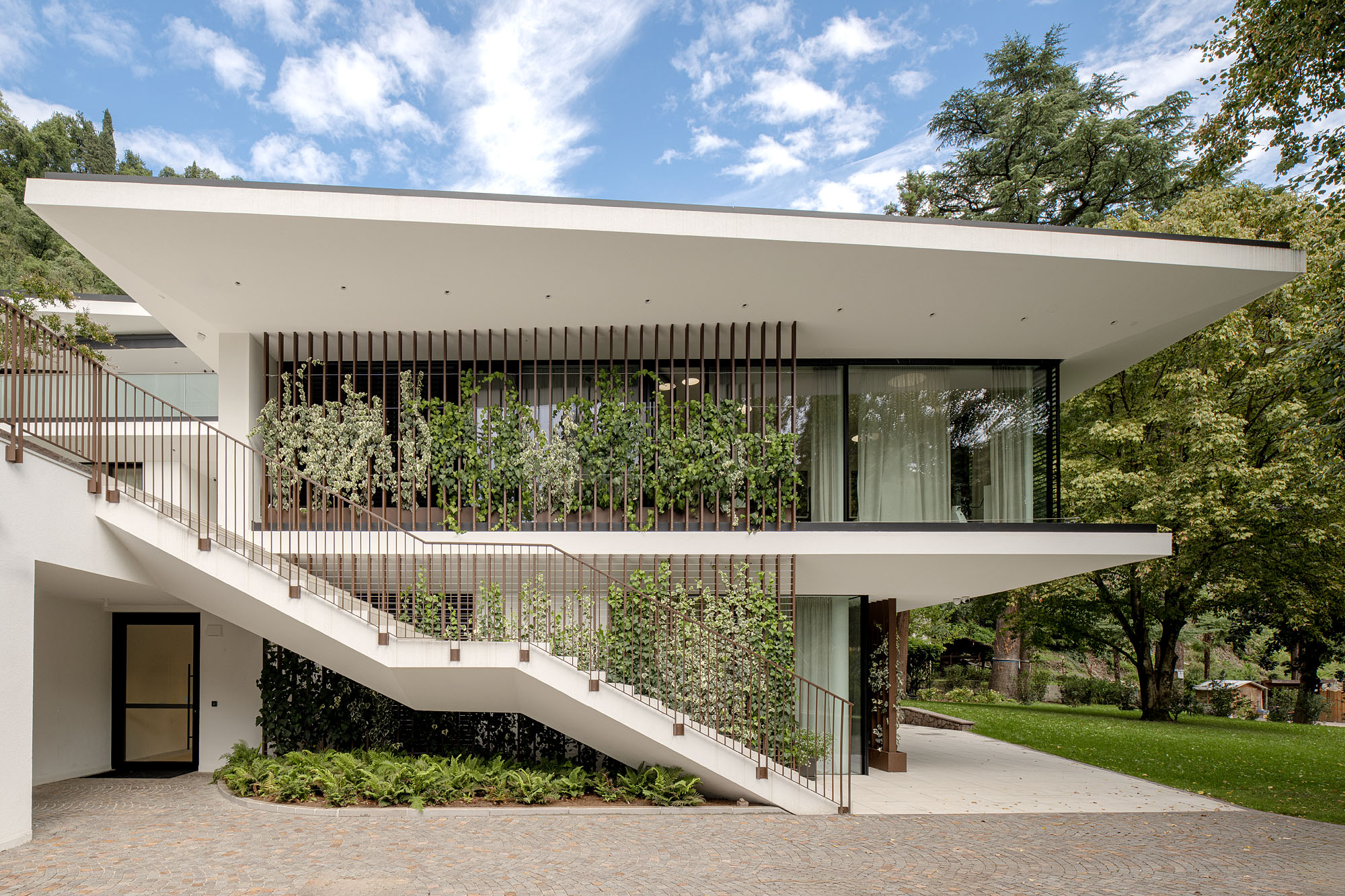
Set within the greenery on the outskirts of Merano, the new Parkclinic Martinsbrunn reinterprets the relationship between healthcare architecture and landscape, proposing a spatial model in which care, rest, and nature converge into a single experience. Designed by monovolume architecture + design, the project replaces an existing pavilion with a new three-level volume, transforming the historic socio-medical facility into a highly specialised centre oriented toward wellbeing and community life. Founded in 1891, the Martinsbrunn clinic has represented a place dedicated to care for over a century. The intervention goes beyond a functional update, redefining the therapeutic experience through architecture, light, and landscape. The building is conceived as an immersive journey through greenery, where spatial organisation and visual permeability foster a continuous dialogue with the surrounding park.
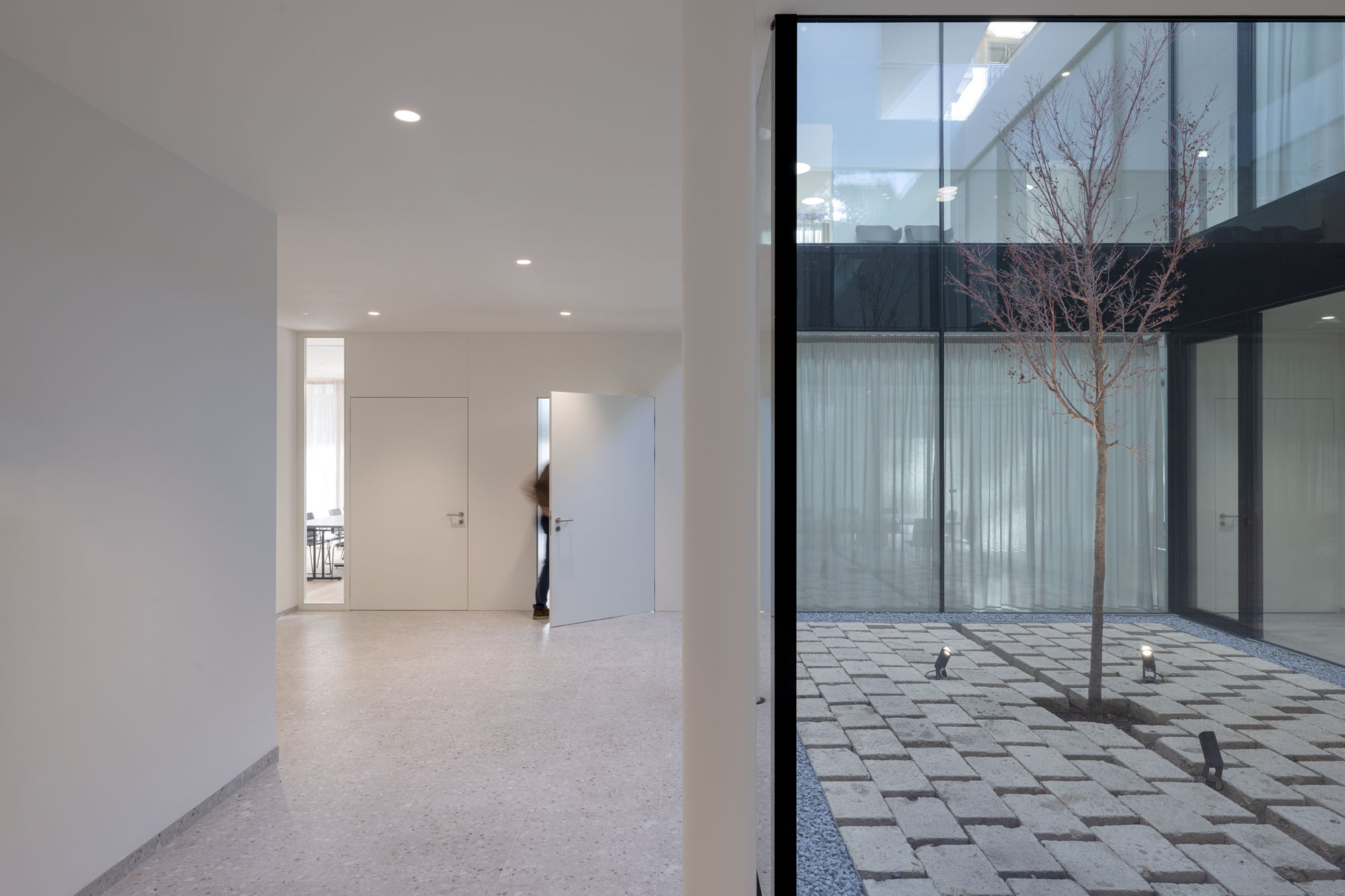
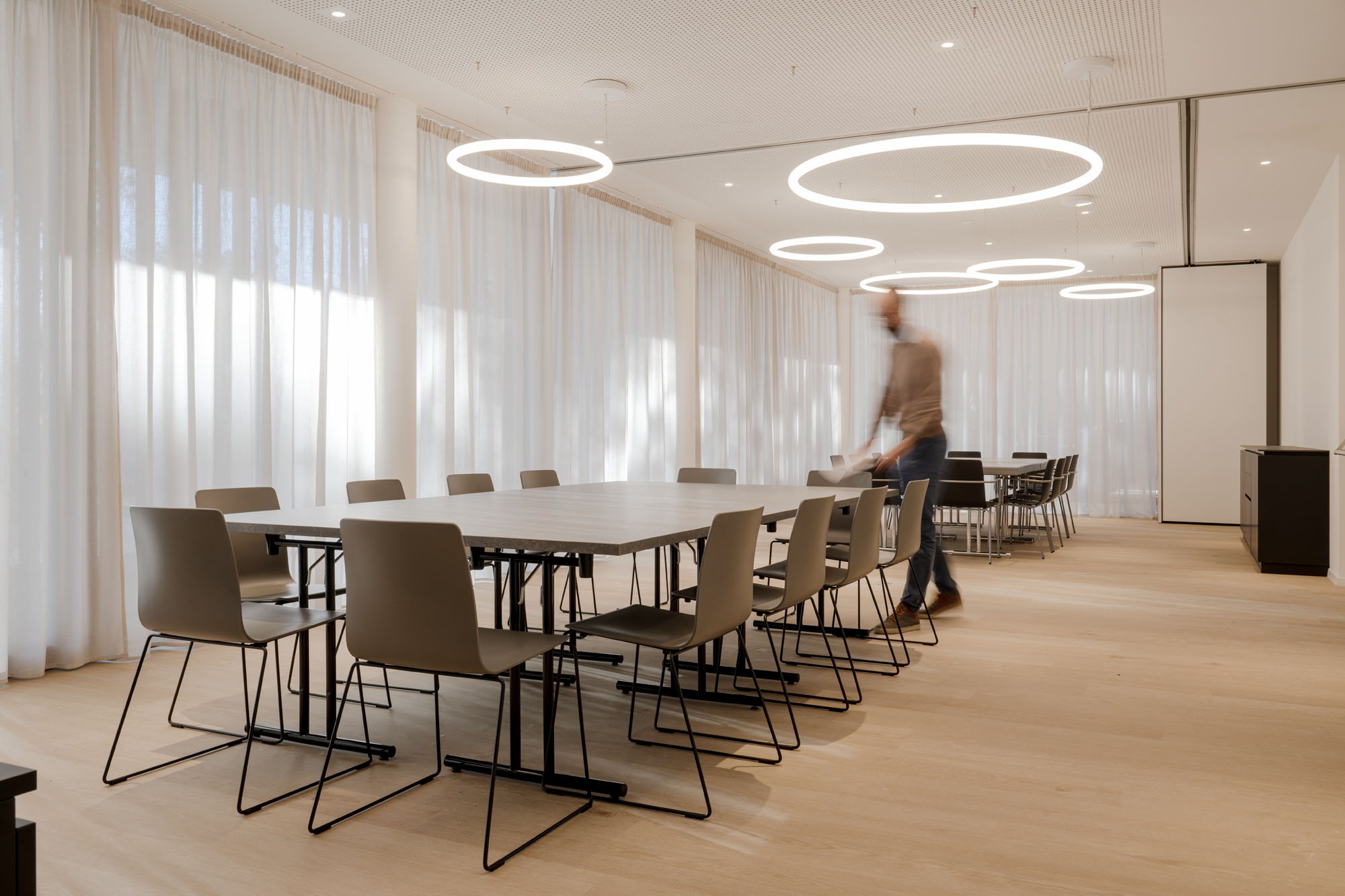
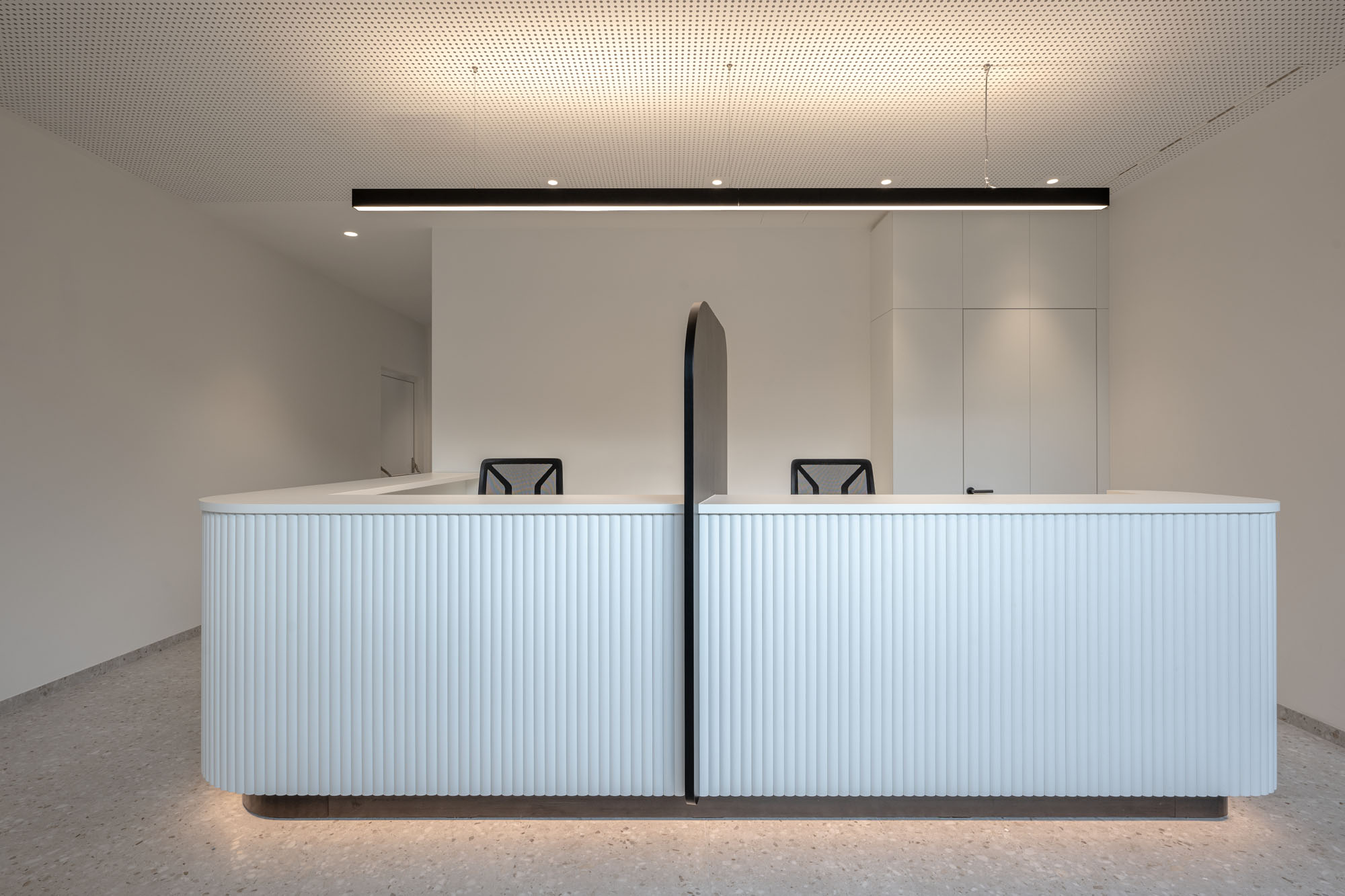
The new volume is distinguished by a light, almost floating façade. Overlapping parallelepipeds compose a dynamic figure in which the floor slabs cantilever outward, becoming both a structural and expressive architectural element. This design gesture enhances the perception of horizontality and visual openness, making the internal organisation of the levels legible from the outside. Transparency is a central design strategy. The extensive glazed façade allows natural light to penetrate deep into the interiors, establishing visual continuity between the courtyard, the park, and the clinical spaces. The boundary between inside and outside dissolves, generating an atmosphere of calm and psychological comfort. The choice of white as the dominant colour, used for both the façade and the interiors, amplifies luminosity and contributes to creating a serene environment, far removed from the traditional hospital aesthetic. From a programmatic point of view, the extension defines an articulated and integrated system. The ground floor accommodates a new outpatient clinic with ten treatment rooms and administrative offices, strengthening the facility’s role as a specialised medical centre. On the first floor, five assisted apartments—two- and three-room units—are designed for elderly residents or people with specific care needs. All units face the park, making nature a constant presence in the daily lives of the guests. The basement level houses a conference room, a laundry, and service areas, ensuring operational efficiency without compromising the compositional clarity of the volumes above ground. This functional stratification reflects a broader ambition: to integrate medical treatment, assisted living, and social interaction within a single coherent architectural organism. A key element of the project is the enhancement of the park as both a therapeutic and civic space. Shaded areas, accessible paths, and open green zones invite walking, resting, and informal encounters. Open to the public during the day, the park acts as a green lung for the city, reinforcing the clinic’s inclusive identity. Nature is not merely a backdrop but an active agent in the healing process. Sounds, colours, and seasonal variations become experiential components that contribute to psychological wellbeing and recovery. In this way, the architecture aligns with the most recent research on healthcare environments, which recognises the natural context as a decisive factor in reducing stress and improving quality of life.
For more information, visit www.monovolume.cc
CREDITS
Project: Parkclinic Martinsbrunn
Studio: monovolume architecture + design
Location: Merano
Year: 2025
Photo credits: Giovanni De Sandre