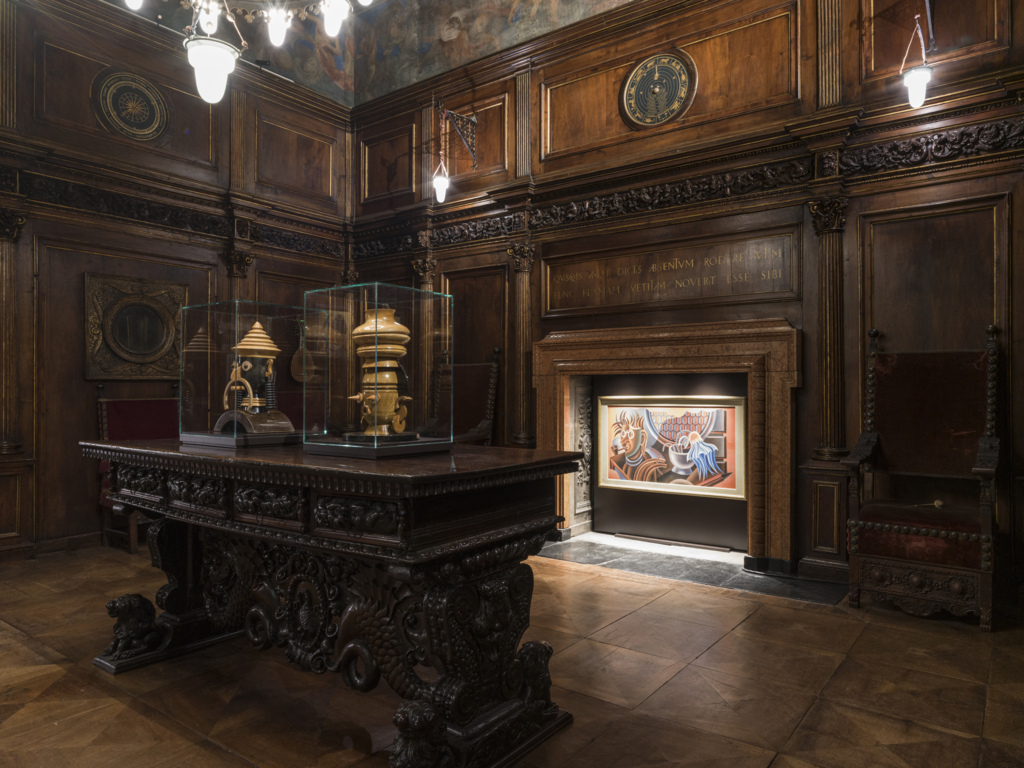

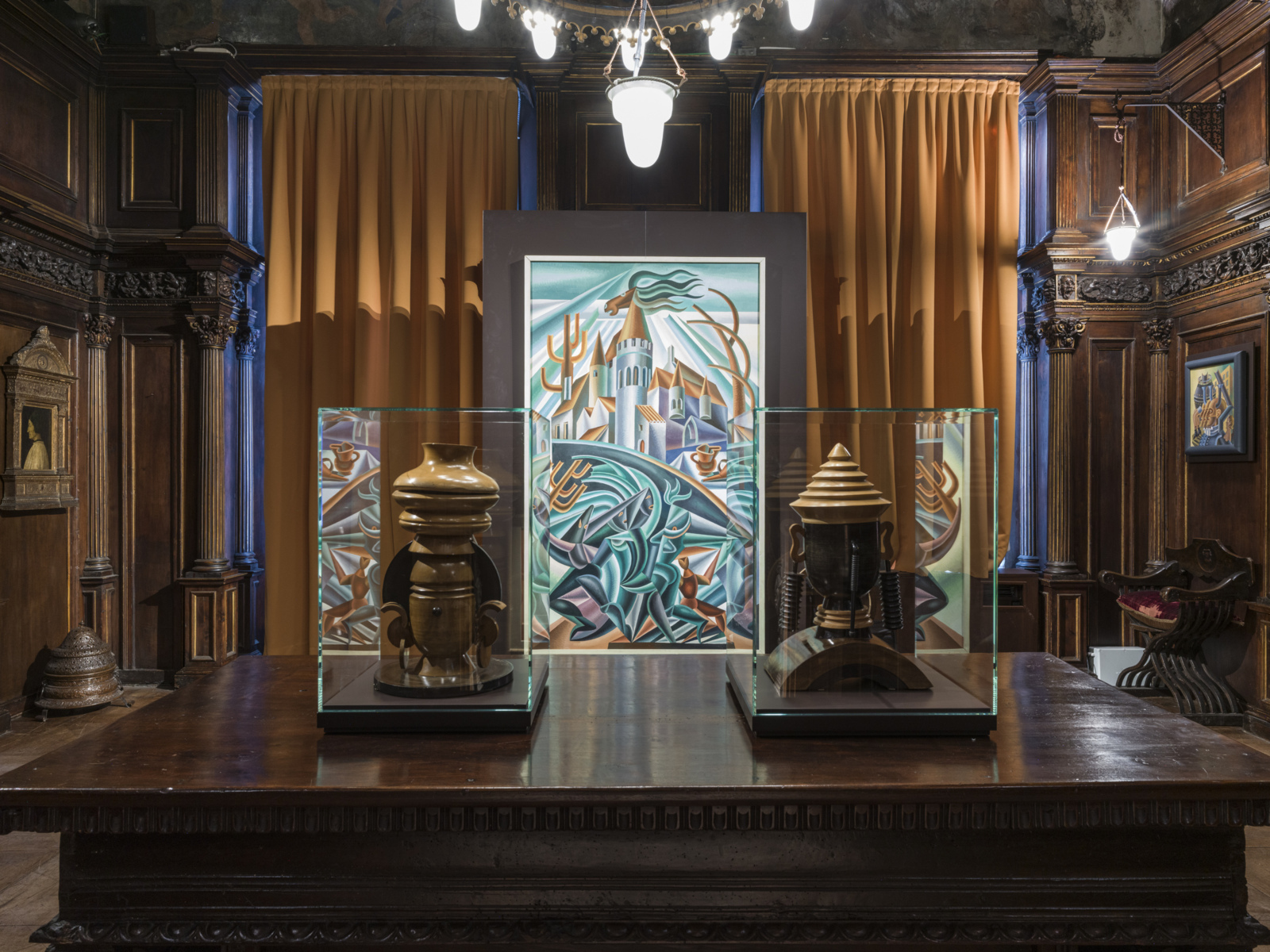
In the rooms of Museo Bagatti Valsecchi, where carved wood paneling and Renaissance furnishings once staged a cultivated fantasy of the Italian past, a bold presence now inhabits this magnificent atmosphere. With Depero Space to Space. La creazione della memoria, the Milanese house museum becomes the setting for a striking and magical encounter between the twentieth and nineteenth centuries, the restless imagination of Futurist artist Fortunato Depero, whose work perpetually negotiates between archaic and progressive visions, and the barons Fausto and Giuseppe Bagatti Valsecchi, visionary and devoted collectors of Neo-Renaissance art.
The exhibition, curated by Nicoletta Boschiero and Antonio D’Amico, organized in collaboration with Mart, Museum of Modern and Contemporary Art of Trento and Rovereto, is on view from February 13 to August 2, 2026. The installation, conceived by the Milan-based a-fact architecture factory, with lighting design by LightScene Studio, treats the museum not as a container but as an active participant. The exhibition unfolds as a relational device, carefully staging Depero’s works in a spatial dialogue, becoming an active narrative.
The intervention intends to “dress” the house, alluding to the Bagatti Valsecchi brothers’ reinvention of the interior in their erudite interpretation of sixteenth-century Milan. The residence, created in the late nineteenth century by the brothers, was never only a home. It was an aesthetic manifesto, a meticulous reimagining of a sixteenth-century Milanese palazzo, complete with period furnishings, applied arts, and decorative coherence. A historical devotion that didn’t deny a thoroughly modern sensibility: electric lighting, running water, and a belief that design could shape daily experience.
This tension between past and present forms the conceptual hinge of the exhibition. Depero, working decades later, pursued a parallel ambition. In Rovereto, he transformed a historic building into what would become the Casa d’Arte Futurista Depero, integrating contemporary works into an ancient structure and collapsing distinctions between art, architecture, and environment. Both projects, one neo-Renaissance, the other late Futurist, share a desire to construct total worlds, spaces in which art and life are inseparable.
The exhibition draws out this unexpected kinship. More than forty works by Depero, dating from the 1930s through the 1950s, are not displayed but inserted into the domestic fabric of the house. Paintings temporarily replace historical pieces; decorative compositions echo the museum’s furnishings, appearing as if they had always belonged to the rooms. The installation does not impose a narrative, but tries to initiate a conversation. Rather than transforming the historic interiors into theatrical backdrops, the designers treat the project as a “vestment,” a subtle layer that activates relationships between objects and rooms. Carefully calibrated lighting heightens this sense of temporal dislocation, suspending visitors between centuries, between Renaissance solidity and Futurist dynamism.
Through the exhibition, one experiences a peculiar elasticity of time. Depero’s angular figures, vibrant textiles, and mechanical fantasies live with the stillness of the neo-Renaissance environment, yet also revealing unexpected affinities: a shared fascination with craftsmanship, ornament, and the shaping of space as a total aesthetic experience. The result is what the curators describe as an “aesthetic short circuit.” The past does not yield to the future, nor does modernity erase tradition; each sharpens the other’s presence. The museum becomes a laboratory in which historical continuity is tested and reimagined.
Emphasis on total experience reflects Depero’s own multidisciplinary practice. Painter, designer and scenographer, he consistently dissolved boundaries between the arts. His installations, theatrical projects, and decorative works aimed to reshape perception. It also marks a symbolic return to Milan, central to the artist’s career, his chosen city, where he displayed, found patrons, and later received critical recognition. More than three decades after the last major retrospective devoted to him, his pieces reappear not as a historical artifact but as a living proposition about space, design, and memory.
Photo Credits:
Cover: Sala della Stufa Valtellinese. Photo by Elena Datrino. Fortunato Depero, Danza del vento, 1952, Mart, Fondo Depero
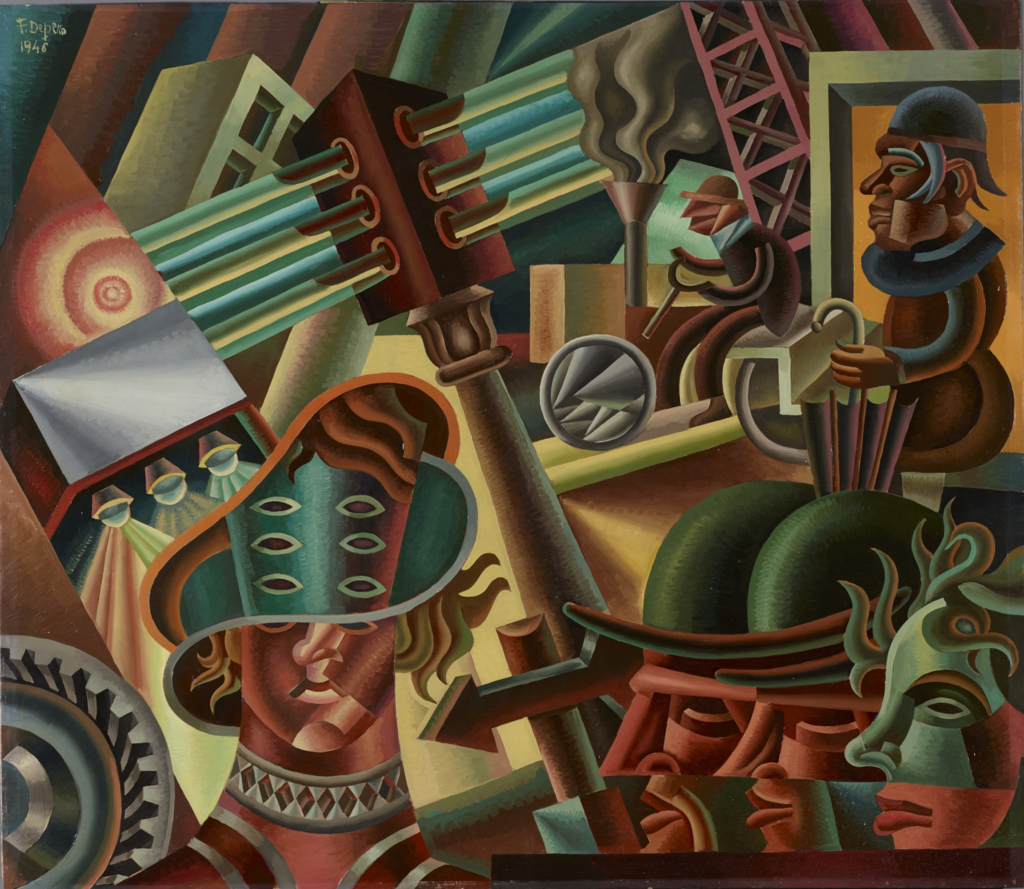
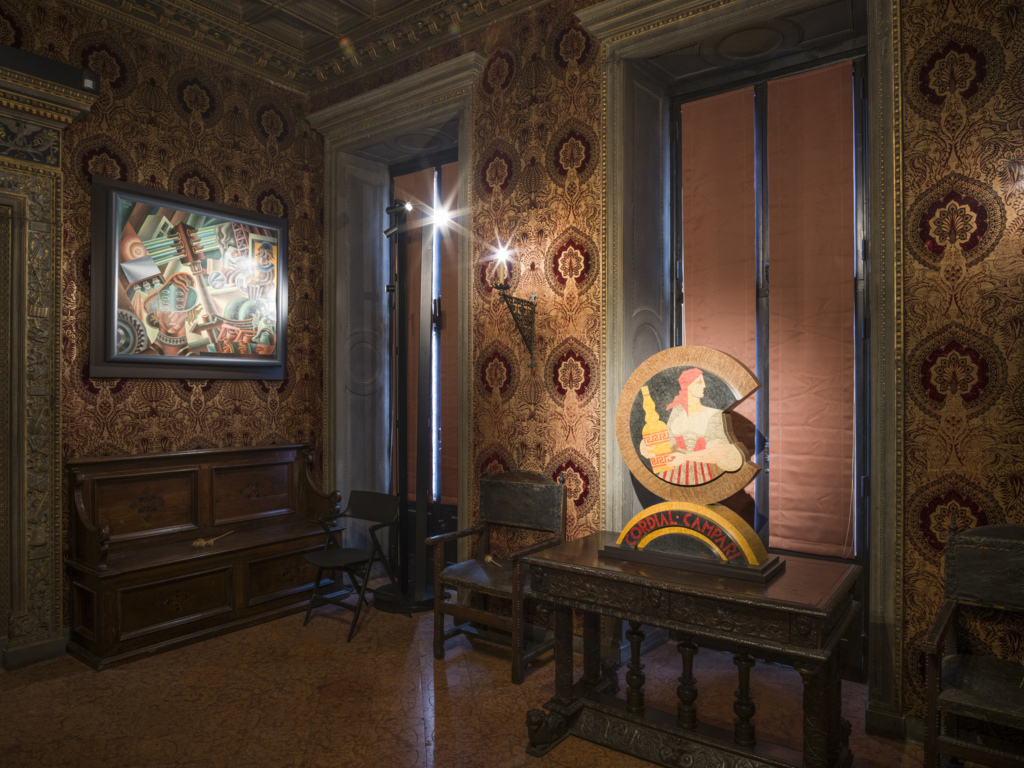
01: Sala Bevilacqua. Photo by Elena Datrino. Fortunato Depero, Cordial Campari, 1939, Mart, Fondo Depero. Fortunato Depero, Simultaneità metropolitane, 1946, Mart, Fondo Depero
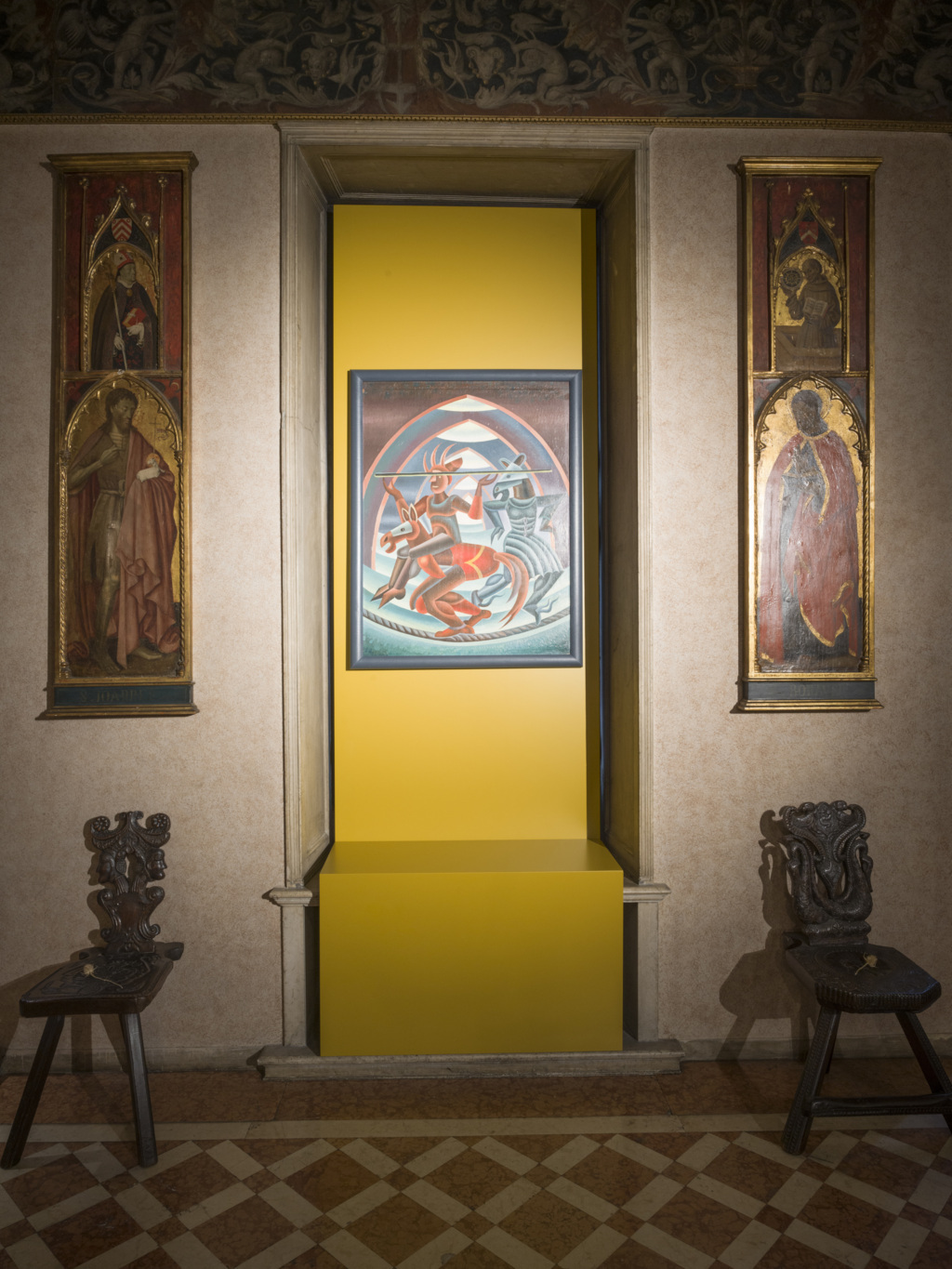
02: Sala dell’affresco. Photo by Elena Datrino. Fortunato Depero, Cavalli sulla corda, Mart, Fondo Depero
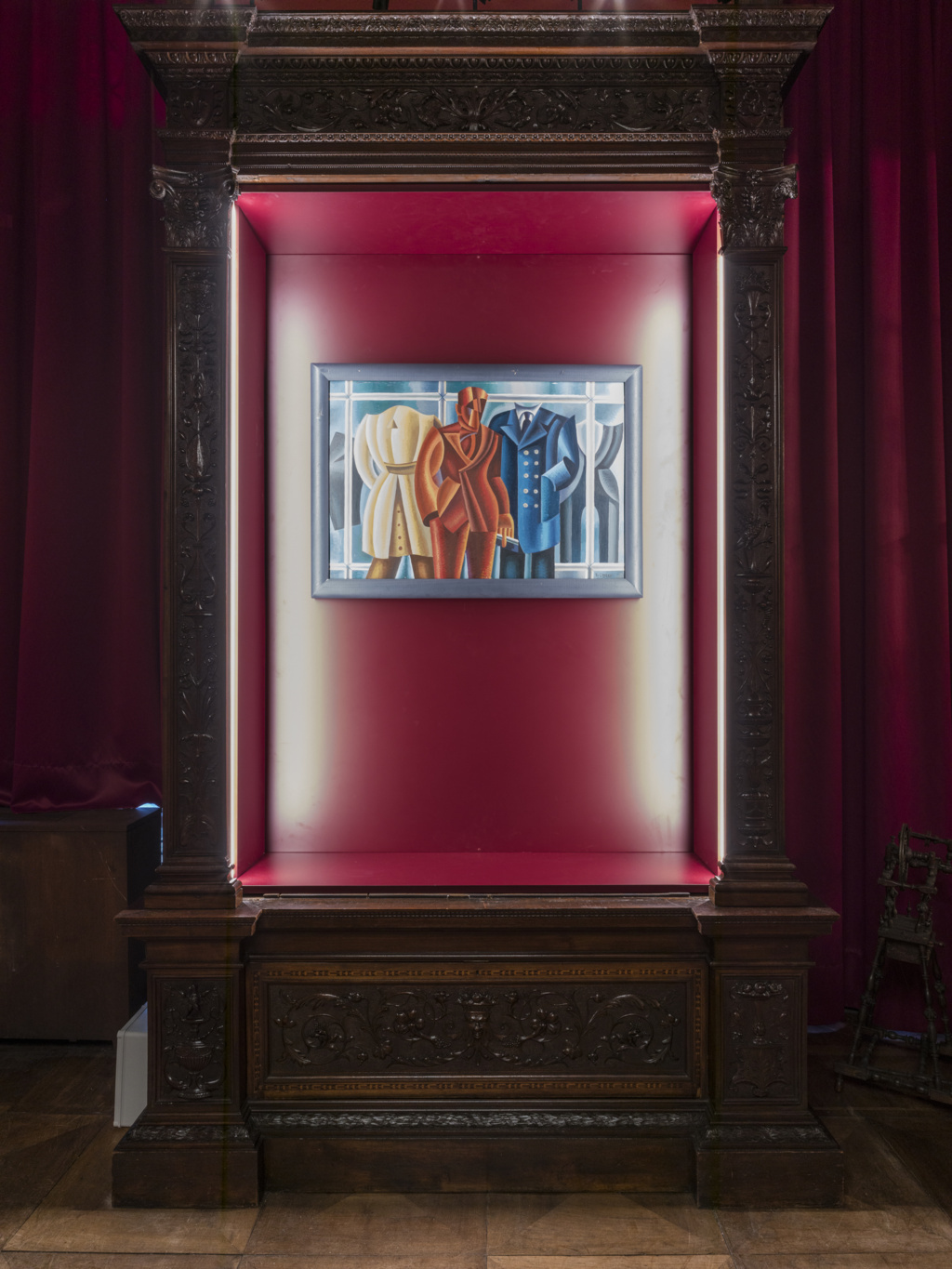
03: Camera Rossa. Photo by Elena Datrino. Fortunato Depero, Abiti da uomo, 1945,Mart, Museo di arte moderna e contemporanea di Trento e Rovereto Fondo Depero © FORTUNATO DEPERO, by SIAE 2026
04: Sala della Stufa Valtellinese. Photo by Elena Datrino. Fortunato Depero, (L’uomo con la pipa) Fumatore e fiore, 1946, Mart, Fondo Depero
05: Sala della Stufa Valtellinese. Photo by Elena Datrino. Fortunato Depero, Danza del vento, 1952, Mart, Fondo Depero