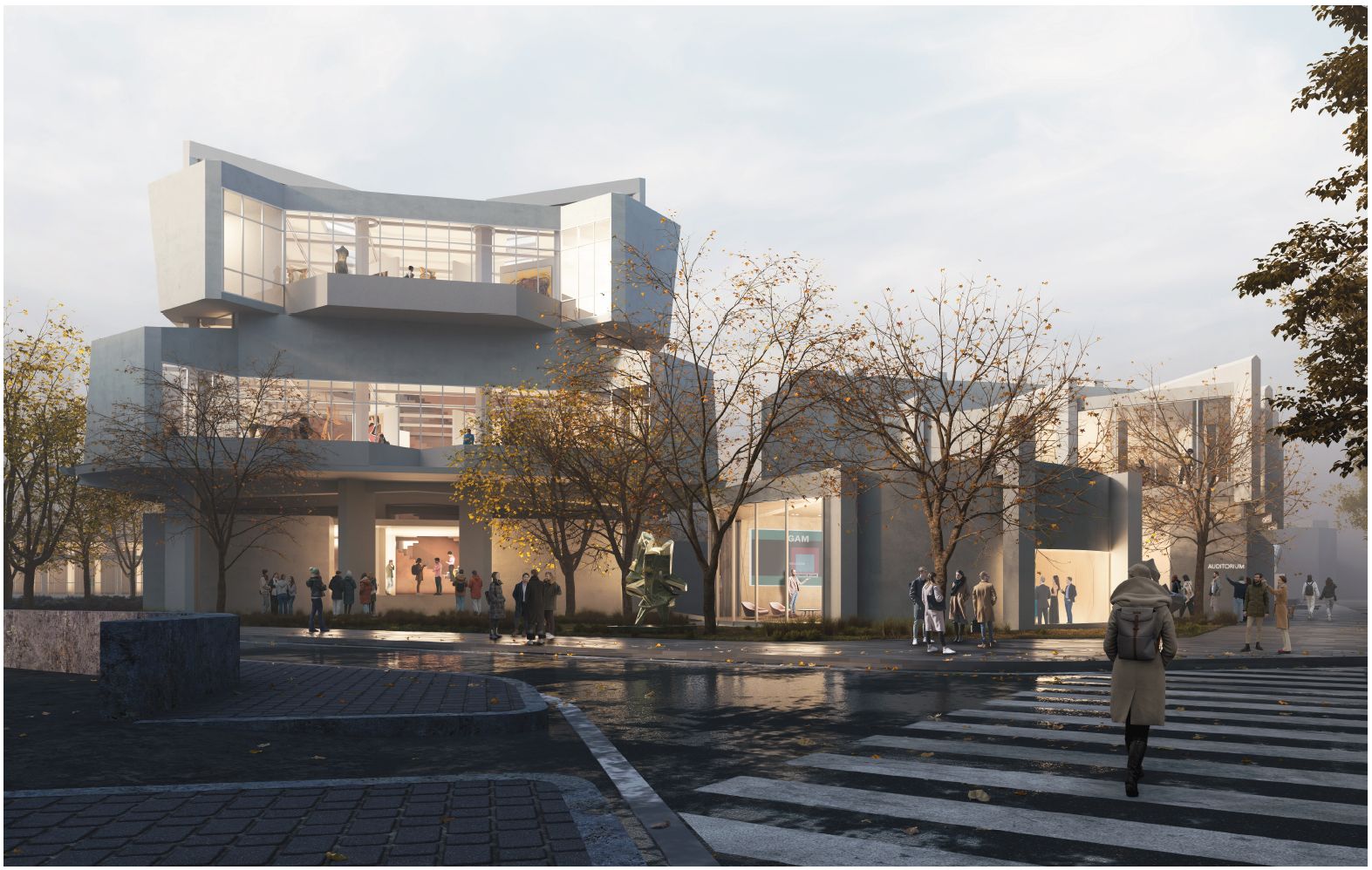

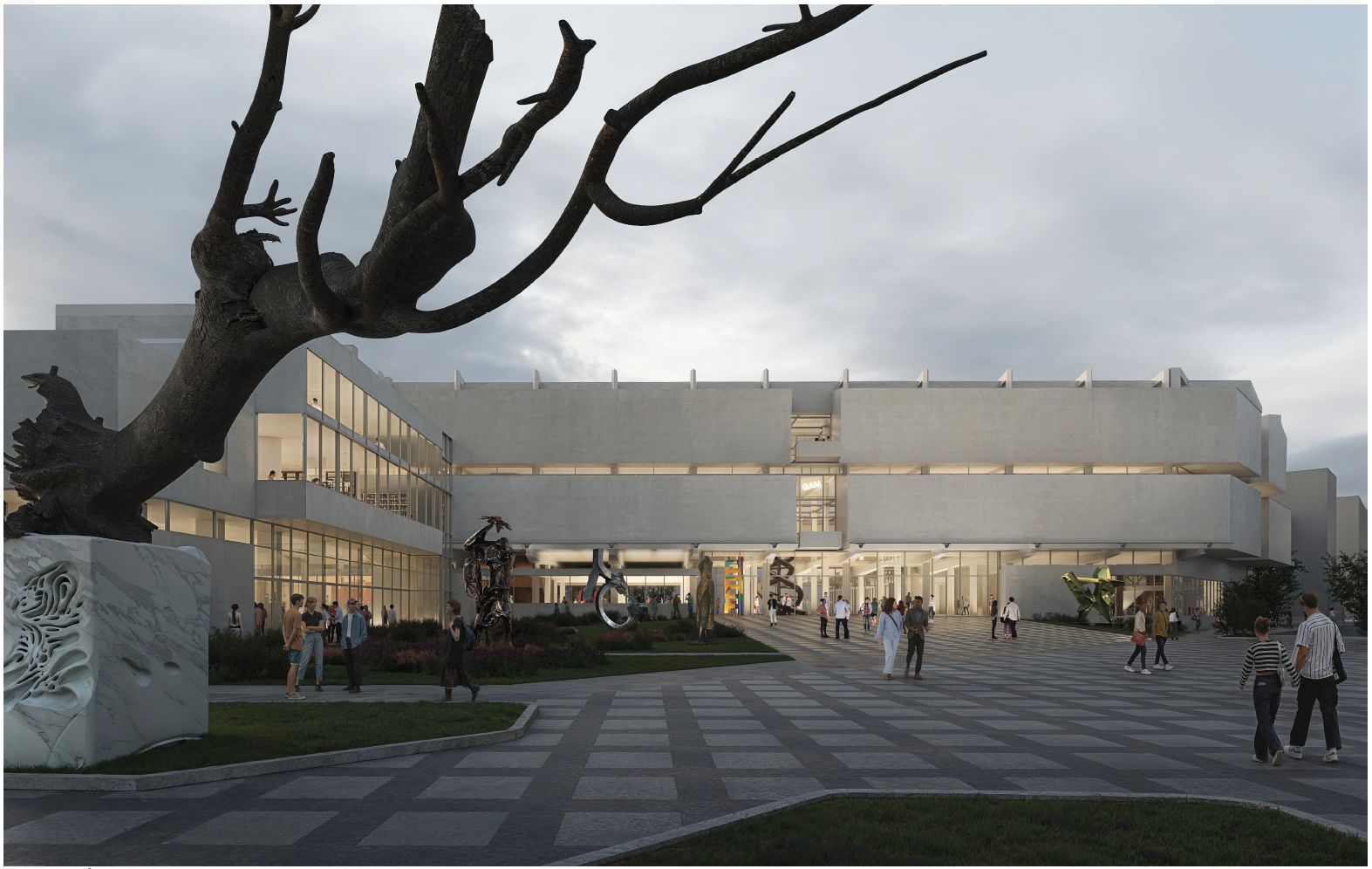
The International Design Competition for the Redevelopment, Relaunch, and Enhancement Plan of the GAM – Galleria Civica d’Arte Moderna e Contemporanea di Turin was won by the team led by MVRDV, in collaboration with Balance Architettura and EP&S Group, together with Dr. Michelangelo Di Gioia and Prof. Eng. Filippo Busato.
The outcome of the competition—promoted by Fondazione Torino Musei and Fondazione Compagnia di San Paolo, with the City of Turin and the support of the Fondazione per l’architettura / Torino—opens a strategic phase for one of the most emblematic museum buildings of postwar Italy.
Founded as Italy’s first gallery of modern art, the GAM consolidated, after postwar reconstruction, an architectural framework conceived to interpret an advanced idea of the museum: not merely a container for collections, but a cultural infrastructure capable of engaging with the city and with the ever-evolving modes of public use.
The winning proposal was described by the Jury as able to combine vision, design quality, and functional coherence, treating the complexity of the contemporary museum as an operational field rather than a constraint. In this sense, the intervention is not conceived as a simple performance upgrade or technological update, but as a genuine repositioning—one that simultaneously addresses historical identity and transformation, preservation and openness, internal organization and urban relationships.
Statements by the winning team clearly outline a methodological starting point: the site visit does not generate a corrective gesture toward the existing building, but a critical review of the layers accumulated over time, distinguishing what belongs to the building’s identity structure from what can be reconsidered and, in some cases, restored.
From this premise, the project declares its intention to move beyond the building itself and to assume openness as its primary objective. Opening the garden and the square means transforming the museum into an urban, traversable device, capable of inviting the city to enter not only the exhibition halls, but along a sequence of spaces extending down to the basement and storage areas, traditionally perceived as the functional backstage of the museum machine.
This shift in perspective—from the museum as destination to the museum as pathway—intersects some of the most pressing issues facing contemporary cultural institutions: expanding accessibility, redefining the visitor experience, ensuring flexibility for future exhibitions, and supporting models of use oriented toward the audiences of tomorrow.
The competition explicitly called for engagement with themes such as environmental sustainability, energy efficiency, and architectural and technological innovation, as well as with the social and inclusive role of the museum, understood as a cultural square and a place of participation.
The economic and operational framework confirms the scale of the intervention. Fondazione Compagnia di San Paolo has declared a comprehensive commitment capable of covering the cost of the operation, estimated at €27.5 million, supporting Fondazione Torino Musei not only financially but also through expertise across all phases of implementation.
The governance of the competition process—structured in two phases, with an initial selection based on curricula followed by an anonymous phase based on design proposals—reflects the intention to build a transparent and comparative process, capable of attracting broad international participation. The finalists included Kengo Kuma & Associates, Guillermo Vázquez Consuegra, Mario Cucinella Architects, and ACPV Antonio Citterio Patricia Viel. The public presentation of the winning project is scheduled for early 2026, as the first moment of restitution of the selected vision and of dialogue with institutions, professionals, and cultural communities.
For more info: https://www.mvrdv.com/