
The project for the recovery and reuse of Palazzo delle Pietre, in Rome, stems from the intersection of architecture, collecting, and the culture of dwelling, restoring new life to a historic building through an idea of hospitality that intertwines material memory and contemporary design. The intervention is set within the urban fabric of Campo Marzio, an area that has been central to Rome’s development since the Republican era, and more specifically along Via delle Coppelle, a medieval route once used by pilgrims traveling toward St. Peter’s.
The building rises over the remains of the Baths of Nero, in use between the 1st and 5th centuries, and was constructed in the 15th century by the Confraternity of the Santissima Annunziata, which retained ownership until the mid-19th century. In 2012, after a long period of abandonment, the palazzo was acquired by Carlo Mazzi and underwent a complex restoration process lasting seven years, aimed at enhancing its historical stratification while integrating it into a coherent hospitality project that today comprises ten apartments and a series of shared spaces.
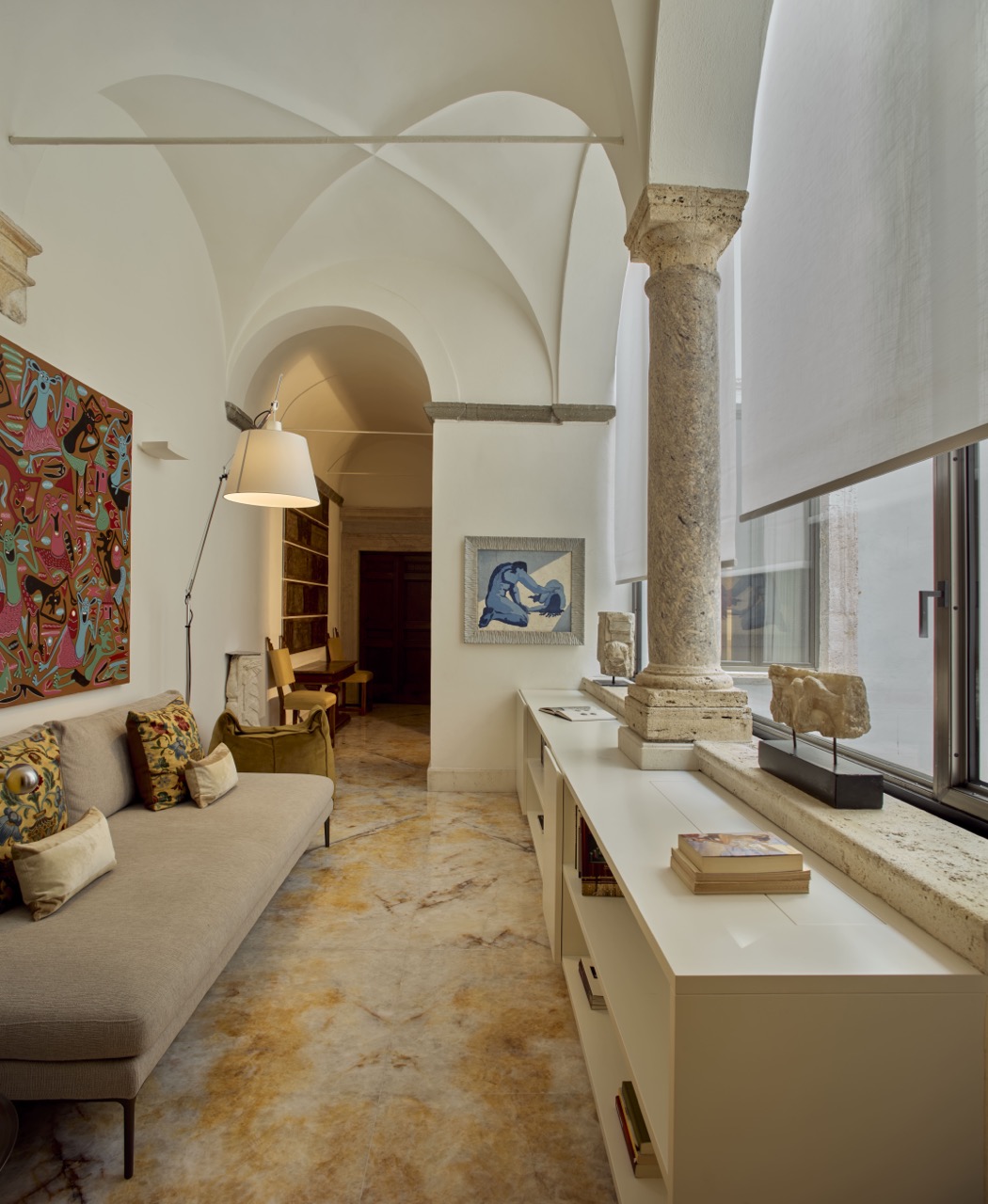
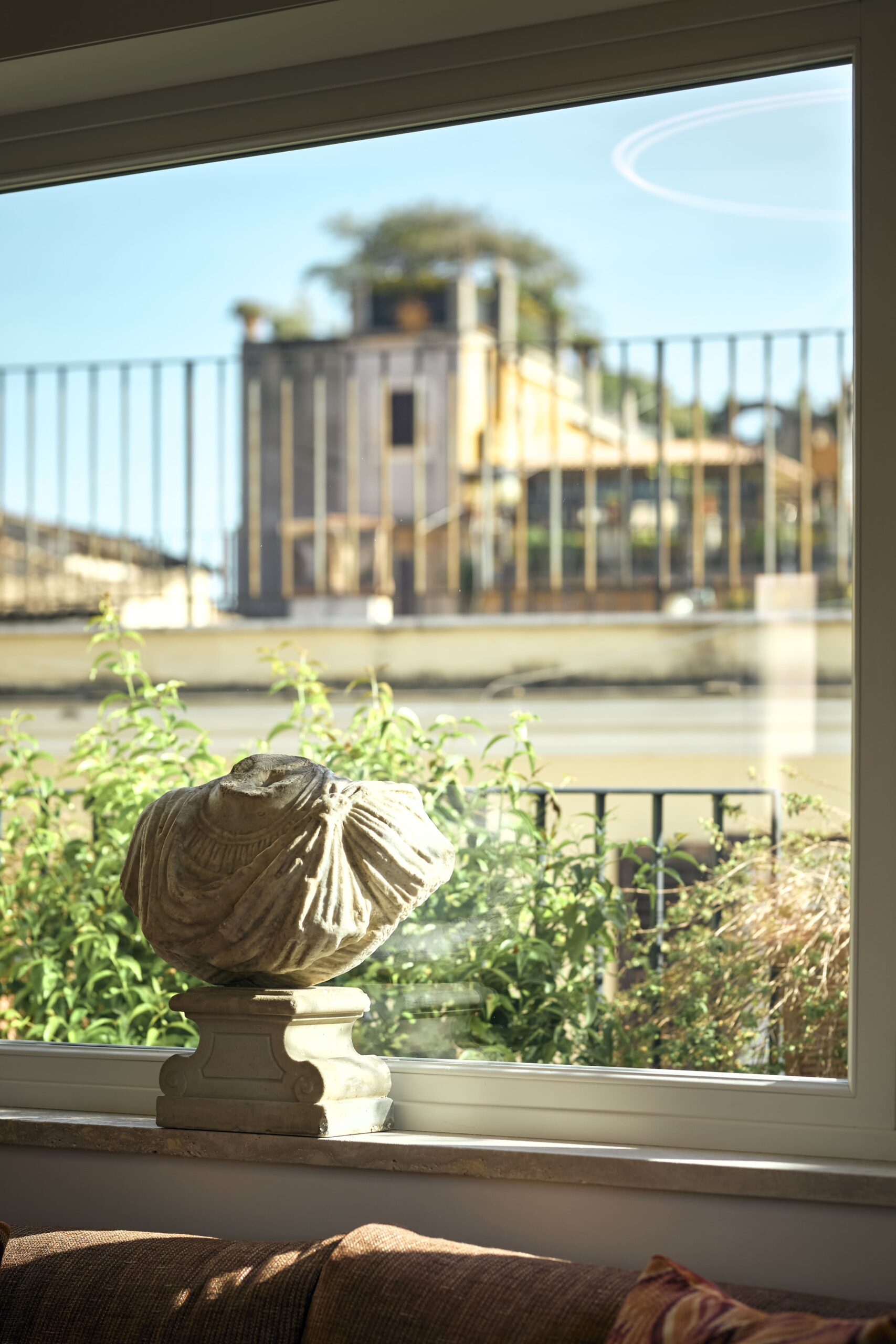
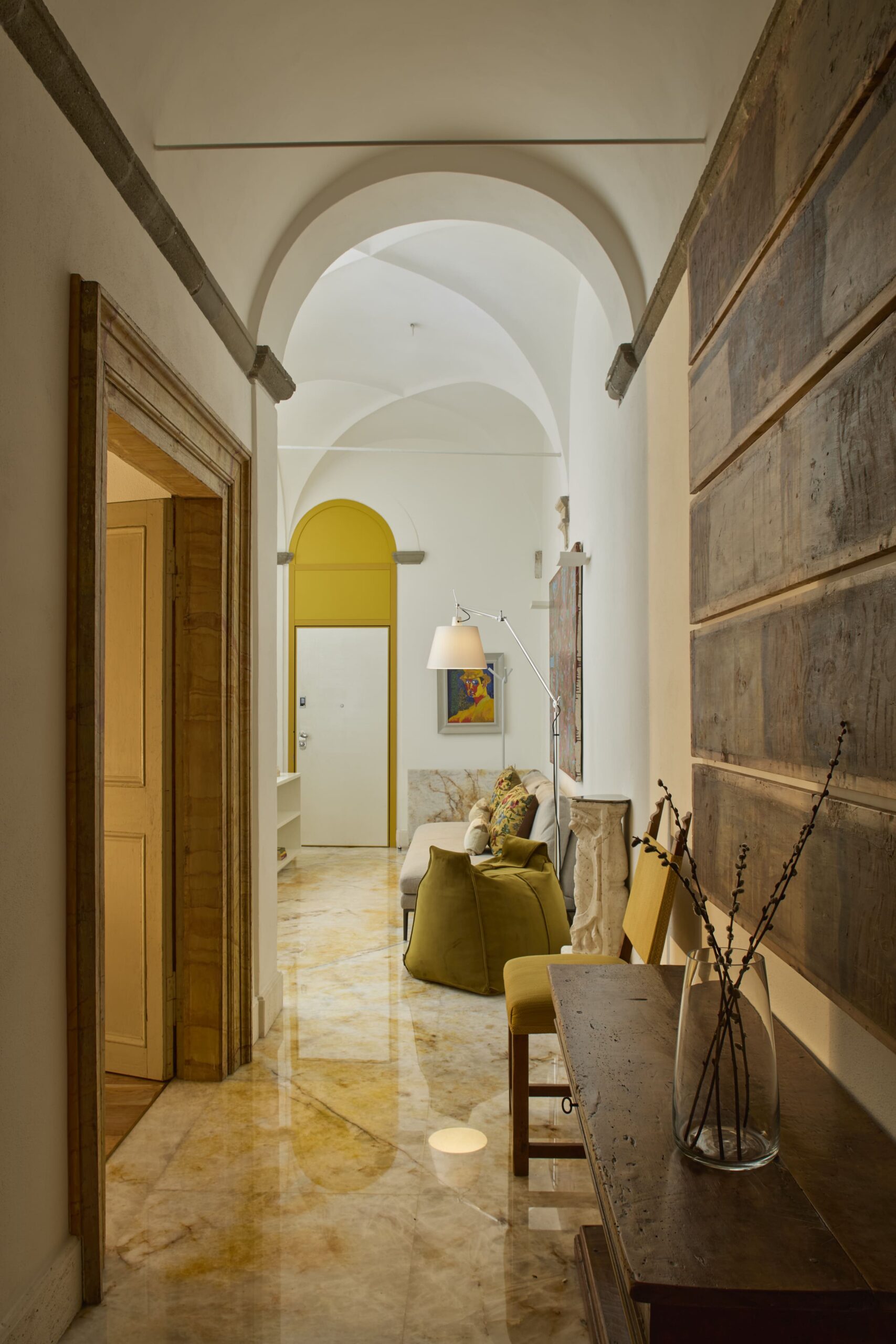
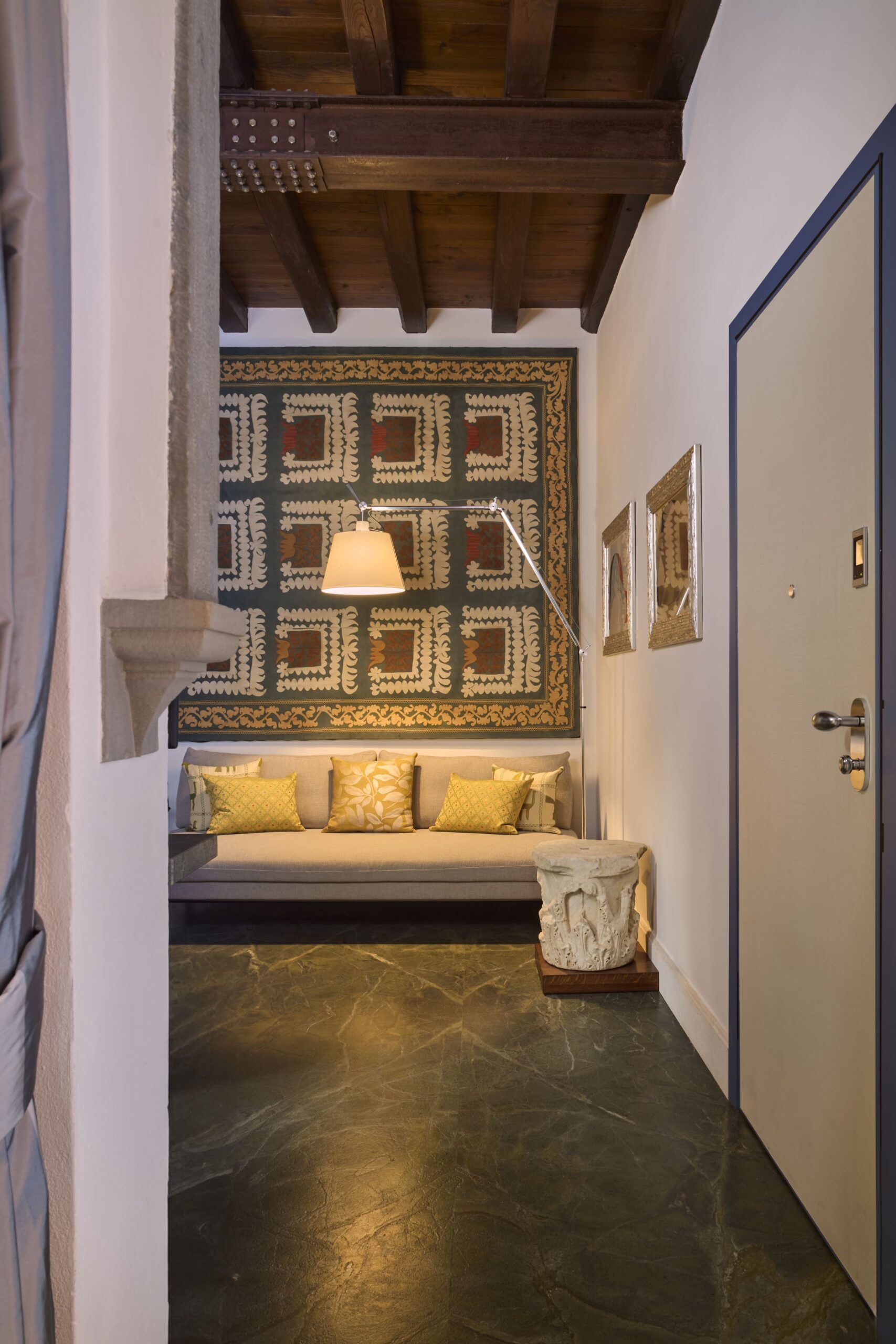
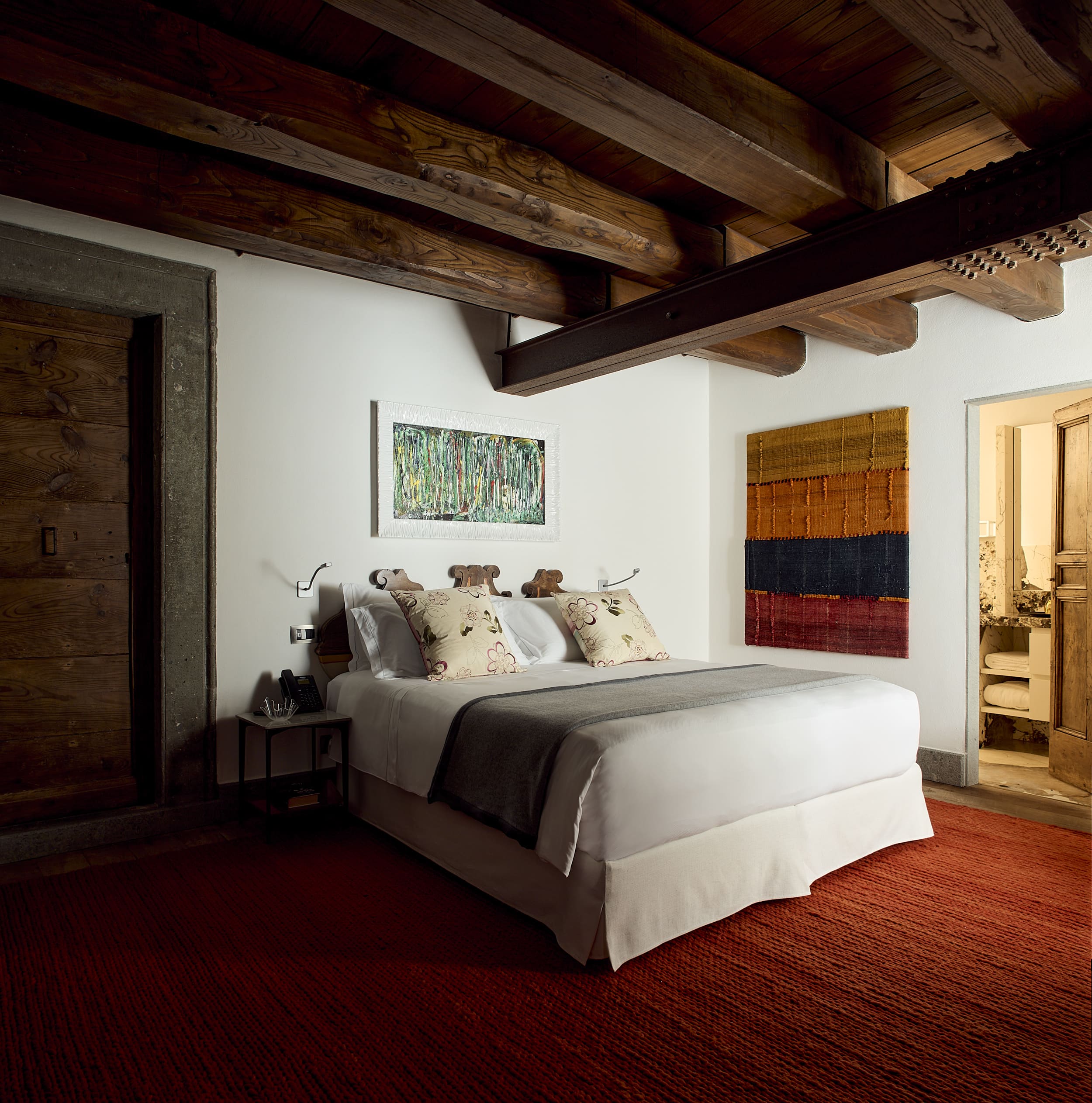
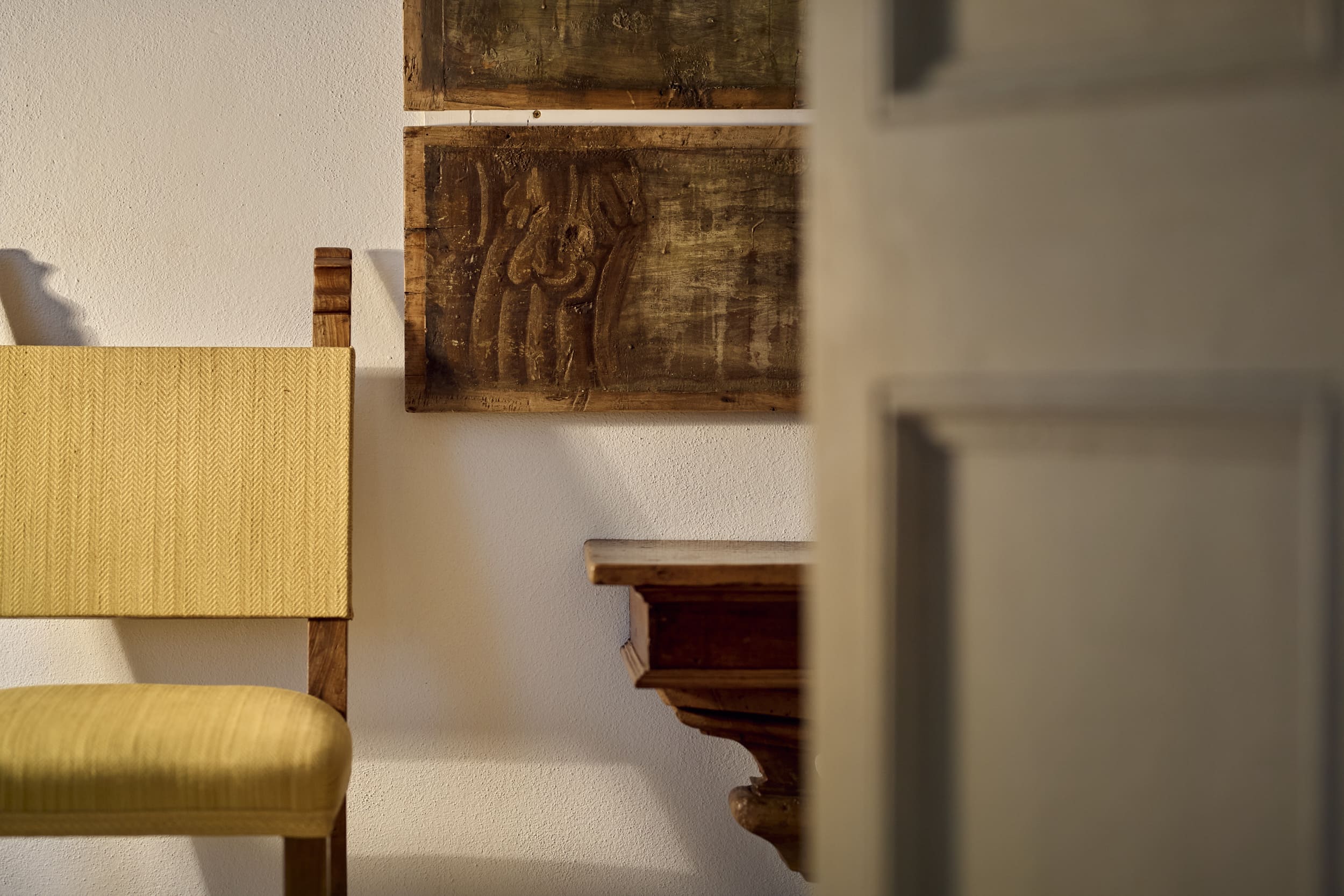
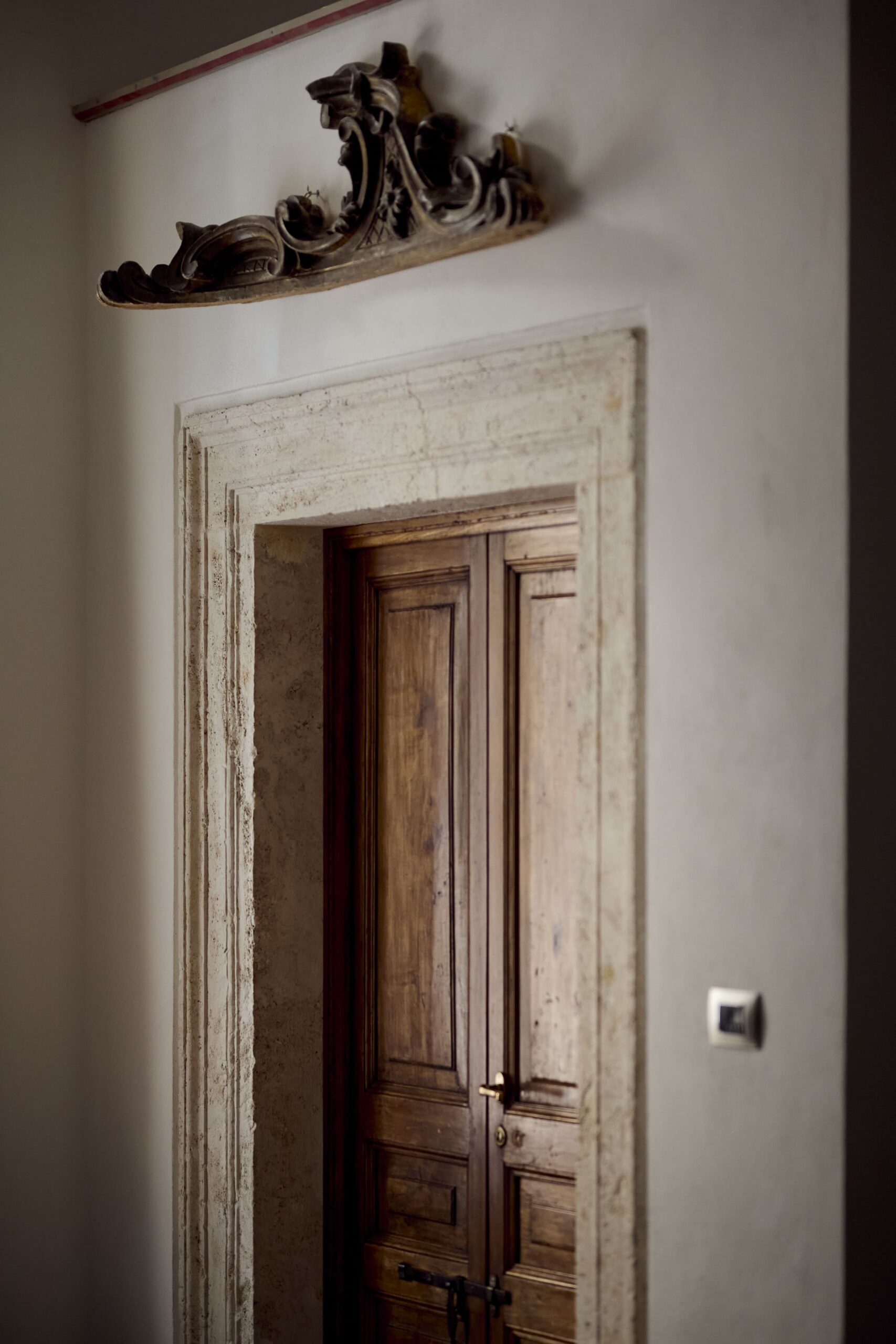
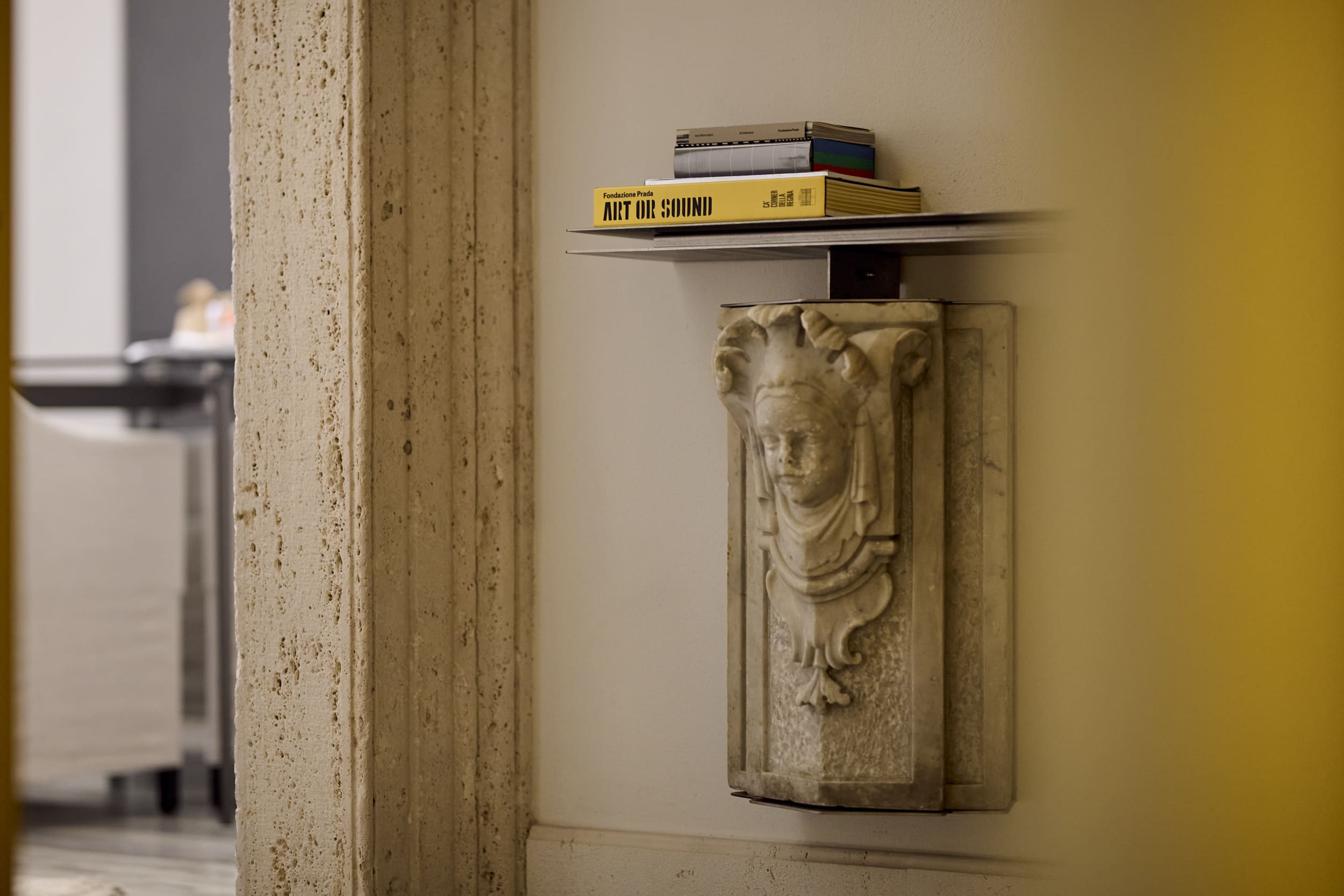
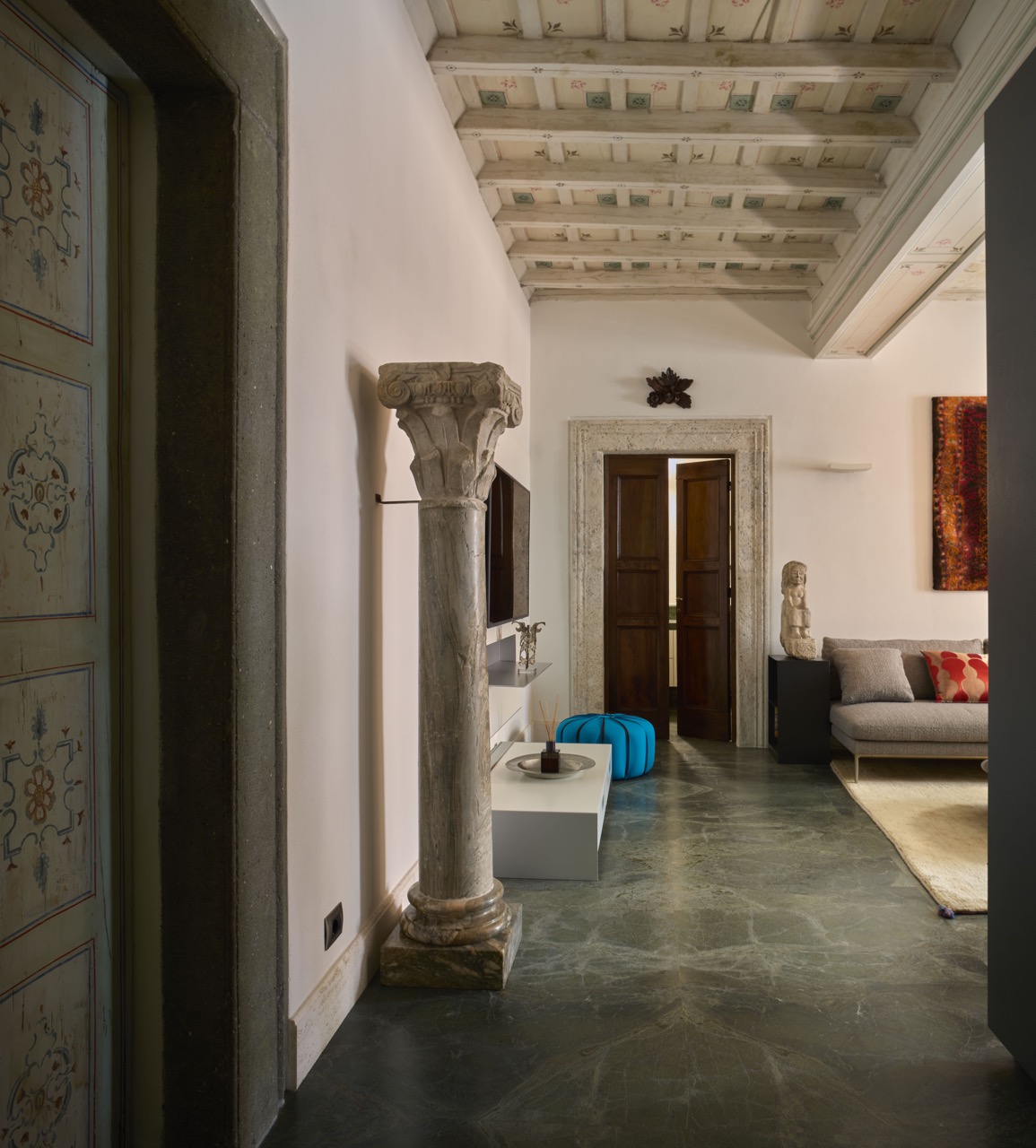
Palazzo delle Pietre bears, in every detail, the traces of a passion for architecture, design, and history that spans four generations. At the core of the project lies the Mazzi family collection, consisting of approximately two hundred Roman archaeological artifacts and fifty Renaissance finds, distributed throughout the living spaces and common areas with rigorous philological care. The objects are set among ceilings, decorated vaults, and travertine portals, establishing a continuous visual and narrative relationship with the historic architecture.
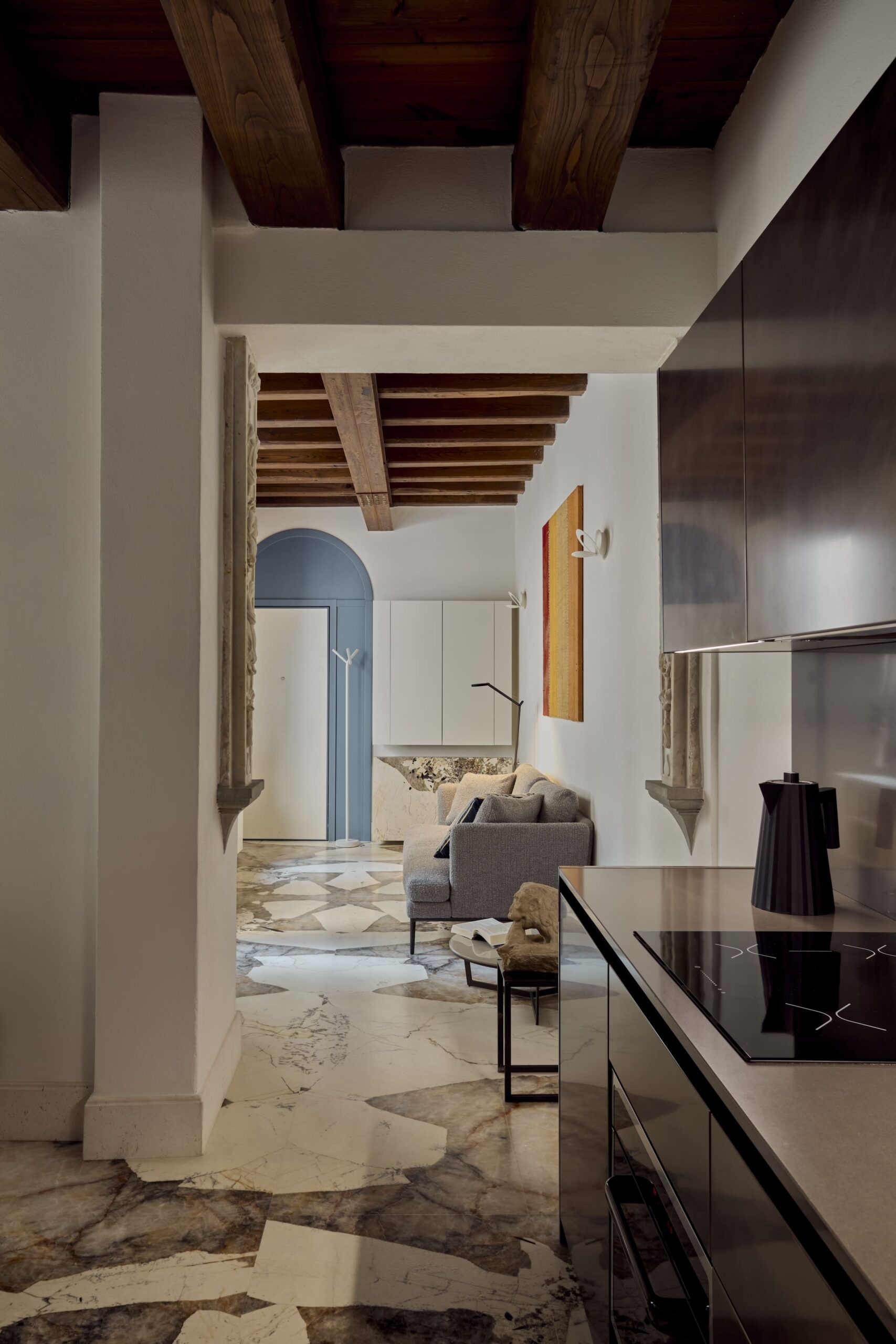
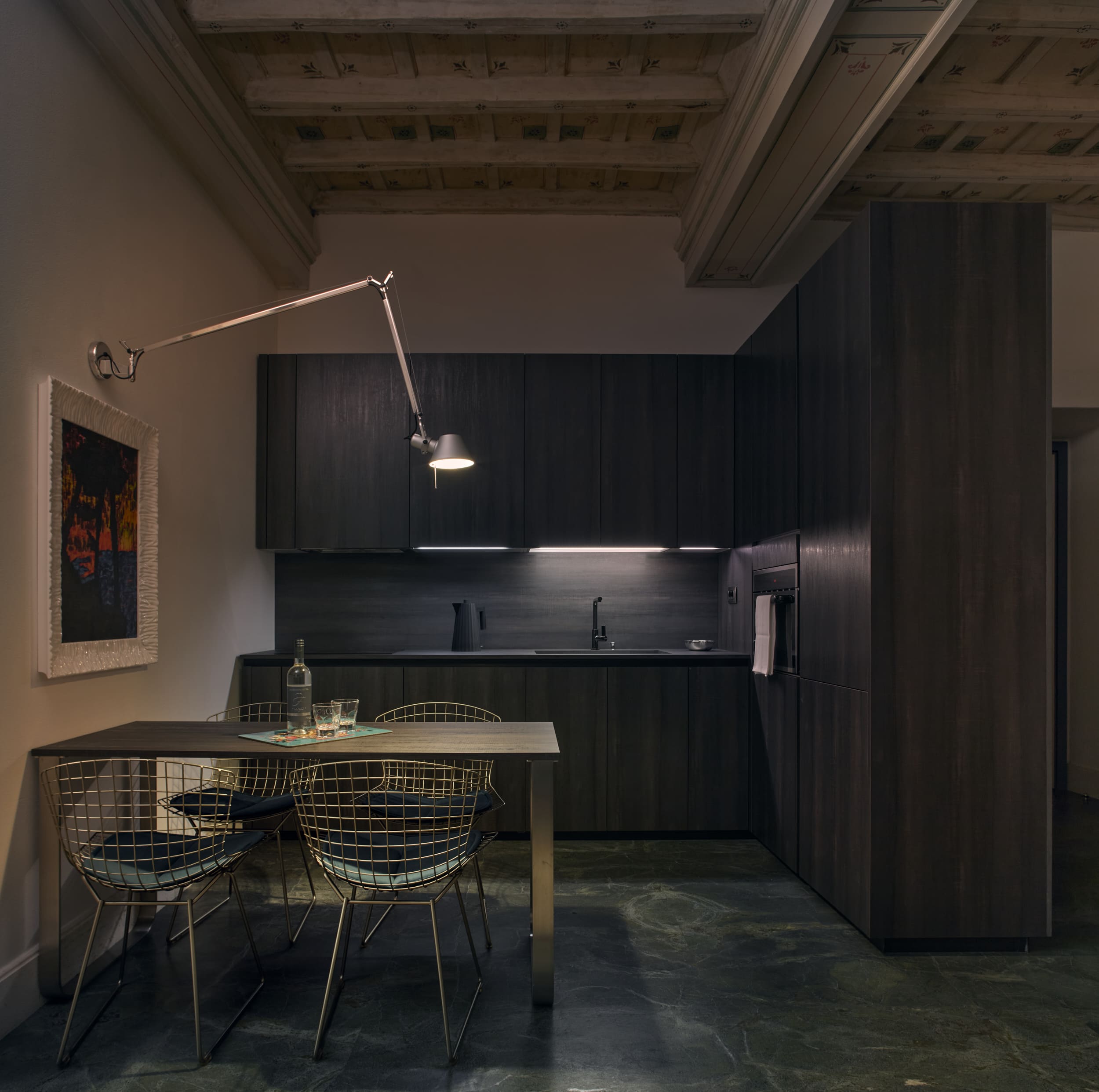
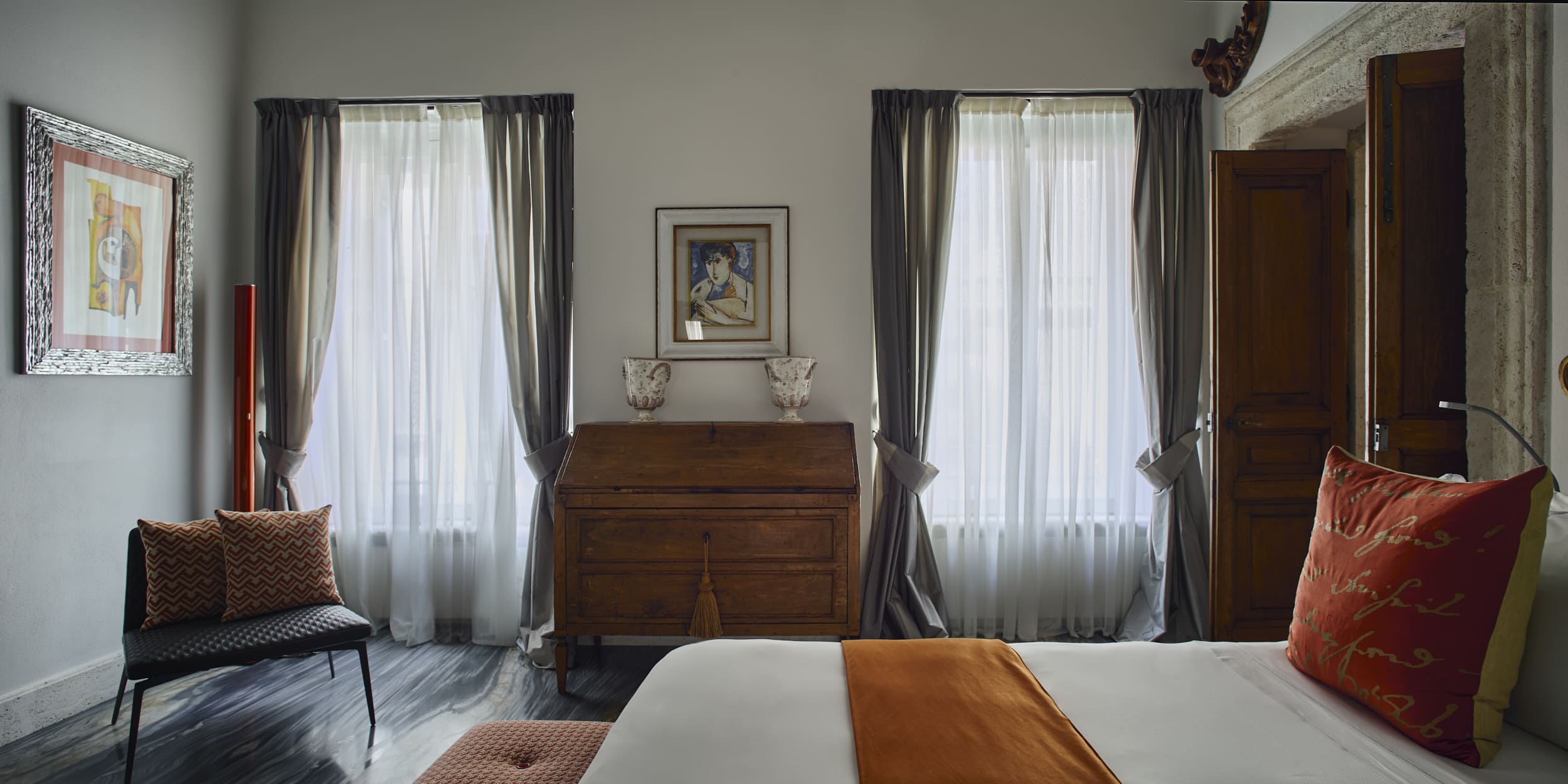
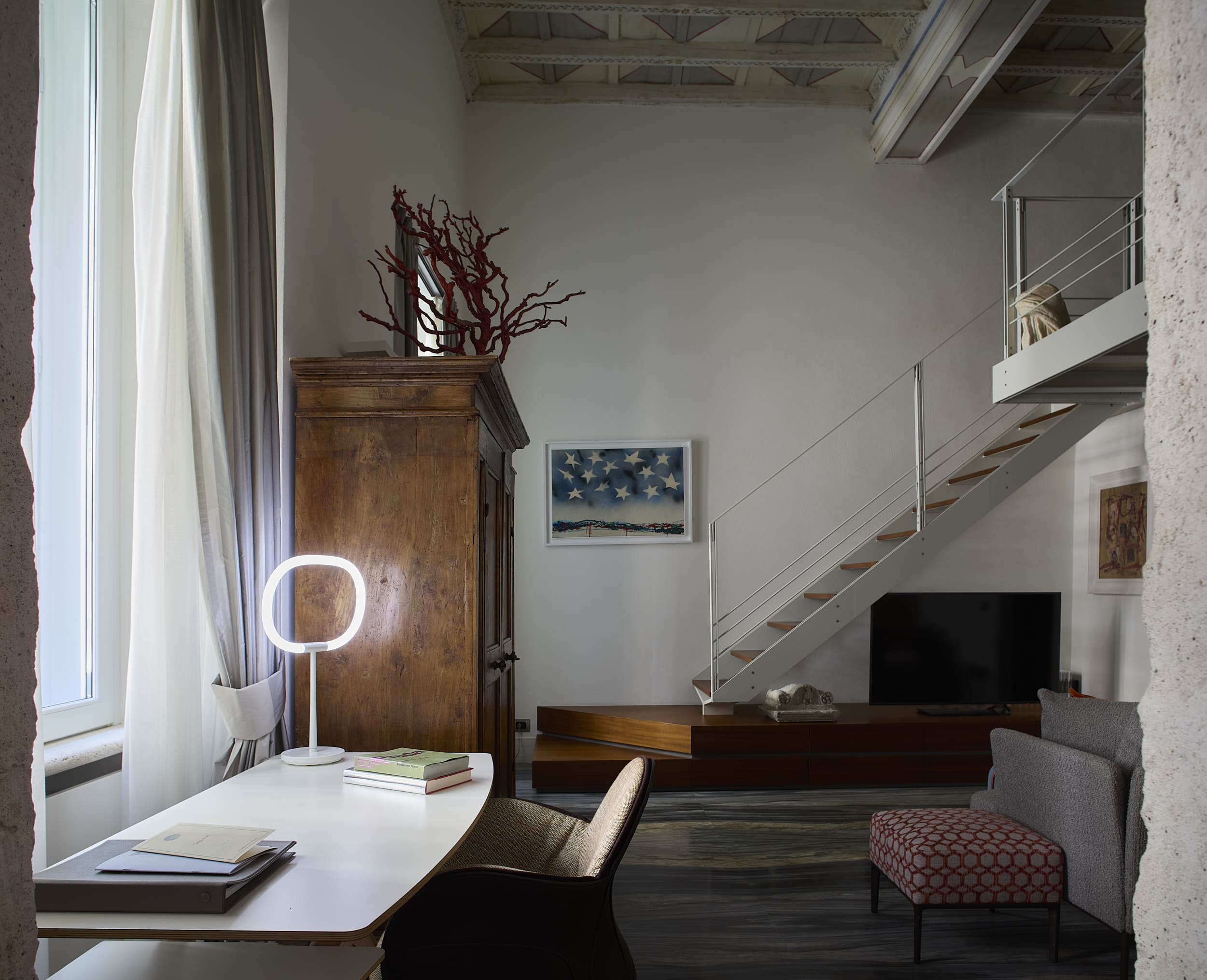
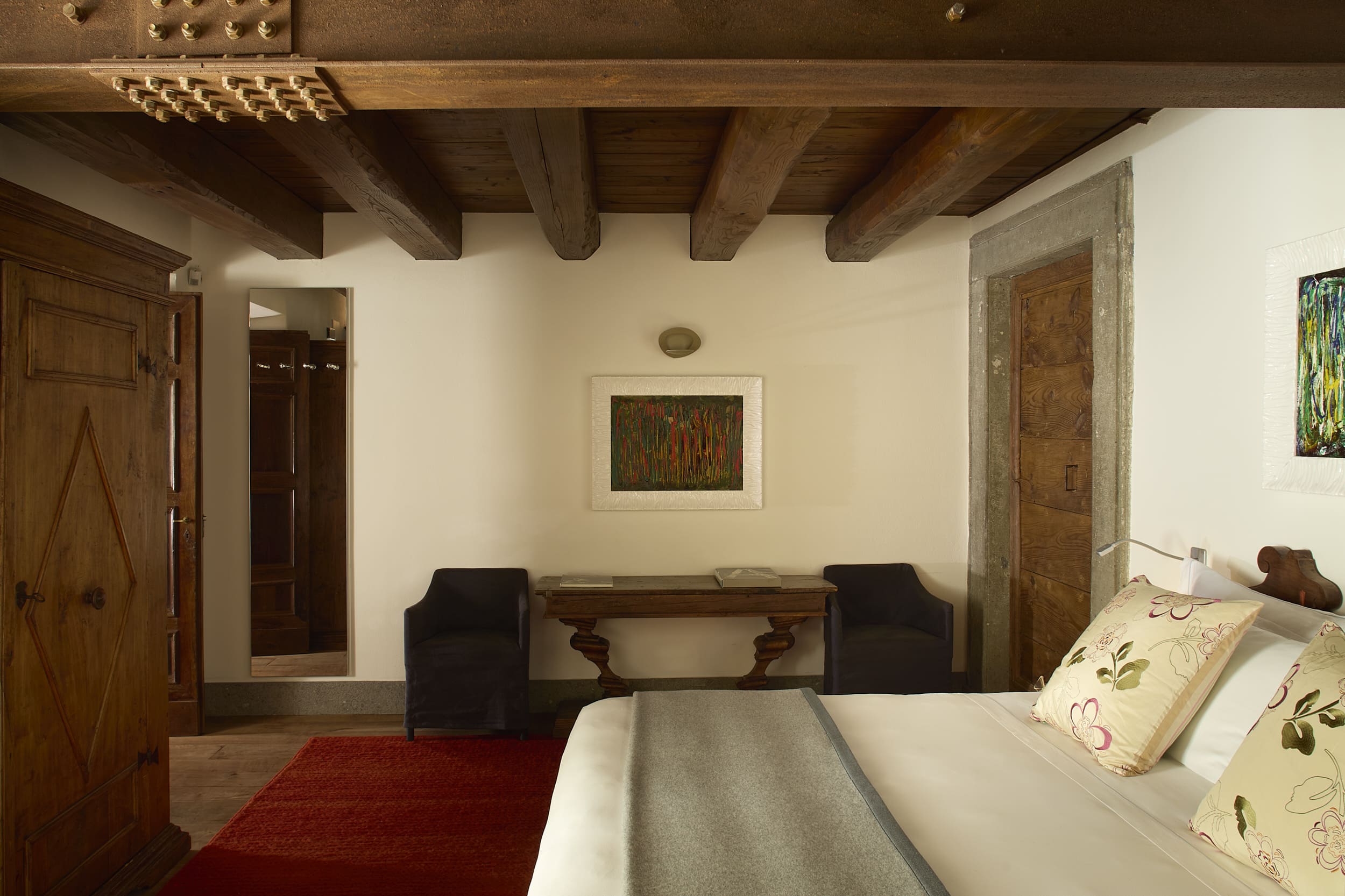
This presence does not take on a museum-like character but instead enters into dialogue with contemporary artworks and a curated selection of pieces by masters of 20th-century Italian design. Without interruption, Harry Bertoia chairs for Knoll, Artemide lamps, and De Padova desks coexist with a Napoleon-era marble bathtub, Tuscan Renaissance wooden sculptures, and Caucasian rugs woven on small portable looms. The juxtaposition of eras, materials, and languages produces a layered interior, in which design operates as a relational device between past and present.
Project care extends to the selection of materials and finishes. Marble floor and wall coverings—some of which are now no longer available—are laid in an open-vein pattern, creating a continuous flow of veining that runs through staircases and rooms in varying chromatic shades. At least ten different types of marble can be identified, characterized by vivid tones and gradations, balanced against the more delicate palettes of the walls. These are accompanied by reclaimed woods, selected textiles, and handcrafted furnishings, reflecting a research process oriented toward material quality and tangible sustainability.
The palazzo presents itself as a work in constant evolution. Tuscan and Roman artisans periodically intervene to renew the interiors, while the display of archaeological artifacts continues to expand according to the choices of the owners. The project remains open and adaptive, shaped by a practice of collecting that translates directly into lived space.
Alongside its residential function, Palazzo delle Pietre hosts “FraMmenti Club”, a curatorial project conceived and organized by Patrizia Albano, which interprets the site’s vocation as a place for cultural sharing. The program unfolds through monthly meetings, free of charge and open to the public by reservation, as well as to the palazzo’s guests, with the aim of weaving dialogue across disciplines, fields of knowledge, and creative practices. The current cycle, titled FraMmenti d’Acqua, renews the tradition of Roman circles and academies, promoting dissemination and debate as tools for integration and social cohesion.
CREDITS
Project: Palazzo delle Pietre
Location: Rome (RM), Italy
Photography: Matteo Lavazza