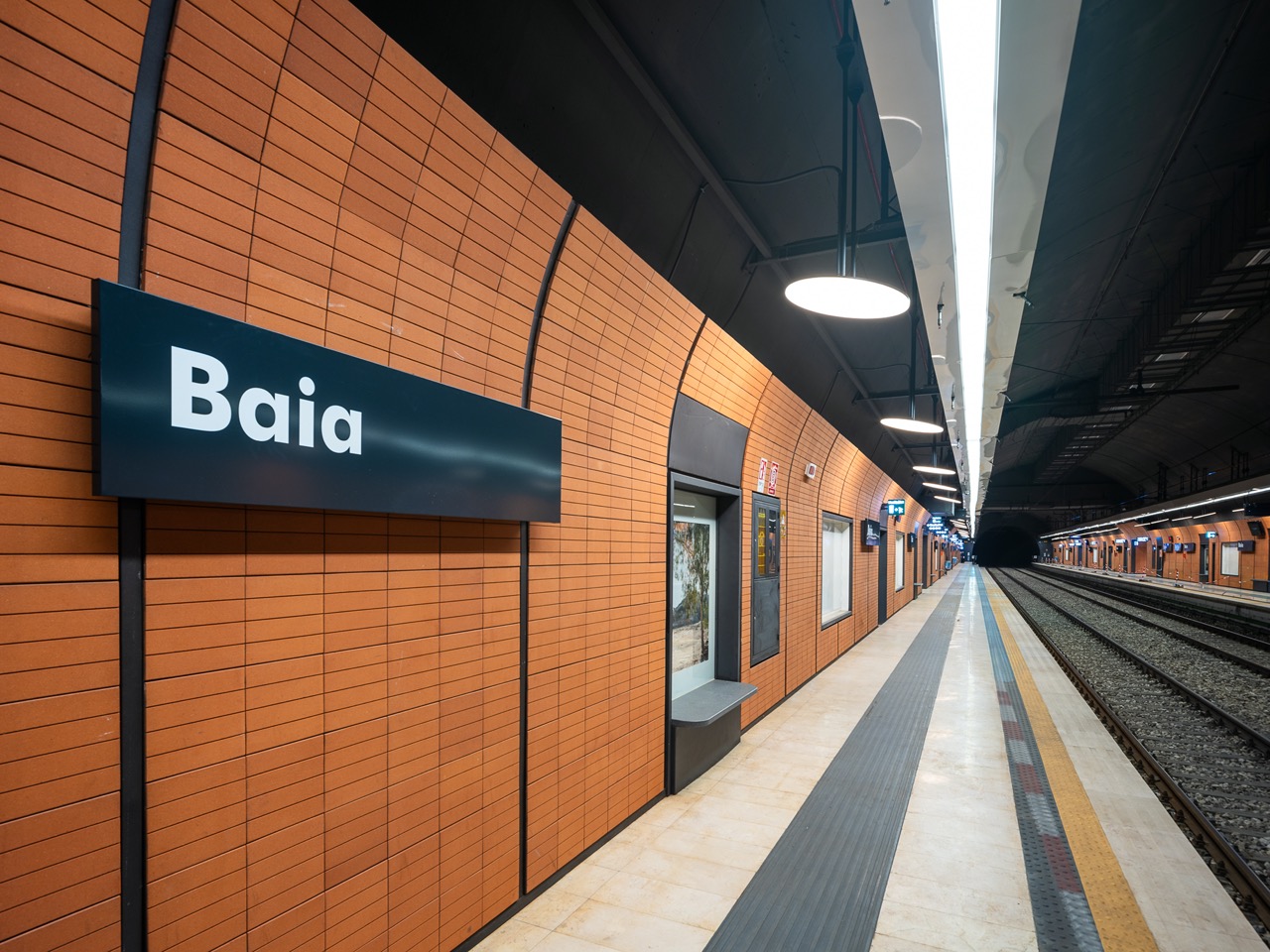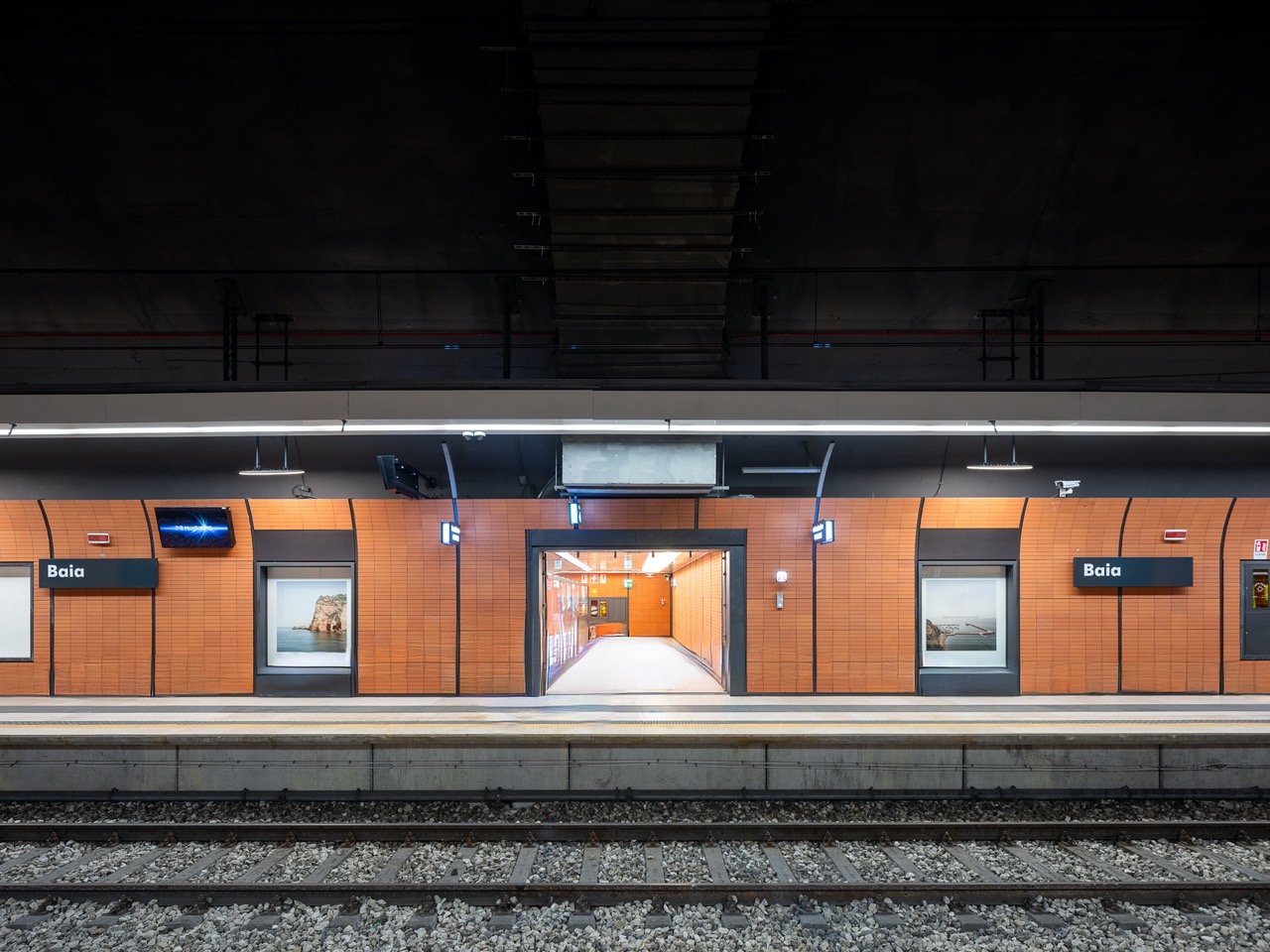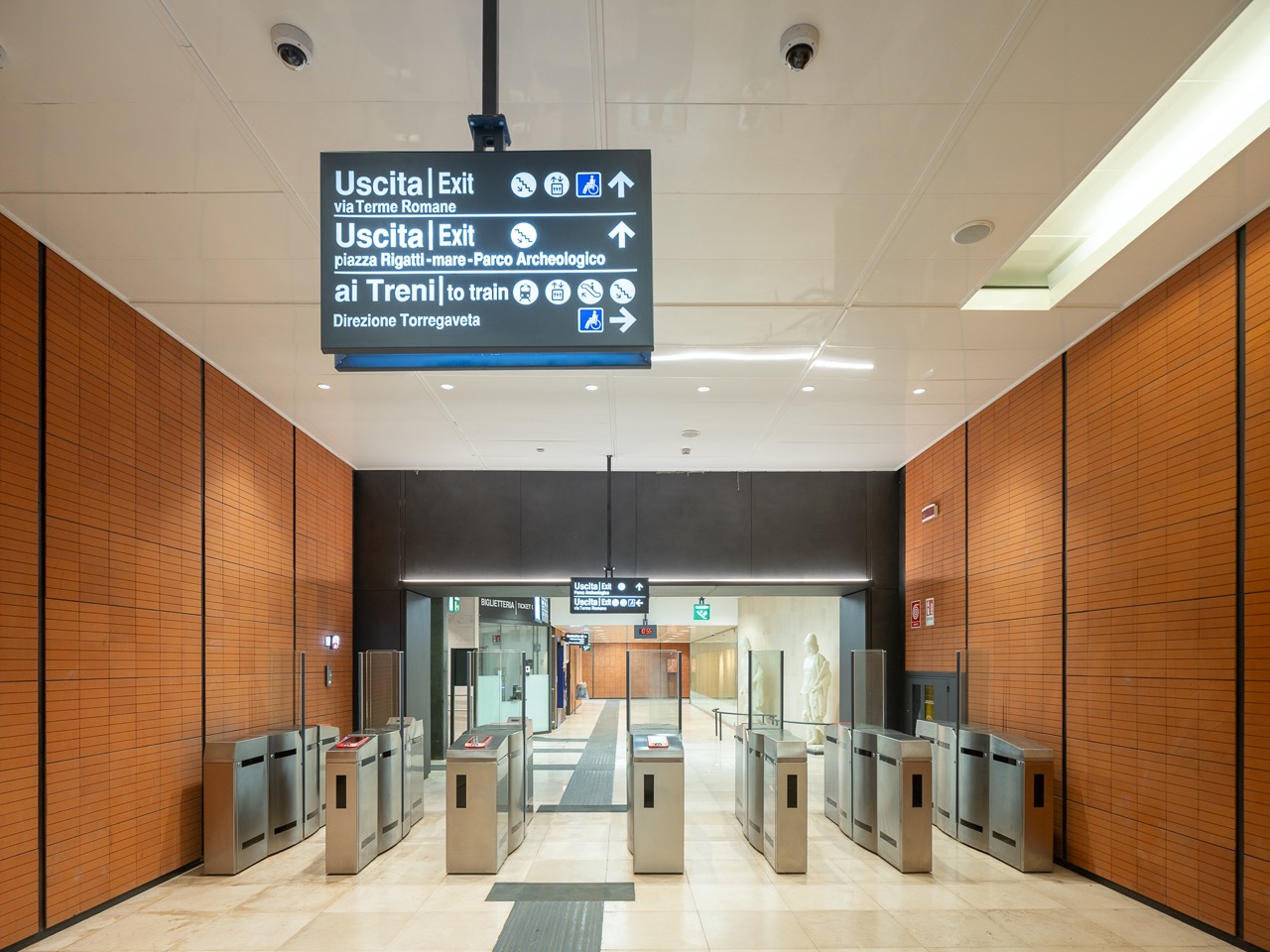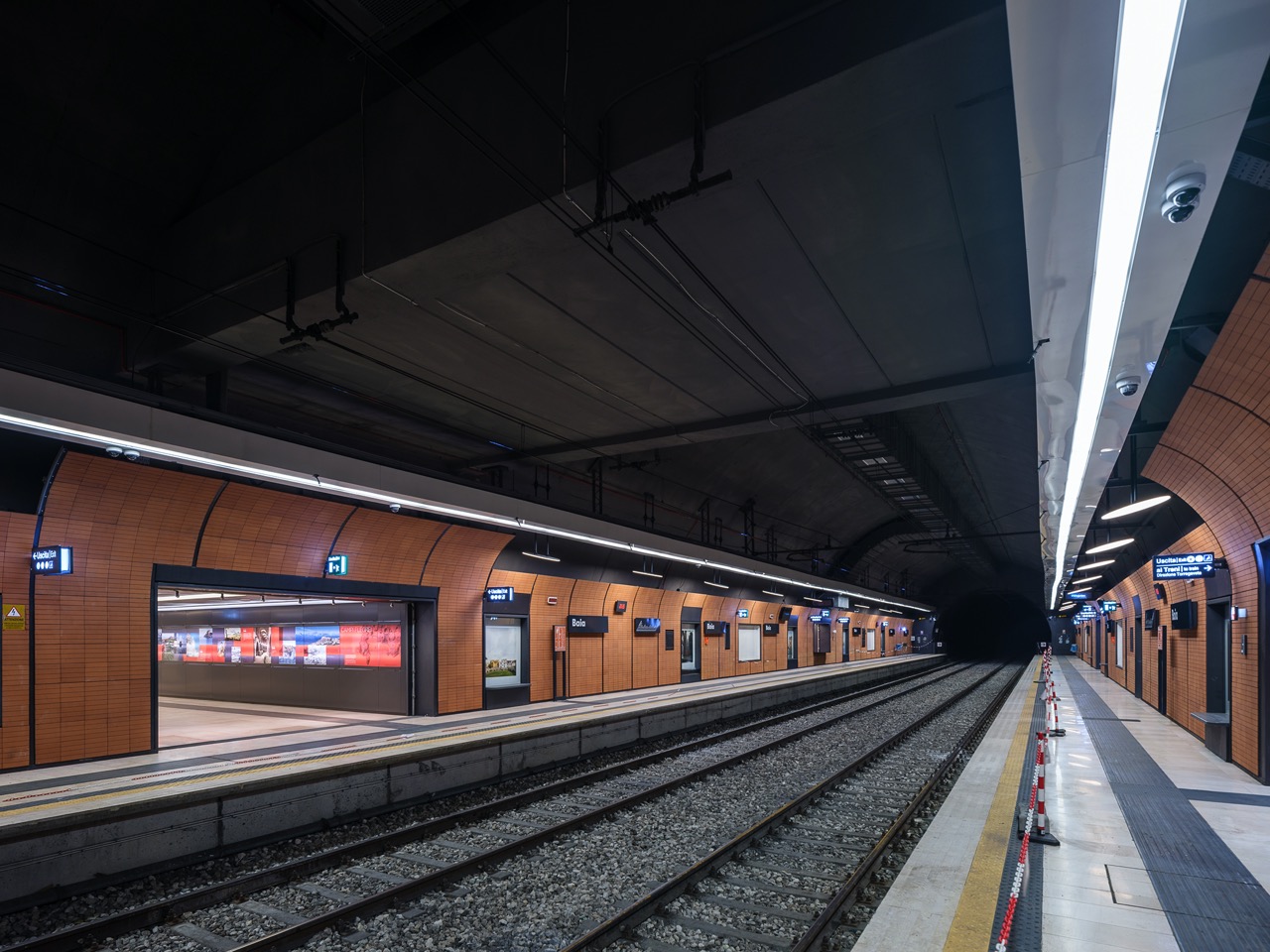

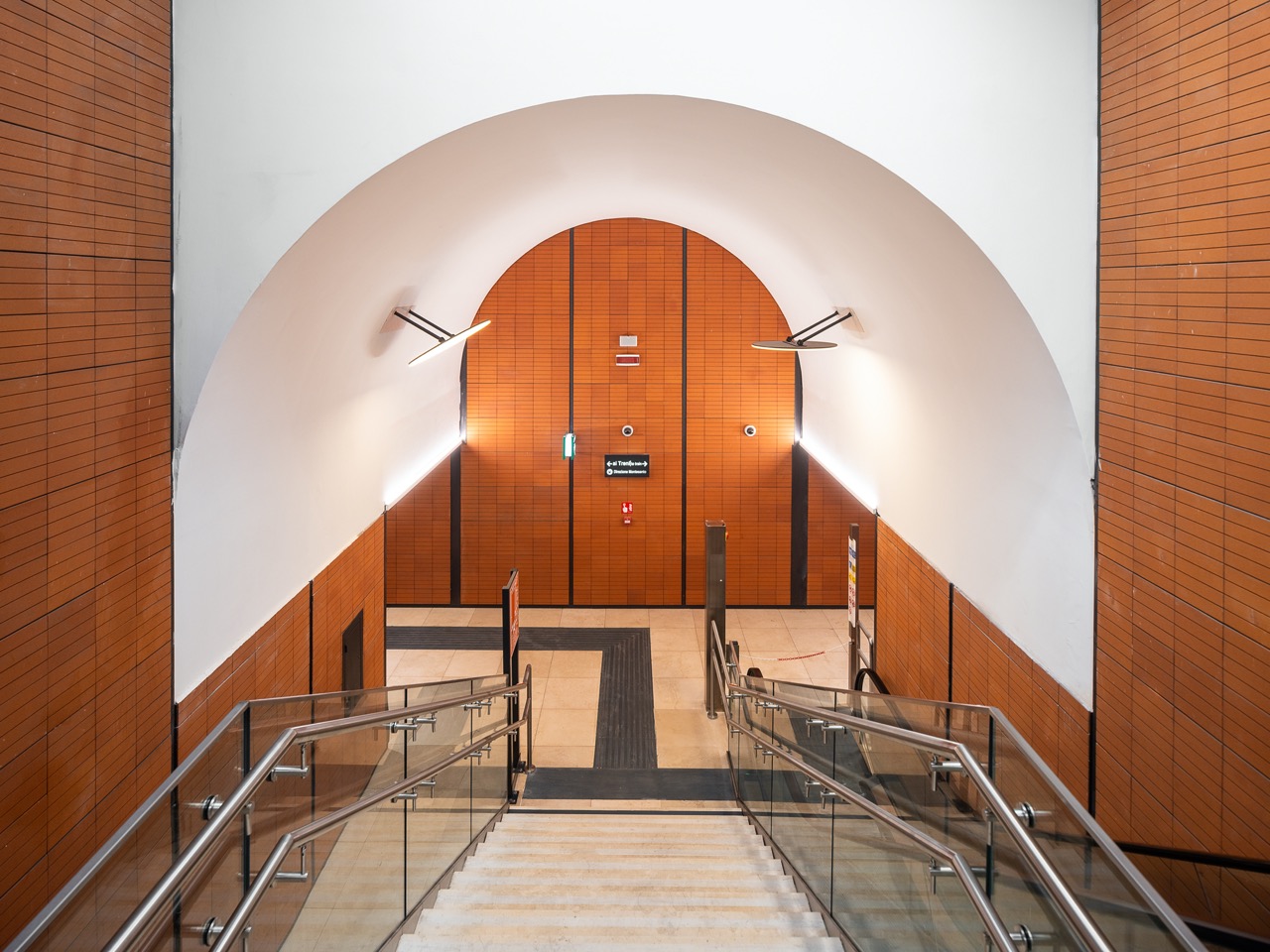
Within the territory of the Campi Flegrei, where the volcanic landscape intertwines with traces of millennia-old stratification and the urban vitality of Bacoli, the project for the new Baia Station takes shape as an act of architectural and cultural regeneration. The intervention, designed by od’a – Officina d’Architettura in collaboration with Tecnosistem spa for the engineering aspects, stems from the intention to restore identity, function, and meaning to a railway station that had remained unfinished for over a decade. In a context of extraordinary historical and landscape value, the station is conceived not as a mere transit infrastructure, but as a place of reception, narration, and connection between the city, the archaeological heritage, and the sea.
Baia—an ancient Roman thermal resort and today the gateway to the Parco Archeologico dei Campi Flegrei—constitutes the cultural and symbolic reference of the project. Here, architecture is called upon to engage with a fragile yet powerful territory, where every new intervention must enter into dialogue with the memory of the ground and the complexity of the landscape.
The project originates in the early 2000s with the modernization of the Cumana line and the decommissioning, in 1999, of the historic Baia station. Between 2004 and 2007, the new underground station was designed: a complex of approximately 2,800 square meters articulated over multiple levels. The start of construction was followed by a long suspension, leaving the building unfinished for years and marking the surrounding urban fabric.
Only in 2023 was the project reactivated and updated through a variant that made it possible to redefine access points, improve connections with the urban center, and enhance the entire external area. The intervention by od’a – Officina d’Architettura is grounded in a careful balance between memory, functionality, and landscape. The central theme is integration: integrating the architecture into the volcanic ground and archaeological remains, integrating rail mobility with pedestrian and cycling paths, and integrating the experience of travel with that of cultural discovery.
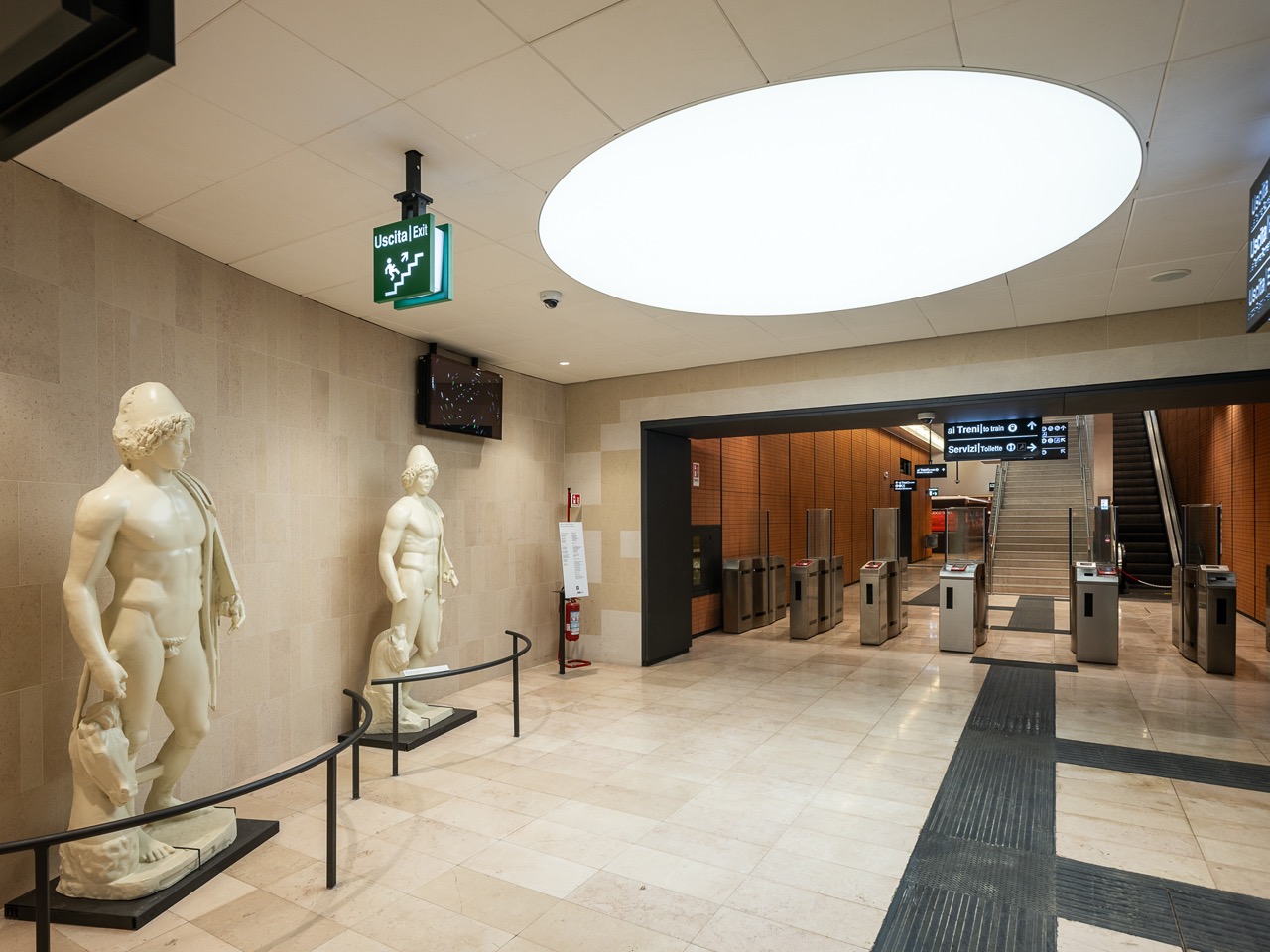
The building develops across multiple levels and is characterized by geometrically essential volumes and a material palette that recalls local construction traditions: tuff, stone, travertine, brick surfaces, and pigmented concrete. Natural light plays a structuring role in the project: large circular skylights puncture the roof and channel daylight into the underground spaces, transforming the subterranean environment into a surprisingly luminous and welcoming place. The station thus takes on the character of an interior urban space, capable of restoring perceptual quality and a sense of belonging, overcoming the notion of a mere place of passage.
Alongside the architectural redevelopment of the building, the project innovatively addresses the design of the external spaces. The 2023 variant replaces the originally planned mechanized connection with a new pedestrian and cycling underpass that directly links the station to the former, disused railway alignment. This corridor, long abandoned, becomes the core of a linear green route extending toward the urban center of Baia. The new cycle–pedestrian axis is conceived as a true linear urban park: a sequence of public spaces, squares, bicycle and electric vehicle parking areas, meeting zones, and small belvederes. The landscape design is restrained and natural, featuring permeable paving, Mediterranean scrub planting, and minimal steel and wood furnishings. In this way, the station opens itself to the neighborhood, reconnecting fragmented urban areas and returning to the territory a place that is lived in and traversed.
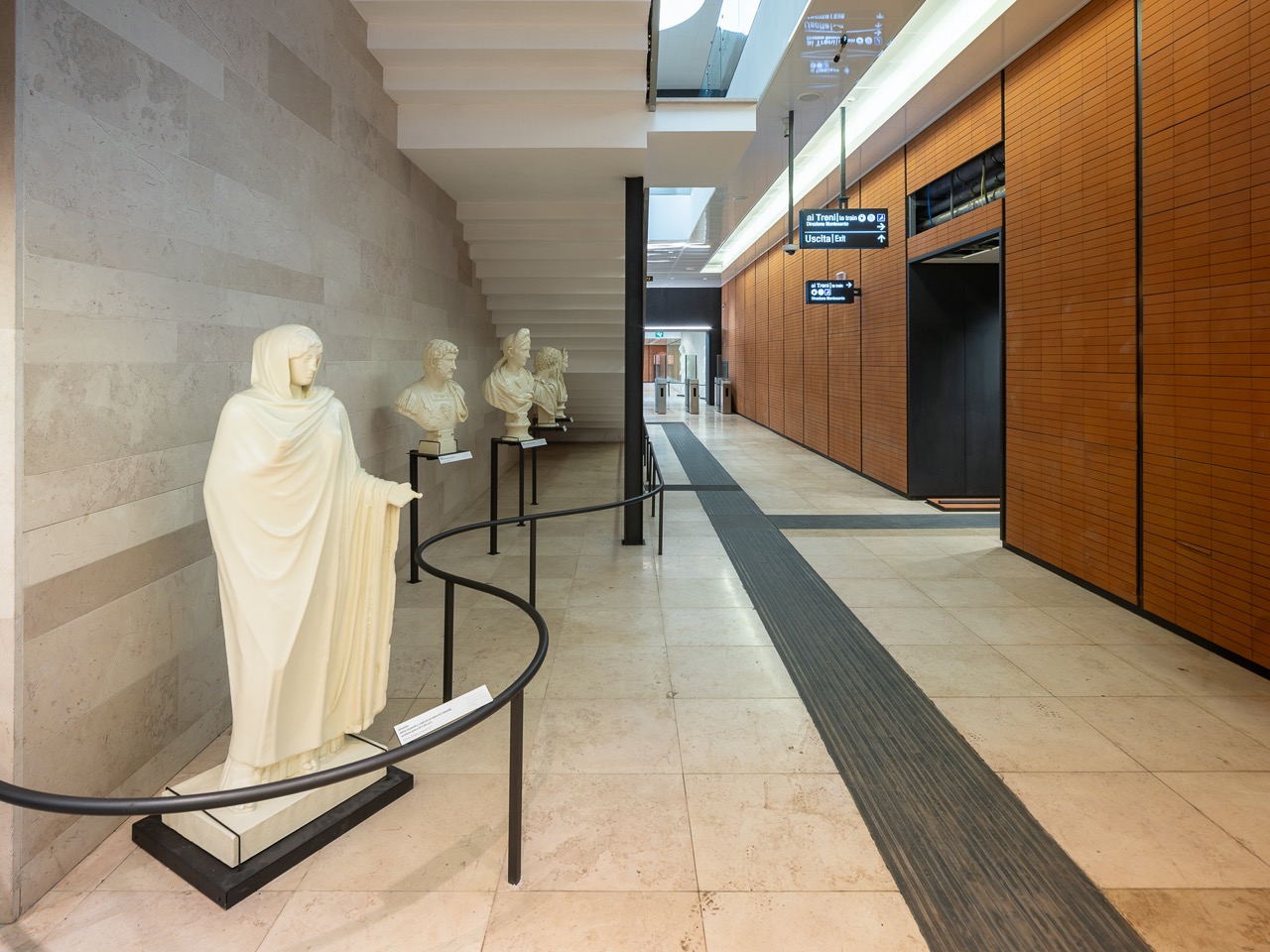
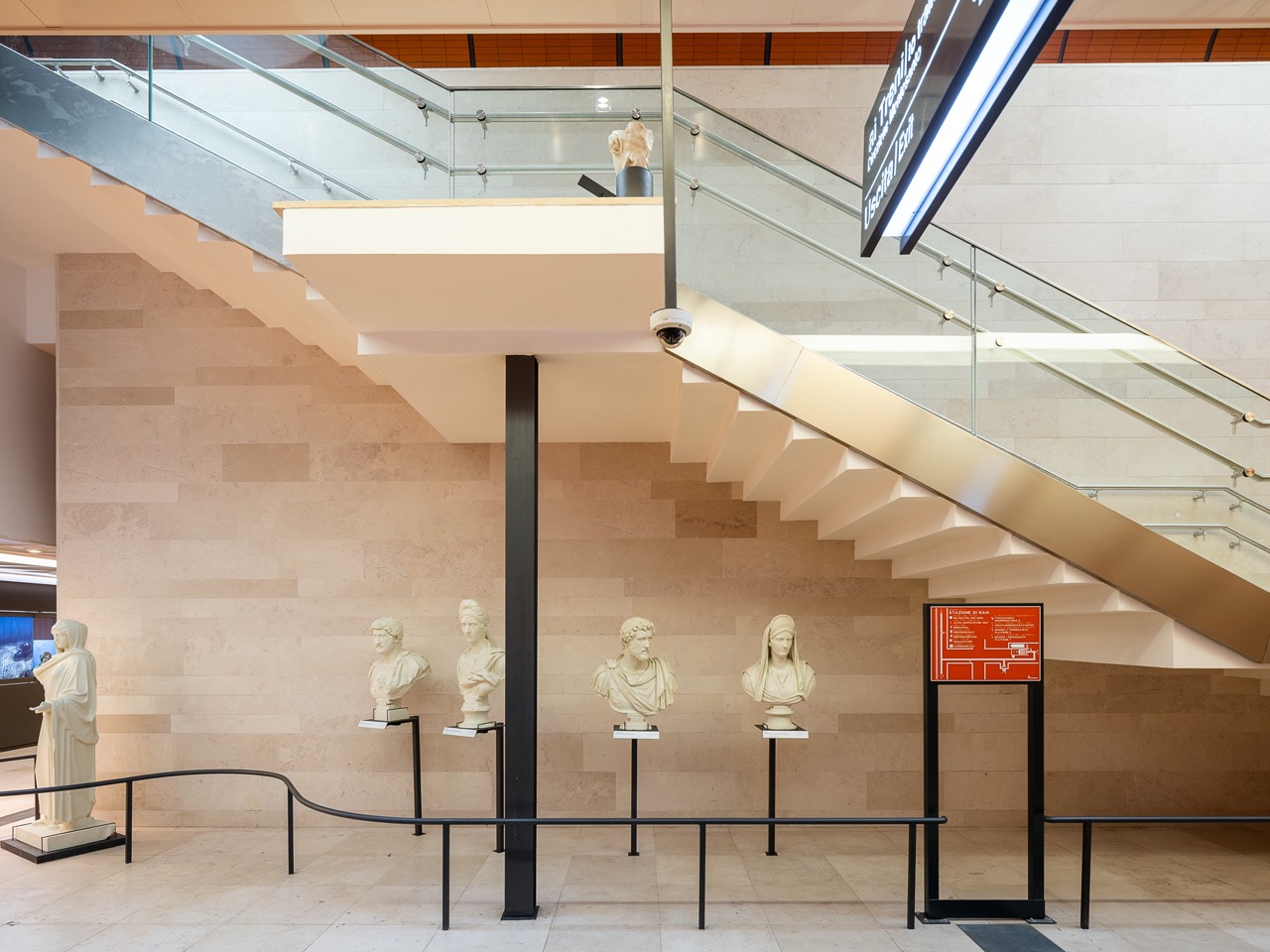
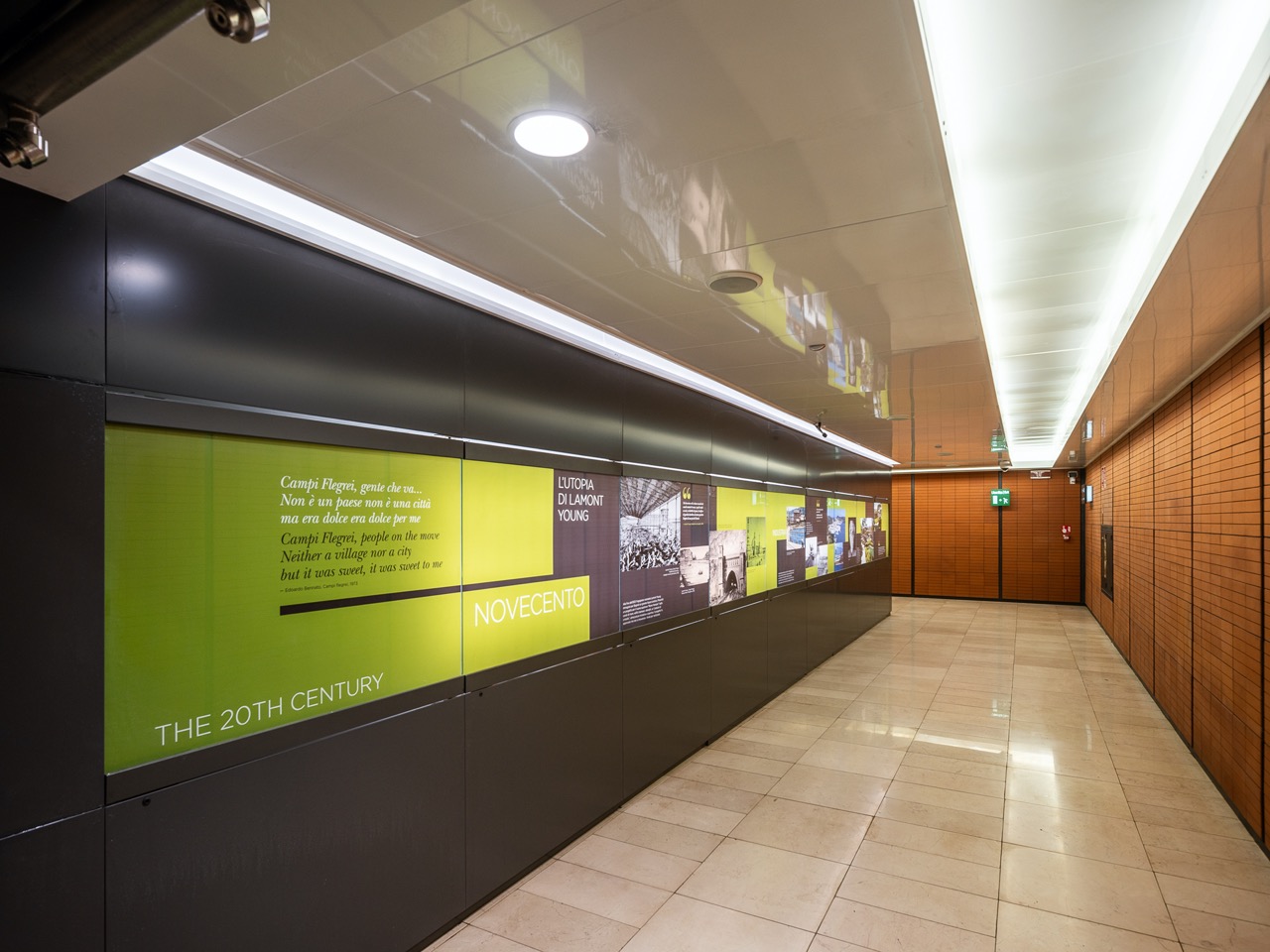
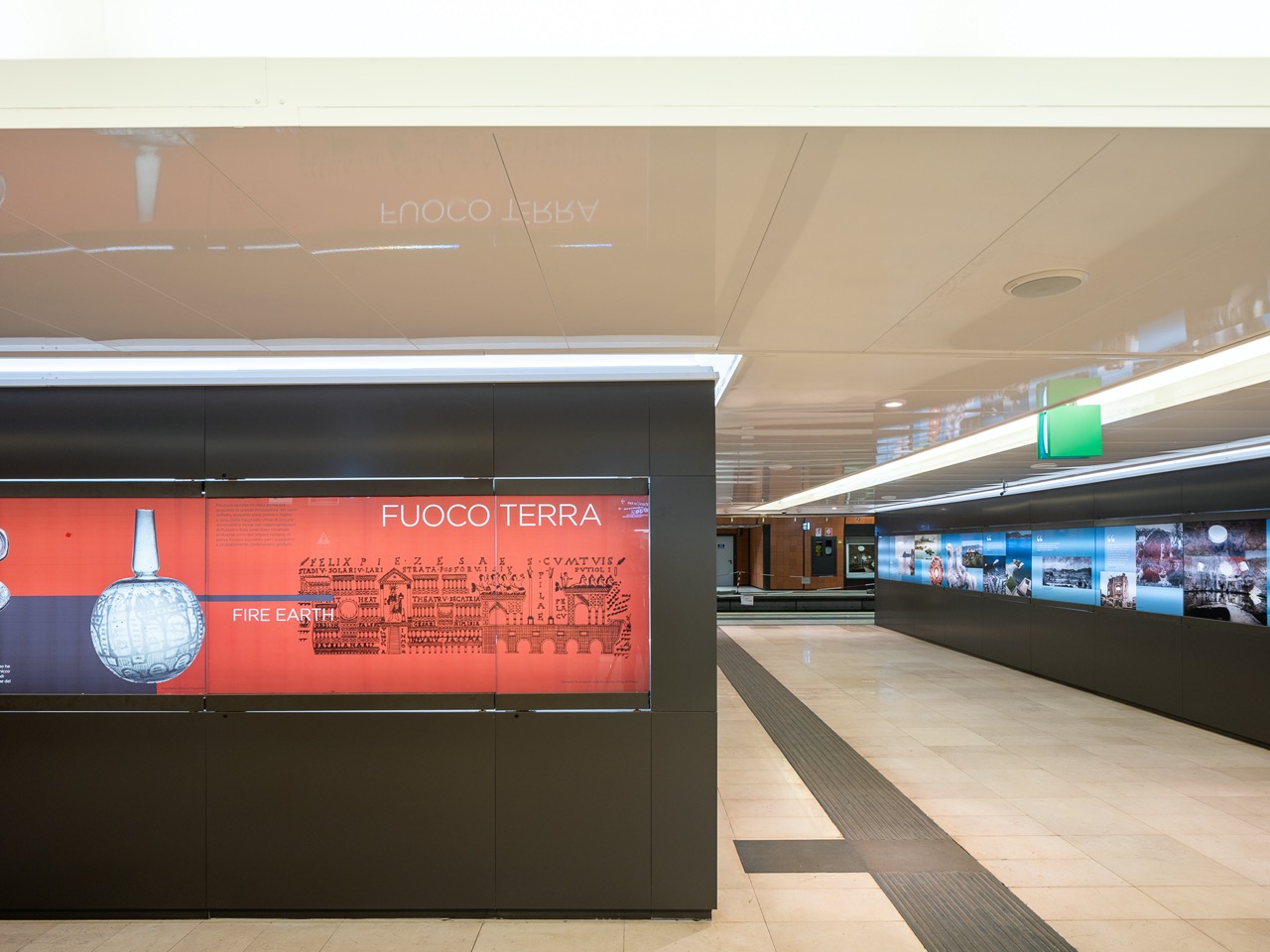
One of the most significant aspects of the project concerns the interior layout, conceived as a narrative device. The station’s walls become surfaces of storytelling, hosting display cases, backlit panels, maps, and three-dimensional reproductions that accompany travelers in discovering the history of Baia and the Campi Flegrei. Thanks to collaboration with the Museo Archeologico Nazionale di Napoli and the use of advanced 3D printing techniques, full-scale reproductions of Phlegraean statues and artifacts—ranging from the Dioscuri of Baia to the Aphrodite Sosandra—are planned. First presented at Expo 2025 Osaka, these installations will later be placed within the station spaces. Architecture thus becomes the support for a diffuse museum, where mobility, technology, and memory intertwine, transforming waiting and transit into a cognitive and sensory experience.
CREDITS
Project: Baia Station
Architectural design: od’a – Officina d’Architettura srl
Engineering: Tecnosistem S.p.A.
Location: Baia, Bacoli (NA), Italy
Photography: Mario Ferrara