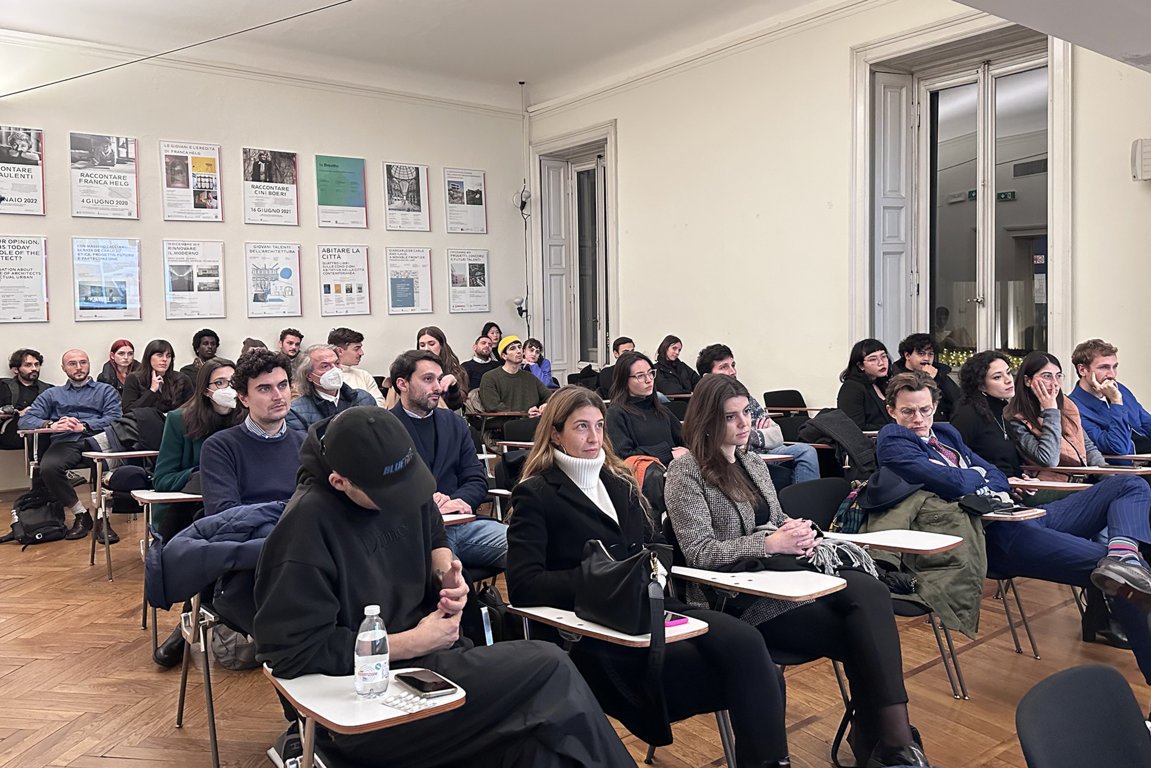


On December 15th 2022, the award ceremony for the 2022 edition of the Neolaureati Prize was held, dedicated to the best architecture dissertations supported by students of the Milan Polytechnic.
The Order of Architects of Milan and the OAMi Foundation have been promoting the Neolaureati Award since 2003, dedicated to the best graduation theses discussed in the previous year, with the aim of connecting the authors of the most meritorious theses supported at the Politecnico di Milano with the cultural and professional reality of architecture, design, planning, landscape and conservation.
The 2022 jury is composed of: Lorenzo Bini, board member Ordine e Fondazione Ordine Architetti Milano; Giovanna Castiglioni, Castiglioni Foundation; Simona Finessi, Platform architecture and design; Yukio Ishiyama, ADF / Garde Italia; Luca Manzocchi, Parc Nouveau.
Again this year, as in the last edition, the prize was realized thanks to the contribution of ADF – Aoyama Design Forum.
The 1st Prize was awarded to Too far to walk – Disaster Resilent Maternity Waiting Home in Mozambique, by Tatiana Levitskaya and Massimiliano Piffer, speakers Camillo Magni, Isacco Rama. Master’s degree in Architecture and Urban Design.
Jury comment: for the methodological approach that takes into account anthropological, sociological and livability aspects. Award was given for the interpretation to the approach towards the professional practice of contemporary design, with special attention of the thesis to the construction theme. Consideration was also given to the use of materials and construction techniques of the context in which one works, encouraging the construction of a micro-economy related to the realization of the project.
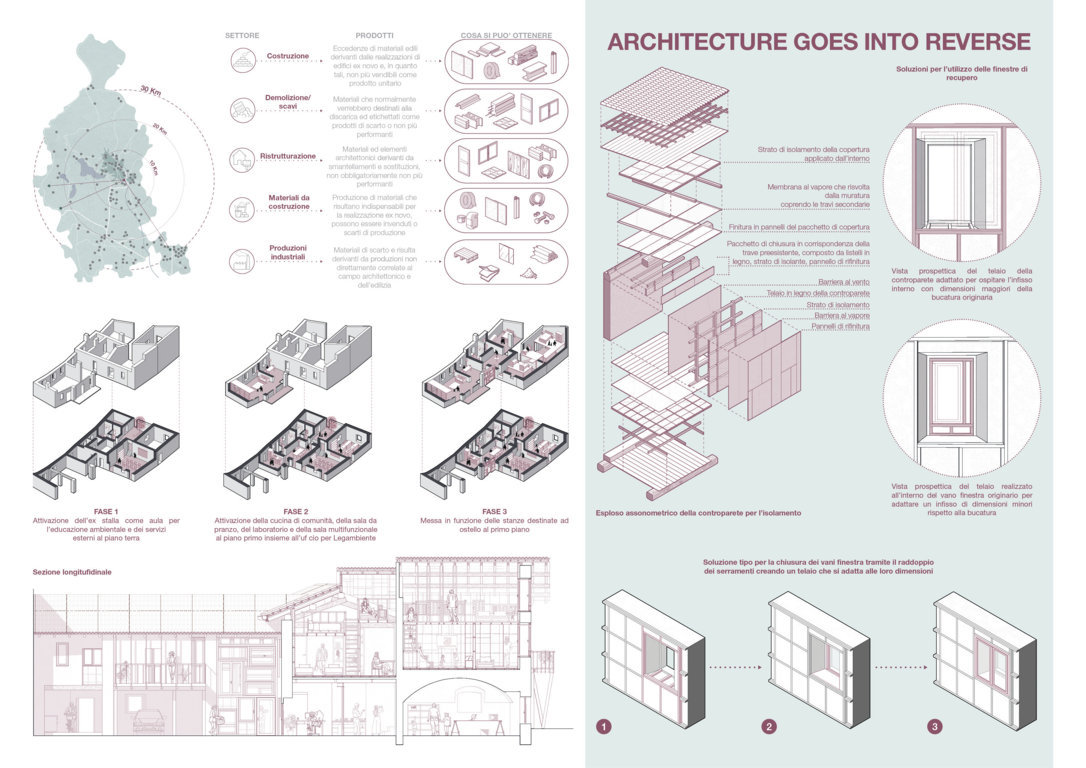
The 2nd Prize was awarded to Architecture goes into reverse. Ideas for (self-)building responsible living, by Federico Cortes, Tommaso Gatti, Federica Melis, speakers Gian Luca Brunetti, Giovanni Di Luzio. Master’s degree in Architecture-Built Environment-Interiors.
Jury comment: for careful research on the theme of materials used, favoring the concept of reuse and reducing the impact of recycling processes. For the ability to reverse the design process, indicating a new methodology, with a conscious and critical approach.
The 3rd Prize was awarded to Anthropogenic Landscapes: the case of the Scalo Cavallo quarry in Favignana (Sicily, Italy). Architecture as a catalyst for water rehabilitation of a vulnerable landscape, by Alessandra Savorelli, supervisor Simone Giostra. Master’s degree in School of Architecture Urban Planning Construction Engineering.
Jury comment: for delving into the current theme of regeneration of abandoned territories after intensive resource exploitation. An interesting analysis that combines the formal aspect of architectures with the functional aspect, trying to solve the problems related to a water system peculiar to a territory.
First special mention: Nature sought. Project for the enhancement and refunctionalization of the ruins of the Monastery of San Secondo in Isola Polvese, by Giovanni Grignani, supervisor Francesco Leoni. Master’s degree in Architecture, Urban Planning, Construction Engineering.
Jury comment: for identifying a context and a design theme that seems to suggest a potential following in the professional field. Rewarding the passionate reading of a place in its landscape and naturalistic aspects.
The second special mention: The Idiorritmic Building. Shared living proposals for the city of speculation, by Francesca Pesce, supervisor Gennaro Postiglione. Master’s degree in Architecture – Built Environment – Interior.
Jury comment: for the systematic way in which the project was developed, starting from topical issues related to living, critically reconfiguring the typology of the apartment building as a metaphor for a broader, city-wide transformation.
Third special mention: “THE JUNGLE” MUSEUM. Project for the architectural transposition of Upton Sinclair’s novel to the places where it was written and set, by Davide Guida, supervisor Andrea Gritti. Master’s degree in Architecture – Built Environment – Interiors.
Jury’s comment: for the ability to start from a story and translate it into a design for the layout and reorganization of spaces, maintaining the visionary and immersive character of the novel, suggesting the transformation of a decidedly emblematic existing building.
For more information visit www.ordinearchitetti.mi.it.