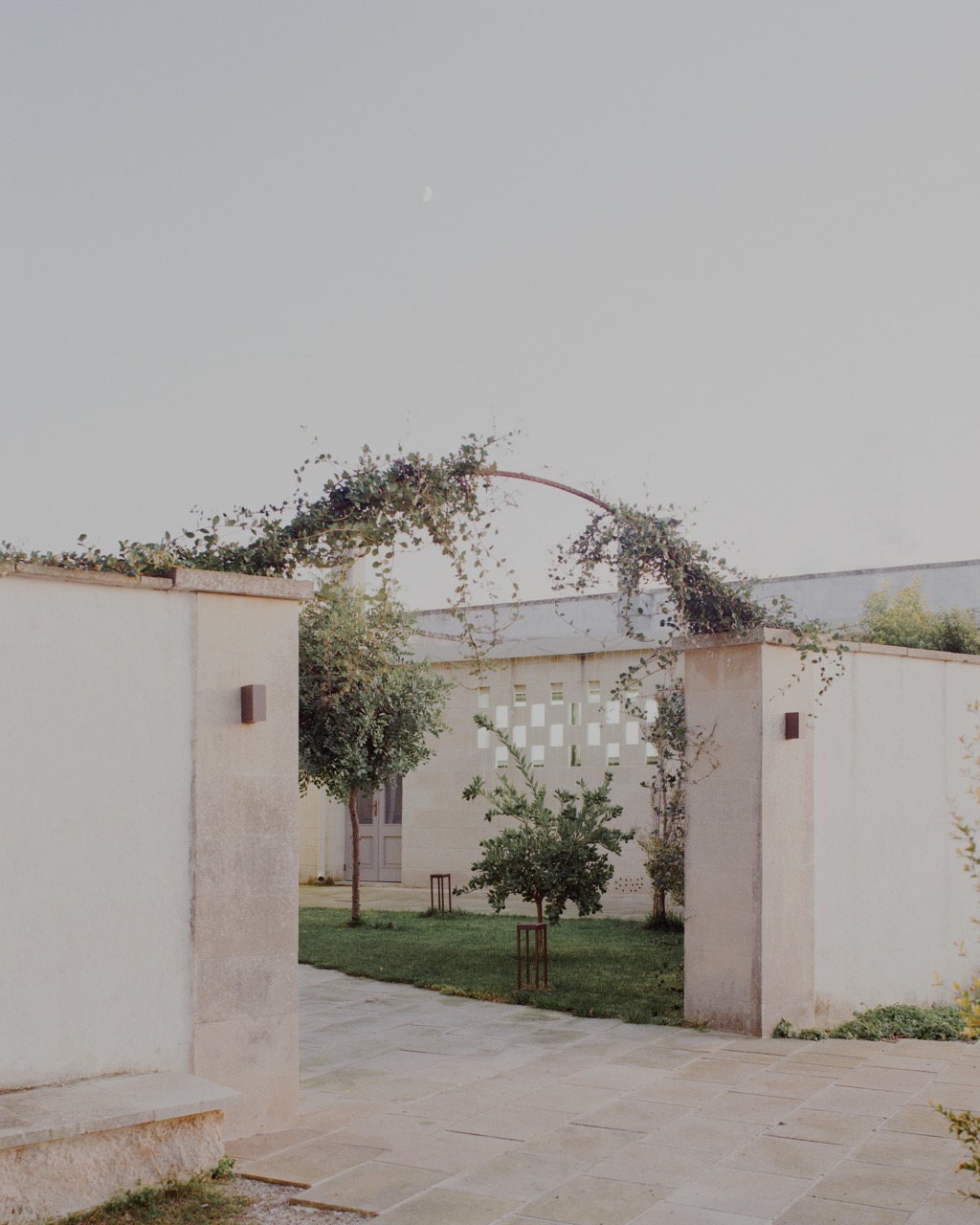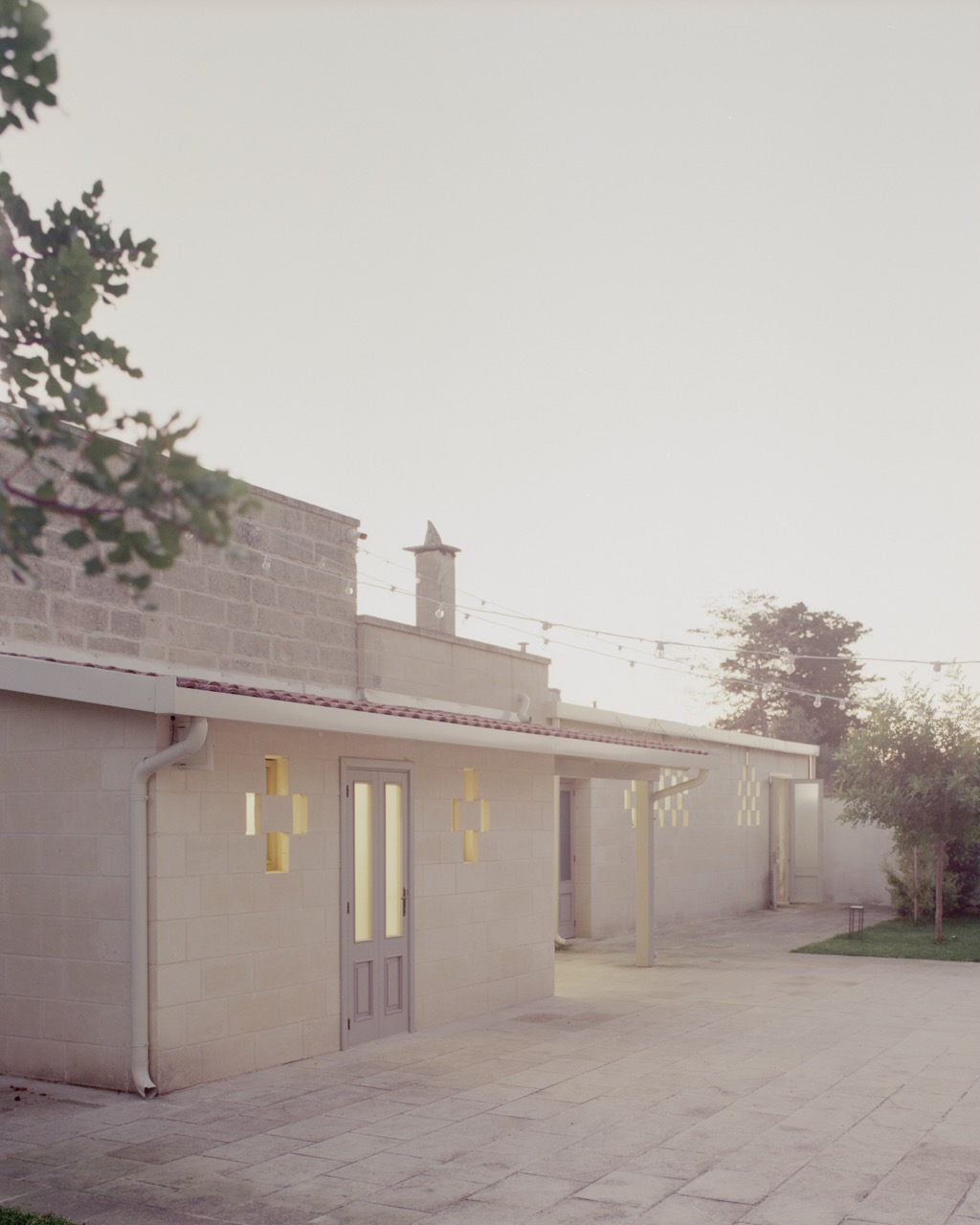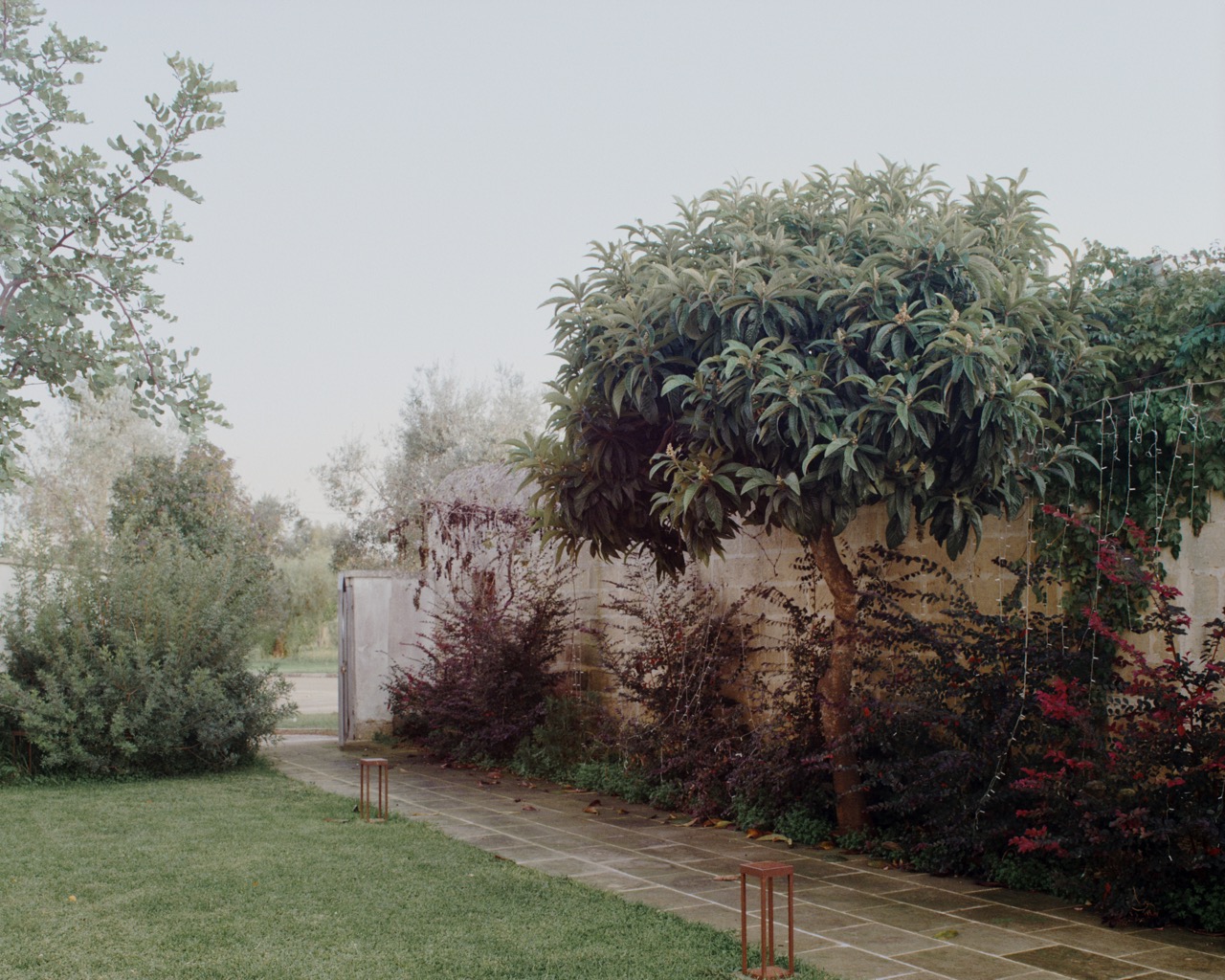

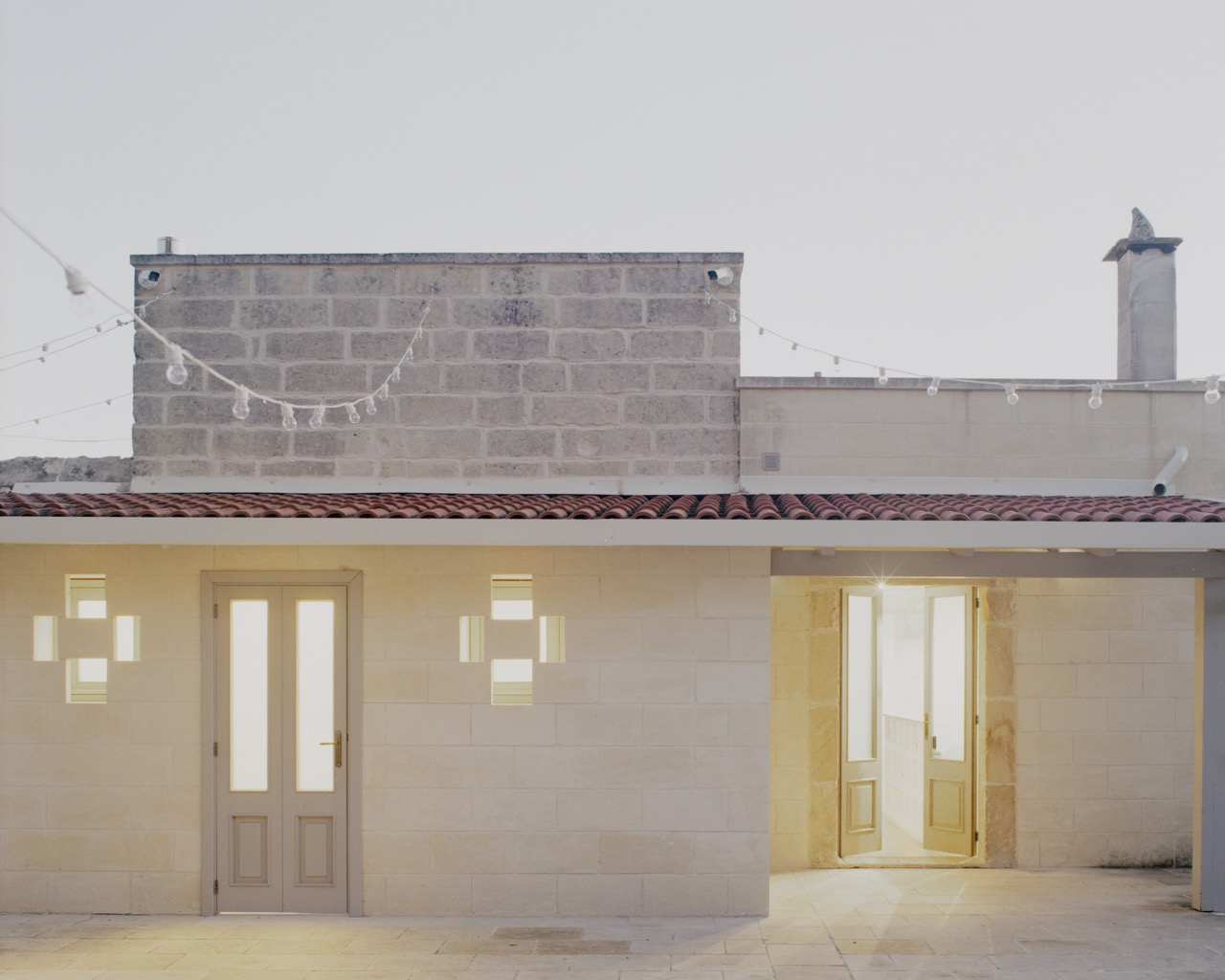
The restoration project of Masseria Caronte, designed by the studio Margine in Vernole, in the Salento region, is a work on time even before it is a work on form. A time sedimented in the Lecce stone, in the vaults, in the enclosure that for centuries sheltered labor and animals, and that over the years has been altered by additions and transformations.
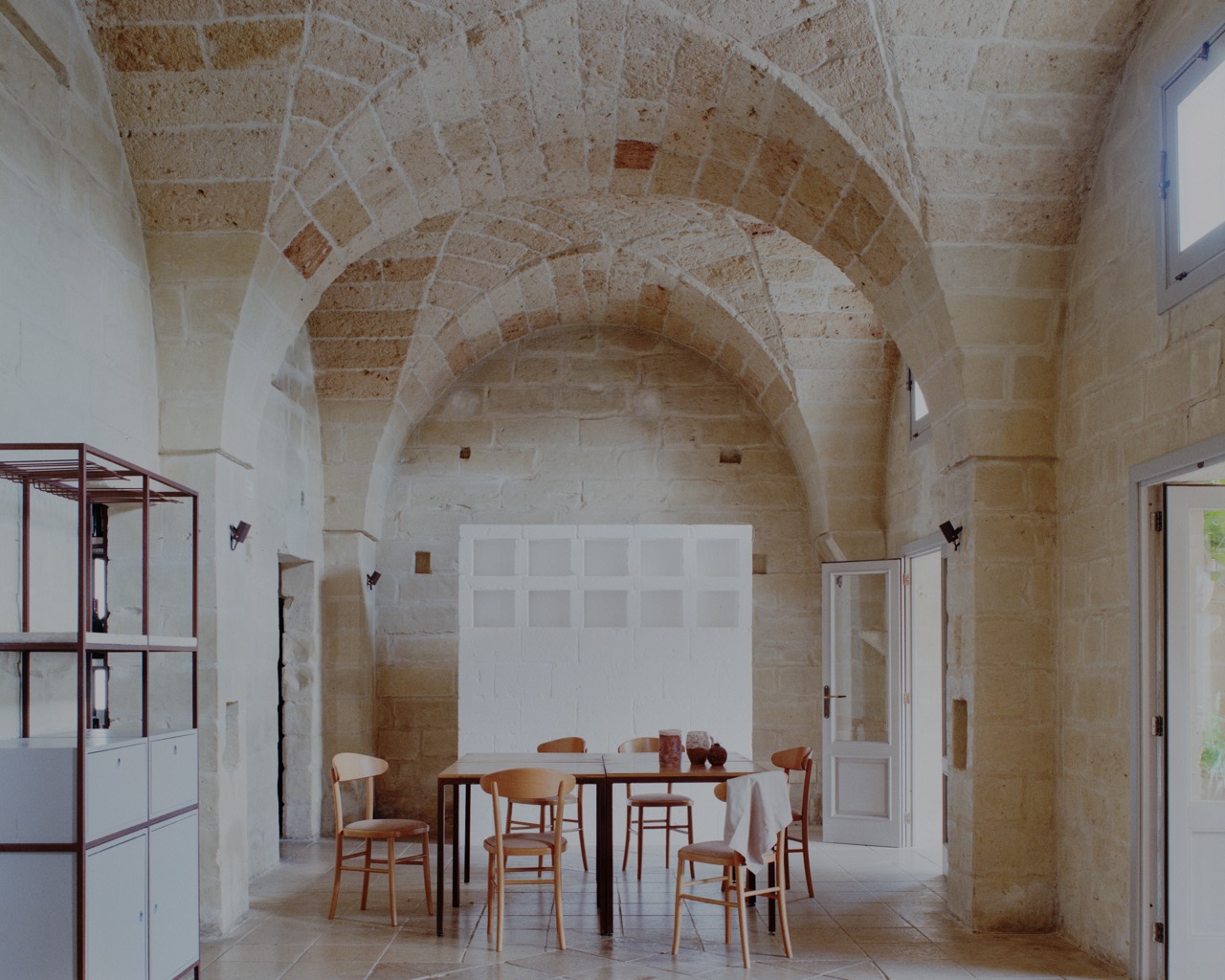
Historically devoted to sheep farming and to the production of wool and yarns, the masseria retains a clearly legible original structure organized around an enclosed courtyard. The founding nucleus is defined by a quadrangular perimeter wall in Lecce stone, approximately three meters high, conceived as a protective device for livestock. This enclosure is joined by a vaulted stone building articulated into three rooms, originally used as a workshop and, when necessary, as shelter for animals. The intervention takes this stratification as critical material and chooses to operate through subtraction, freeing the architecture from later overwritings in order to restore spatial continuity, proportional balance to the material, and clarity to the original layout.
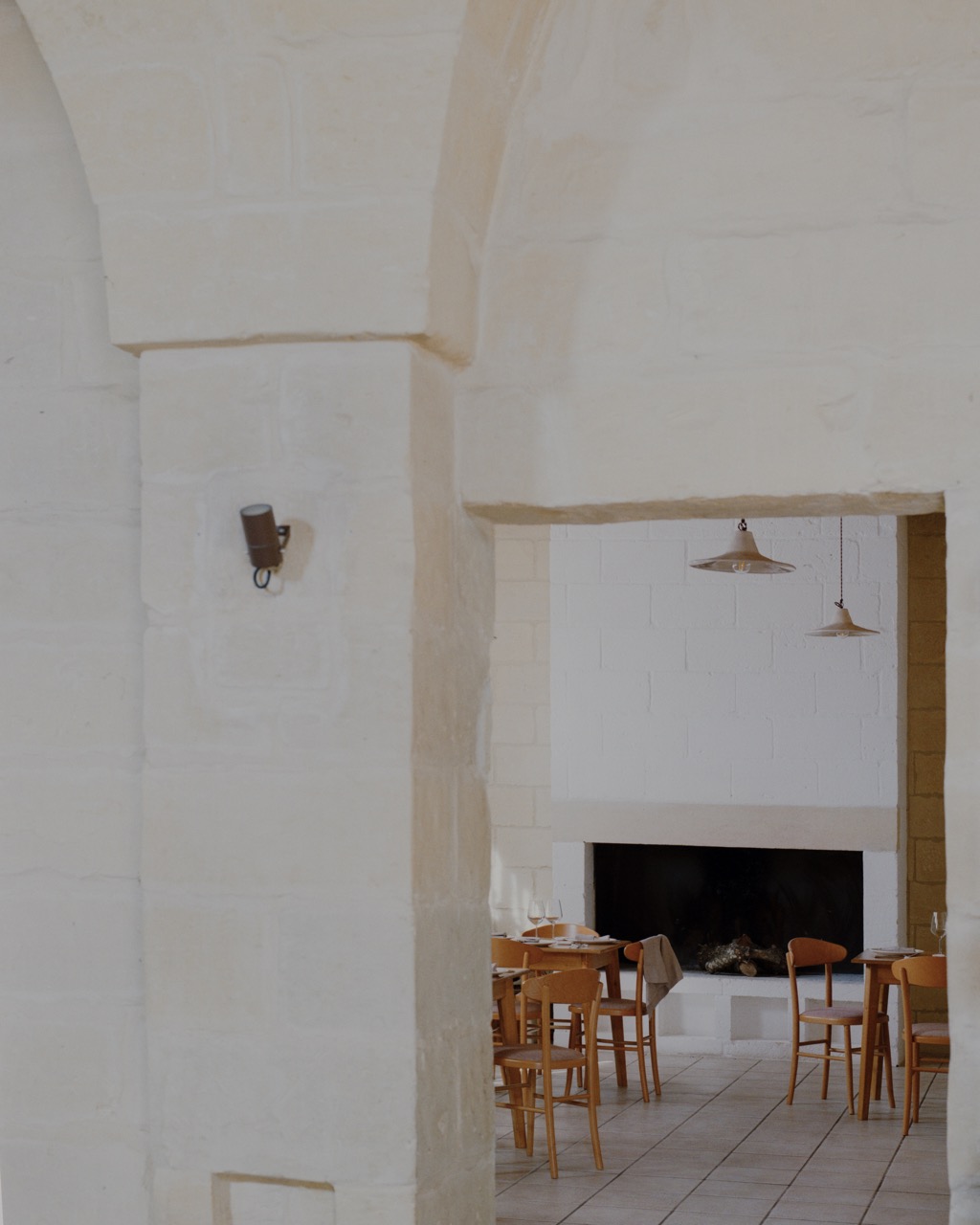
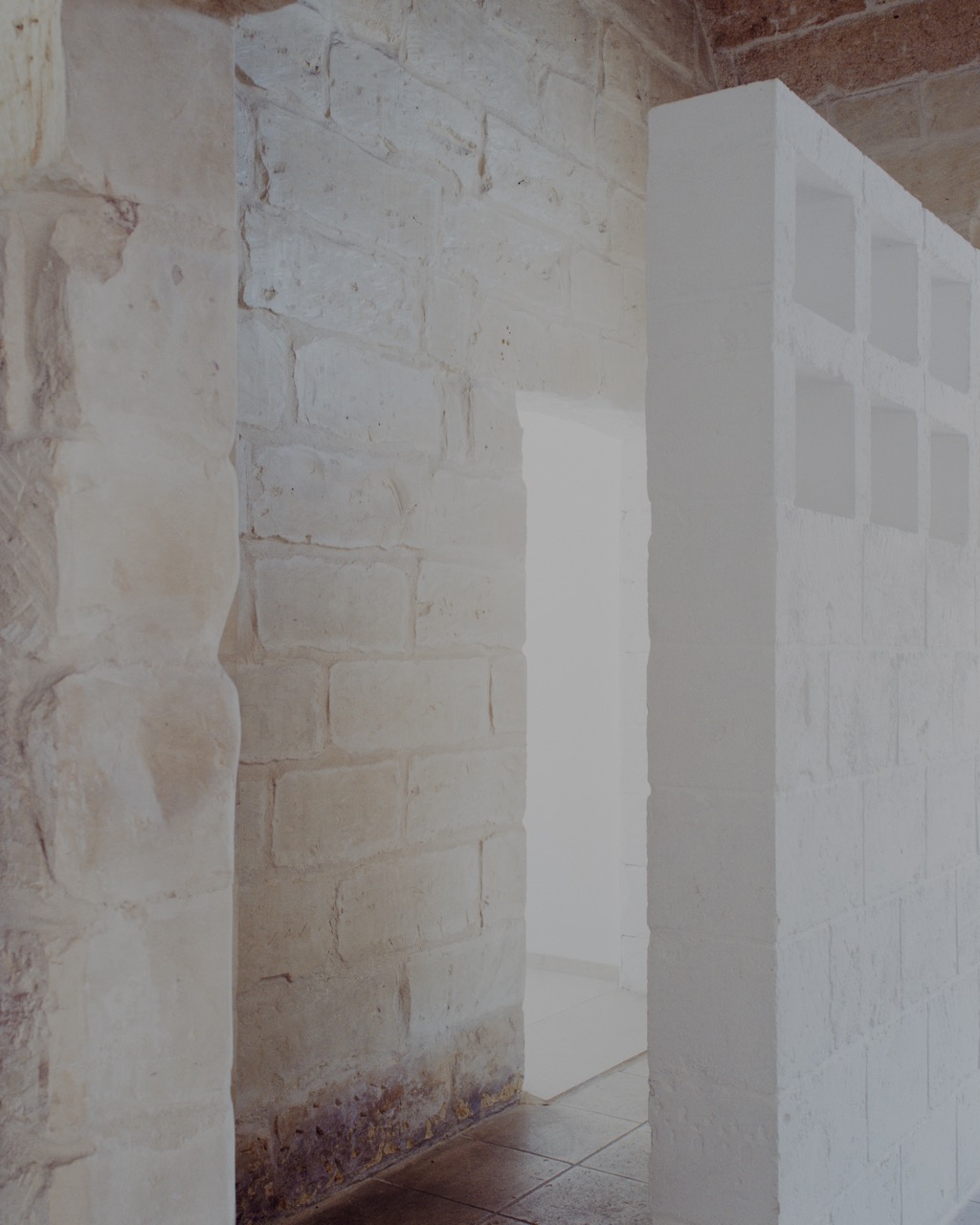
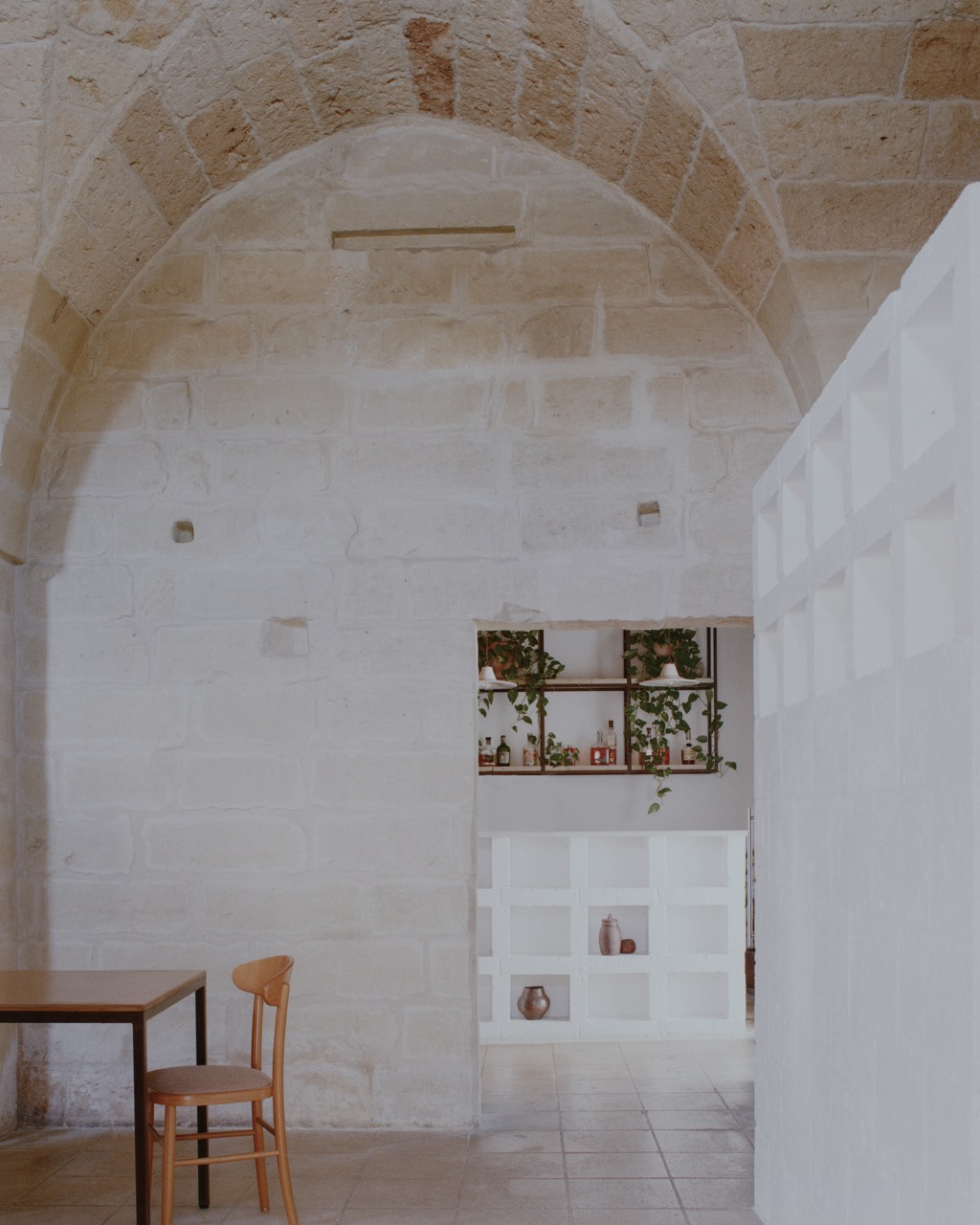
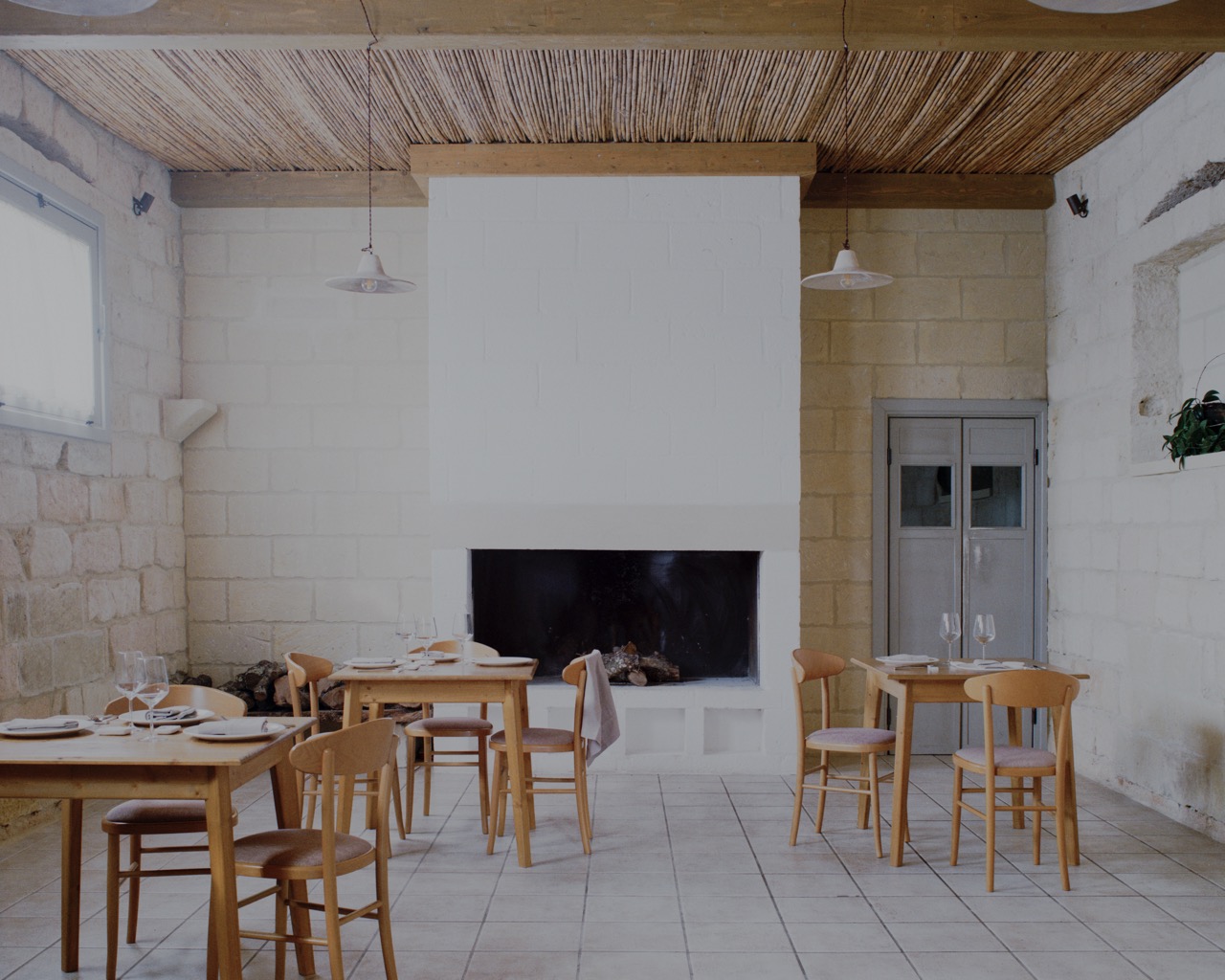
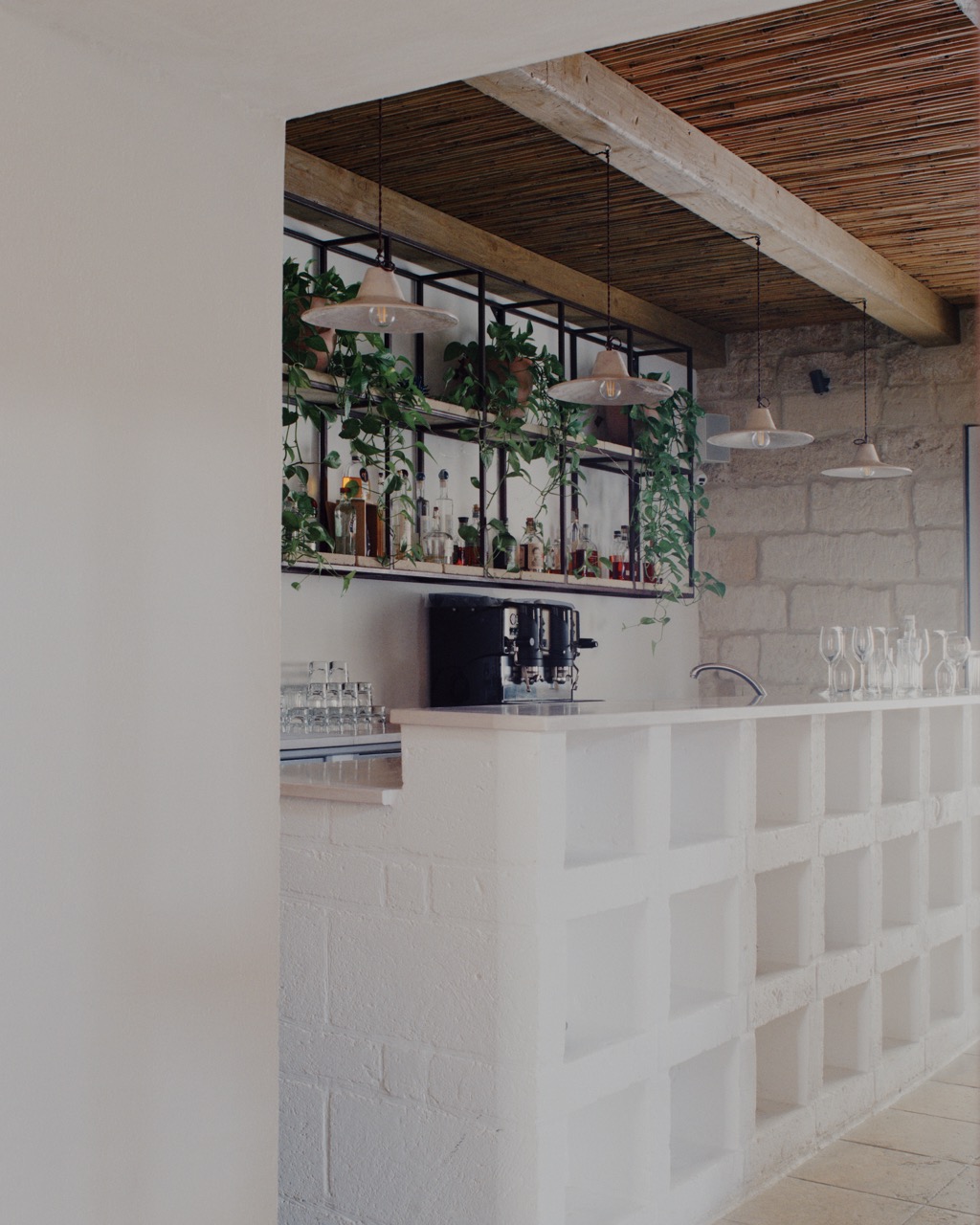
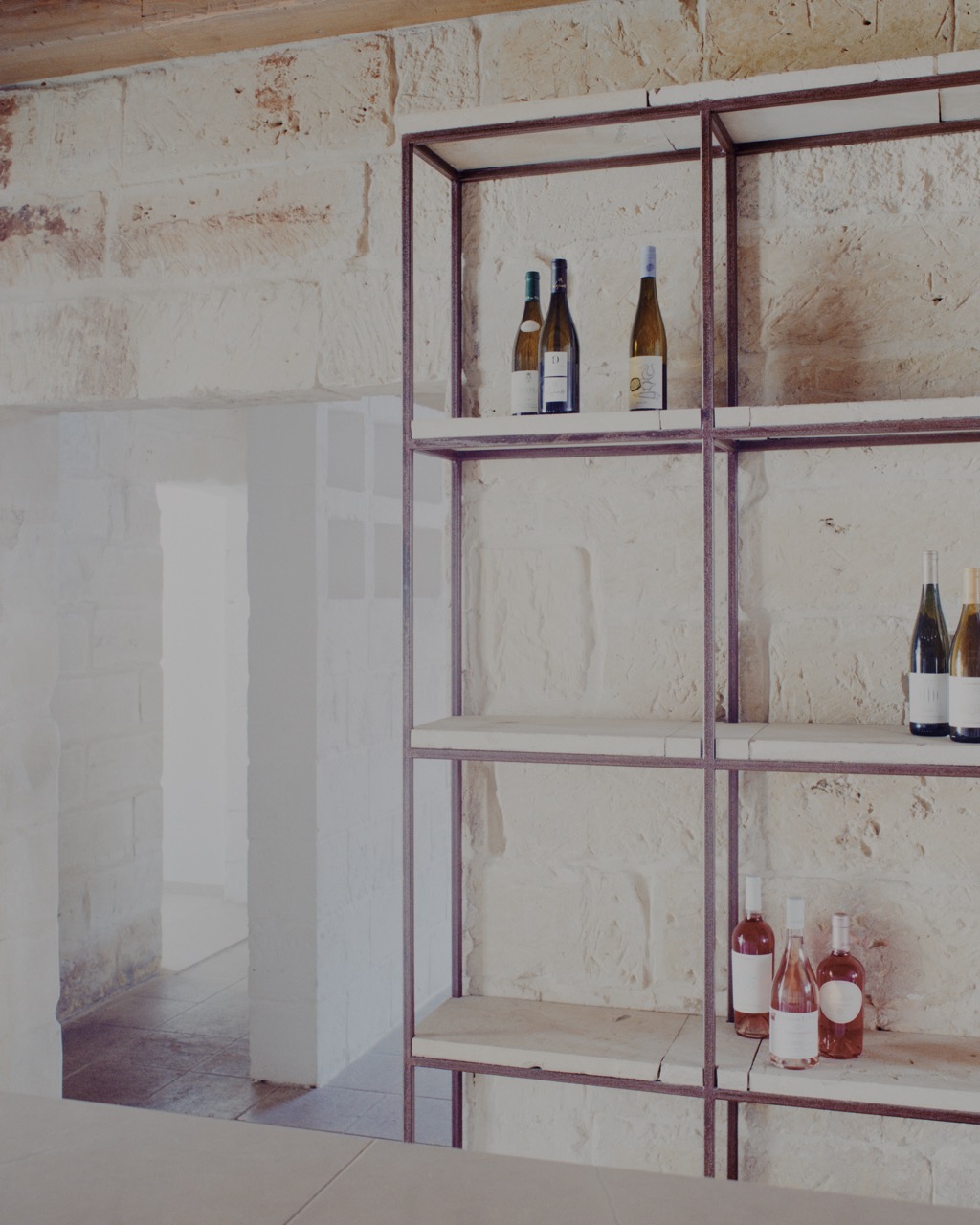
The reprogramming of the interior spaces, now intended for use as a restaurant, does not take place through a total redefinition of the building, but through the insertion of three precise architectural episodes: a counter, a hearth, and a screen wall. These elements, made of tuff stone and finished with limewash, clearly declare themselves as contemporary presences, distinguishing themselves chromatically and materially from the historic fabric. Their essential design and the shared coffered motif establish a visual continuity across the spaces, constructing a new spatial hierarchy without overlapping the existing structure.
The counter introduces and organizes access, acting as a threshold between public space and service areas; the hearth defines the room housed within the 1960s addition, transforming it into a space of identity; the screen wall, finally, resolves a functional requirement by concealing the anteroom to the restrooms and controlling visual relationships with the vaulted rooms. In all three cases, the intervention measures itself against the scale and materiality of the place, entrusting the clarity of the gesture with its expressive strength.
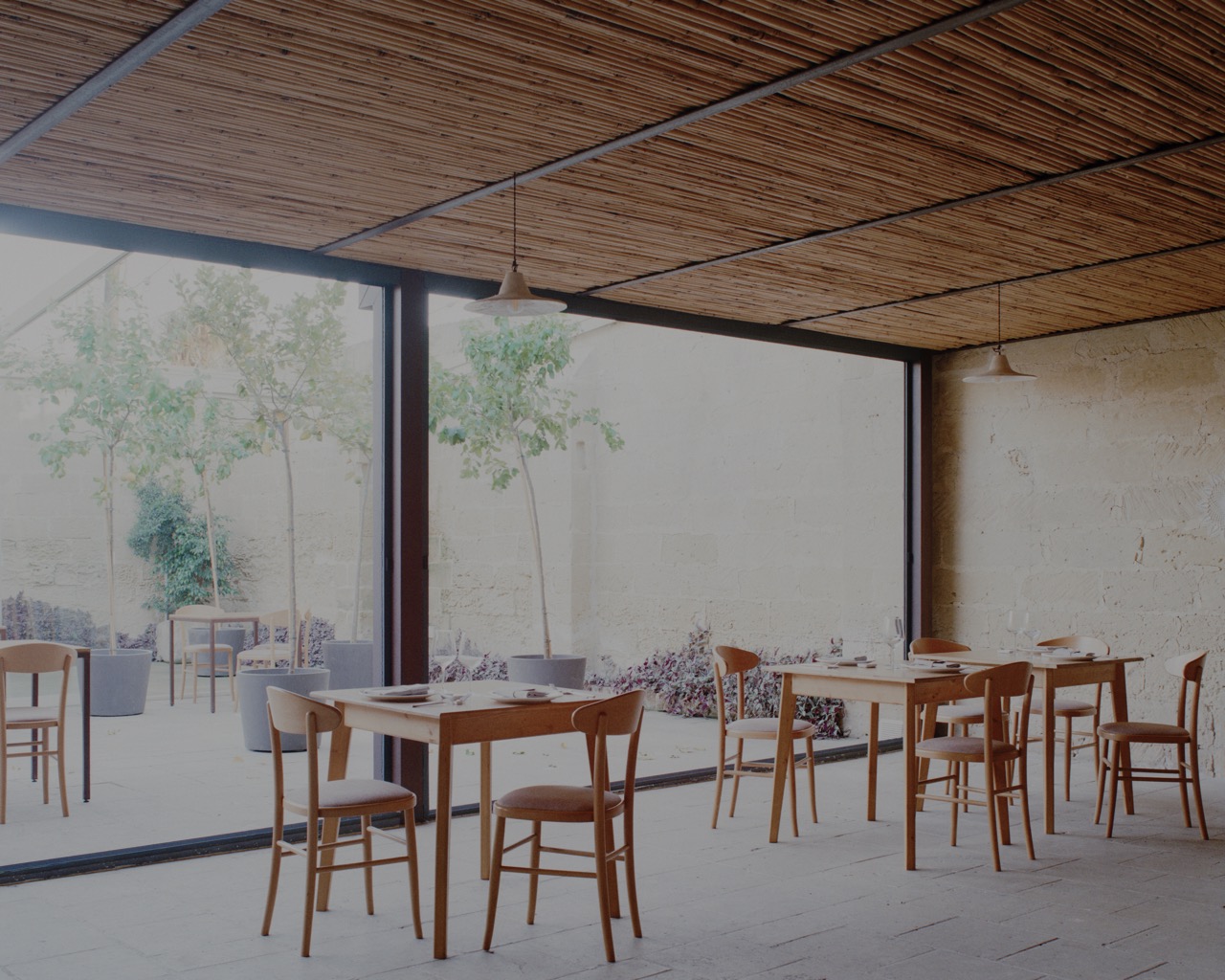
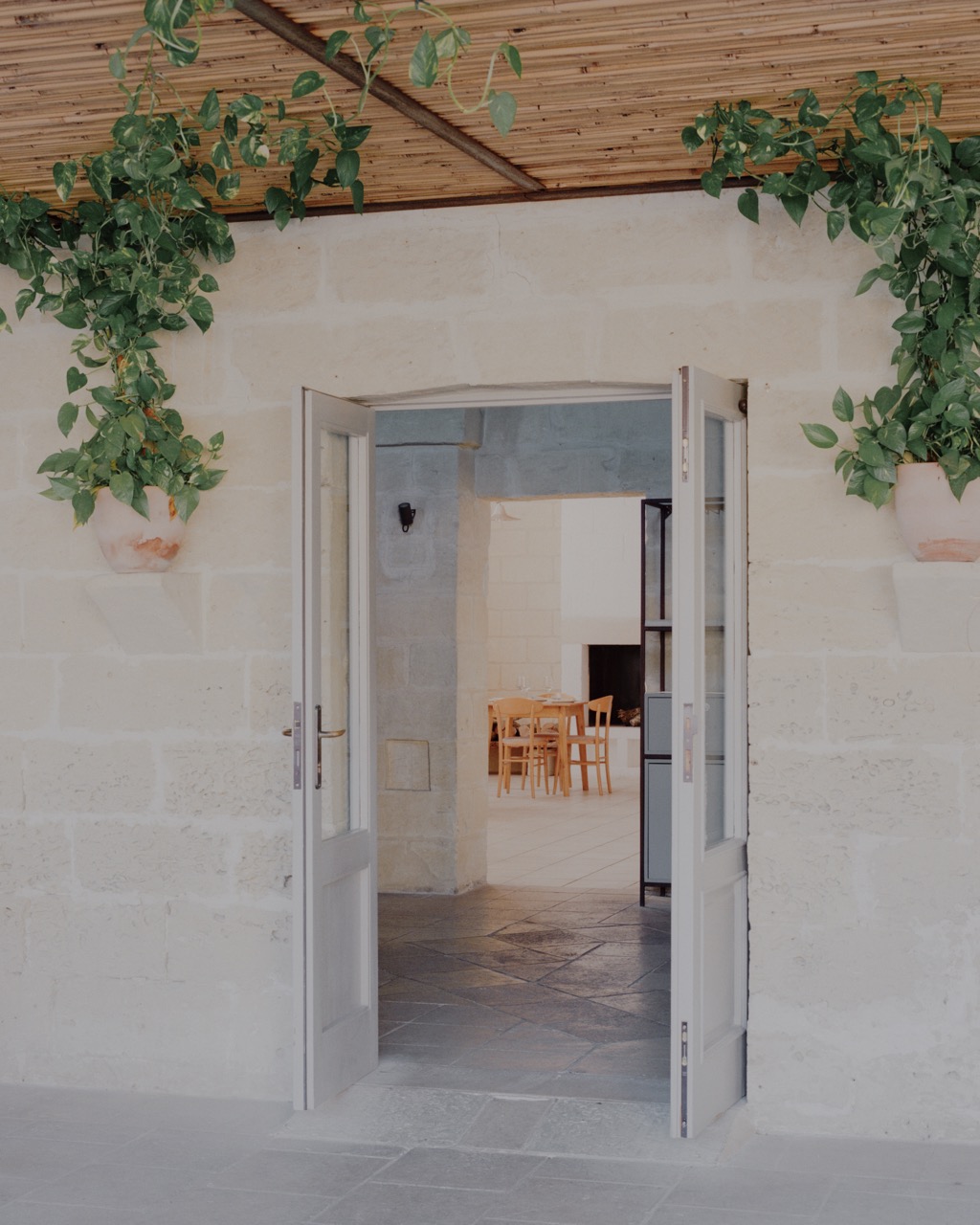
The courtyard, freed from the incongruous wooden roof, once again becomes a central space of the project. Partial protection is provided by a corten steel dehor, clad with raw reed matting and complemented by terracotta lighting elements. Tables and furnishings, specifically designed for the project, employ the same materials—corten, stone, and wood—reinforcing the idea of a coherent whole, constructed through the addition of essential and clearly legible elements. The masseria thus returns to being an essential structure, capable of accommodating a new use without relinquishing its constructive memory.
CREDITS
Project: Masseria Caronte
Architects: Margine
Location: Vernole (LE), Italy
Year: 2025
Photography: Marcello Mariana