
Seek and you shall find, and one can never fully anticipate the treasures that may emerge within an existing building embedded in the layered urban fabric of Porta Portese, Rome. It is precisely from this dimension of discovery—deeply tied to the imagery of the famous market—that the project by Valentina Andriulli and Costanza Santovetti redefines domestic space as an expressive device capable of holding together identity, materiality, and narrative. Located in the Porta Portese district, the intervention transforms a large penthouse into an articulated and stratified environment, where dwelling becomes both an aesthetic and everyday practice.
The apartment originates from the merging of two separate units within a 1970s building, an operation that goes beyond a simple redistribution of functions to construct a new spatial continuity based on sequences, thresholds, and material variations. The result is a complex domestic organism, capable of alternating generous openings with more intimate moments, defining a fluid yet never indistinct spatiality.
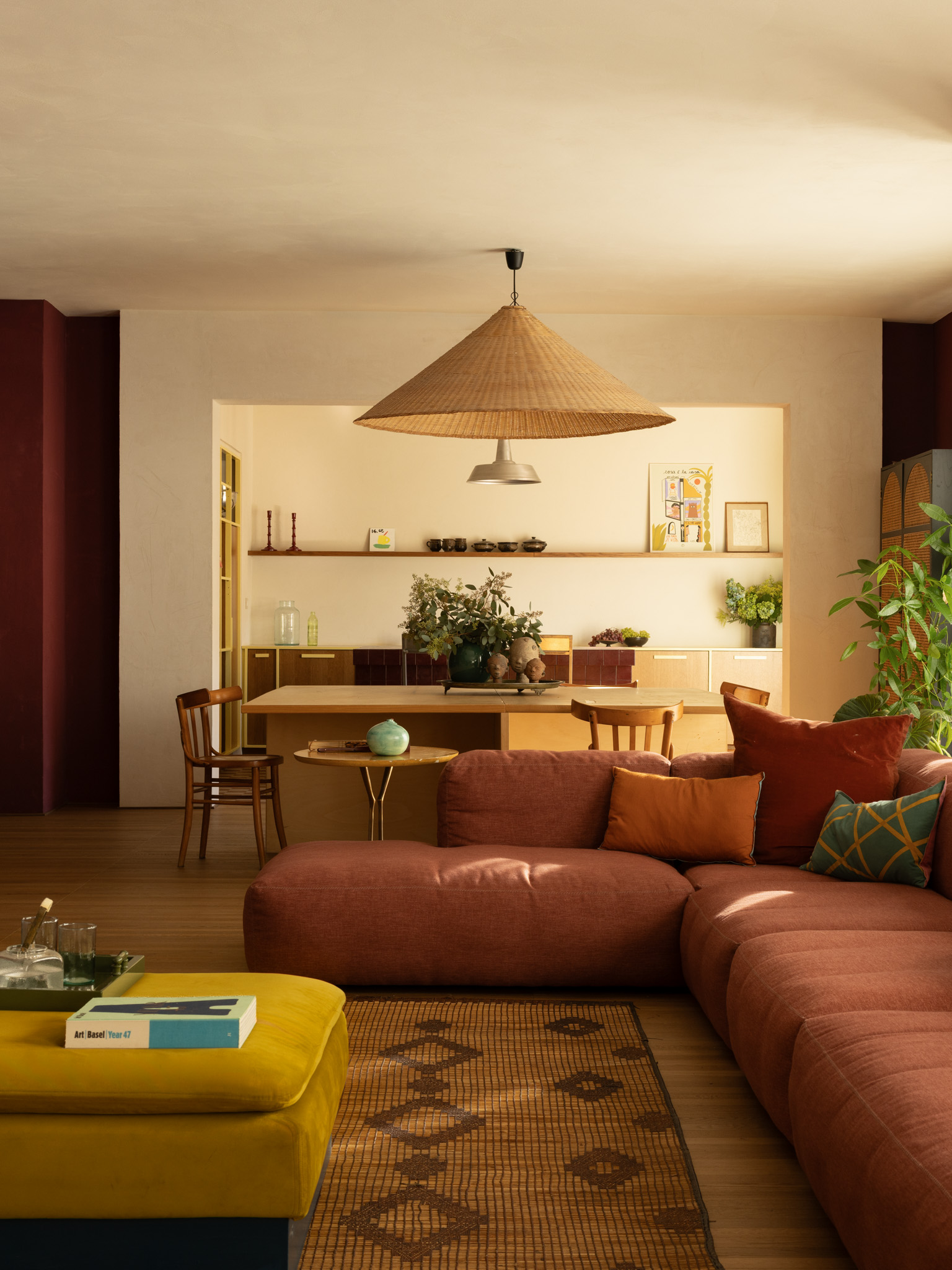
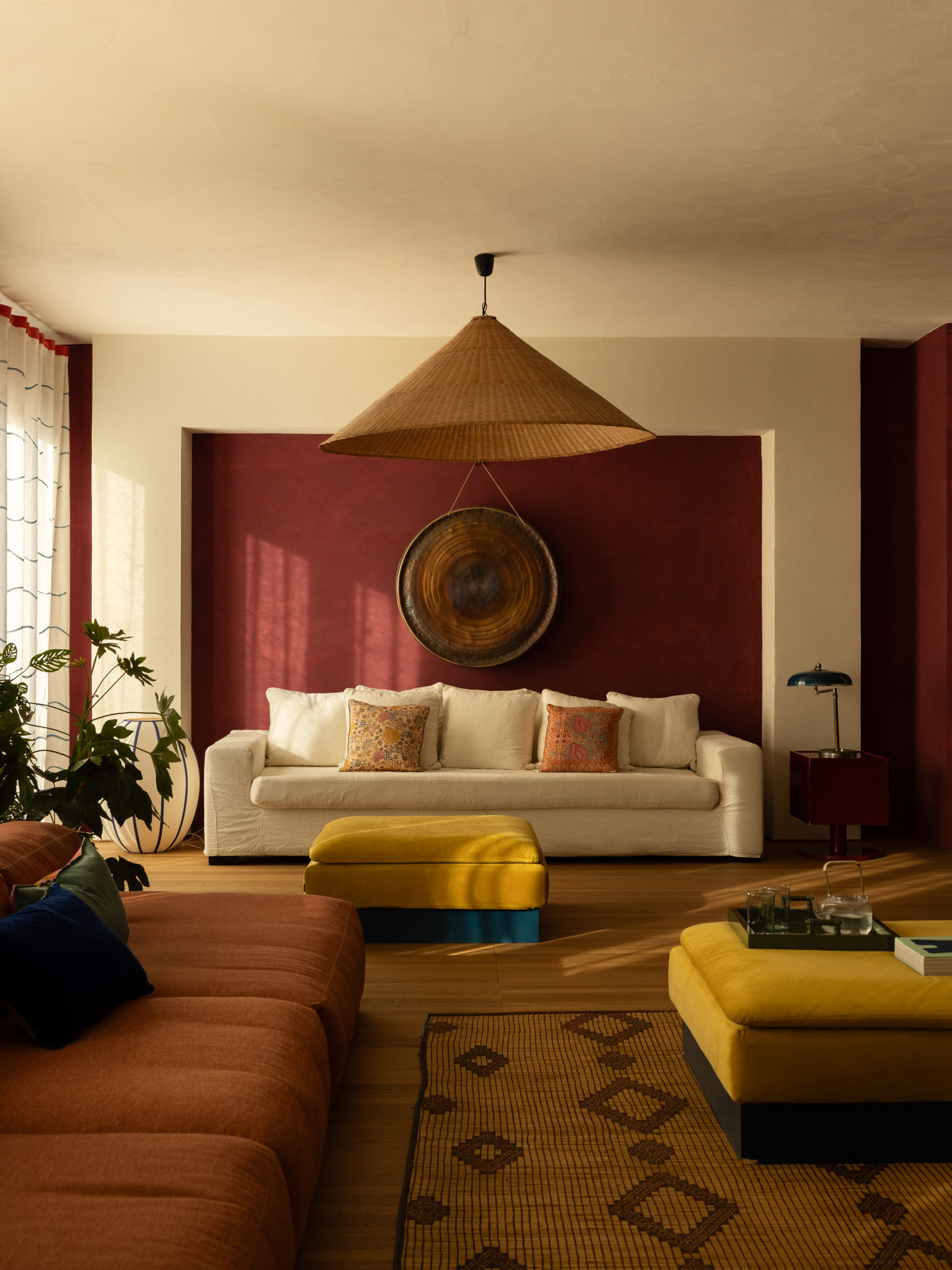
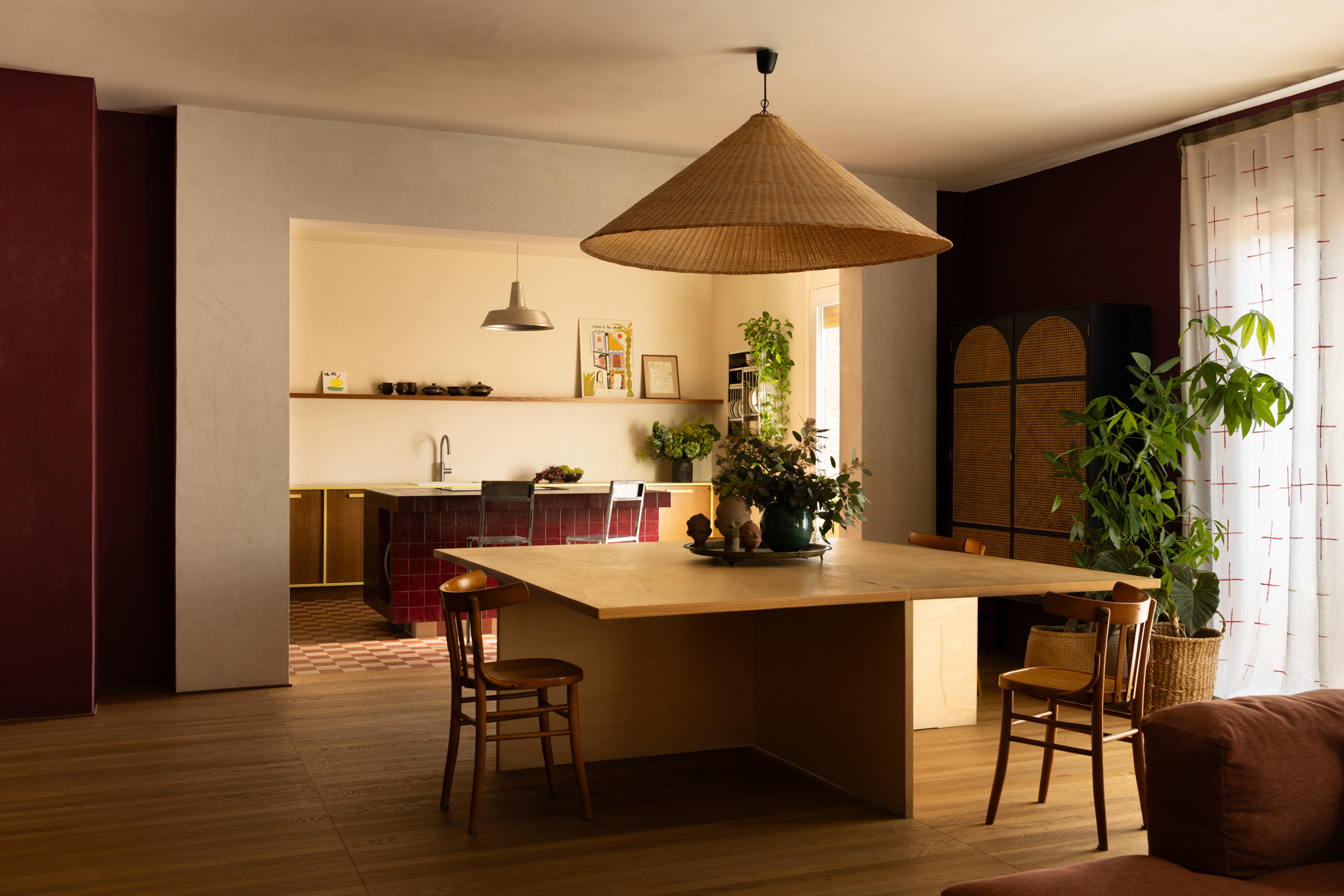
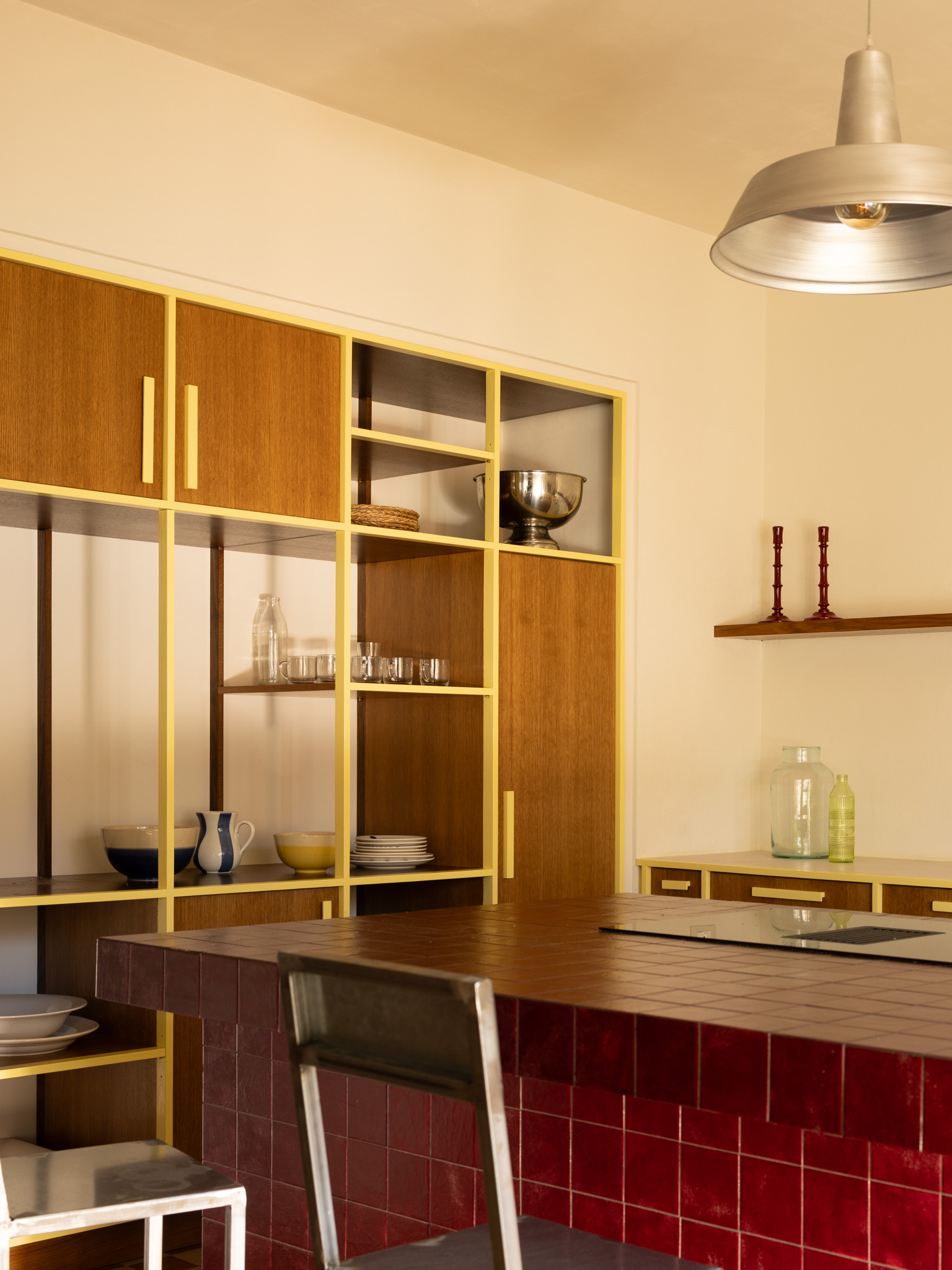
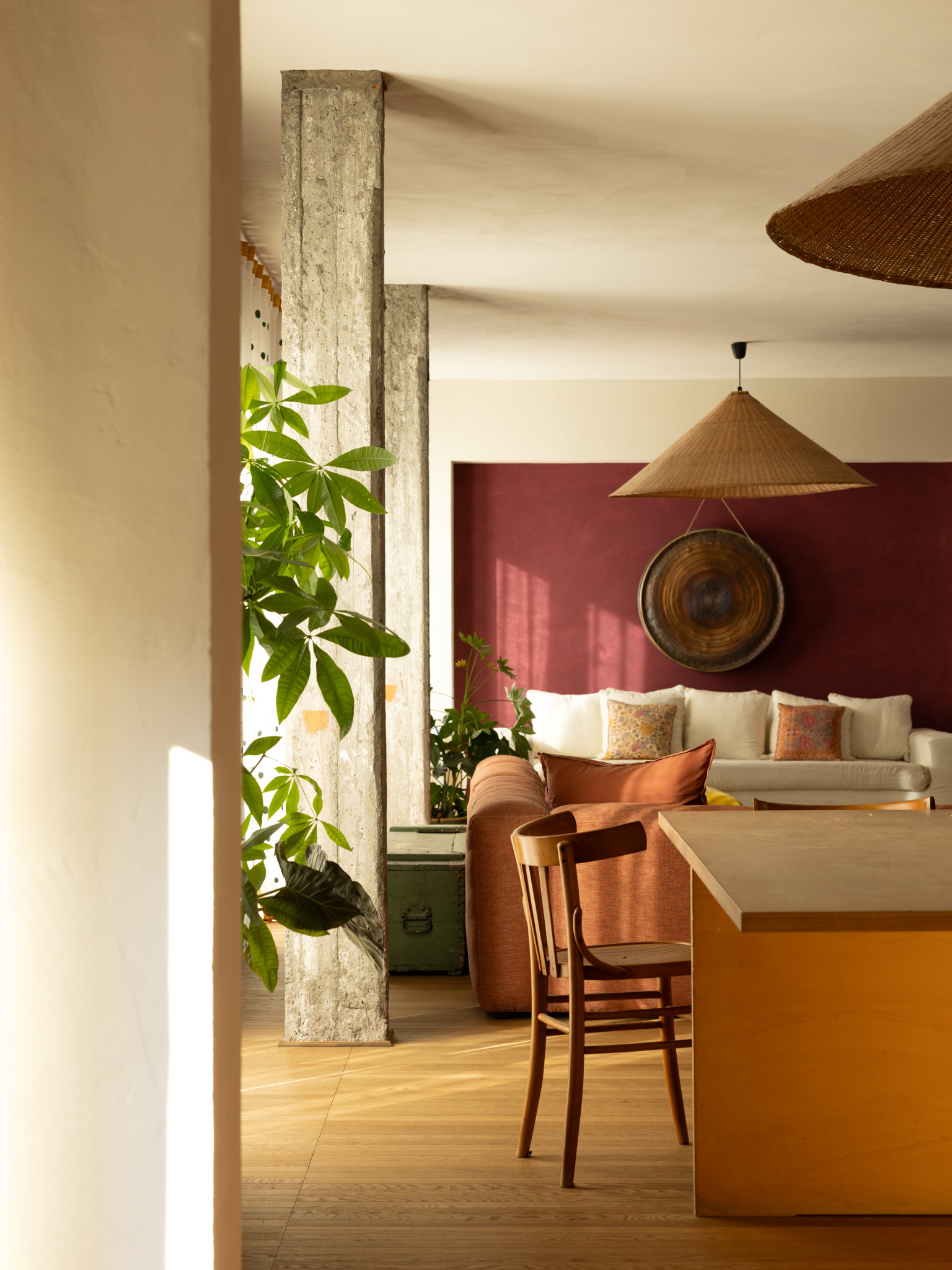
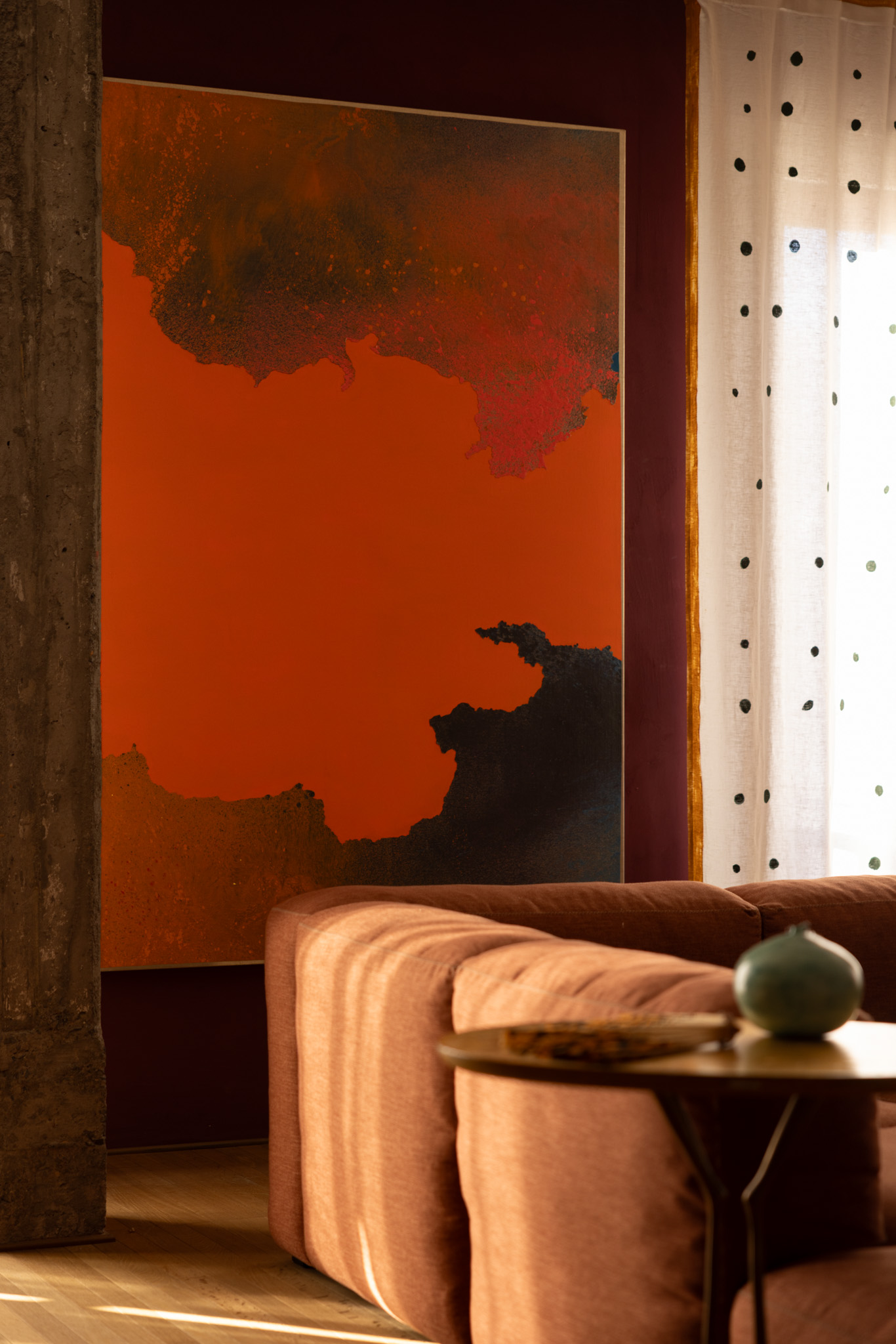
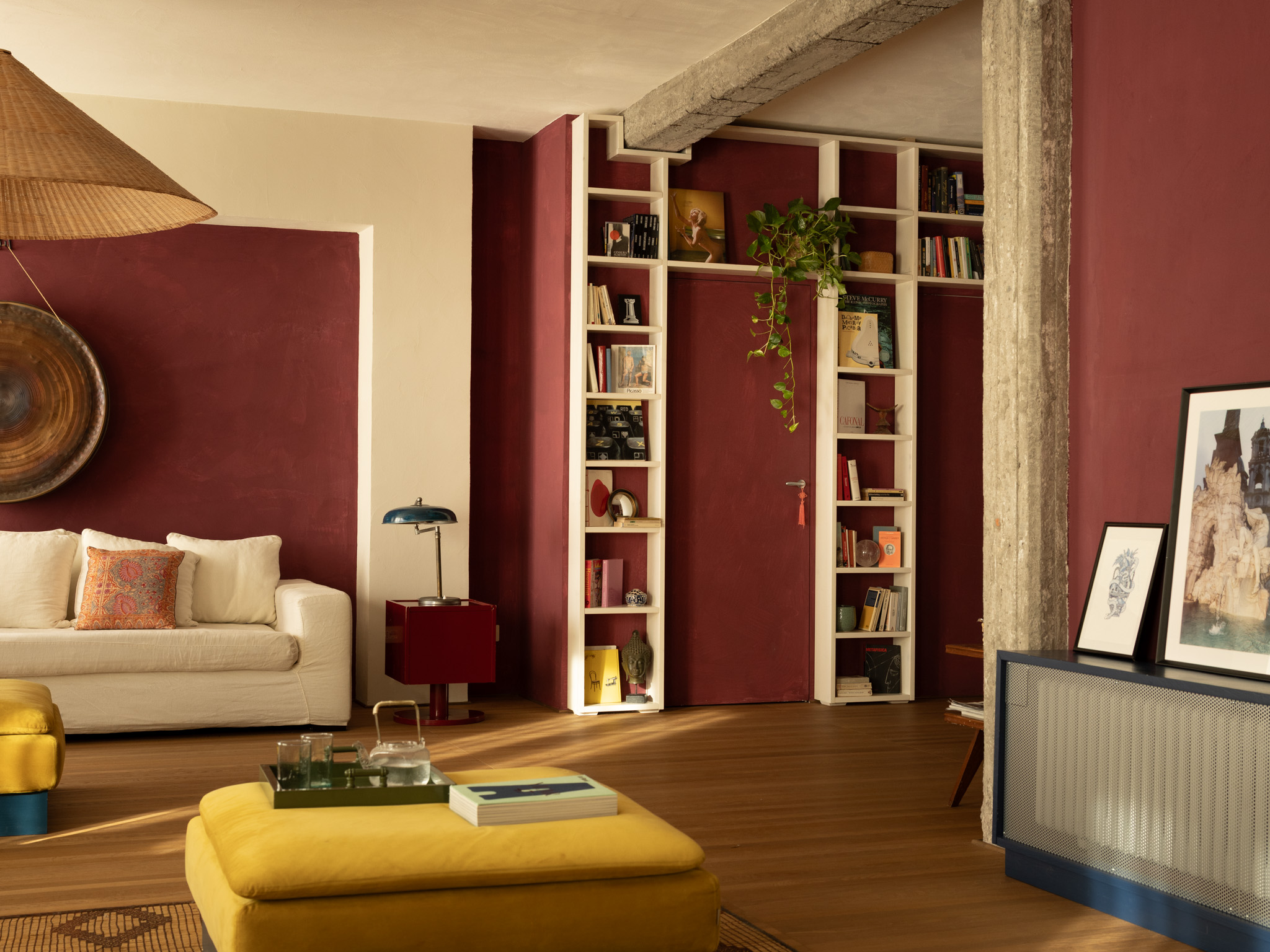
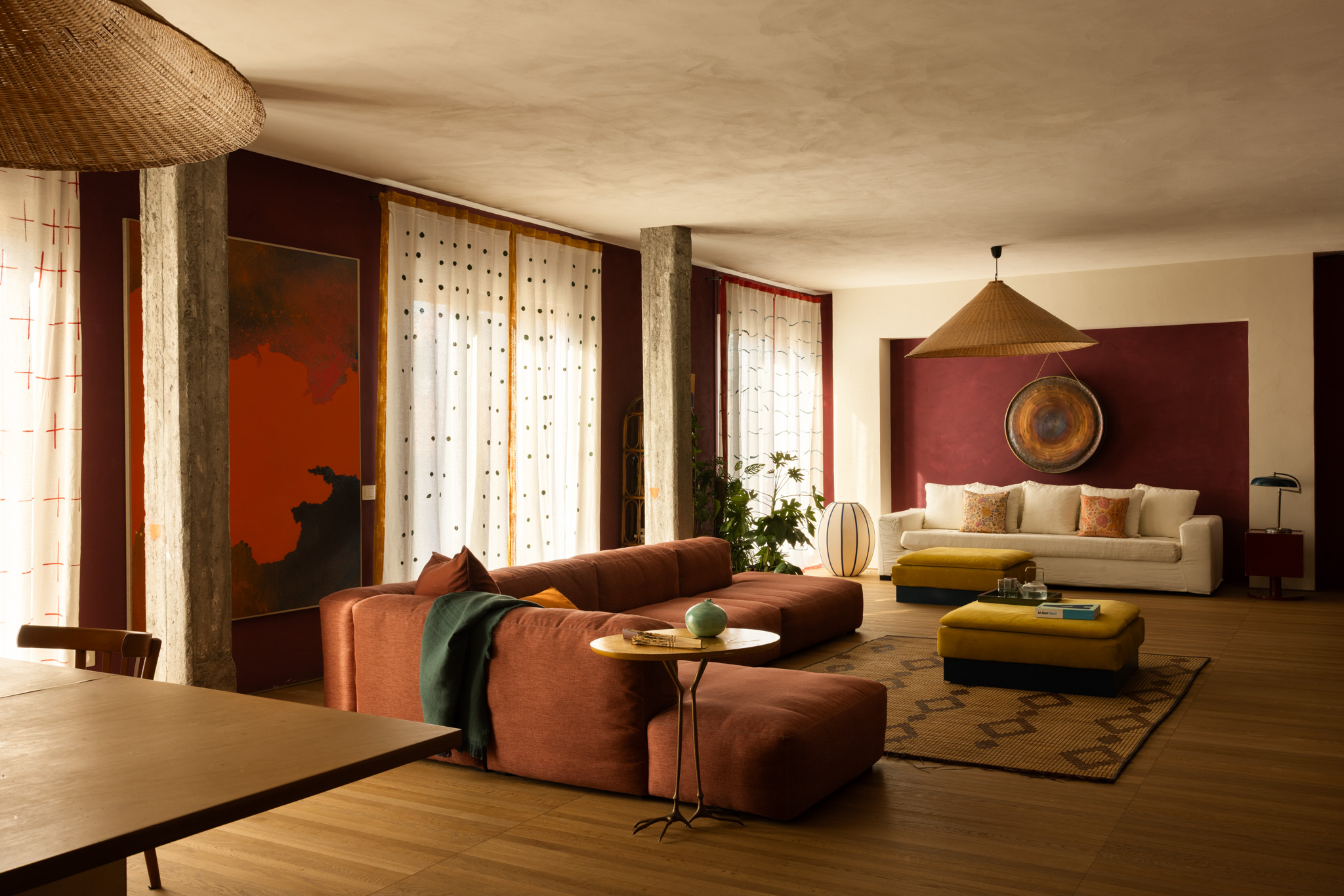
The heart of the project is the living area, conceived as a relational field in which kitchen and living room intertwine. Here, the design operates through the layering of materials, colors, and textures: the wood of the custom-made kitchen engages with the vibrant surface of the walls, immersed in a wine-red tone that lends depth and perceptual density to the space. Light, filtered and reflected by the surfaces, contributes to shaping a warm and enveloping atmosphere, in which the domestic dimension acquires an almost scenographic quality.
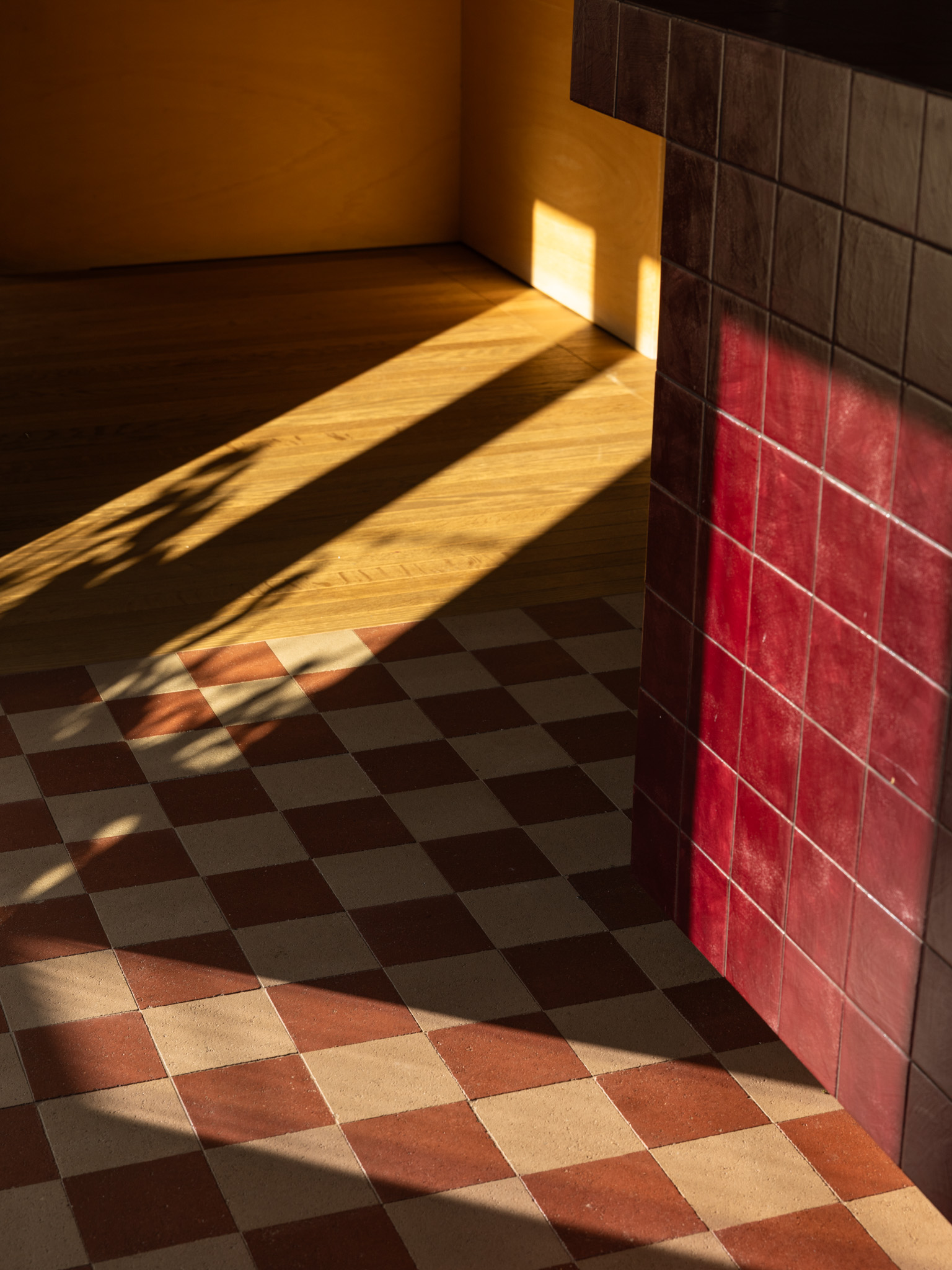
The selection of materials reveals a particular attention to the tactile and artisanal dimension of the project. The compacted stone flooring, arranged in a checkerboard pattern, introduces a visual rhythm that dialogues with vertical surfaces, while the kitchen island, clad in hand-painted tiles, becomes both a focal element and a narrative device. The large teak floorboards, extending throughout the rooms, establish a warm and continuous base capable of absorbing and reflecting the chromatic variations of the interiors.
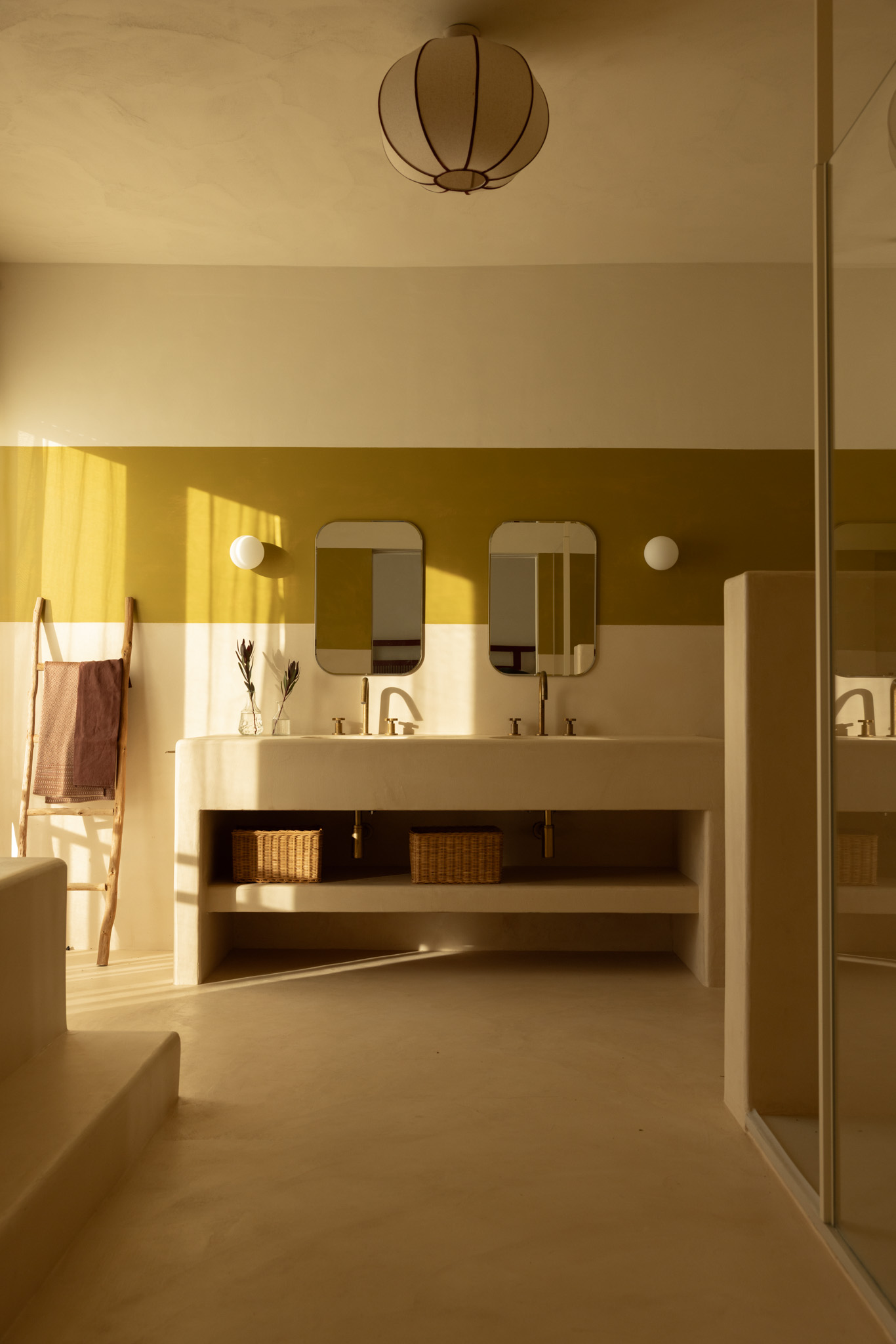
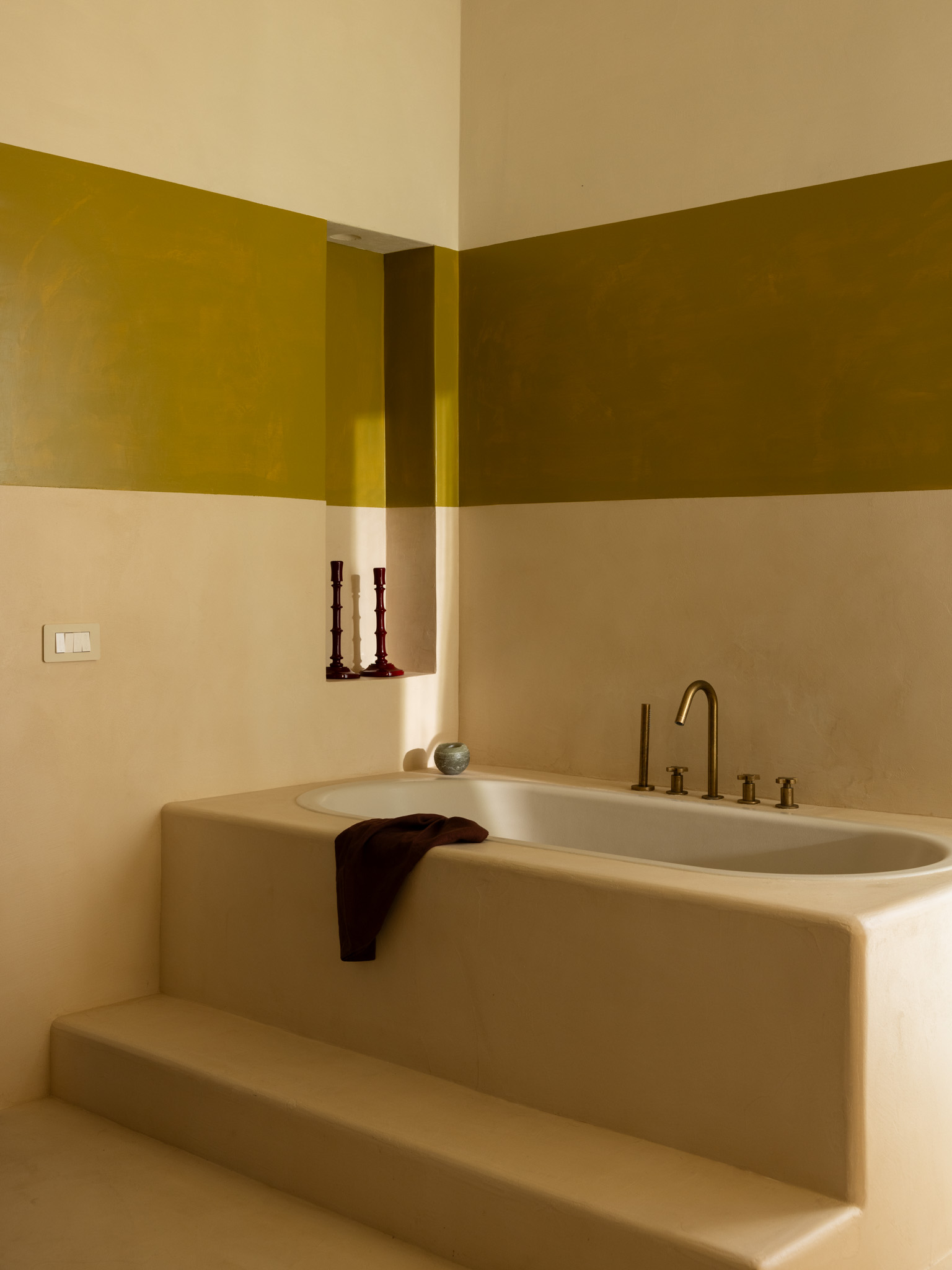
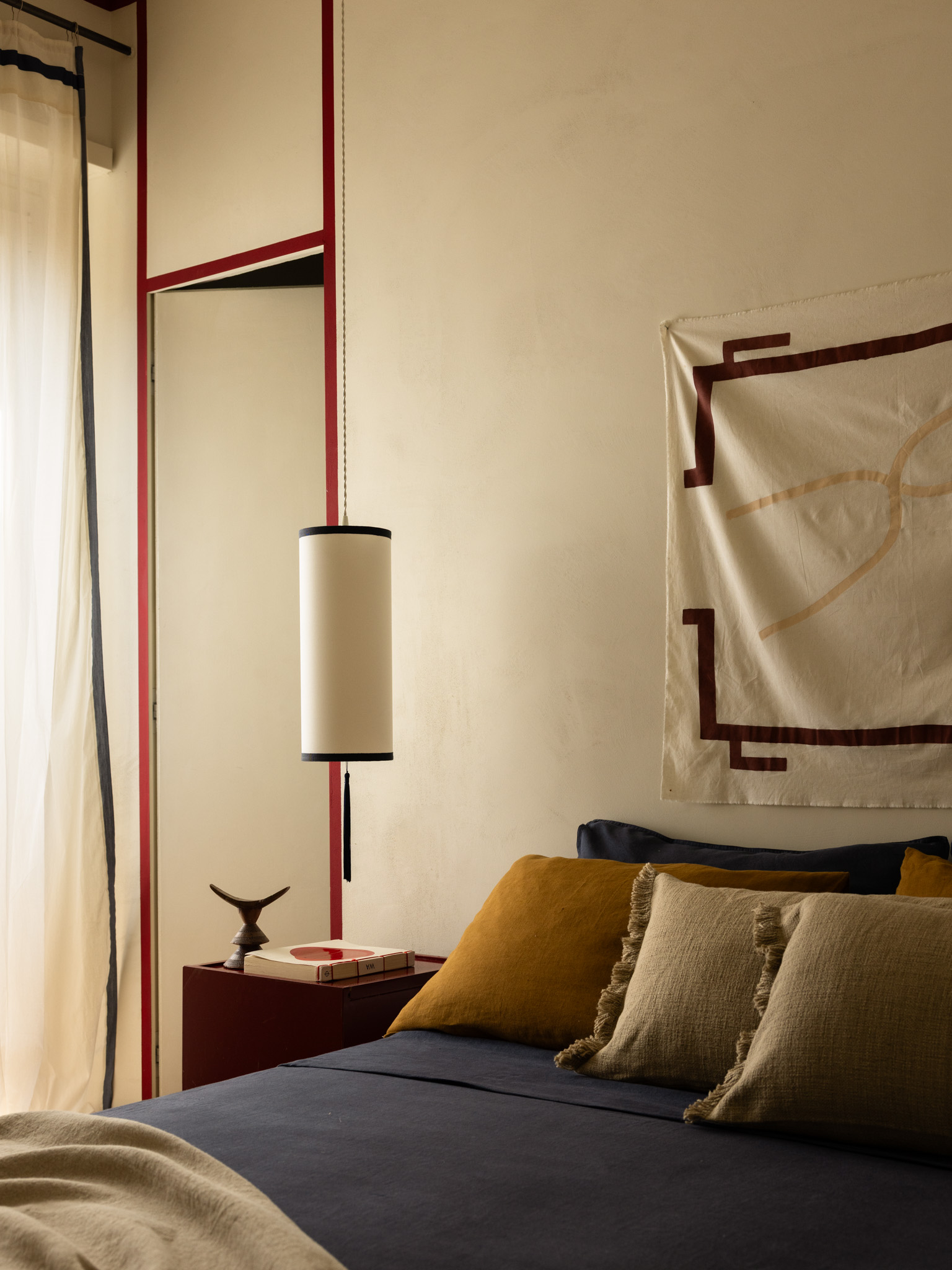
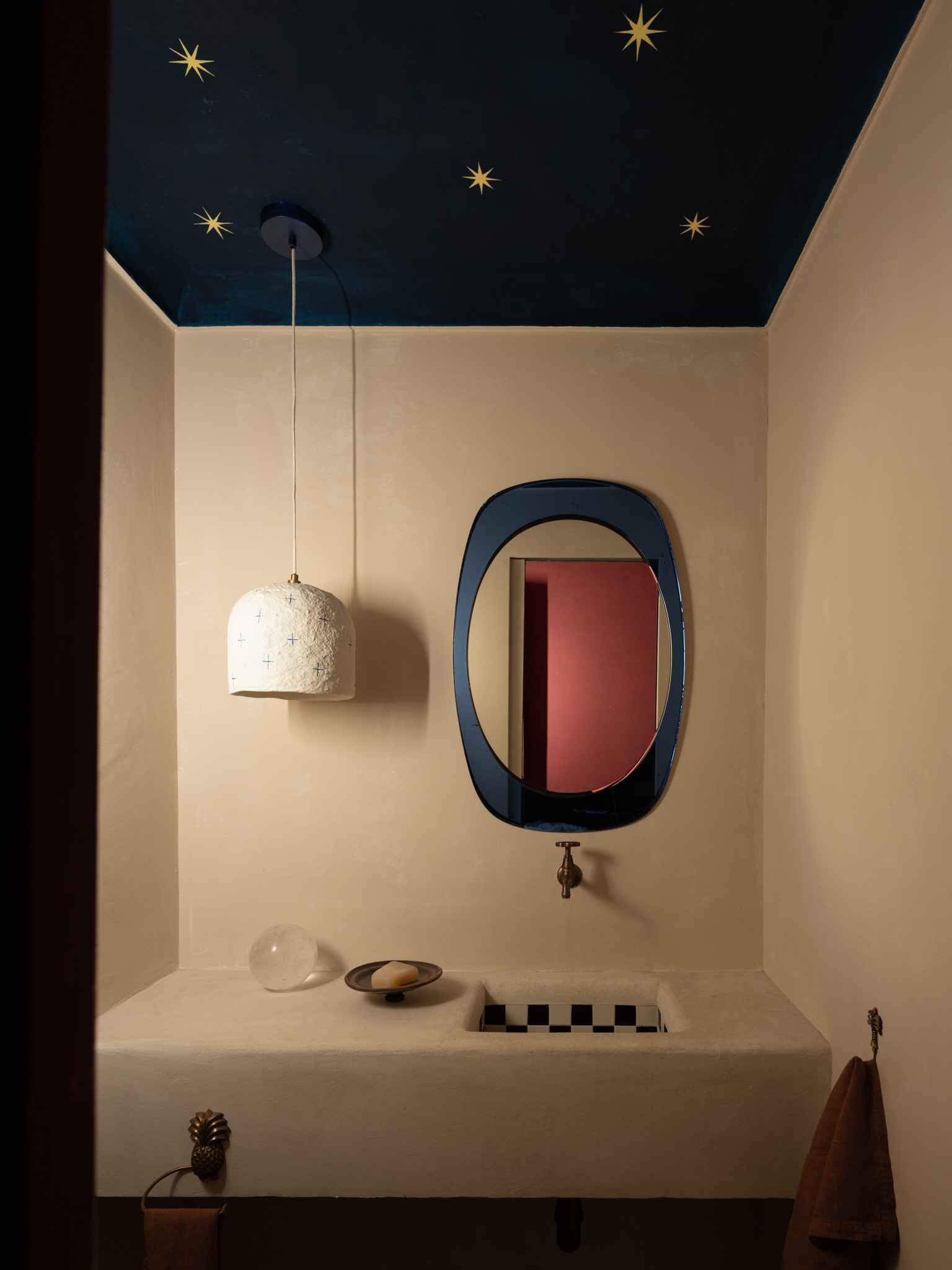
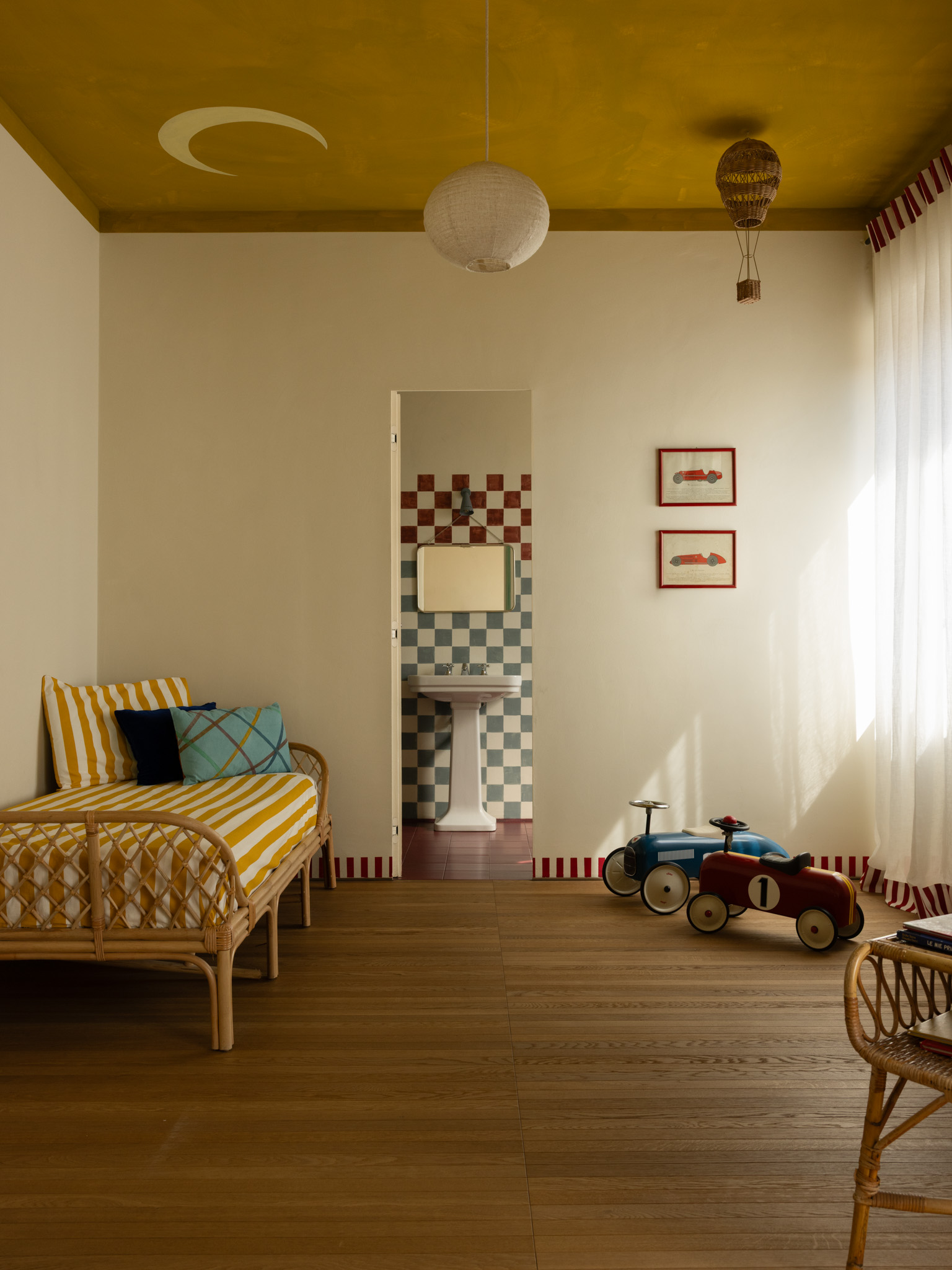
The sleeping area is organized as a more intimate and autonomous domain, accessed through a separate entrance that reinforces its sense of privacy. Here, the project emphasizes personalization through decorative interventions executed on site, transforming each space into a unique episode. Bathrooms and bedrooms thus become experimental fields, where surfaces and details contribute to the construction of a strongly identity-driven domestic narrative.
Furniture plays a fundamental role in defining the space, moving between mid-century pieces, contemporary design, and custom-made elements. This controlled heterogeneity generates a dynamic balance, in which each component contributes to the construction of a coherent yet non-uniform interior landscape. Works by young Italian artists and site-specific installations—such as decorative interventions on ceilings—further amplify this narrative dimension, turning the apartment into a true expressive platform.
The project thus takes shape as a layered composition, in which materials, colors, and objects build a system of relationships capable of conveying the complexity of contemporary living, translating the clients’ needs and imagination into a dense, recognizable, and deeply lived space—where each element seems to emerge as an unexpected find, much like among the stalls of the Porta Portese market.
CREDITS
Project: Appartamento a Porta Portese
Architects: Valentina Andriulli, Costanza Santovetti
Location: Rome (RM), Italy
Year: 2026
Photography: Dario Borruto