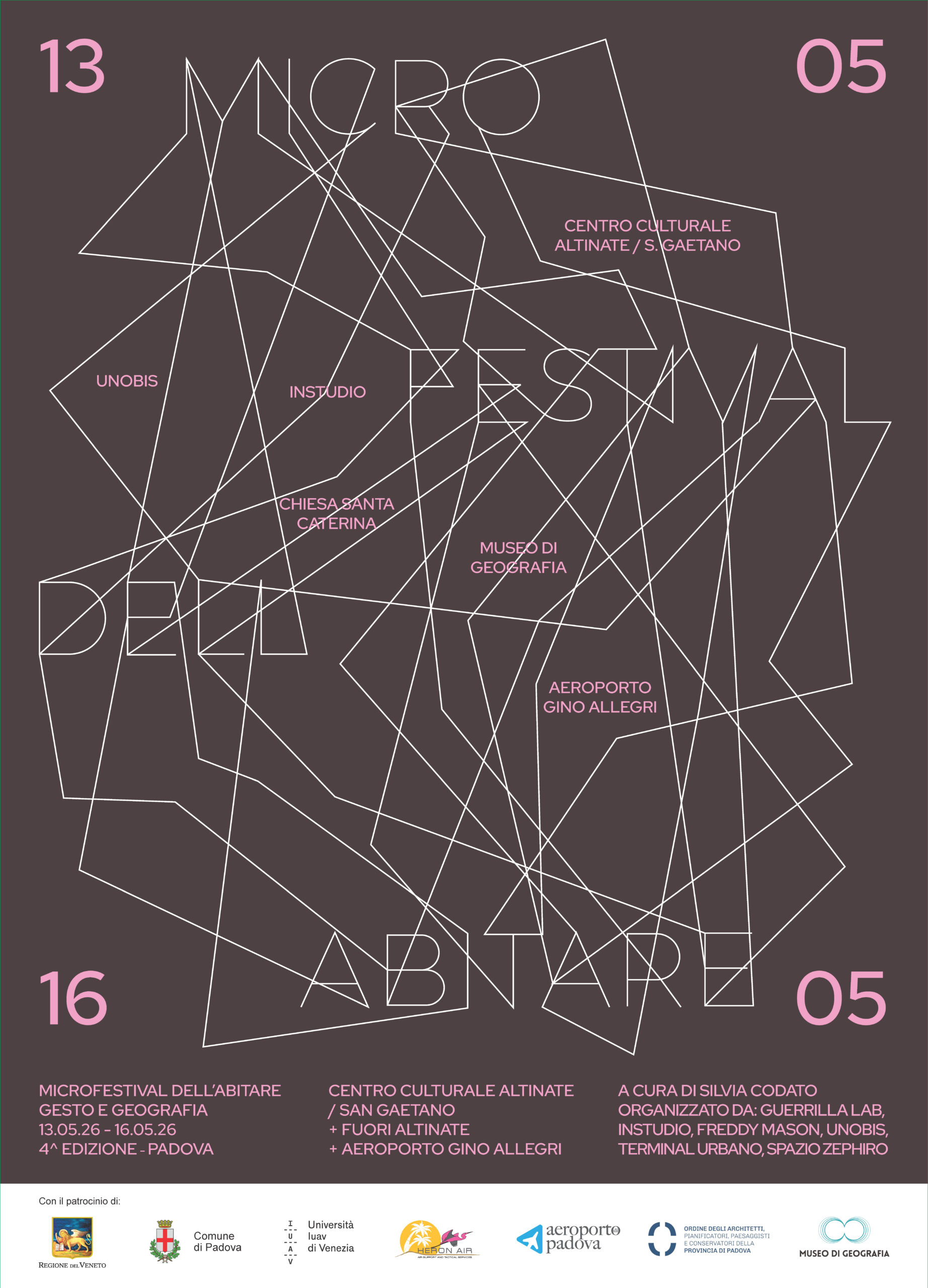

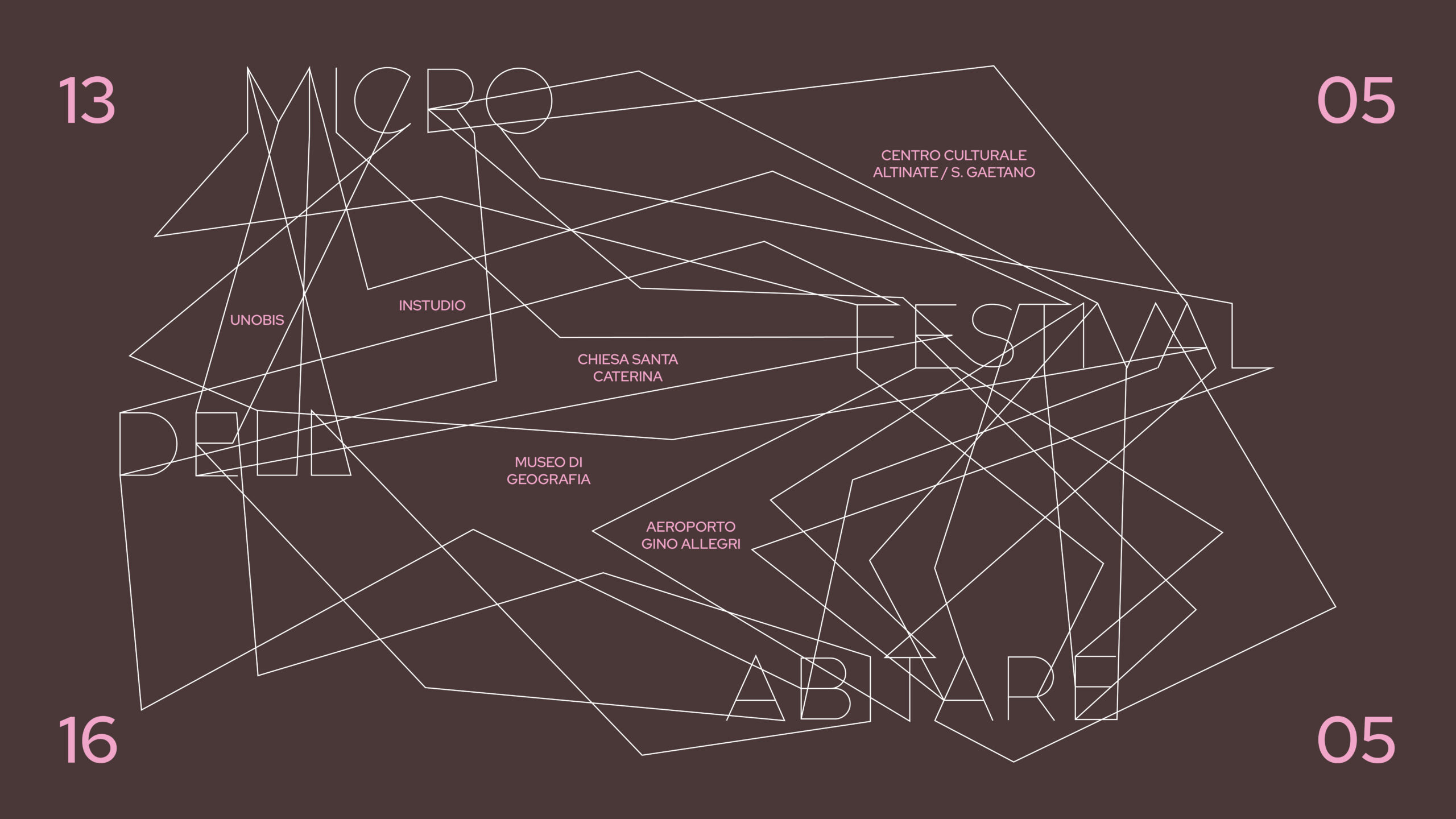
From May 13 to 17, Padua will once again become a widespread laboratory for research on contemporary living with the fourth edition of the Microfestival dell’Abitare. Curated by Silvia Codato and organized by Guerrilla.Lab together with Instudio, Freddy Mason, Unobis, Terminal Urbano and Spazio Zephiro, the 2026 edition revolves around the theme “Gesture and Geography. Habitats, cartographies and artificial intelligence for new forms of living”, investigating the relationship between body, infrastructure, technology and landscape through talks, installations, performances and experimental design practices.
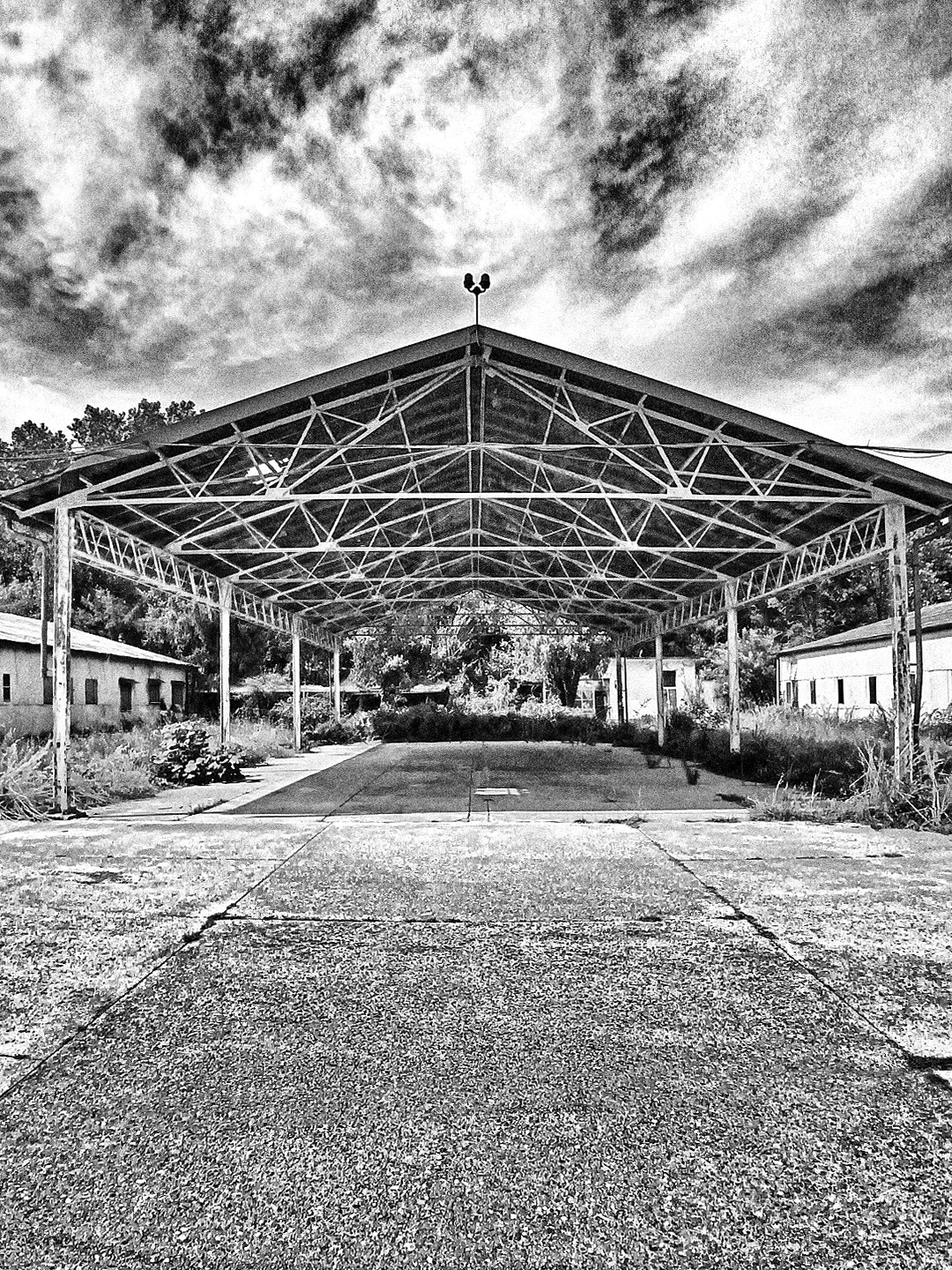
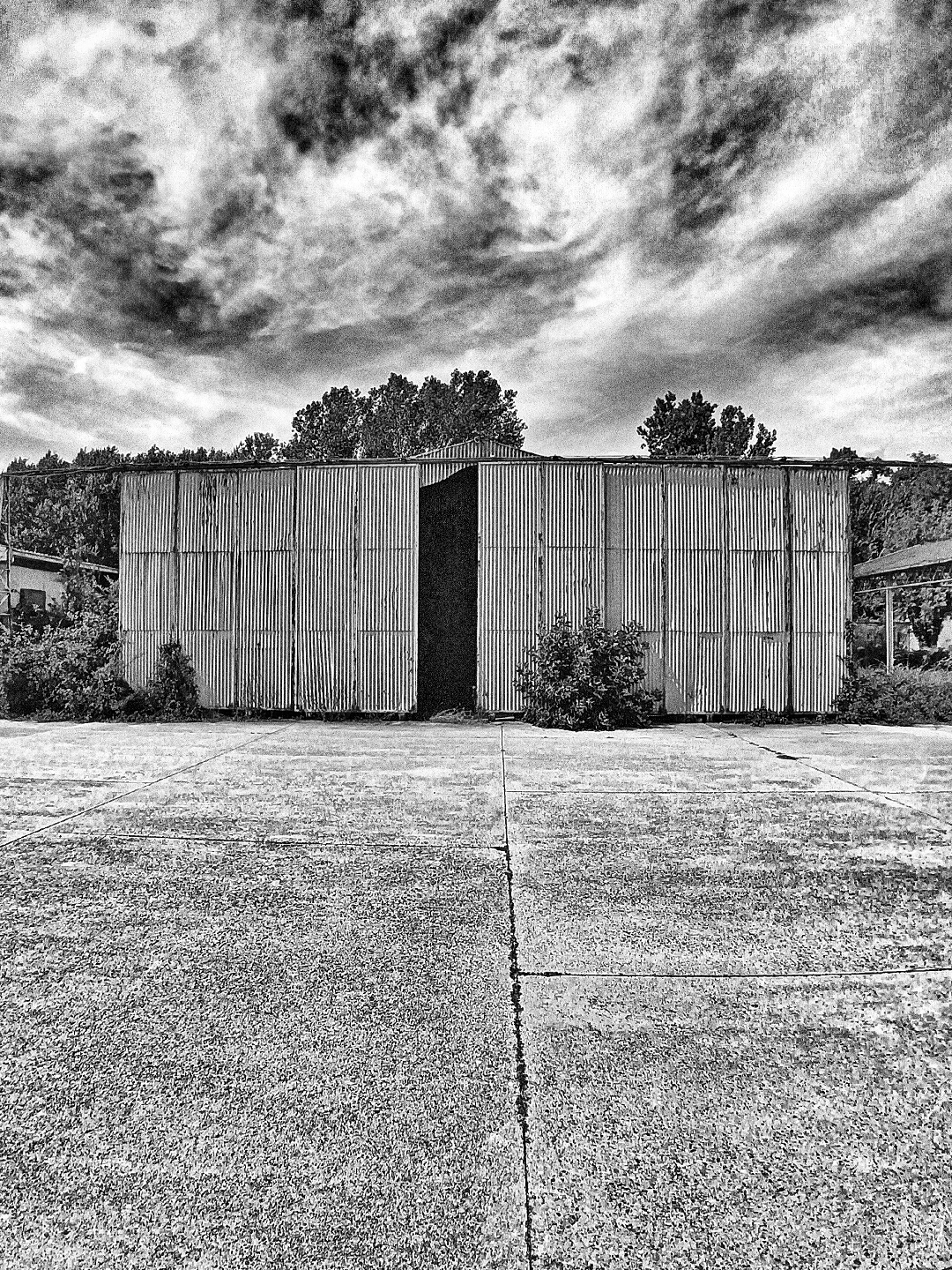
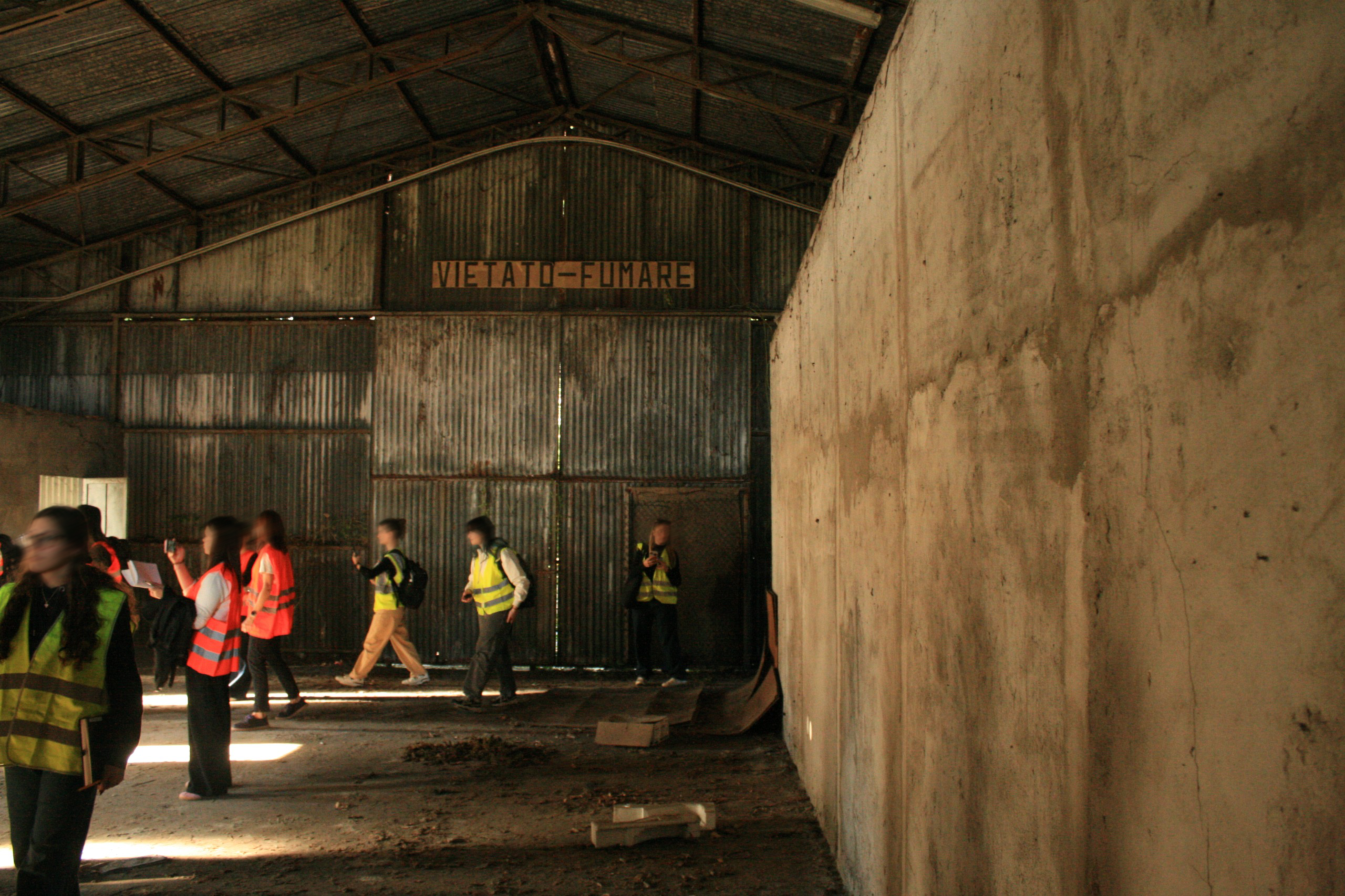
This year’s edition takes an abandoned hangar at Padua’s Gino Allegri Airport as both symbolic and design framework, reimagining it as a large infrastructural void capable of hosting new forms of collective housing and urban regeneration. More than one hundred students from the Interior Design A and B studios of the Università Iuav di Venezia have been invited to develop projects addressing increasingly urgent issues such as housing emergencies, adaptive reuse, temporariness and new models of coexistence.
The festival’s research develops along three main axes: the “habitat capsule” as an essential and performative micro-space; cartography as a critical tool for reading territory; and artificial intelligence understood not only as an operational technology, but also as an “autopilot” capable of questioning contemporary design culture.
The program unfolds across several venues throughout the city — including the Centro Culturale Altinate/San Gaetano, the Museum of Geography, Unobis, Instudio and the airport itself — turning Padua into an interdisciplinary platform where architecture, design, visual arts, music and digital cultures converge.
The festival opens on Wednesday, May 13, with the inauguration of “Aerotavolo”, an exhibition showcasing IUAV students’ proposals for the adaptive reuse of the airport hangar. The evening continues with Francesco Cigana’s sound performance “Heavy Metal Light” and Francesco Fochi’s performative installation exploring the relationship between urban dissent and surveillance technologies.
On Thursday, May 14, the focus shifts to digital cultures and artificial intelligence at Unobis. Highlights include Elena Cavallin’s talk on the potential of GenAI in design practice and Silvia Dal Dosso’s trilogy “The Ultimate AI CoreCore Experience”, a visual exploration of the aesthetics and cultural drifts generated by contemporary artificial intelligence.
Friday, May 15, brings the festival to the Museum of Geography, where Dario Scodeller will discuss design as a critical practice, followed by guided visits to the exhibition “Alter–Atlas of Borders” and the Sala delle Metafore.
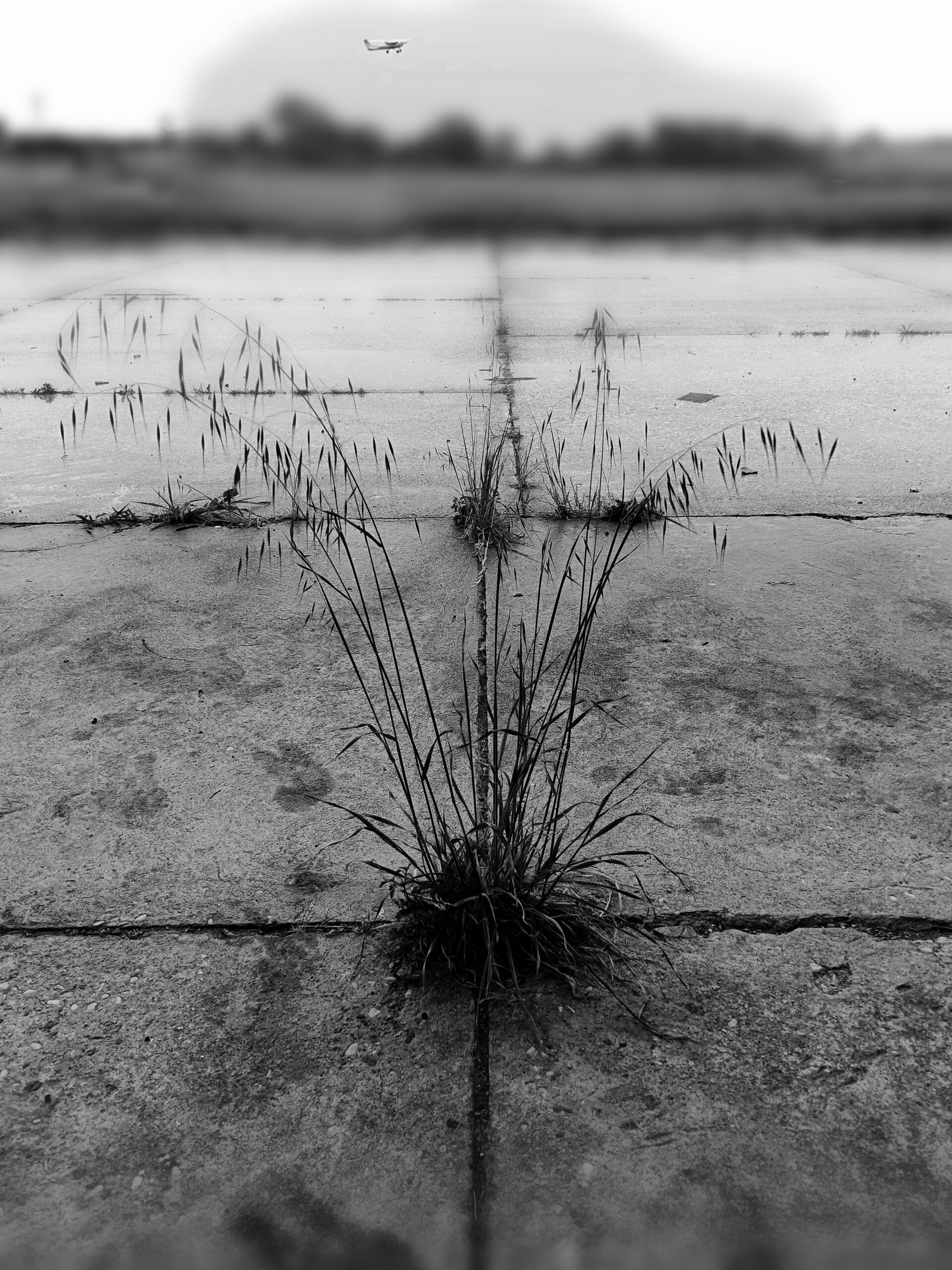
The core of the Microfestival takes place on Saturday, May 16, at Gino Allegri Airport, transformed for an entire day into a performative and cultural infrastructure. The program alternates sound marathons, electromagnetic walks, talks and artistic installations. Among the most anticipated projects are Mauro Martinuz’s “Echoes” – inspired by Brian Eno’s Music for Airports – and “Electric Forests” by the duo Impero della Luce, an immersive experience revealing the hidden electromagnetic soundscape produced by urban infrastructures.
The afternoon continues with talks by Gabriele Toneguzzi, Elena Fava and Edoardo Brunello, Denis Maragno and the collective DEFAULT, all investigating the intersections between micro-architecture, body, technology and contemporary languages.
The festival concludes with “OIKOTOPIA – Metabolizing an Airport” by the duo Pupille Gustative, a synesthetic performance transforming the airport into a collective and embodied experience through food, while reflecting on Michel Foucault’s concept of heterotopia and on the idea of shared space as a practice of inhabiting.
Across its previous editions, the Microfestival dell’Abitare has hosted more than 50 events in 23 locations throughout the city and involved 86 guests including speakers and performers, establishing itself as one of the most compelling independent platforms for contemporary design research in Italy. The 2026 edition reinforces this experimental vocation, presenting the hangar as both metaphor and laboratory: an open, flexible and constantly evolving space where design becomes a tool for imagining new relationships between individuals, communities and territory.