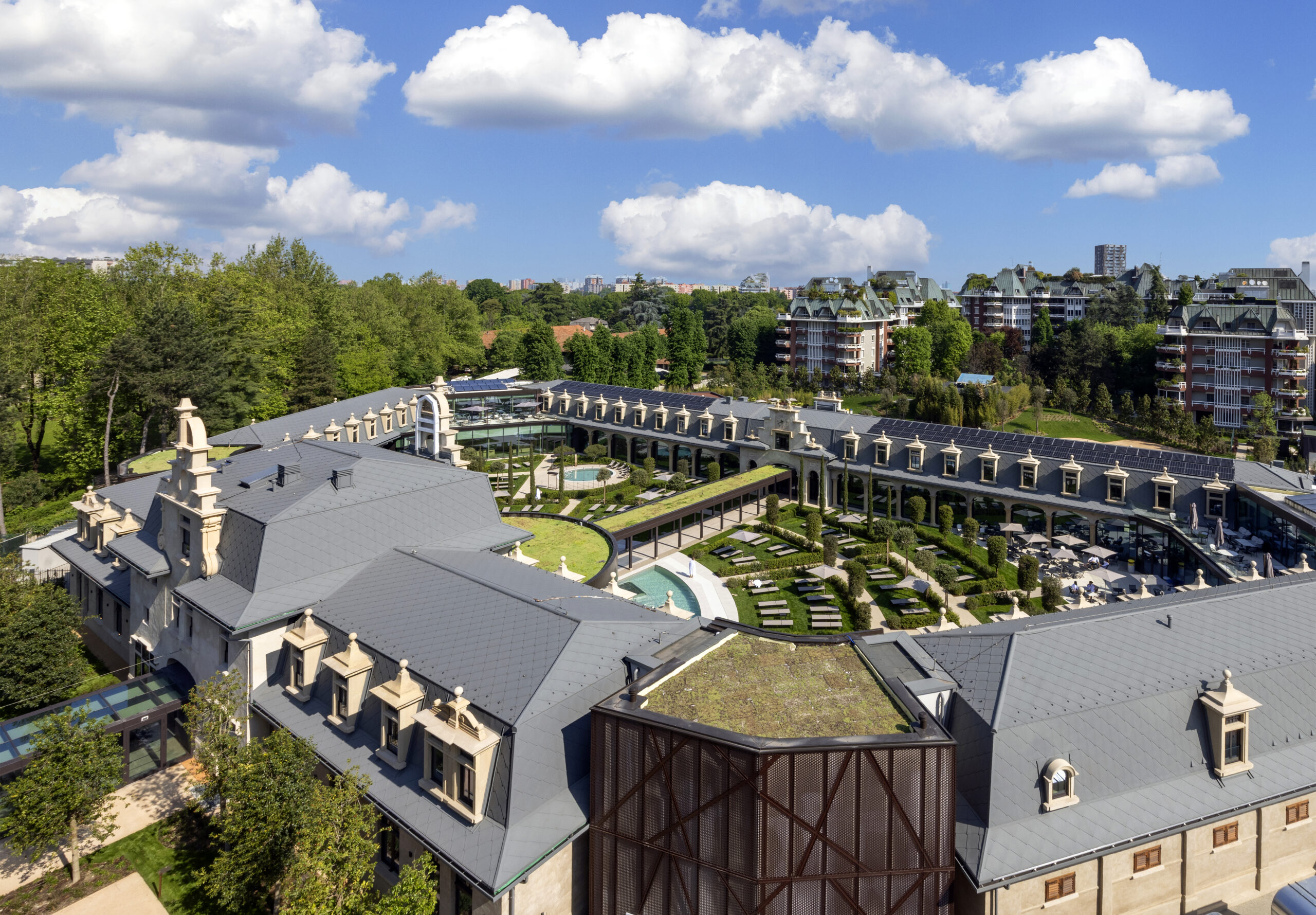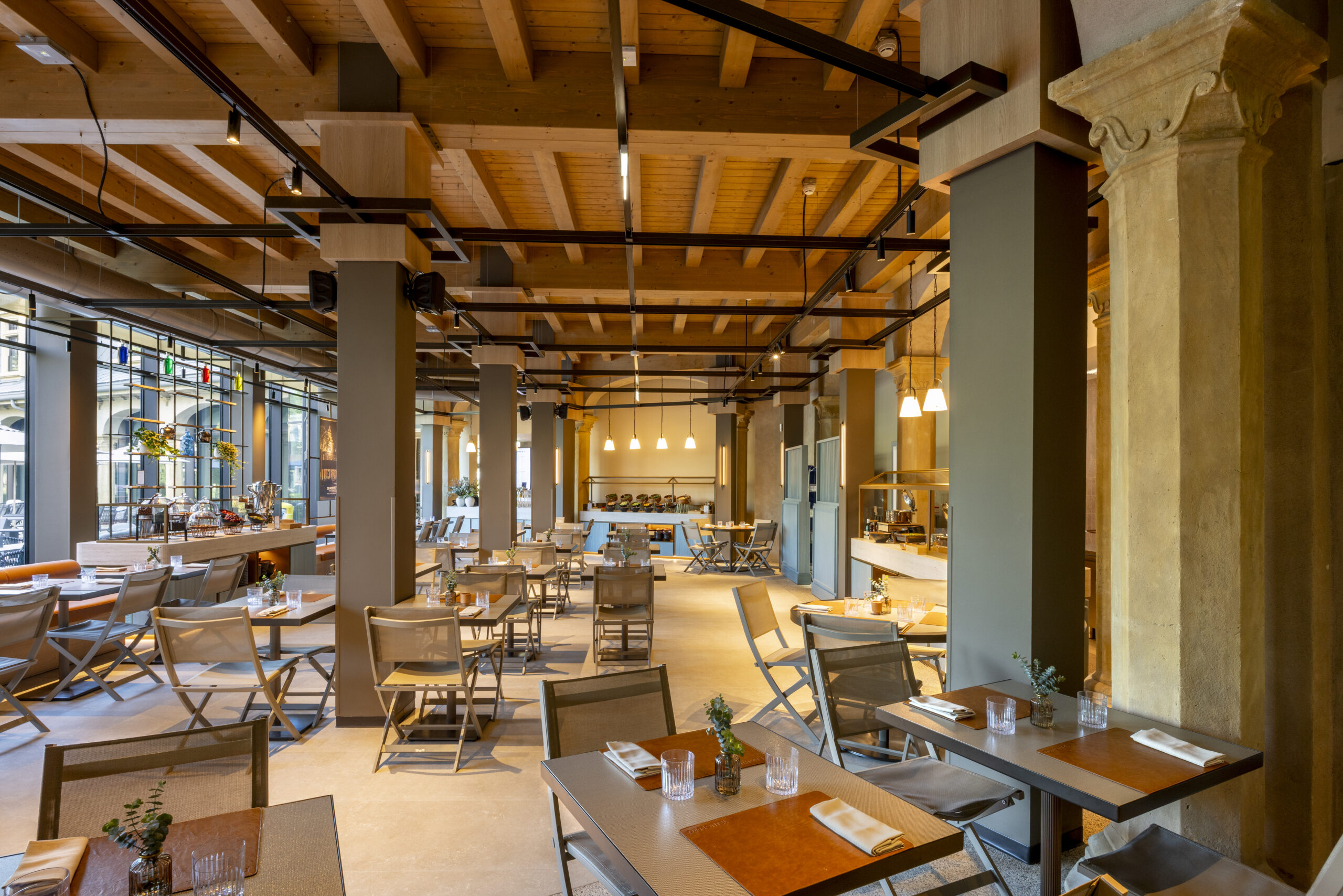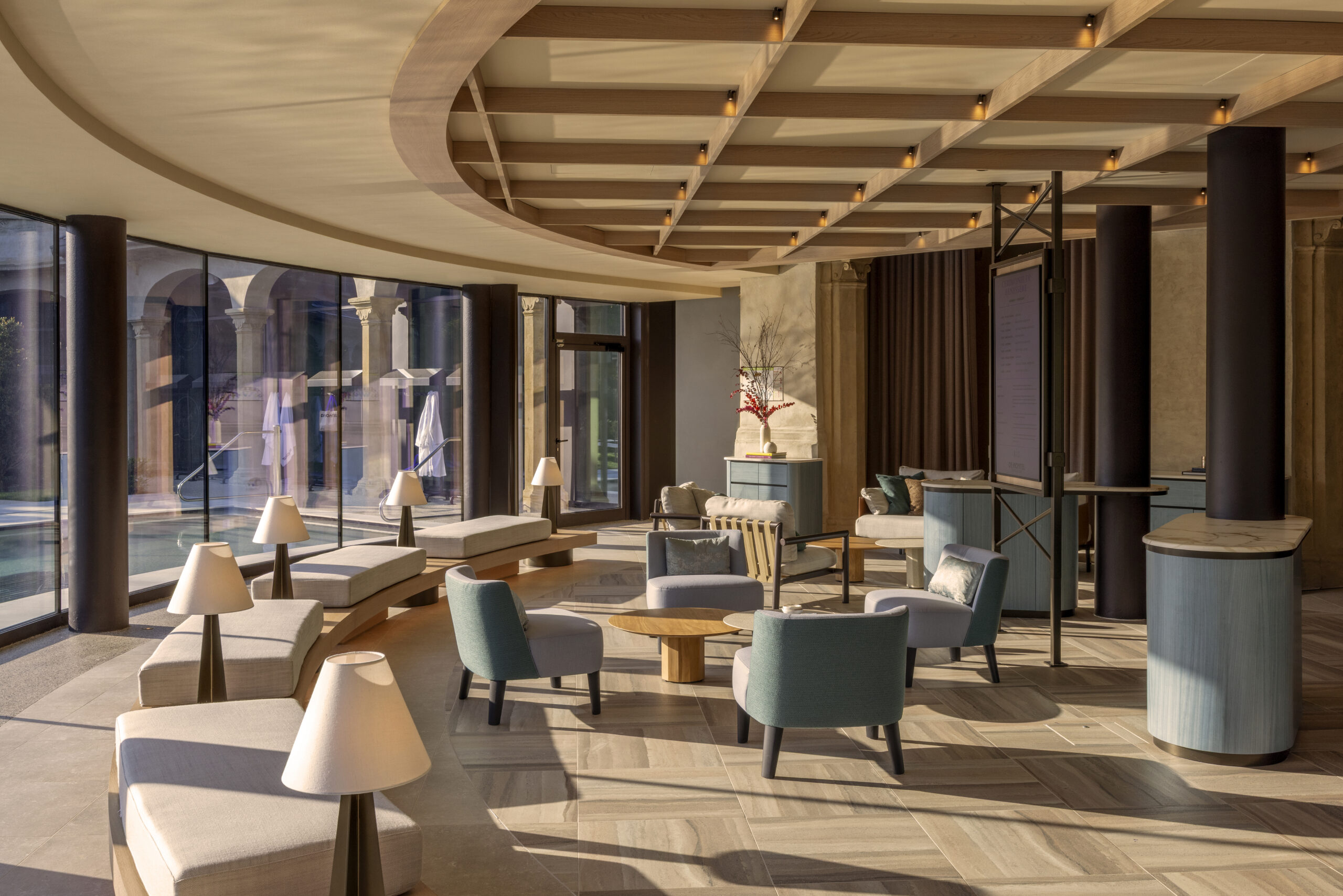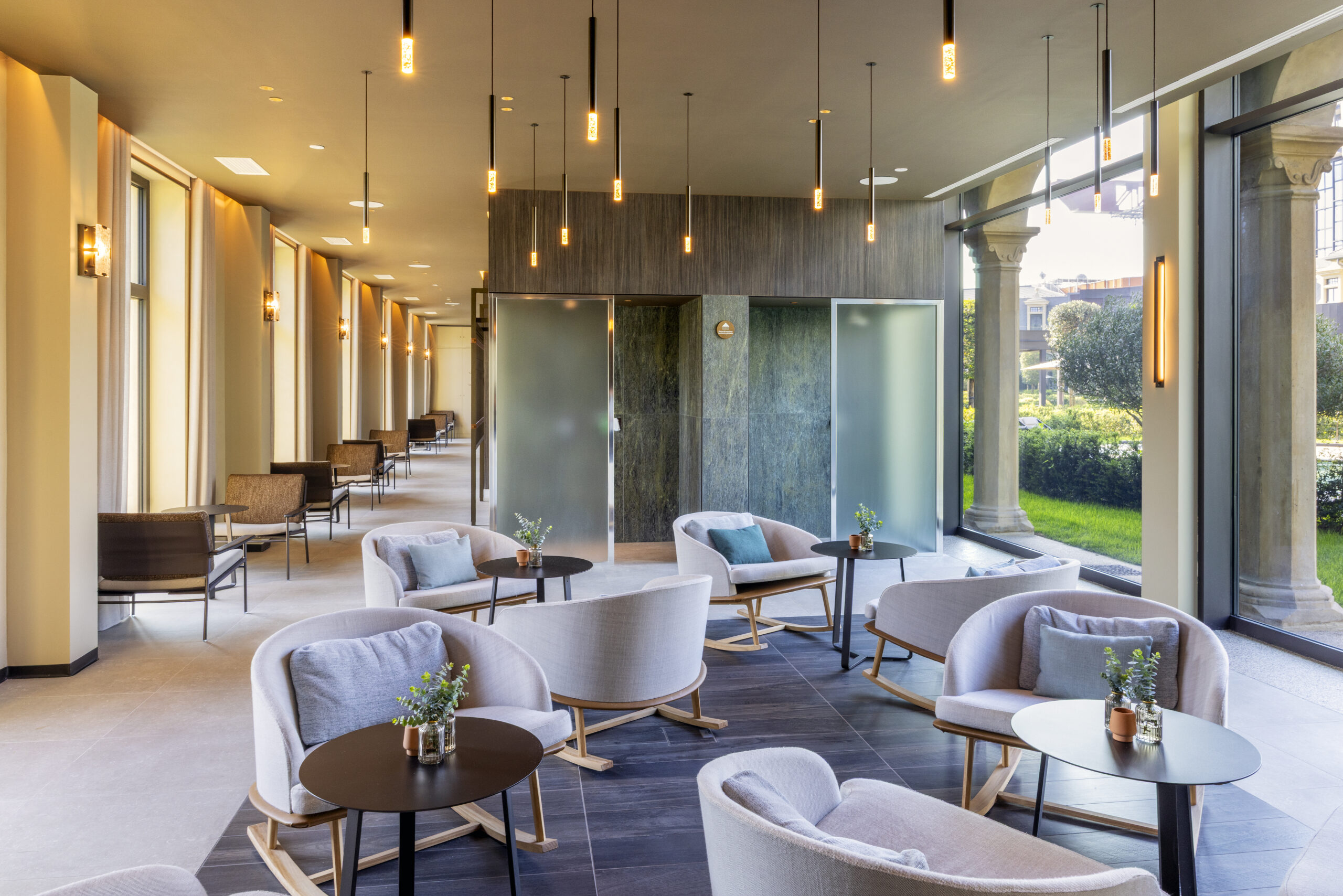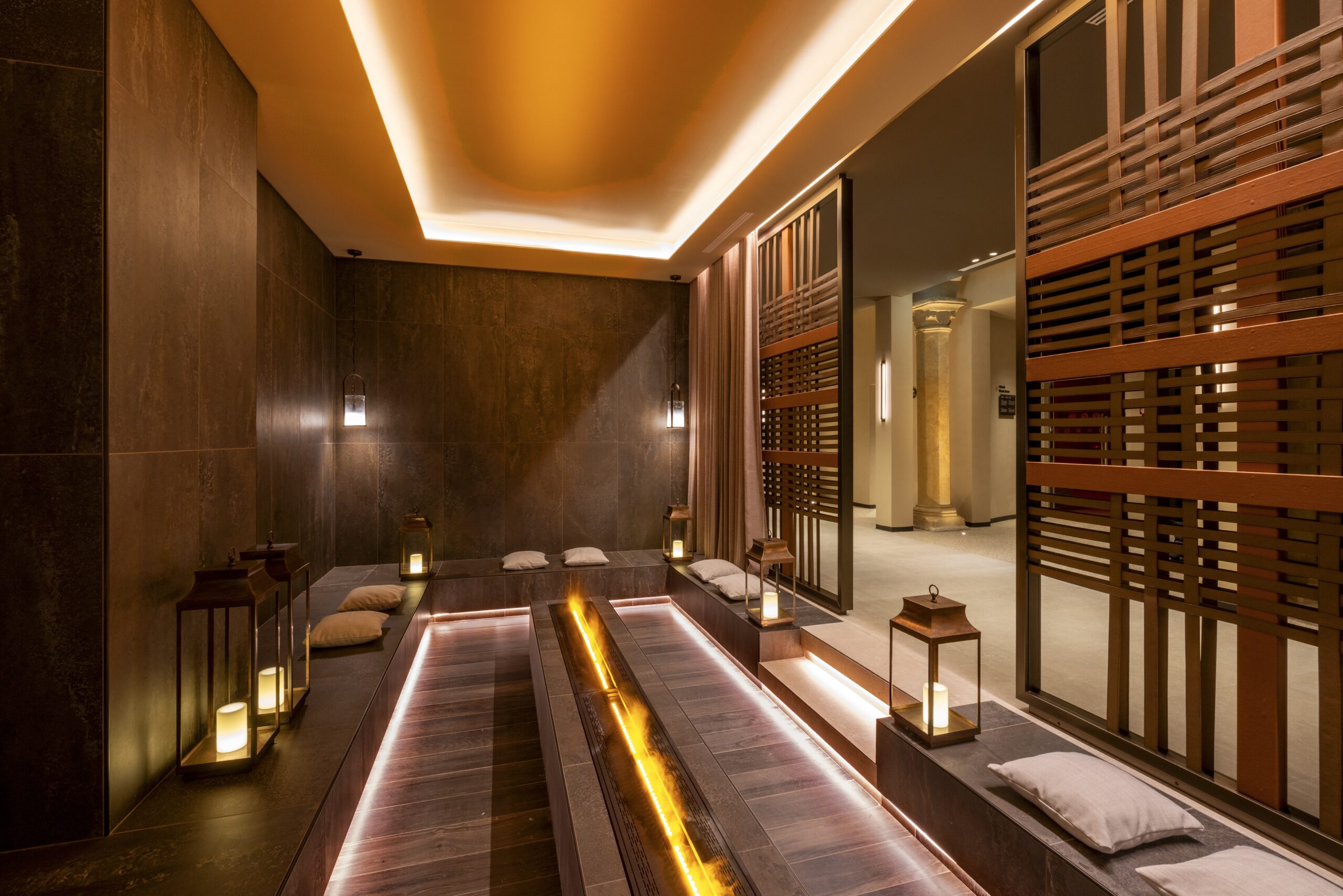

In the western quadrant of Milan, at the heart of the San Siro district, a Liberty-style complex forgotten for over half a century is reborn as a major urban thermal park. The interior design project by THDP for De Montel: Terme Milano interprets the philological restoration of the historic stables designed in the 1920s by Vietti Violi as an opportunity to construct a new spatial narrative: an immersive journey that intertwines equestrian memory, Liberty language, and the contemporary rituality of wellness. The intervention engages with a strongly identity-driven architectural shell, restored under the supervision of the Heritage Authority, and with a complex functional program: over 16,000 square meters of covered areas and equipped gardens dedicated to a layered and sustainable thermal experience. The project thus positions itself among the most significant conservative regeneration operations in Milan, transforming an abandoned historic architecture into a new urban infrastructure devoted to wellness.
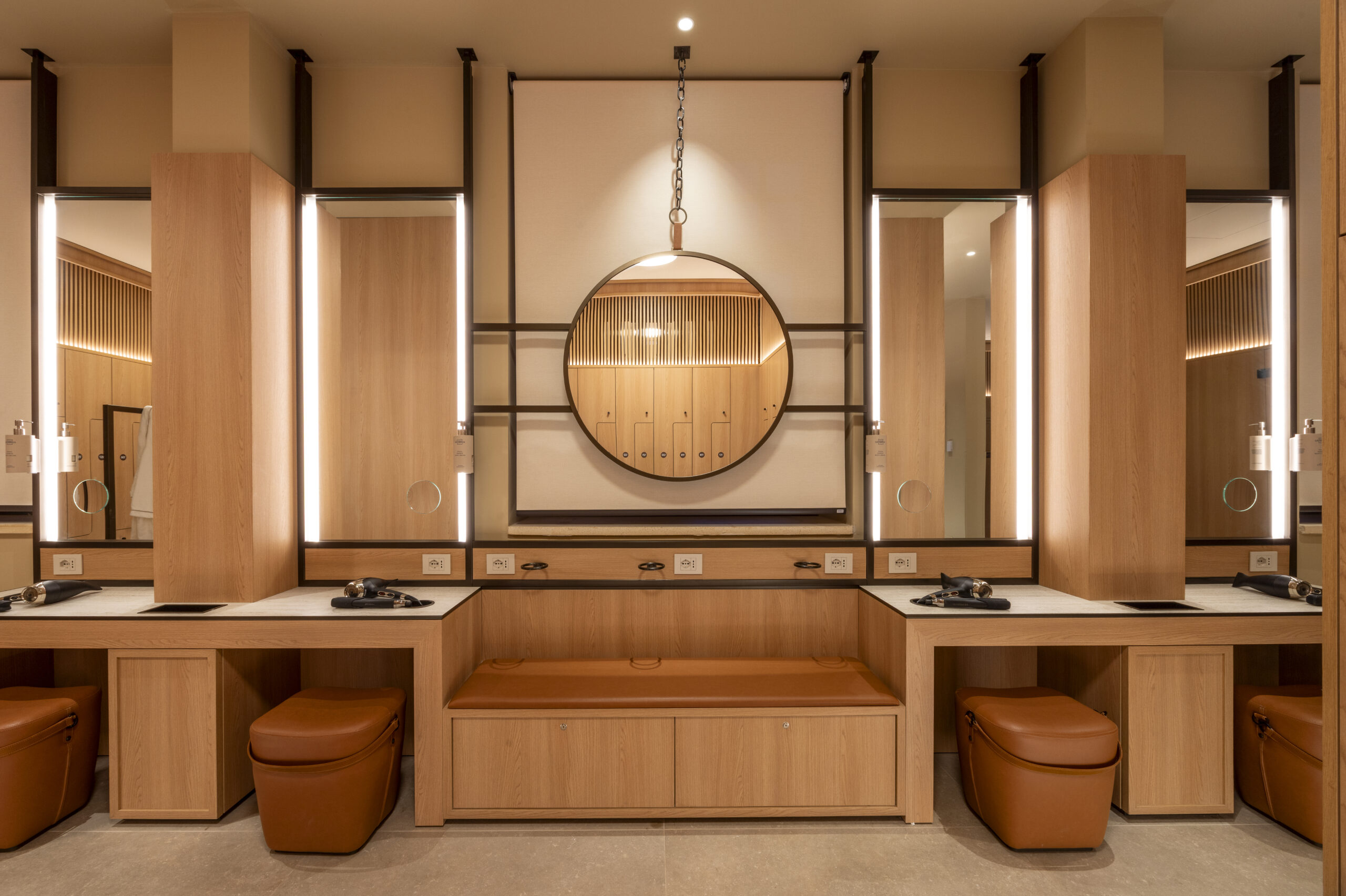
The concept developed by THDP is structured around three main design trajectories: the Liberty matrix of the building, the memory of the stables, and the path of thermal water as the sensory driver of the project. These three layers intertwine in an interior design strategy that translates the historical narrative into tangible elements: materials, lighting, furnishings, and bespoke details become narrative devices capable of guiding the user throughout the entire experience. The Liberty inspiration is expressed through wrought iron, worked glass, and sinuous lines, reinterpreted in a contemporary key. These references go beyond decoration to become a compositional grammar: bespoke lighting, specifically designed for the complex, translates the lightness and refinement of the original style into luminous systems that enhance the perceptual quality of the spaces. At the same time, the building’s equestrian past is evoked through a measured and abstract approach. Custom seating with textures reminiscent of bridle leather, bathrobe hooks modeled on the forms of stirrups and bits, chains and straps integrated into lighting fixtures: every detail restores the soul of the historic stables without resorting to literal quotations, but through a material and functional language. Water, drawn from an artesian well 396 meters deep, becomes the true generative element of the project. The thermal experience is conceived as a journey that accompanies users from the surface to the most intimate and immersive dimension of wellness.
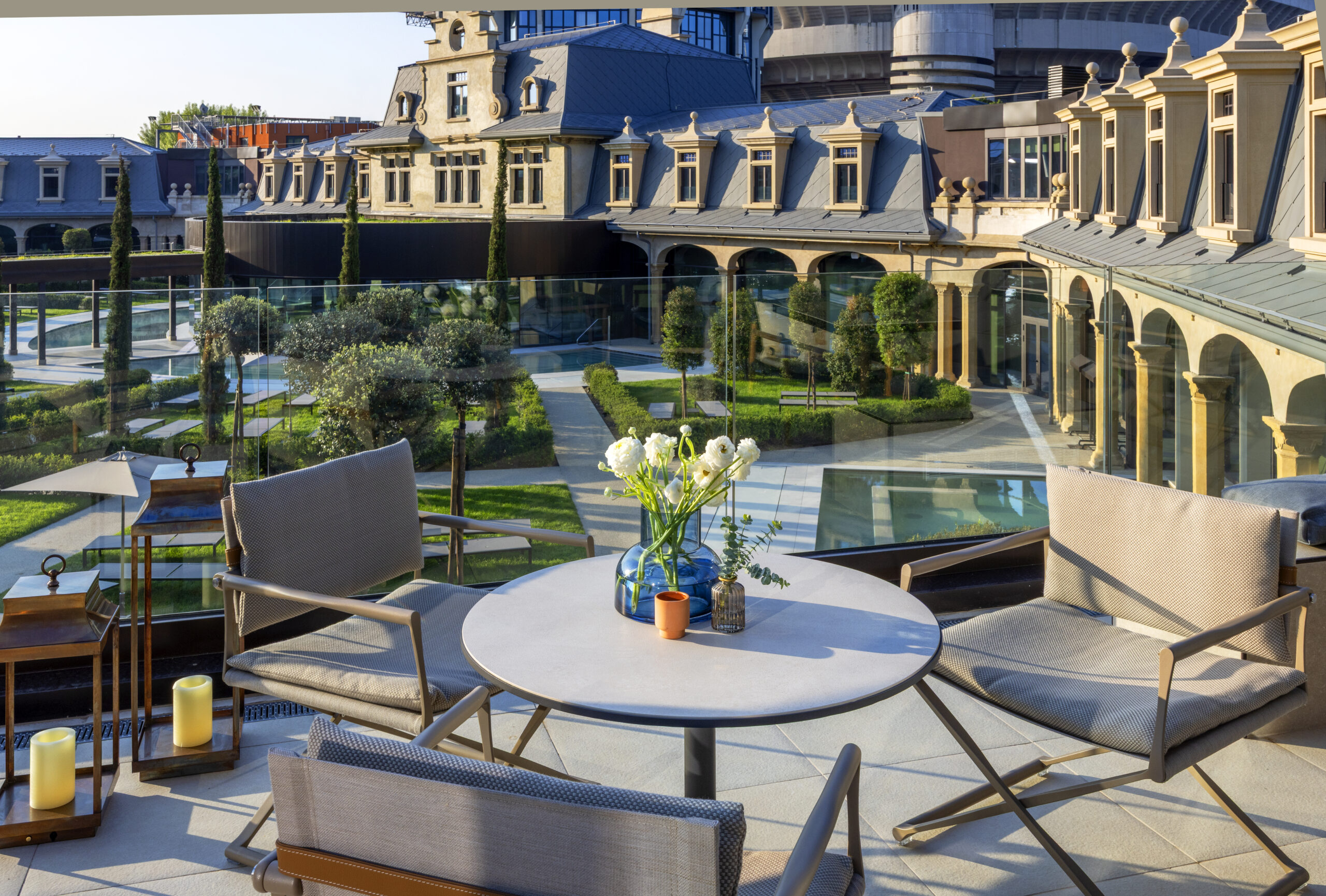
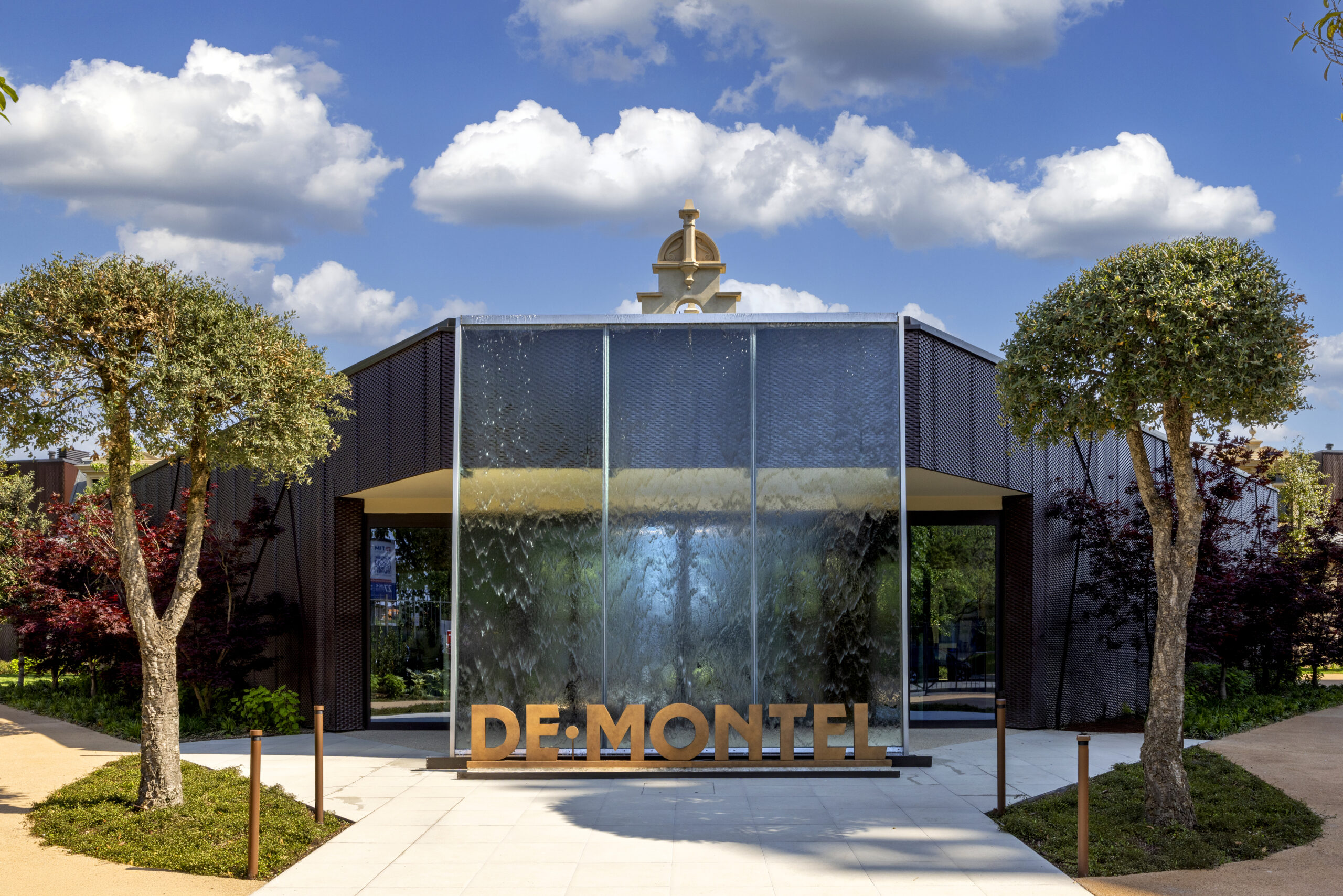
At the entrance, a cascade of handcrafted blown-glass discs captures the natural light from the large iron-and-glass skylight, generating luminous caustics that evoke underwater immersion. This scenographic device immediately introduces the theme of water as a living and dynamic matter, suggesting a symbolic transition from the urban world to a suspended and contemplative dimension. Material choices reinforce this narrative: travertine, textured ceramics, and surfaces recalling moss, salts, and damp rocks translate, in architectural terms, the interaction between water and natural elements. Emotional showers set against “organic” backdrops, saline walls, and luminous compositions of glass bubbles construct an internal landscape that oscillates between natural grotto and contemporary thermal architecture.The spatial organization follows a clear experiential hierarchy. The ground floor is entirely dedicated to the wellness path: thermal pools, saunas, hammams, and relaxation areas open onto the courtyard garden and surrounding park, establishing a continuous dialogue between interior and exterior. The changing rooms, conceived as the true threshold of the thermal ritual, reinterpret the stable boxes as preparation spaces, equipped with beauty stations and personalized lockers.
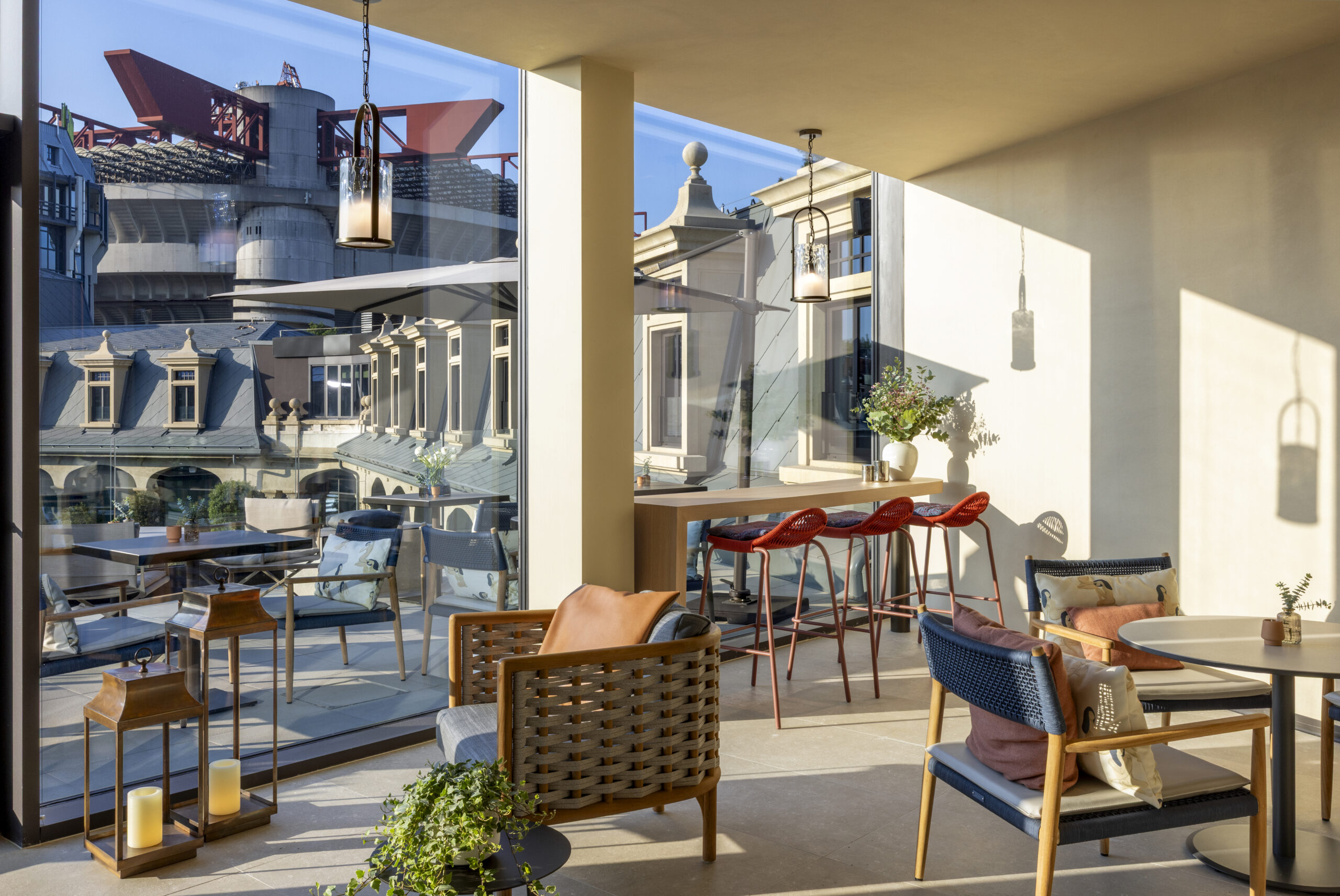
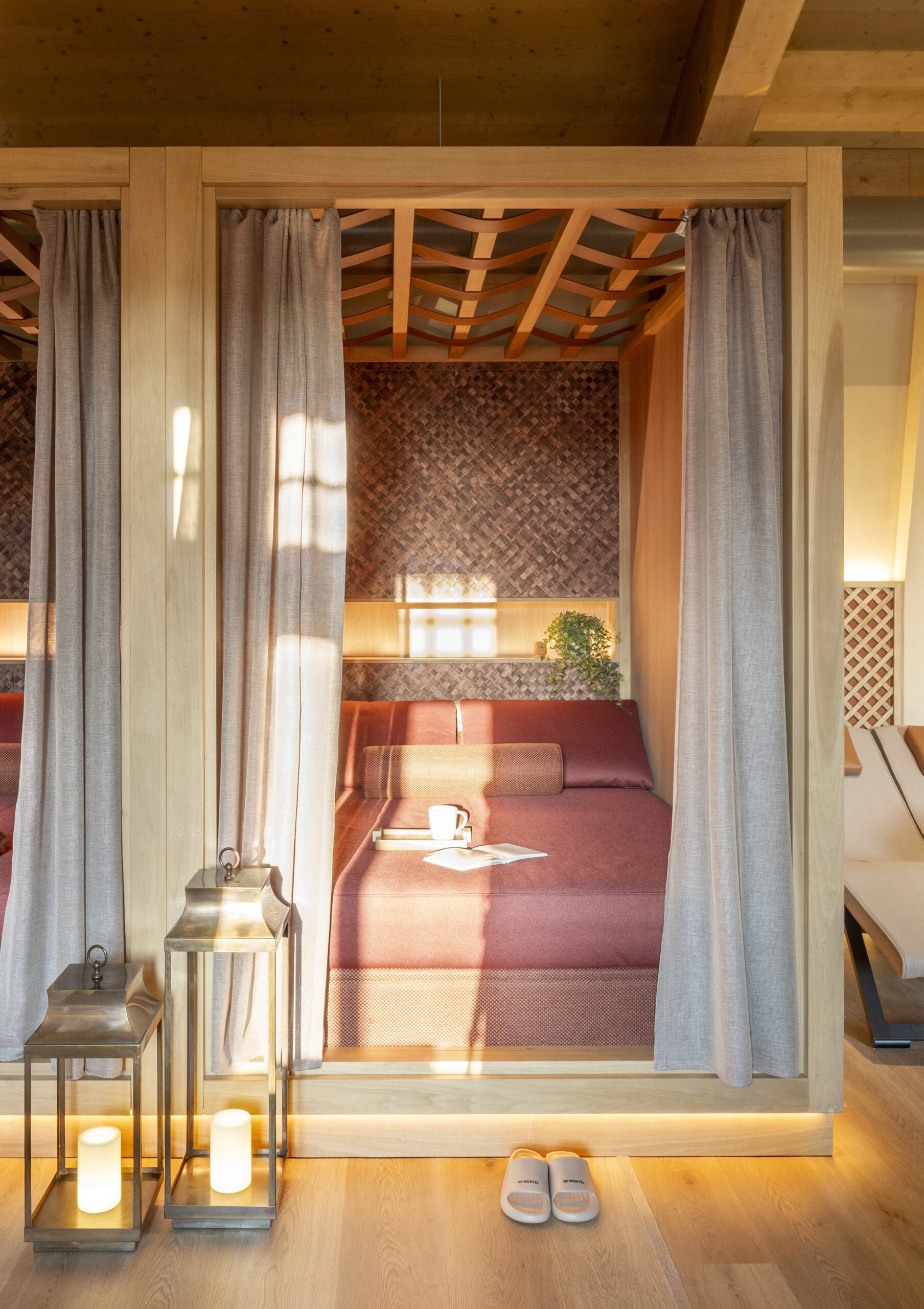
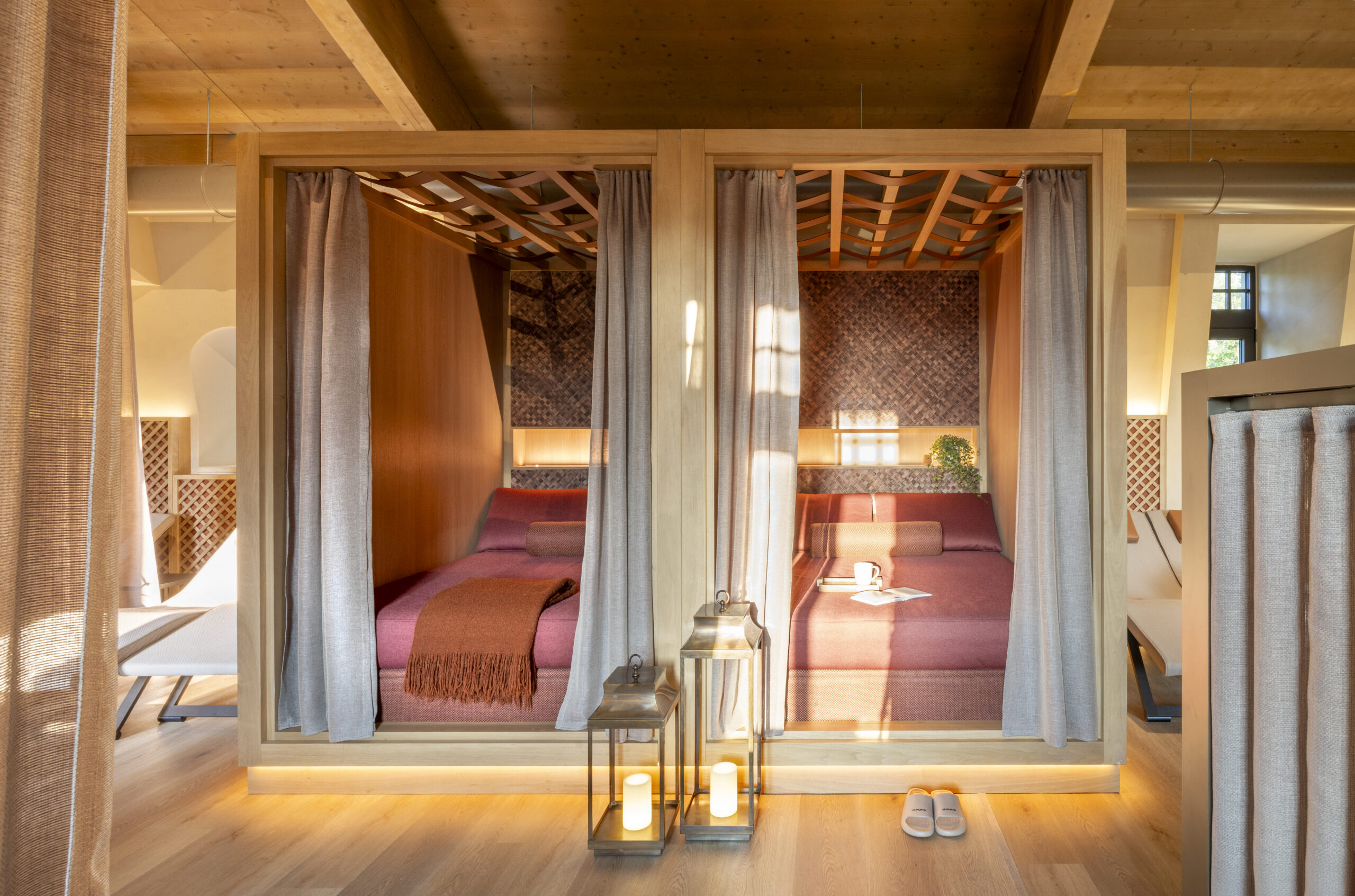
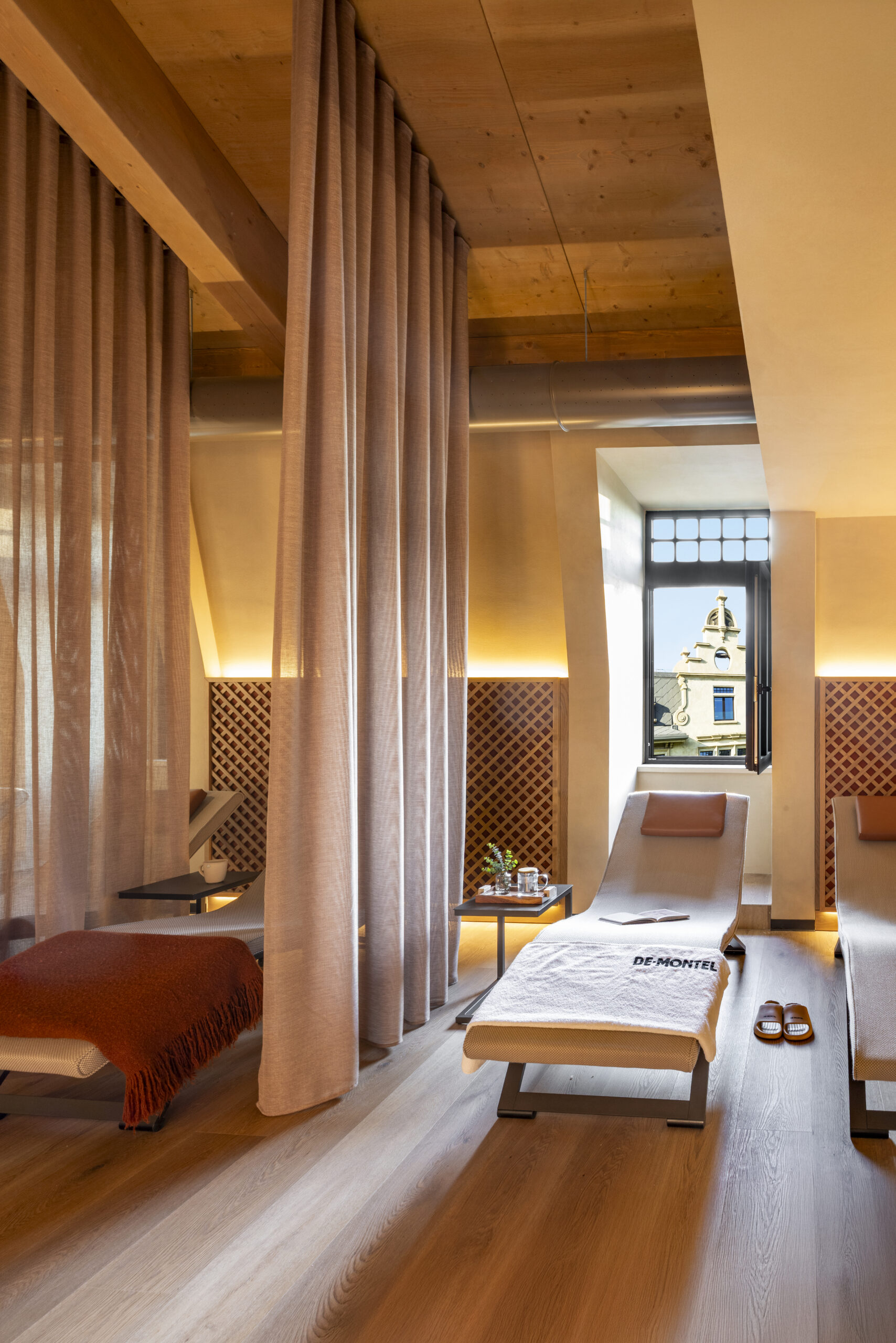
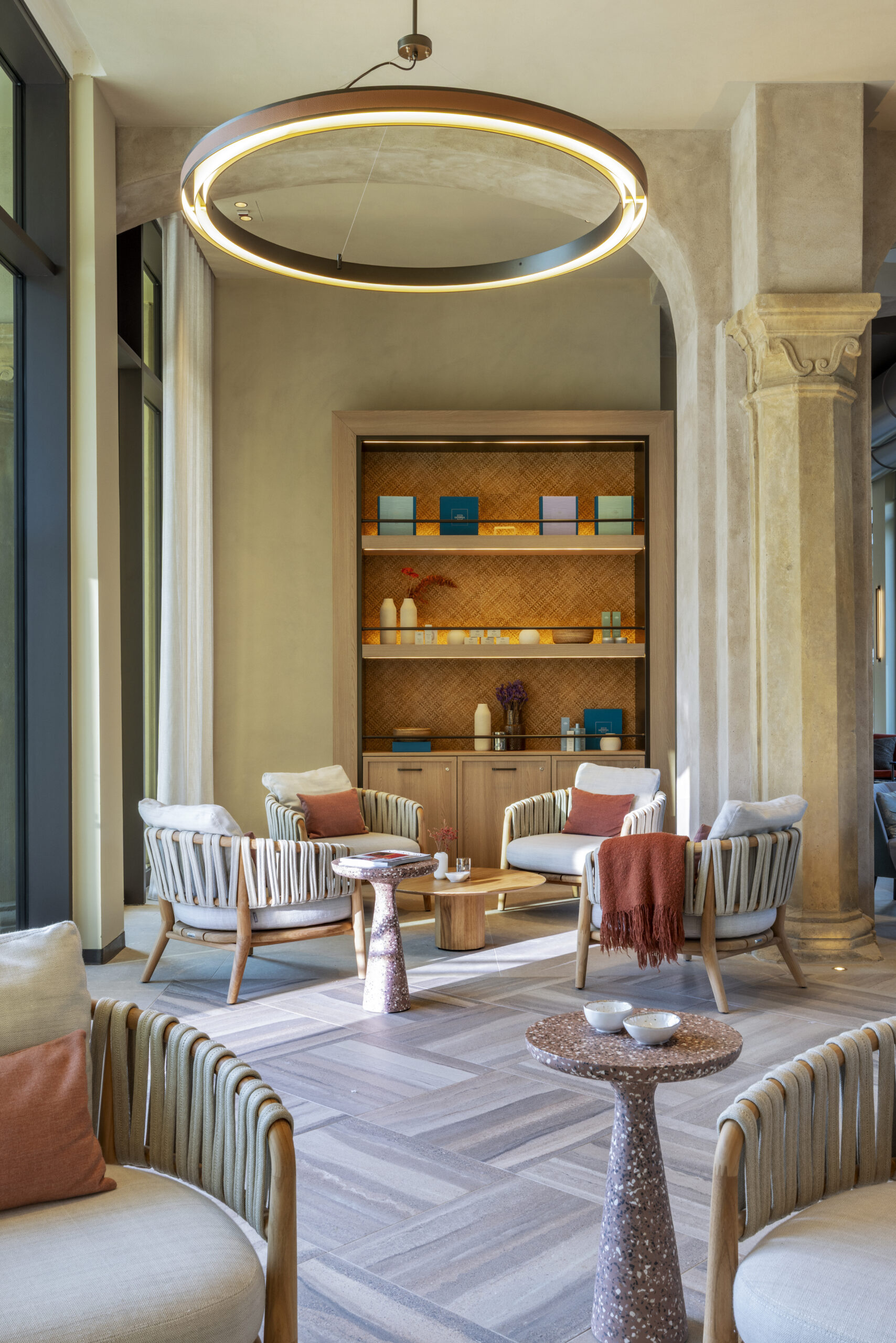
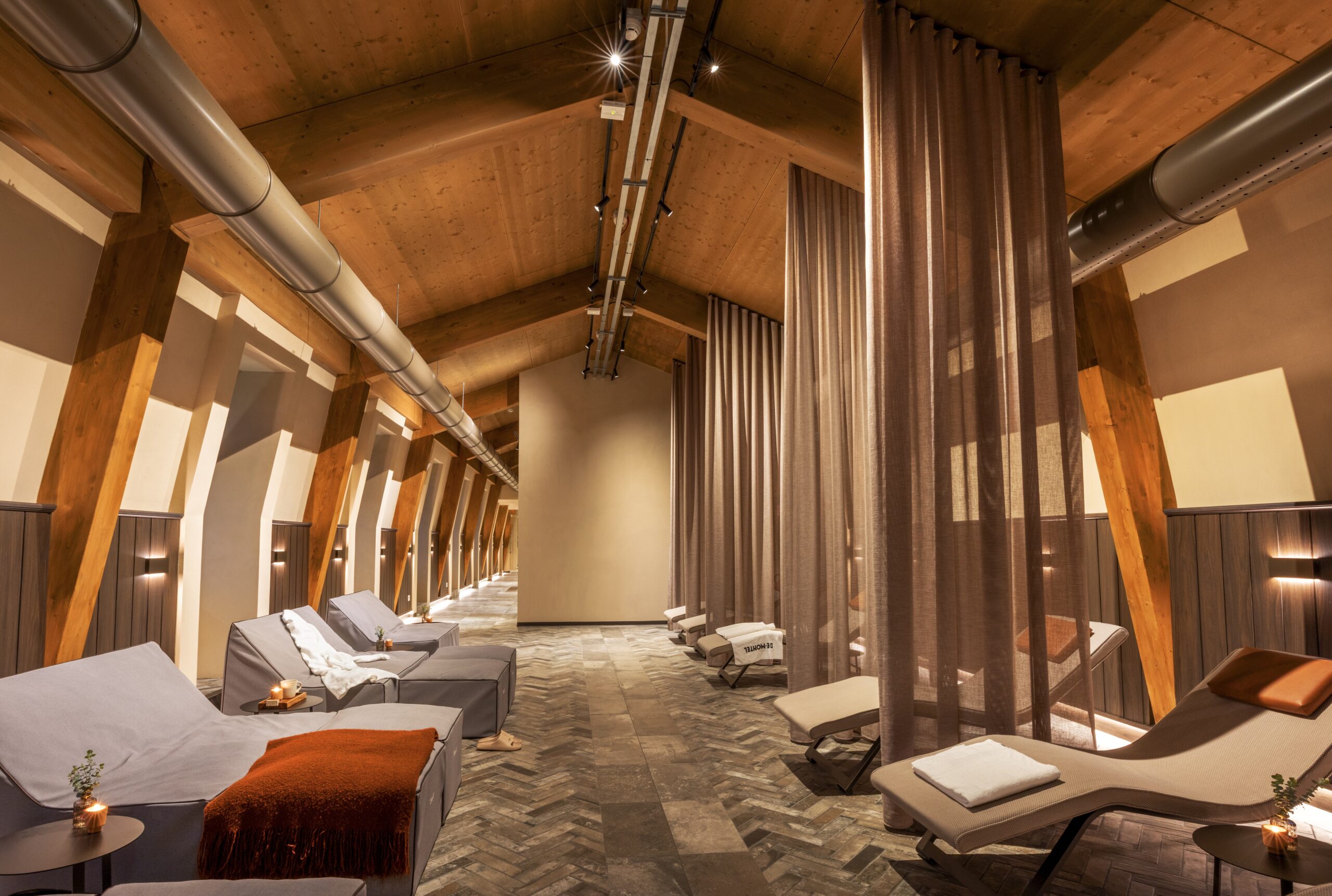
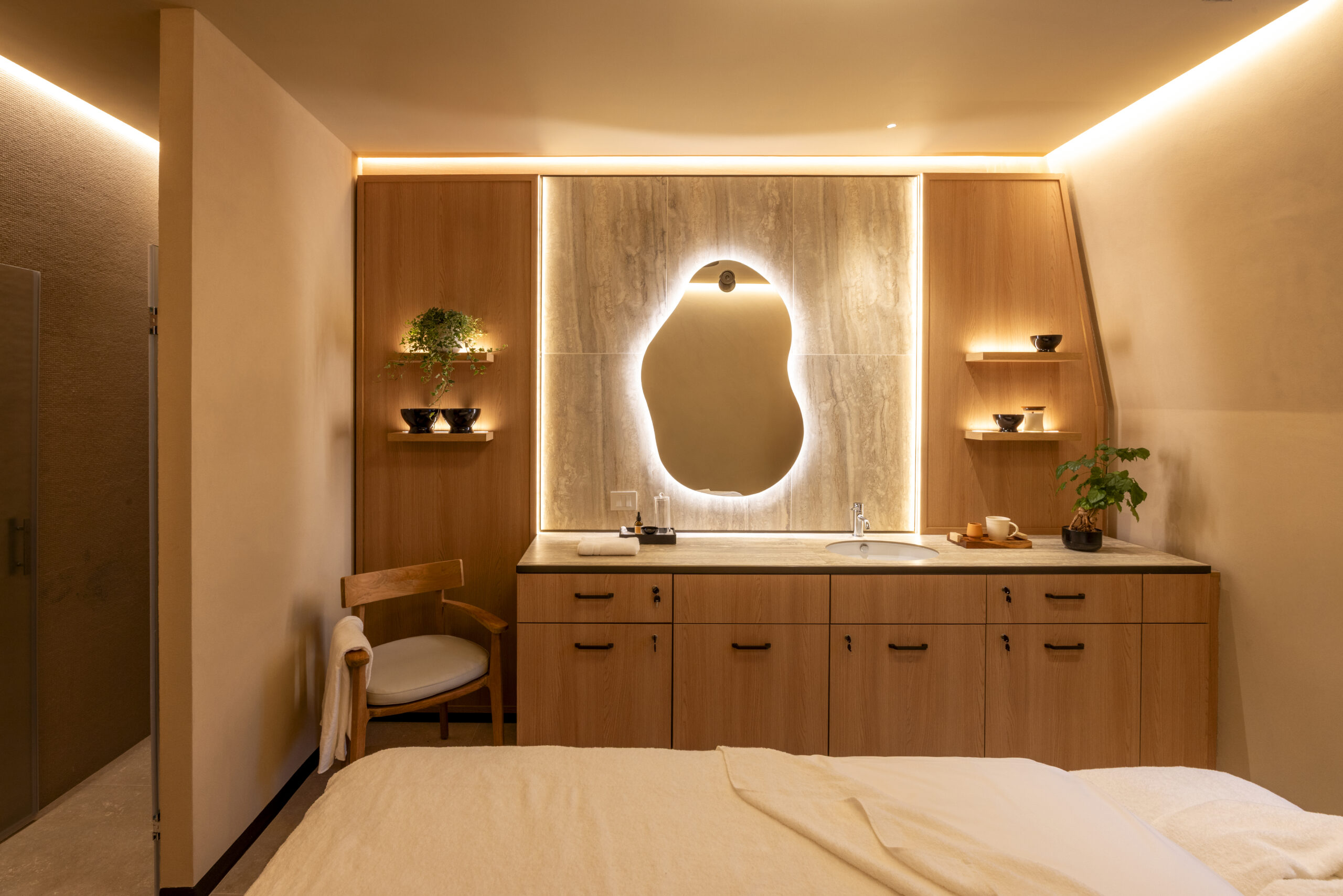
On the first floor, relaxation rooms with exposed wooden trusses overlook the greenery, while the steam bath and treatment cabins introduce a more intimate and secluded atmosphere. Single cabins feature light tones, oak-effect laminates, and travertine countertops; couple cabins adopt darker chromatic palettes and golden checkerboard patterns inspired by the historic dormer windows, defining a perceptual gradient between public and private. The F&B areas, conceived as internal terraces with vegetated trellises and lightweight seating, complete the experience by offering convivial spaces that evoke the image of an urban garden usable in every season.
Lighting plays a key role in shaping the atmosphere: dynamic lights in the corridors simulate the reflections of water on surfaces, while bespoke lanterns reinterpret the Liberty imagery, generating a sequence of spaces suspended between memory and contemporaneity.
CREDITS
Project: De Montel: Terme Milano
Studio: THDP
Location: Milan, Italy
Year: 2025
Photography: Giorgio Baroni