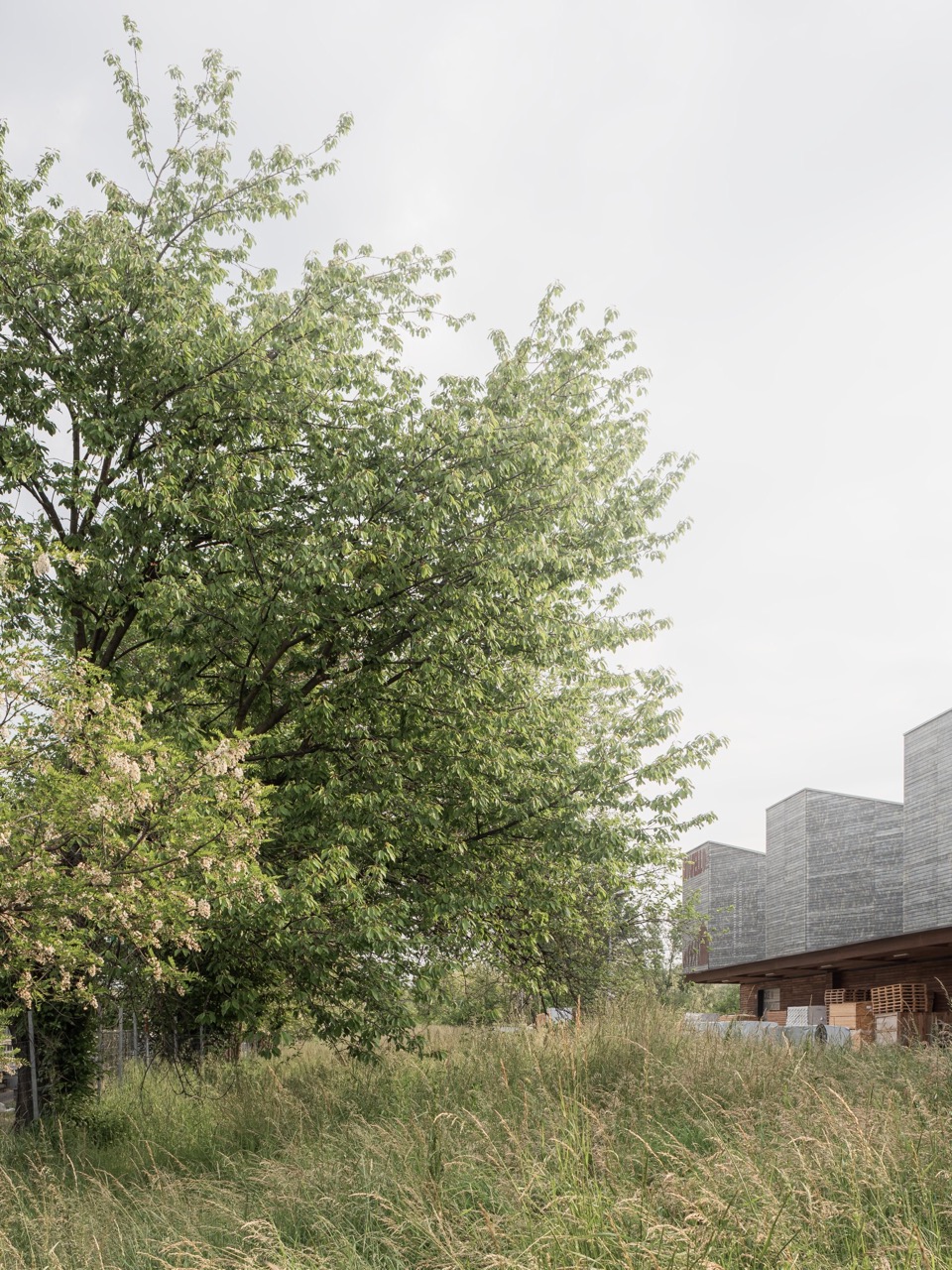

Industrial architecture can become a manifesto when it moves beyond a purely functional logic and takes on the role of expressing a production process, a material choice and an environmental position. With 7 Sustainable Boxes, LCA architetti intervenes on Novello’s new industrial building, working on the external façades and on energy consultancy, transforming the timber warehouse into a built image of sustainability.
The project concerns one of the largest examples in Europe of a bio-ecological and sustainable timber industrial building. Its exceptional nature lies not only in its scale, but also in the decision to create a fully passive building, self-built by the company’s employees and without any air-conditioning or heating system. The intervention focuses on the design of the main façades, facing two highly visible infrastructures. To the west, the façade overlooks the A8 dei Laghi motorway. To the south, the volume faces Provincial Road 20. These elevations take on an urban and landscape role, turning the warehouse into a recognisable presence along the main routes of movement.
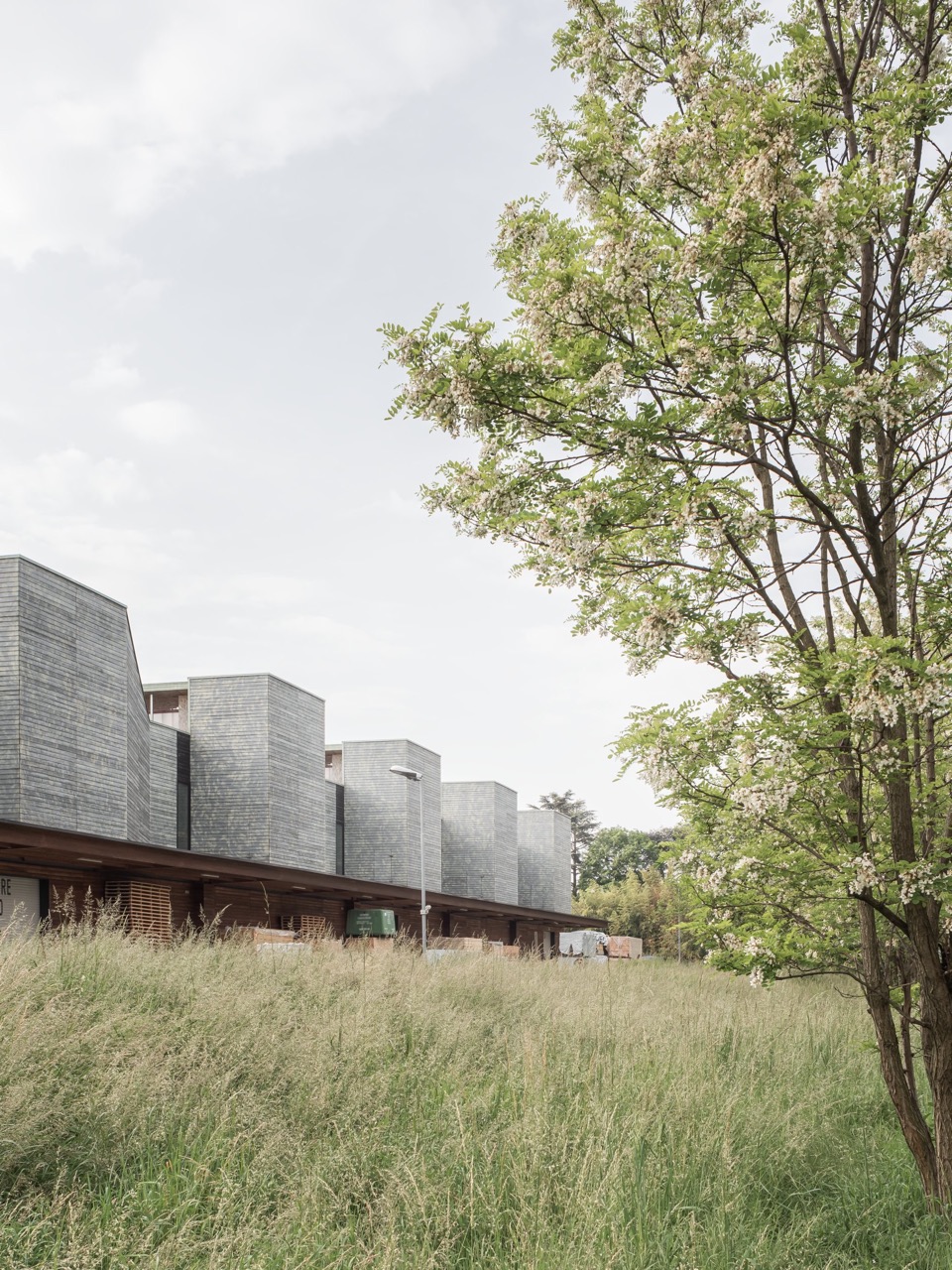
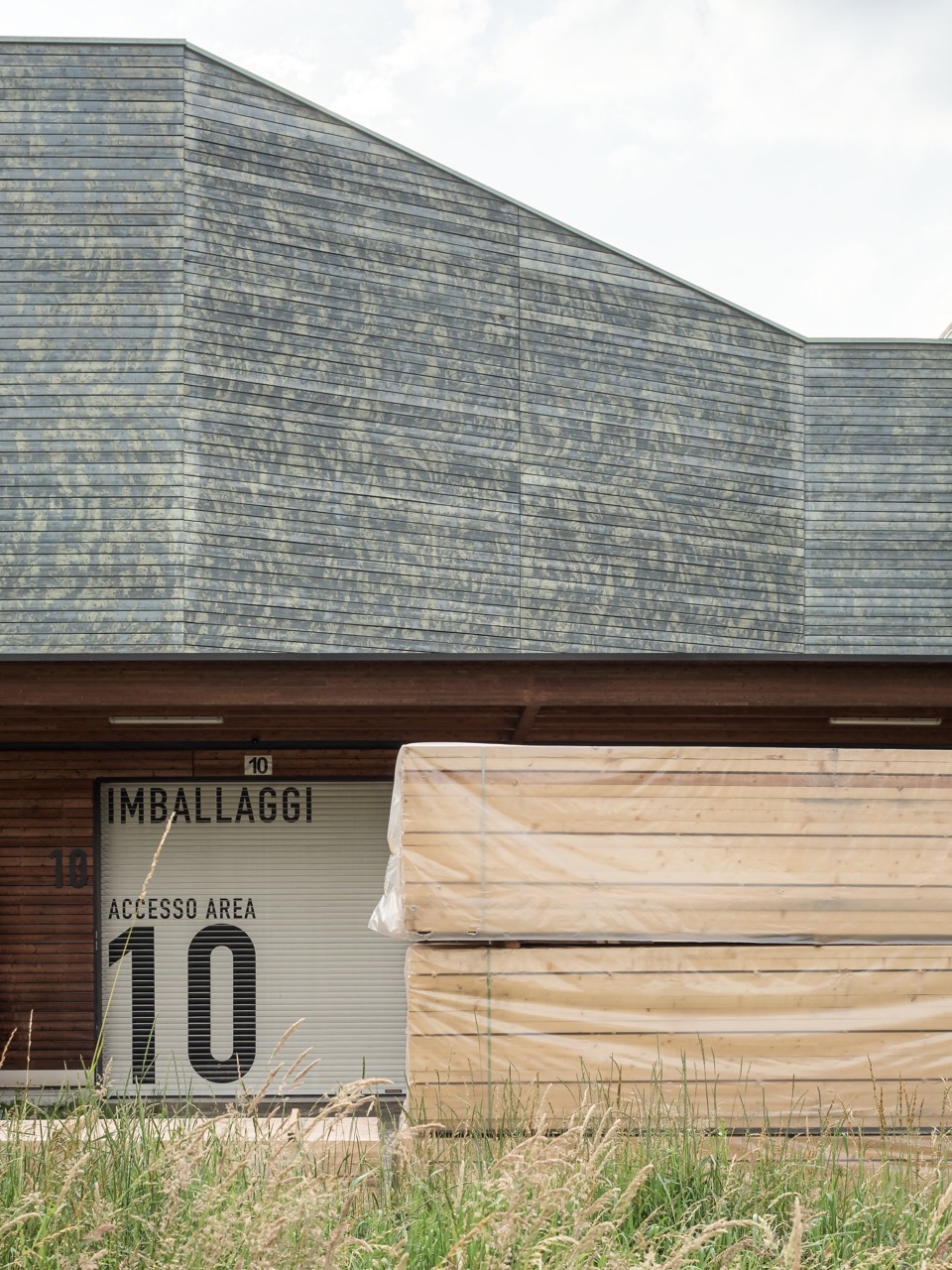
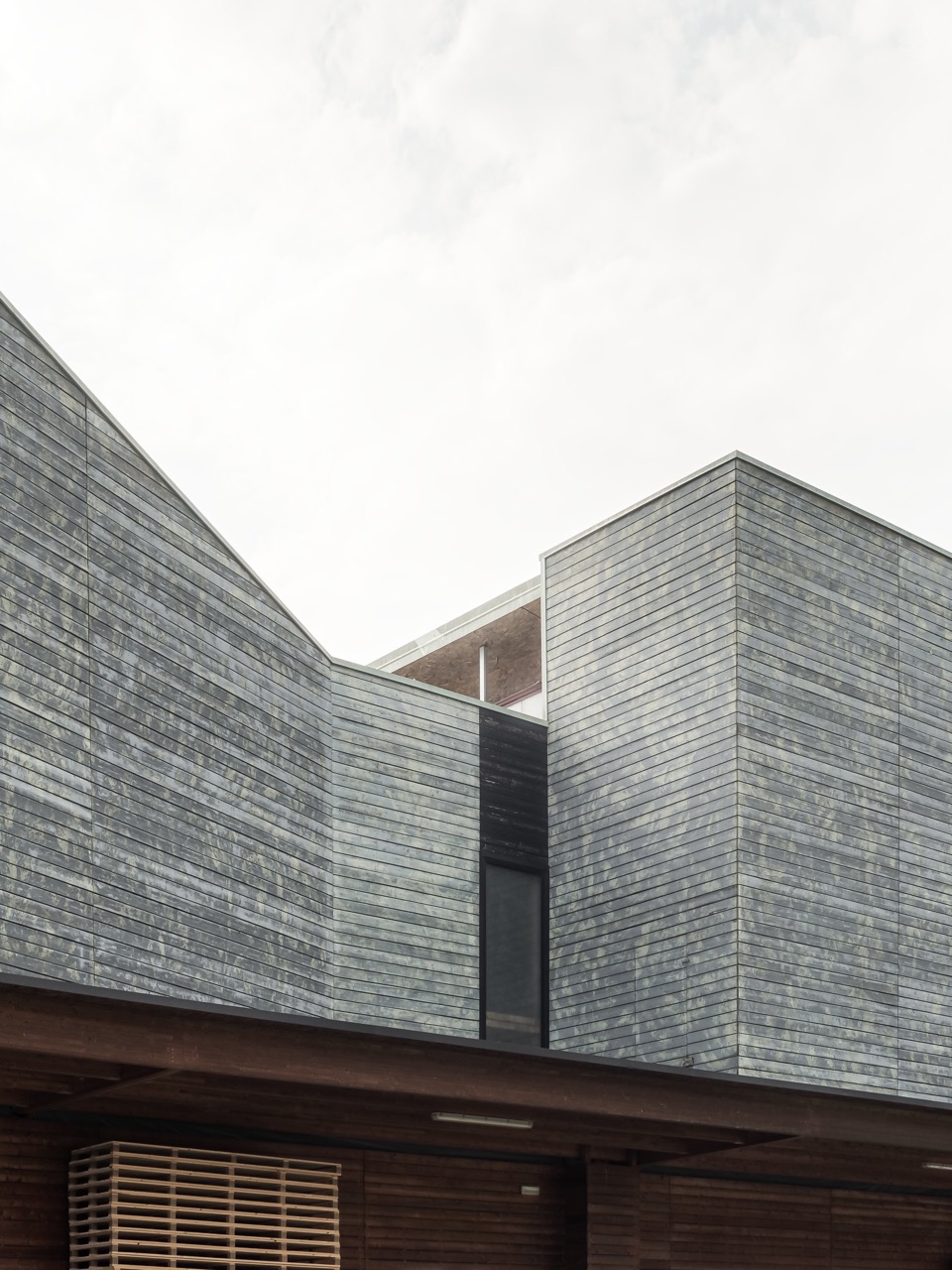
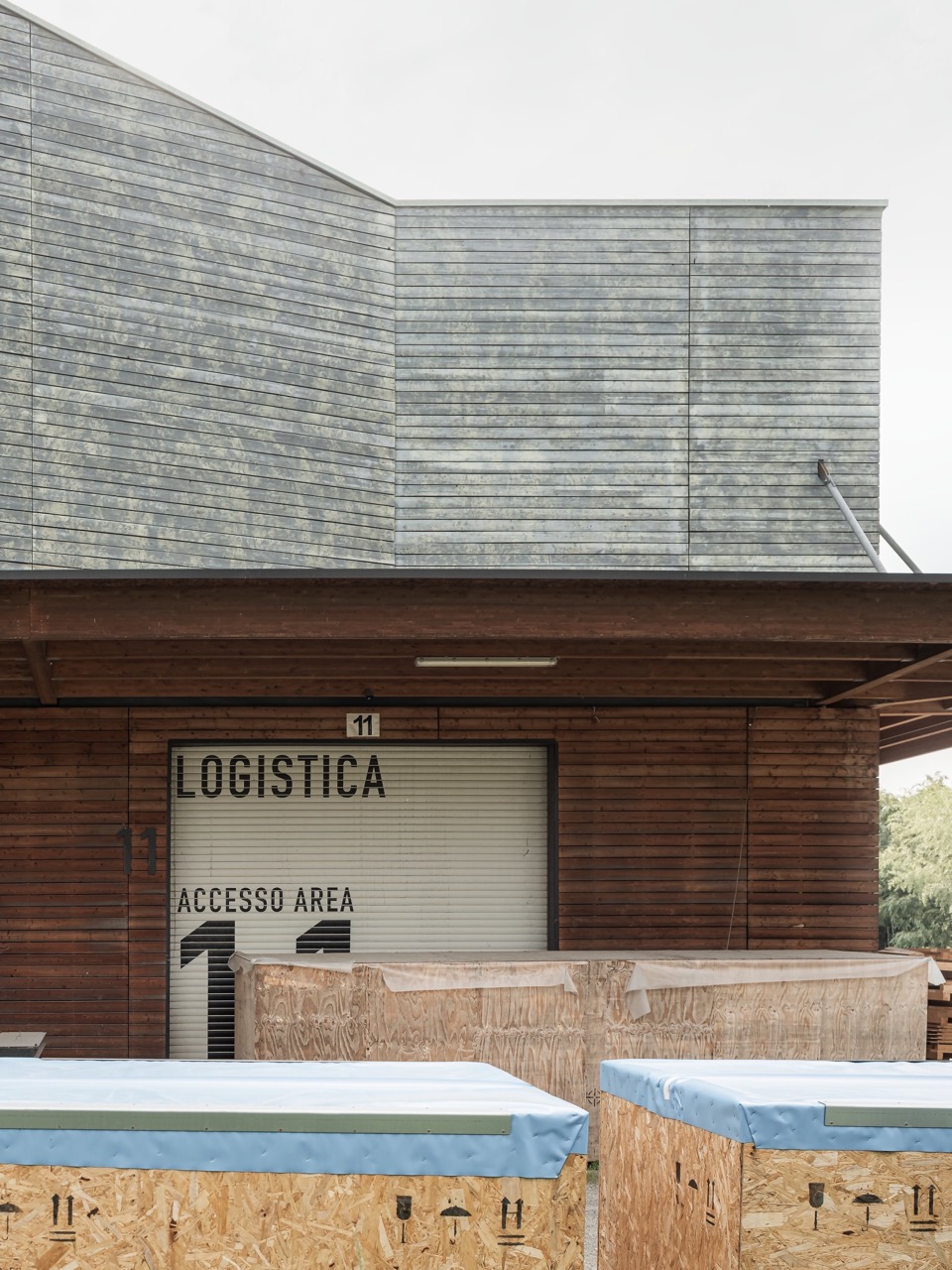
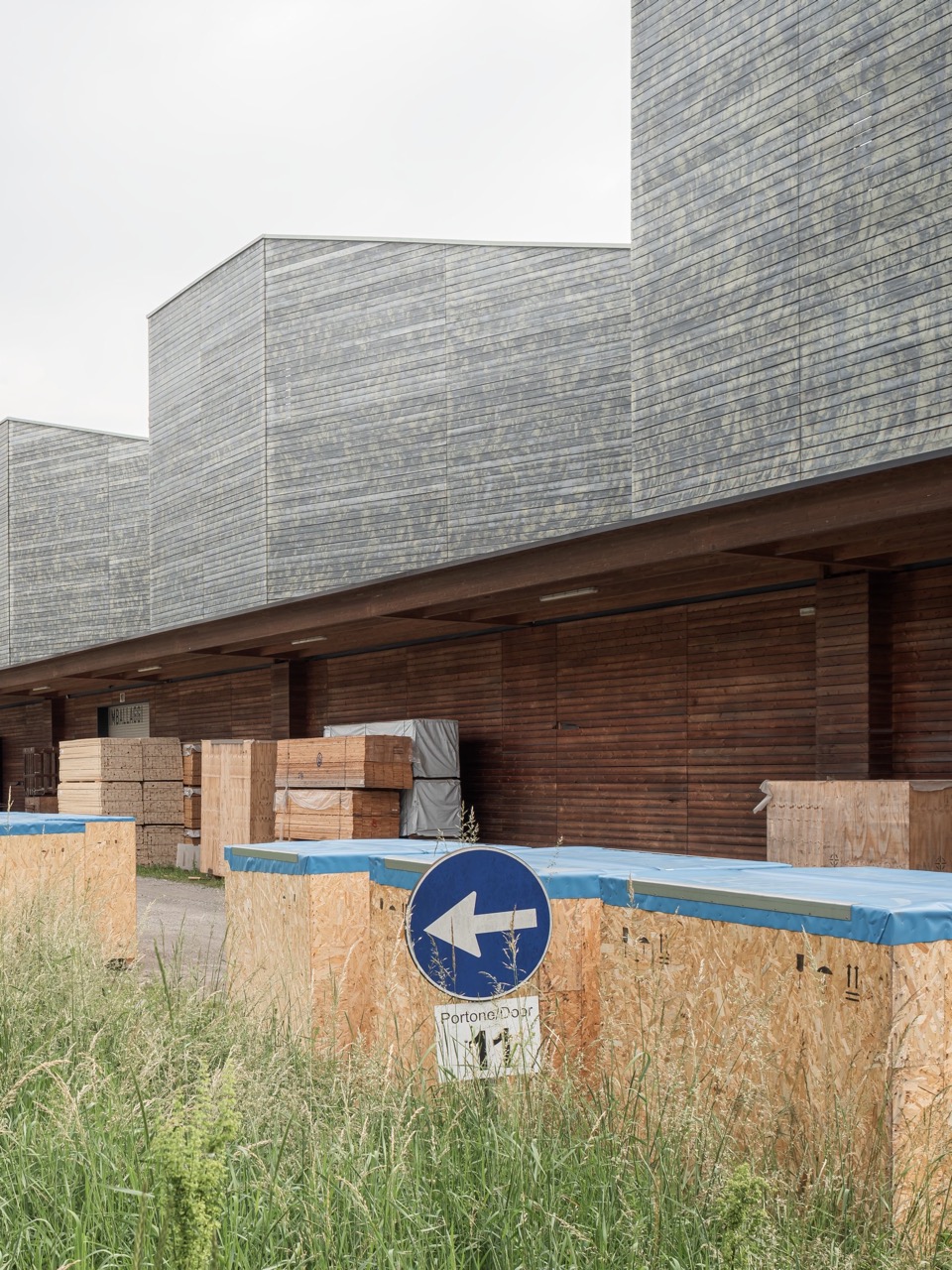
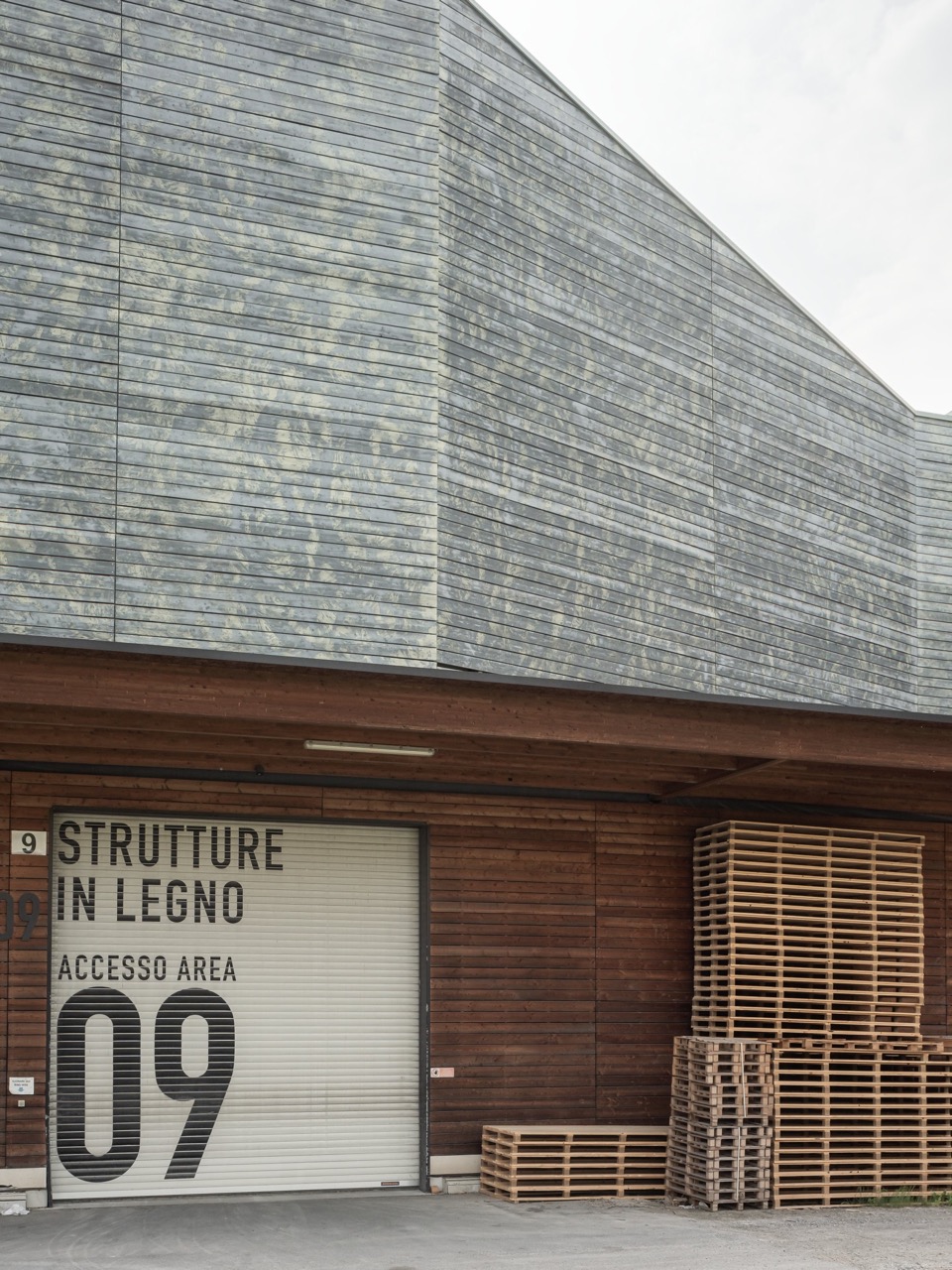
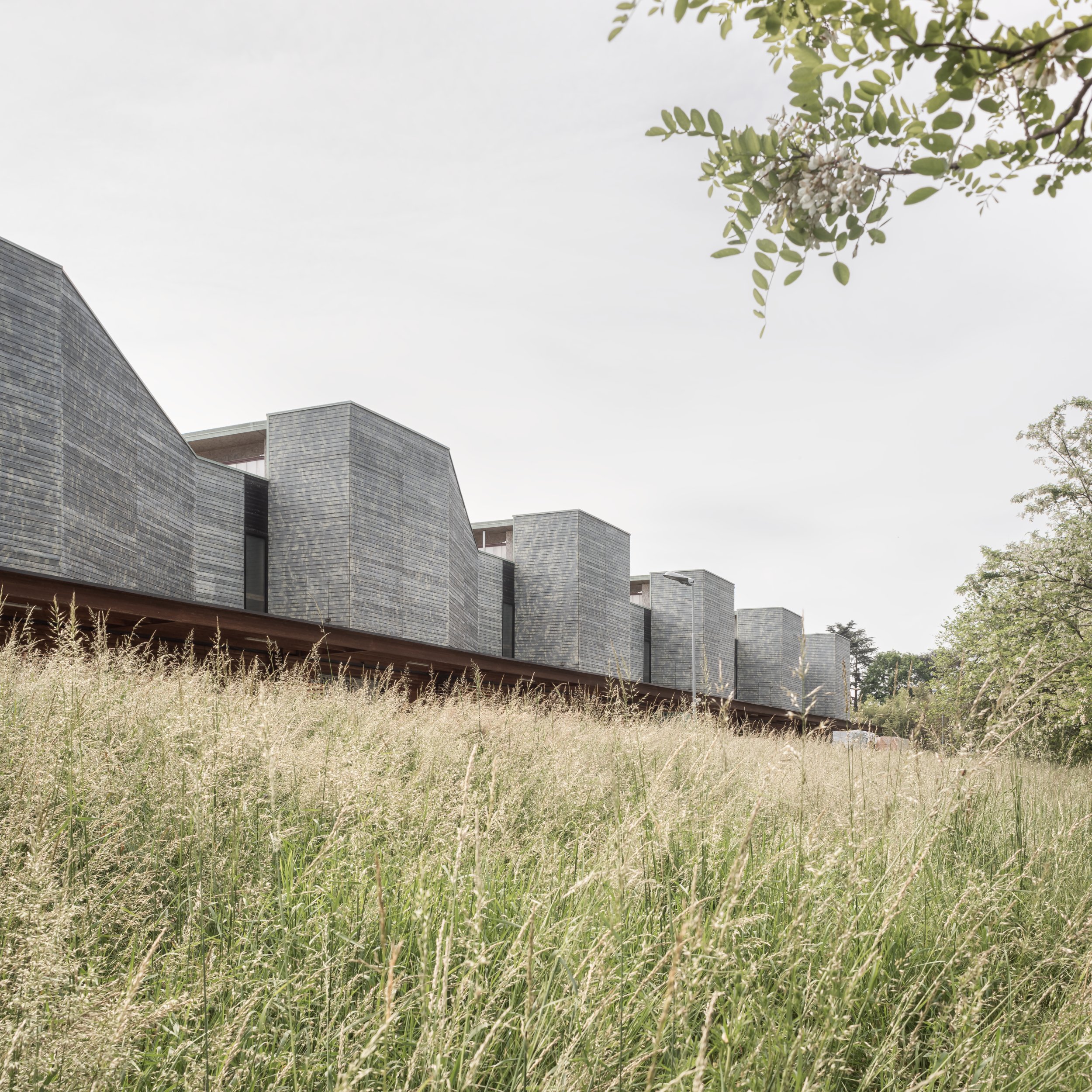
The western façade stems from the need to communicate Novello’s activity to the outside, linked to logistics and the production of timber houses and packaging. From this premise comes the idea of the boxes, repeated along the façade as large three-dimensional volumes. The traditional saw-tooth profile of the shed roof is reinterpreted and deformed without being denied, maintaining the reference to the industrial typology while translating it into a more plastic and contemporary figure. Seven large boxes follow one another along the motorway front, creating a visual rhythm that gives order to the scale of the building. The effect is emphasised by the contrast with the canopy below, projecting almost four metres, whose shadow makes the volumes appear suspended. The image of the warehouse thus moves away from the neutrality of the technical envelope and becomes a legible architectural sequence, capable of giving the building a public form.
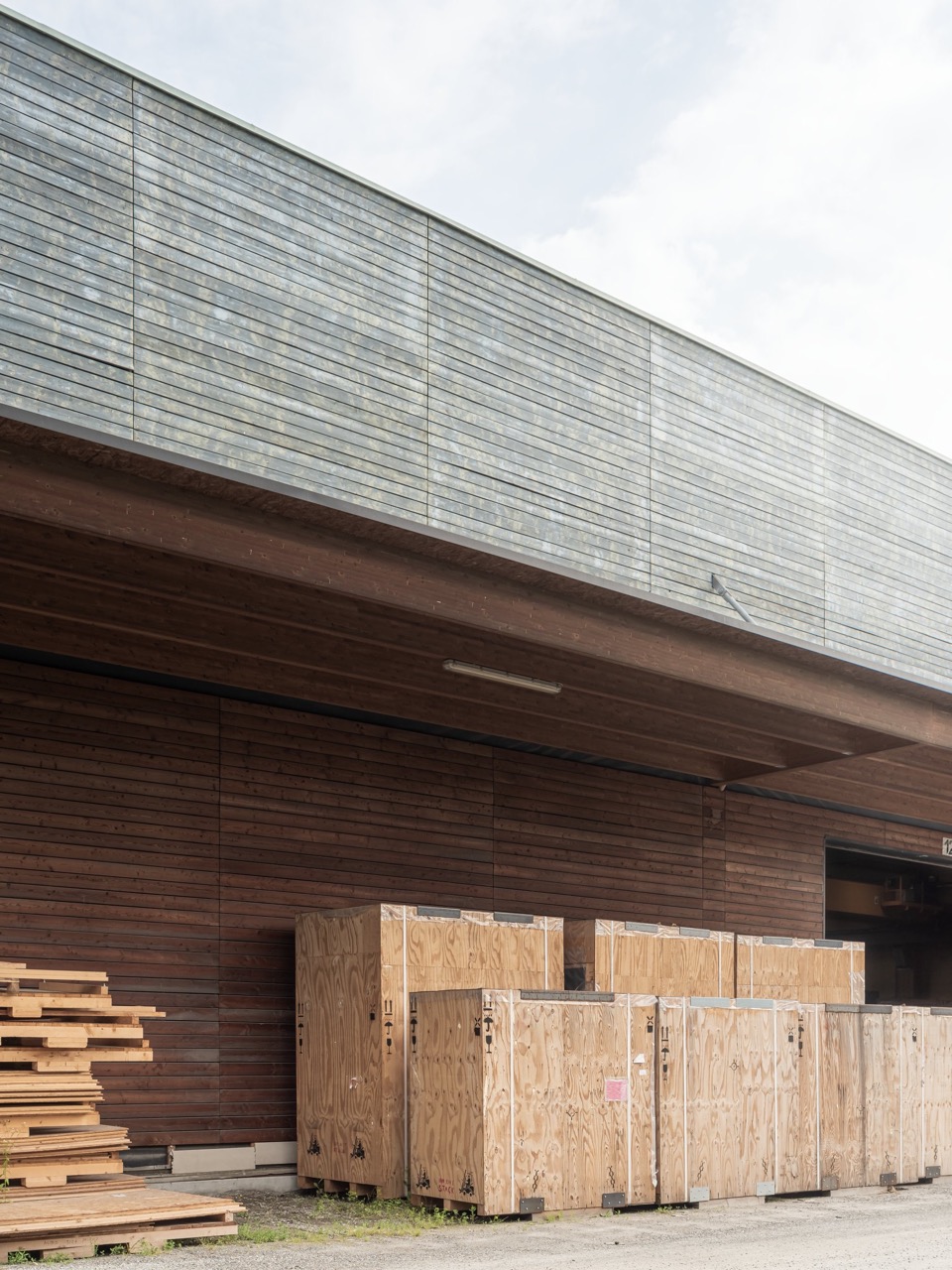
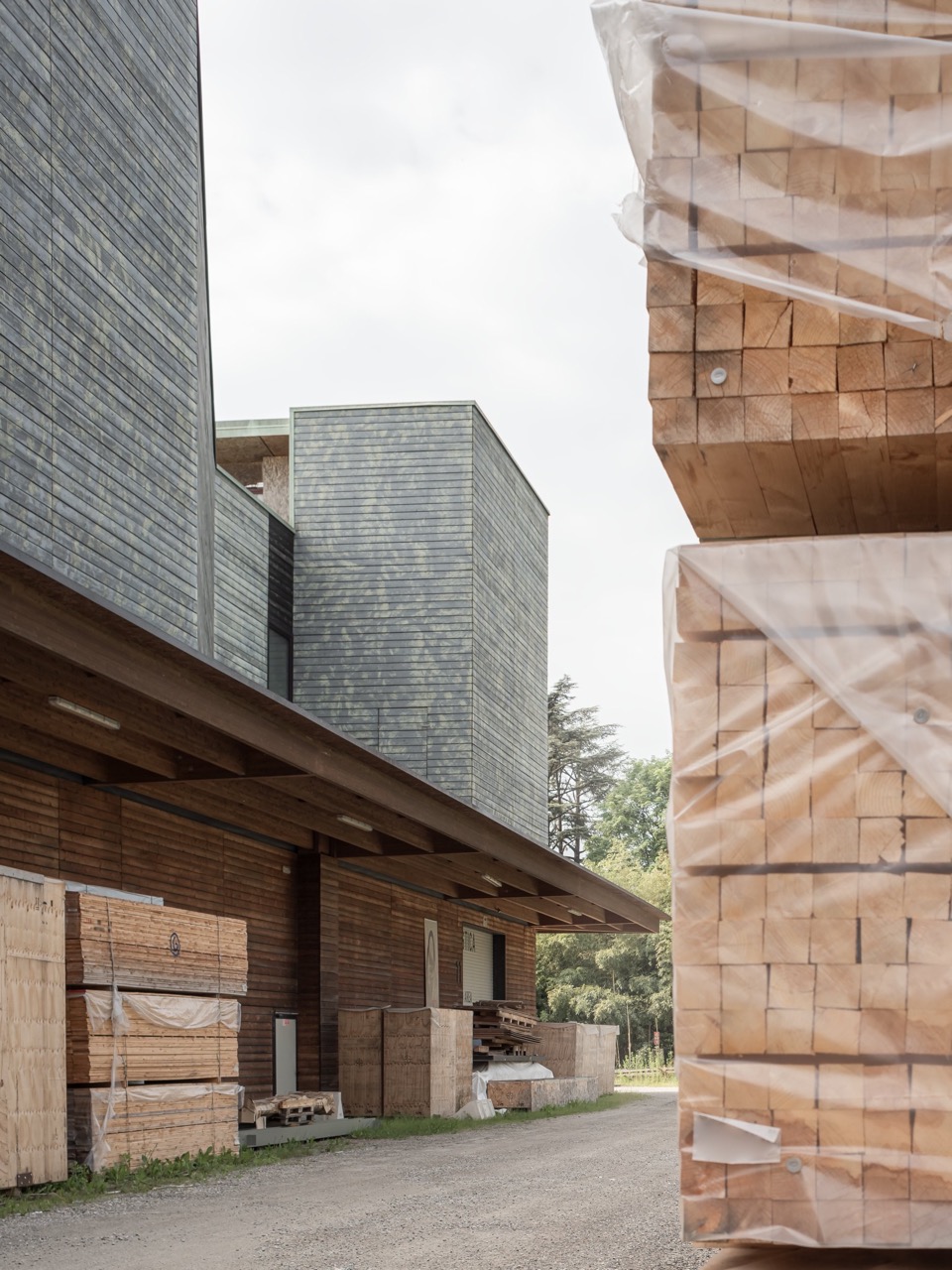
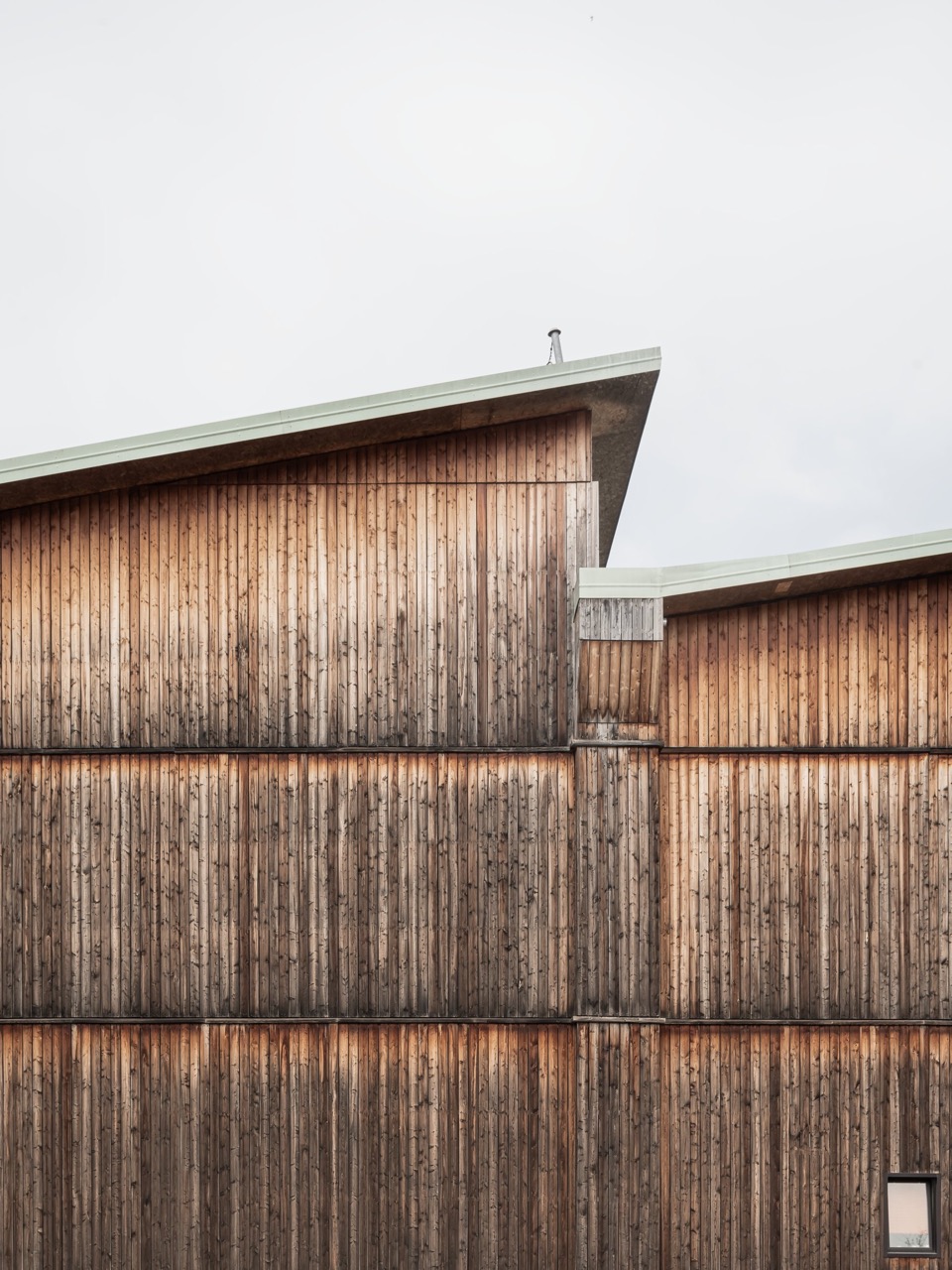
The southern façade, by contrast, works with greater linearity. The cladding in larch boards gives the building material continuity and strengthens the relationship between architecture and raw material. Wood is not only a construction material, but an element of identity. It expresses on the outside what the company produces and works with every day, making architectural image and industrial process coincide.
The choice of wood plays a central role from both an environmental and a construction point of view. The building uses around 5,000 cubic metres of wood, transforming the raw material into structure, envelope and language. Prefabrication, the use of natural materials from renewable sources, the reduction of land consumption and attention to energy saving form the principles behind the intervention.
The building achieves energy autonomy through the high level of insulation of the envelope, the recovery of heat produced by the production machinery and the active and passive use of renewable sources, particularly sun and air. The absence of a traditional heating and cooling system is not a secondary aspect, but an integral part of the design idea. The building does not conceal its productive nature, but brings it onto the façade, transforming the front into a narrative of the supply chain. The large industrial scale is thus brought back to a sequence of recognisable elements, where the theme of the box becomes a compositional measure and the public image of the company.
CREDITS
Project: 7 Sustainable Boxes
Architects: LCA architetti
Year: 2025
Photography: Andrea Ceriani