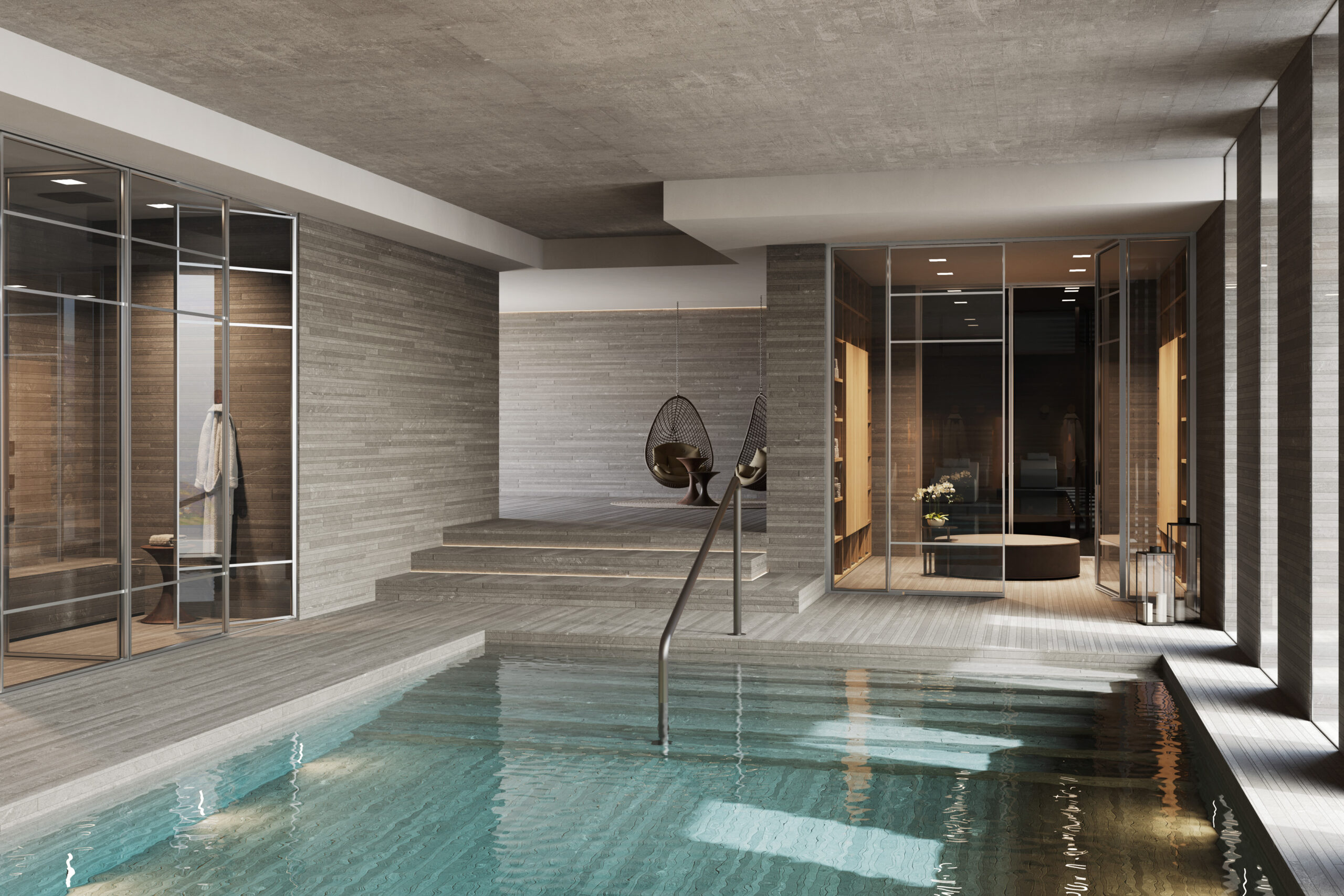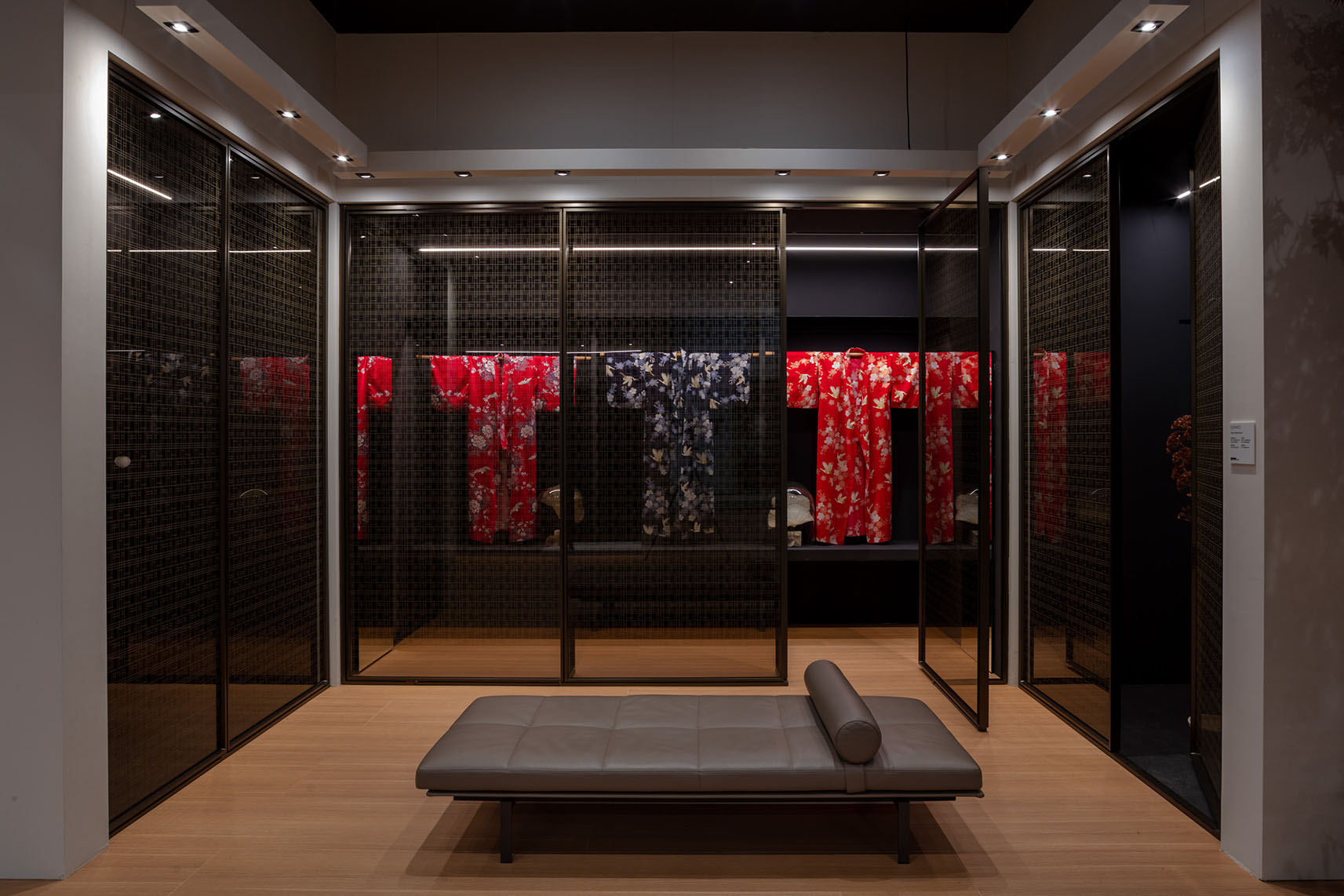

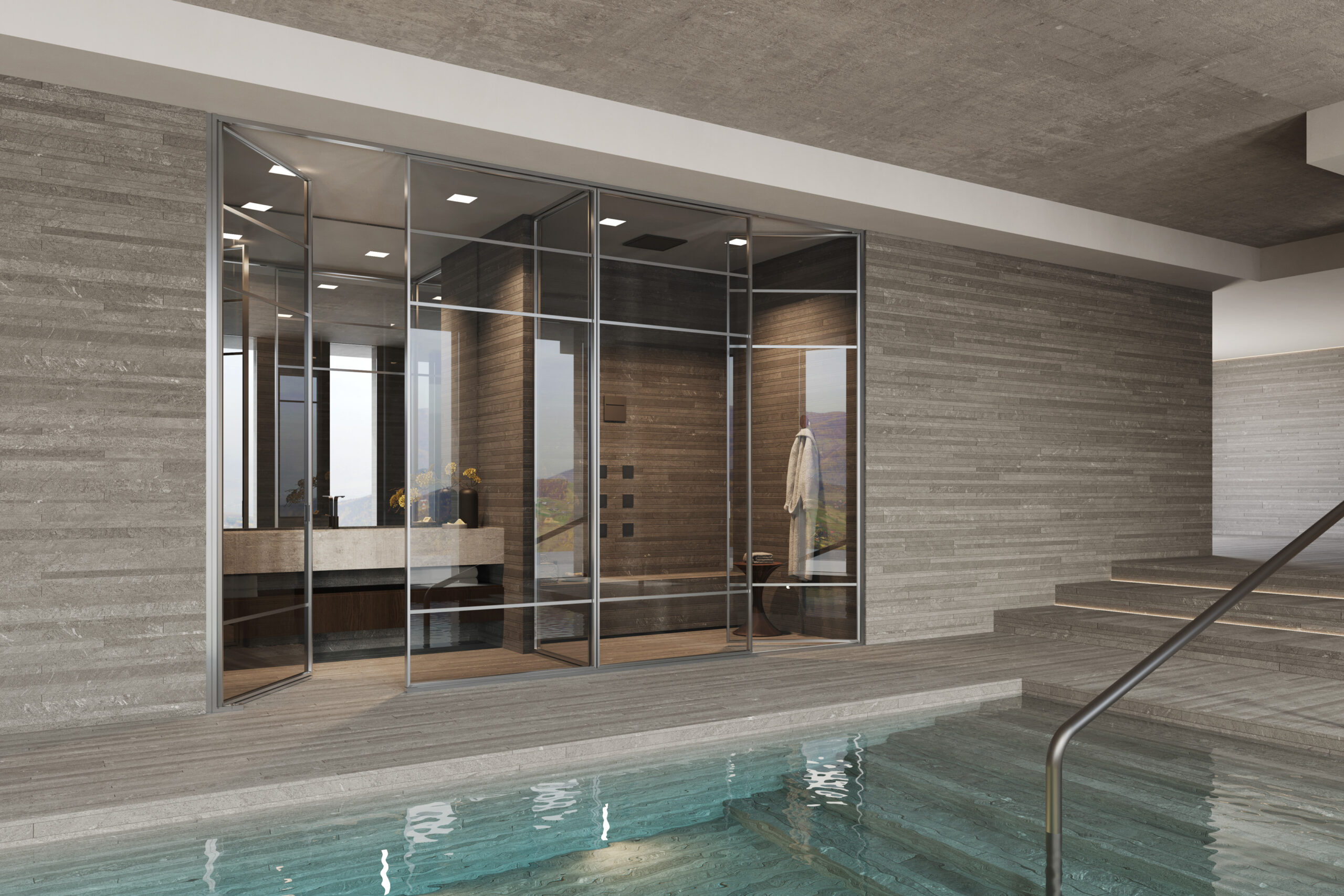
Presented by Vismaravetro at Salone del Bagno 2026, the Domino wall system expands its design vocabulary through new configurations, finishes, and functional solutions that strengthen its dialogue with contemporary architecture.
Originally conceived to define the boundary between the shower area and the bathroom environment through an essential and rigorous language, the system now evolves while remaining true to its founding principle: transforming a few elements into a wide range of compositional possibilities.
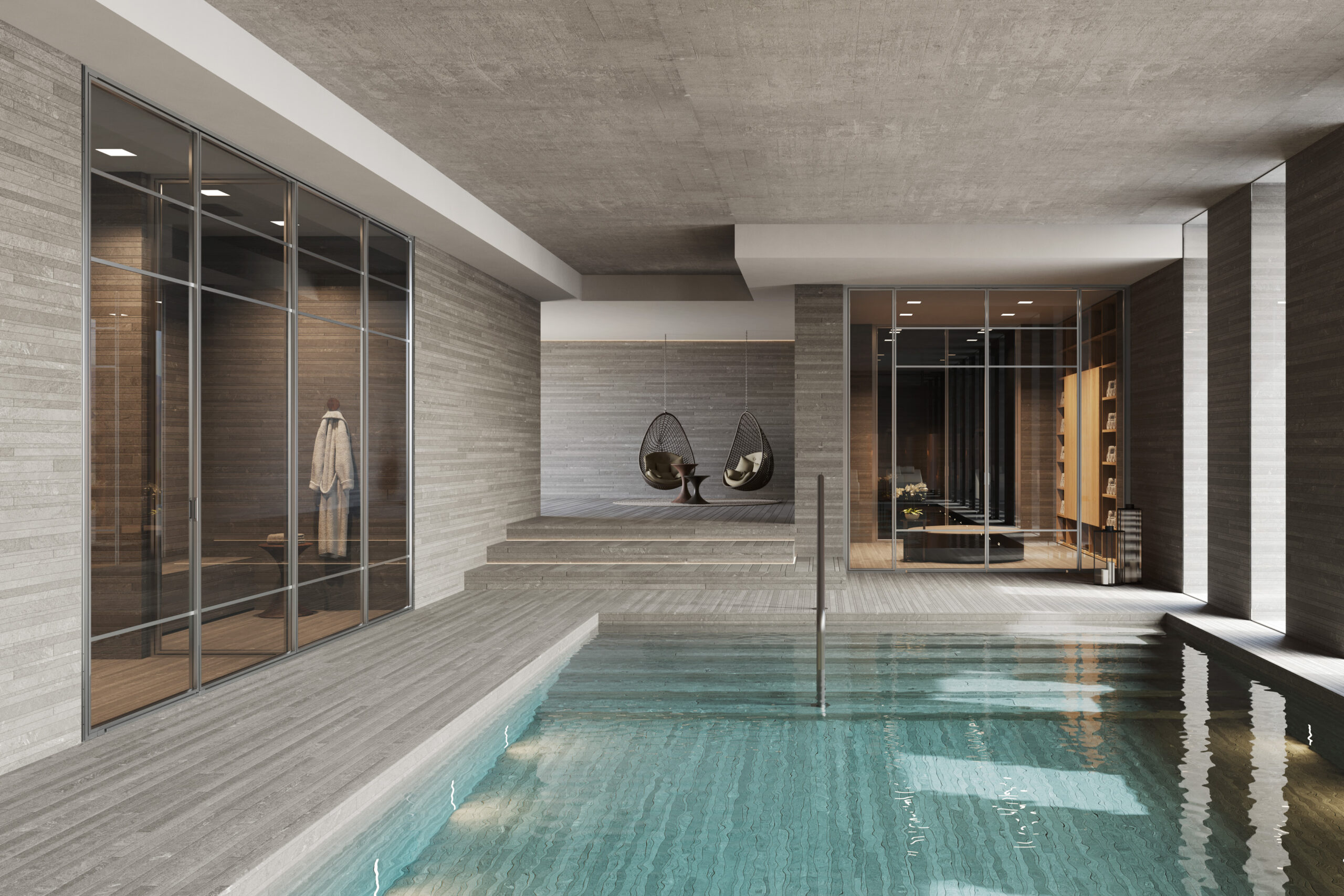
Designed by Castiglia Associati, Domino is based on a simple modular structure composed of just four core elements. This design synthesis allows spaces to be configured with remarkable freedom, adapting to different architectural requirements while preserving visual continuity, functionality, and formal quality. The name itself recalls a historic Vismaravetro project, a shower enclosure introduced in 1994, now reinterpreted as a wall system capable of responding to the needs of contemporary living.
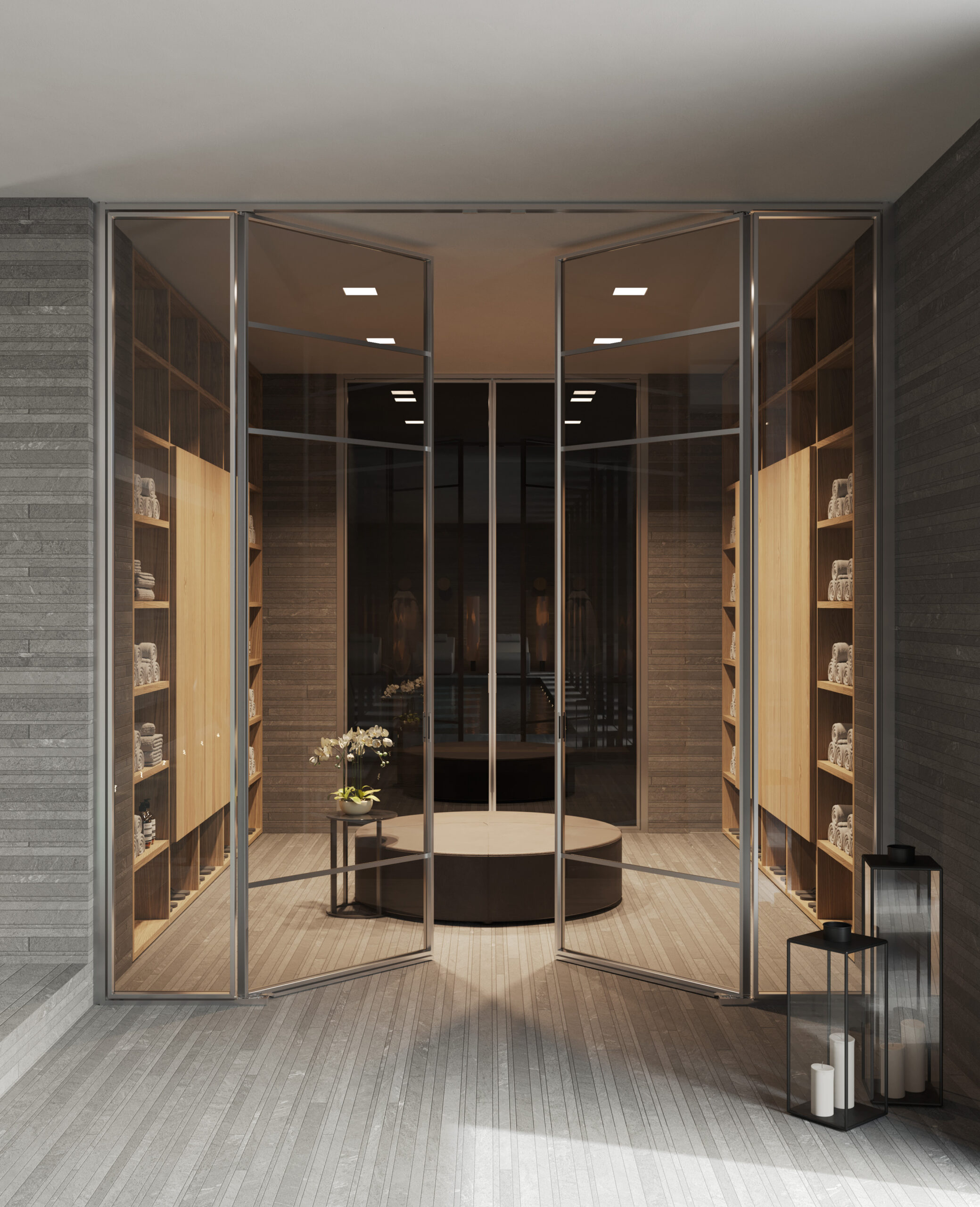
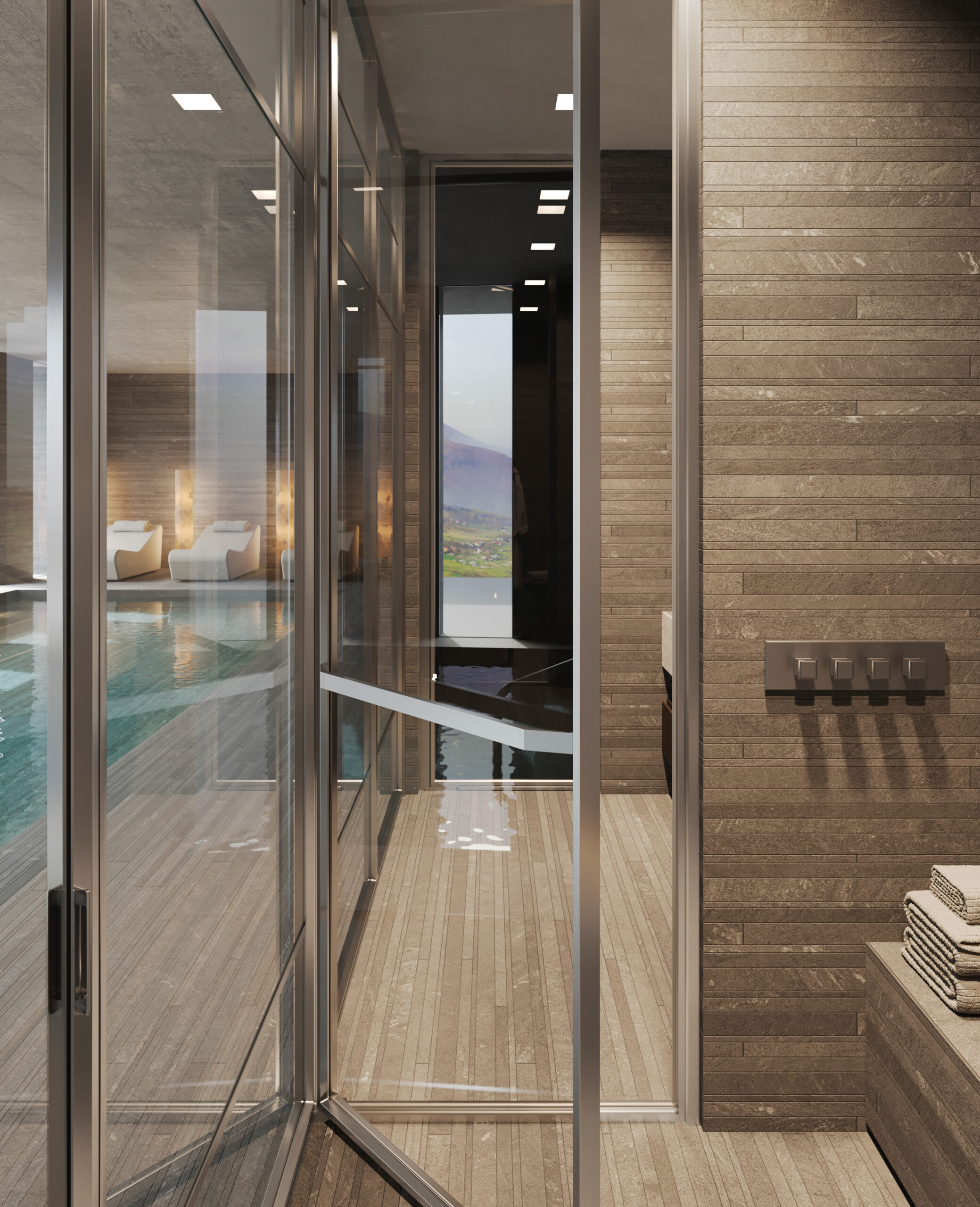
Among the main innovations presented in Milan are the new glass surface divisions. Slim profiles run across the glass, creating a more articulated composition defined by panels, horizontal and vertical rhythms, and contrasts between different types of glass. The wall thus moves beyond the role of a neutral surface to become an active element in shaping space, while retaining the lightness and transparency that characterize the system.
The evolution also involves new modes of use. Alongside the traditional outward opening, Domino now offers inward opening, a solution that increases design flexibility and responds to the needs of hospitality and contract environments, where circulation management and space optimization play a central role.
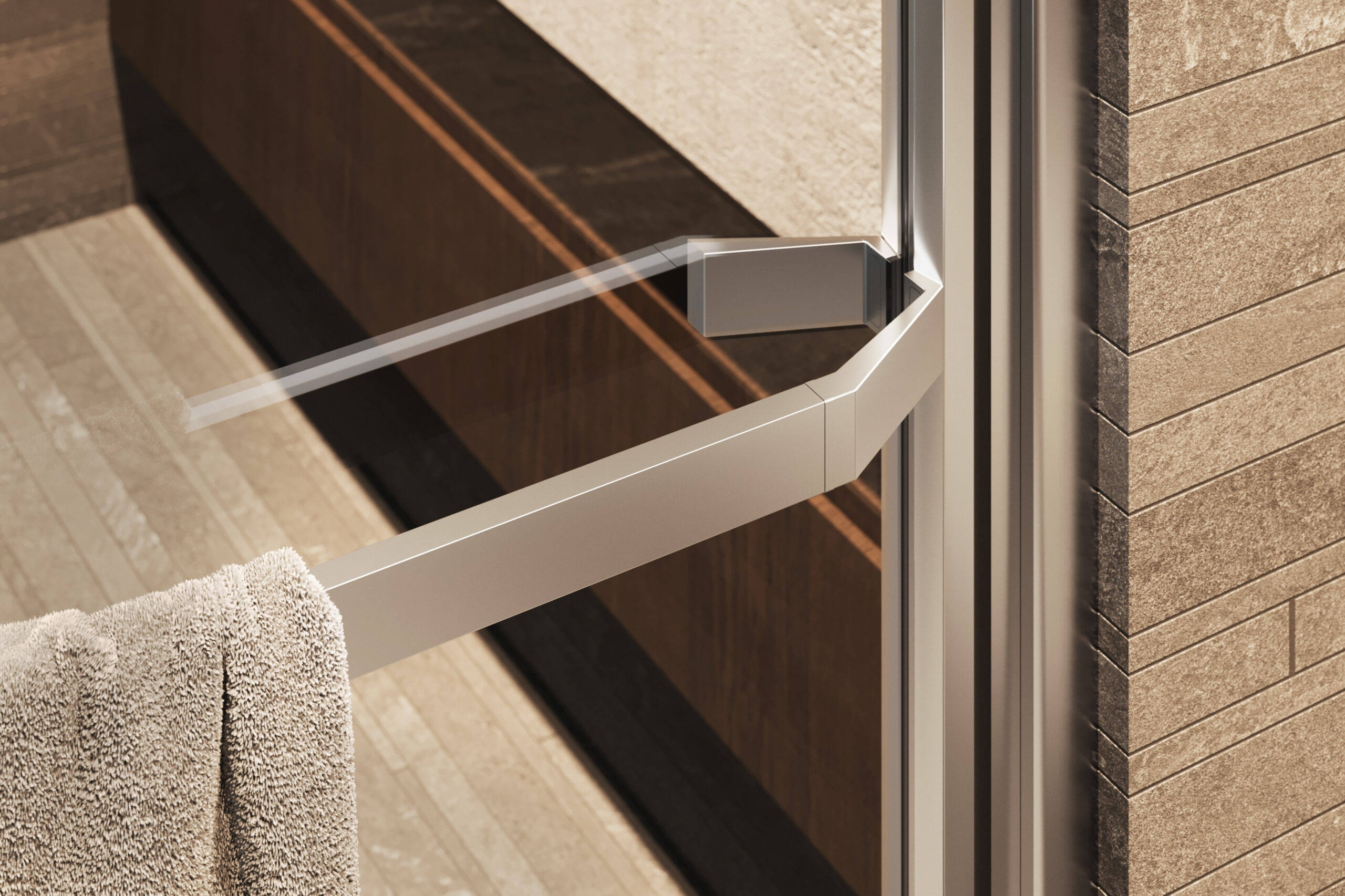
Beyond functionality, Vismaravetro has focused on detail as an integrated component of the project. The new towel rail is a clear example: conceived as a natural extension of the structure rather than an added accessory, it extends the visual language of the wall and reinforces the system-based approach in which every component contributes to the overall composition.
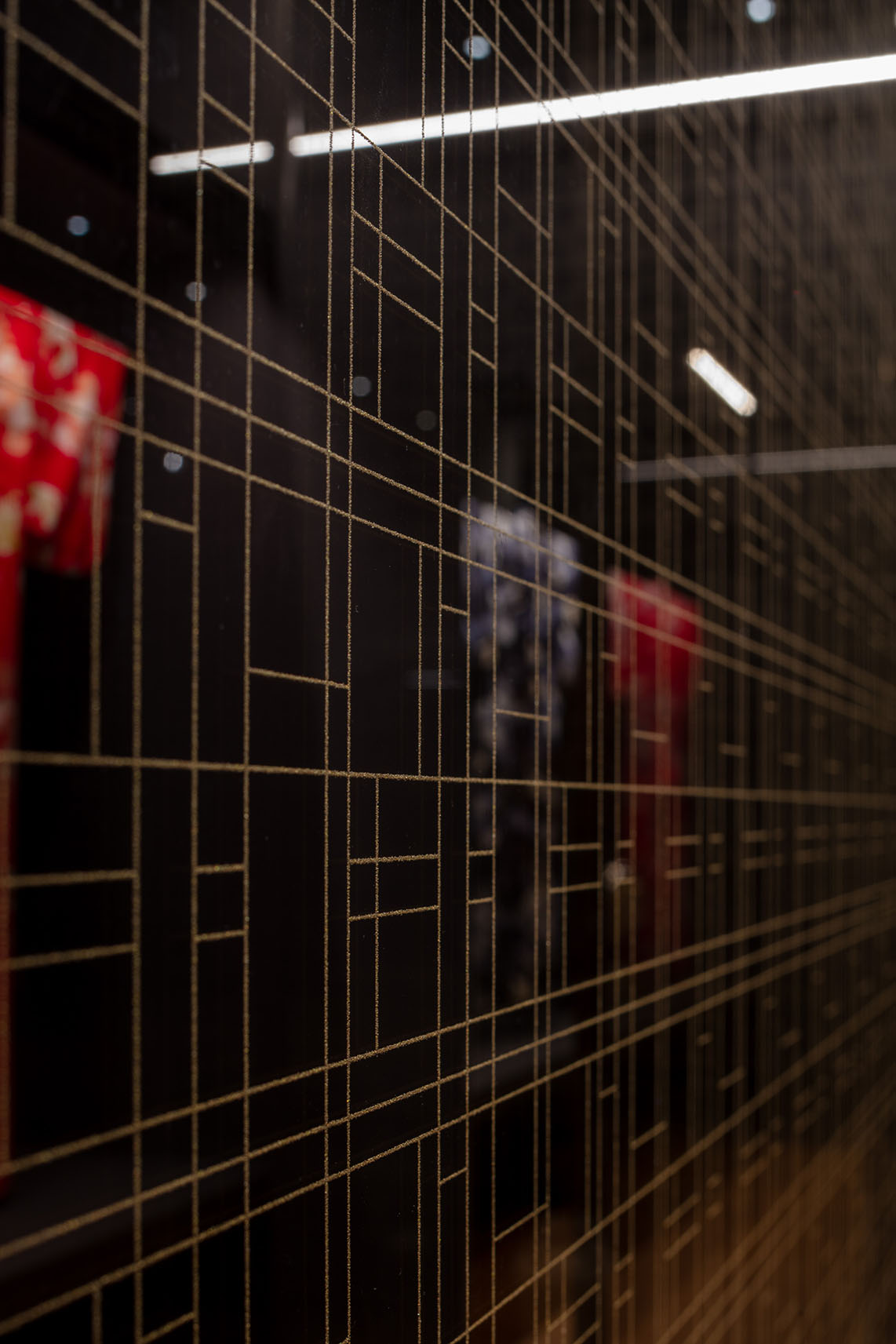
Research also extends to materiality. Domino introduces a new mineral finish, achieved through the controlled application of metallized particles onto the glass surface. More than a decorative treatment, it alters the perception of the glass through reflections and depth, transforming it into a surface capable of interacting with light and expanding the expressive potential of the system.
Completing this evolution is Domino Sliding, a new configuration that introduces movement as an integral part of the design. While maintaining its construction principles and formal essentiality, the system offers a different relationship with space through a fluid and continuous opening mechanism. The full-height handle and the upper track, fully integrated into the architecture, confirm the intention to reduce visual elements to a minimum, allowing glass, light, and movement to define the spatial experience.