
Suspended between Alpine landscape and contemporary infrastructure, La Stella del Cuis, designed by De Carlo Gualla, redefines the concept of the cable car station by transforming it into an immersive architectural experience. The project for the new Pila-Couis gondola lift interprets the relationship between mobility, panorama and public space through a sculptural structure that integrates into the Valle d’Aosta landscape as a true “archisculpture”.
The project unfolds between the valley station and the new mountain station on the Platta di Grevon, one of the most spectacular panoramic points in the Aosta Valley Alpine arc. From here, the view stretches across Gran Paradiso, Mont Blanc, Grand Combin and the Matterhorn, turning architecture into a device for observing the landscape.
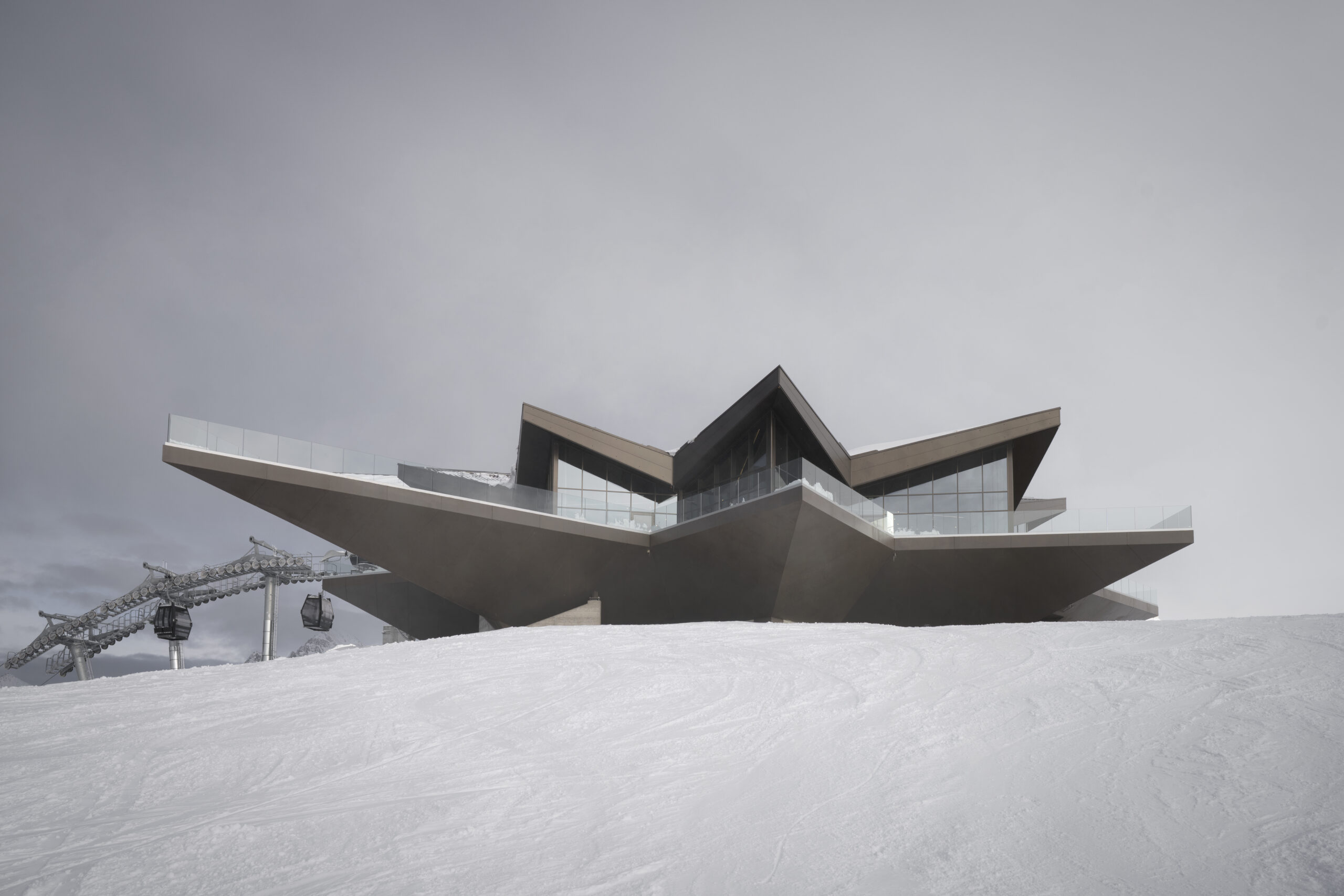
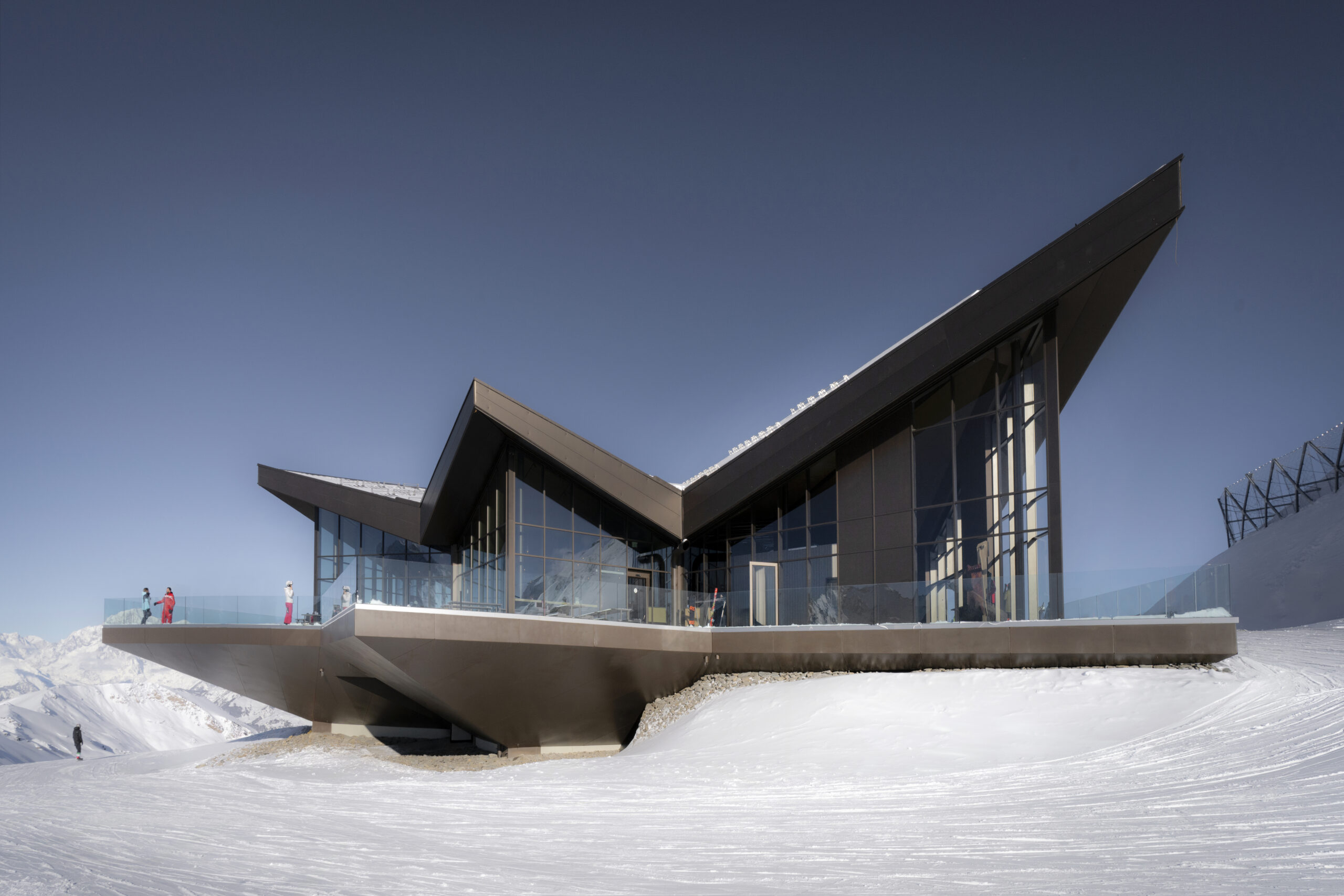
The form of the mountain station emerges directly from its geographical context. De Carlo Gualla imagines the building as an Alpine flower growing along the mountain ridge, capable of deforming its own symmetry in response to the tensions of the terrain. The imagery of the “Alpine star” merges with that of the “wind rose”: each petal of the building points toward a specific peak in Valle d’Aosta, establishing a direct relationship between architecture and geography.
The station takes shape as a double inverted funnel that faces Pila on one side and Cogne on the other, while the restaurant and bar unfold like a fan toward the Alpine panorama. One petal projects dramatically into the void, becoming a panoramic belvedere suspended above the valley.
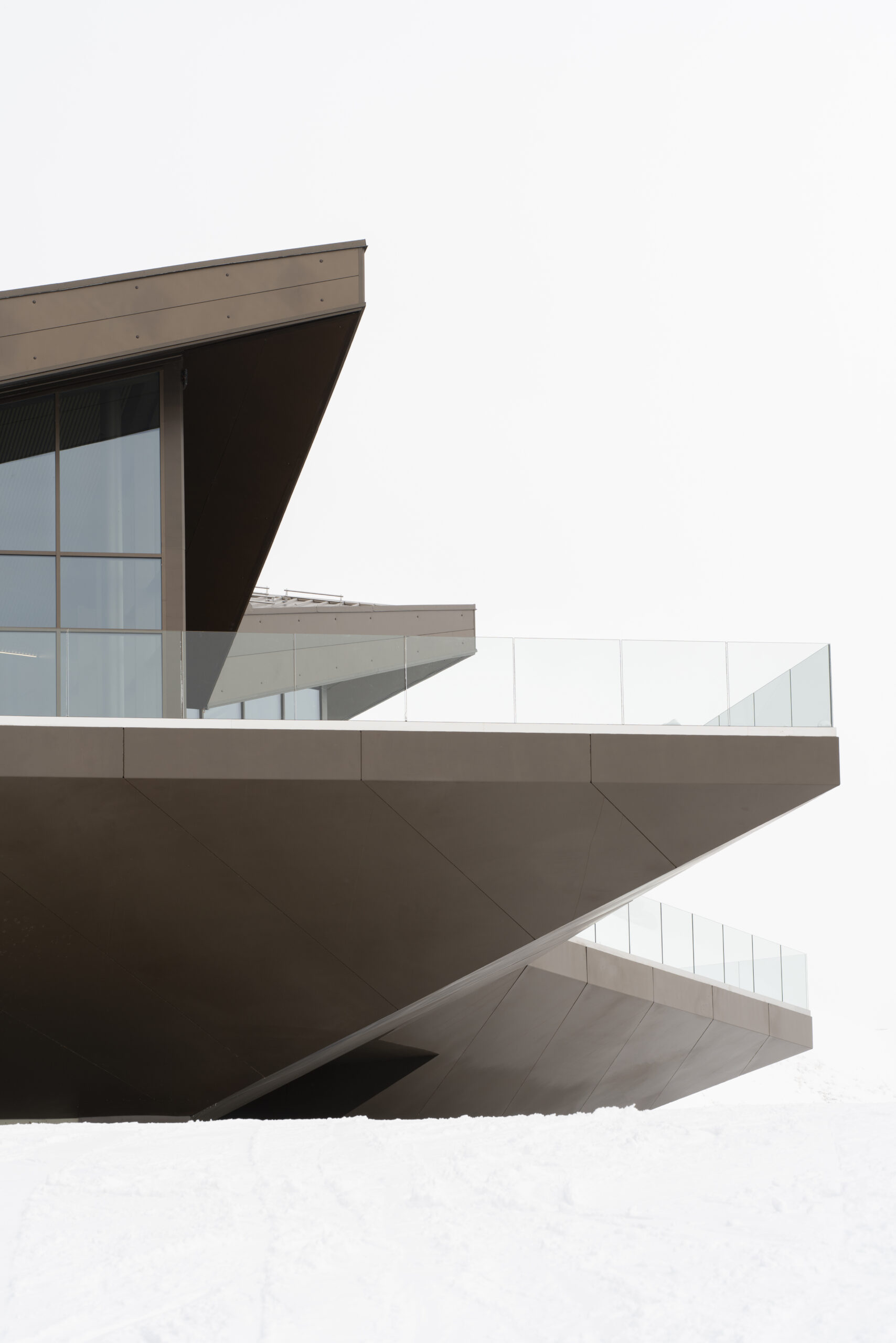
From a structural perspective, the building is conceived as a large tray suspended along the mountain ridge. The structure is anchored to the ground through a reinforced concrete base from which major cantilevers extend, supported by three-dimensional V-shaped brackets. The roof, completely detached from the volume below by a continuous glazed strip, appears instead as a light and independent element.
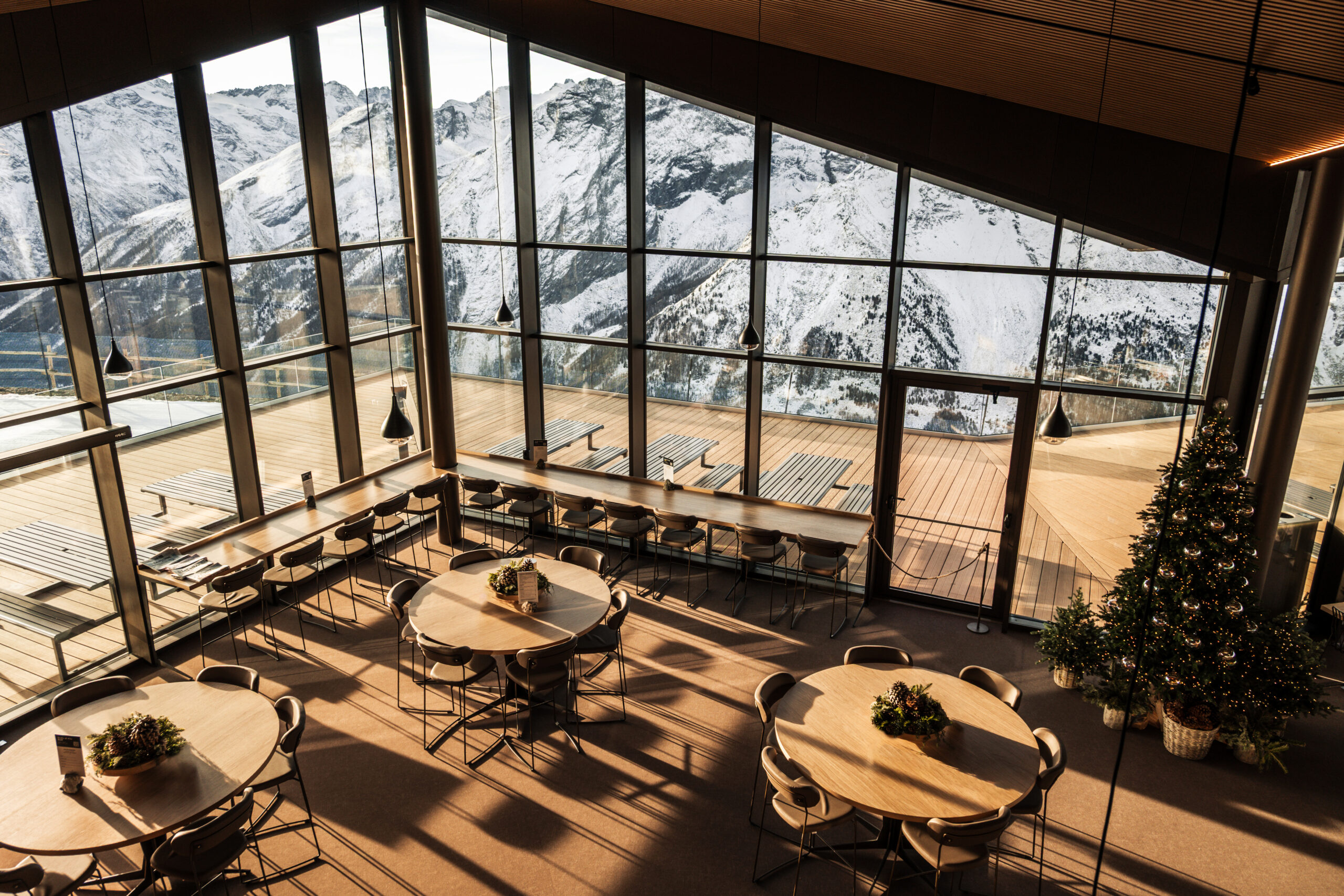
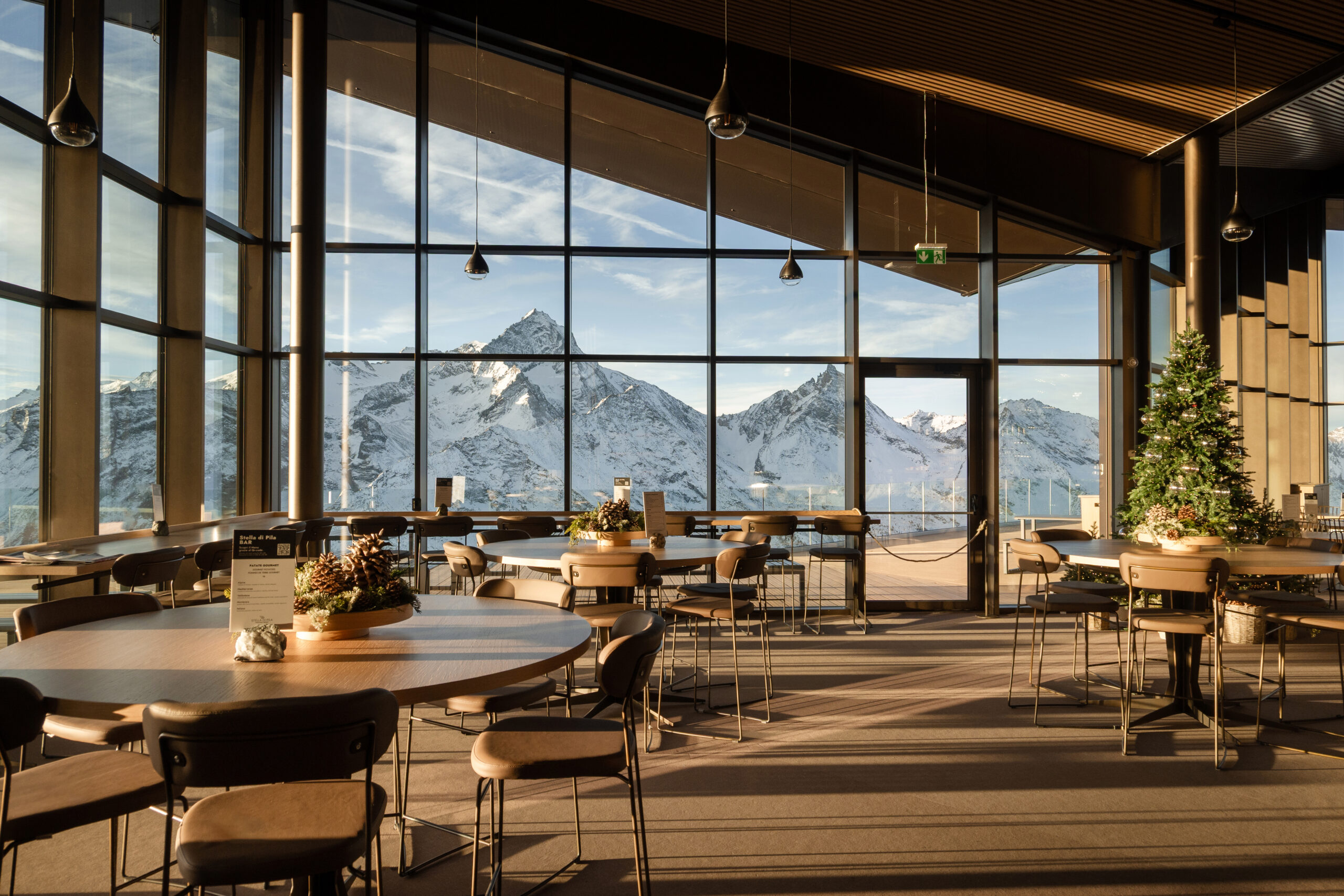
Inside, the mountain station is organized as a transitional space between infrastructure and landscape. A large glazed hall guides visitors toward the ski slopes, the panoramic terrace and the restaurant, while a central service volume also acts as a communicative and scenographic element.
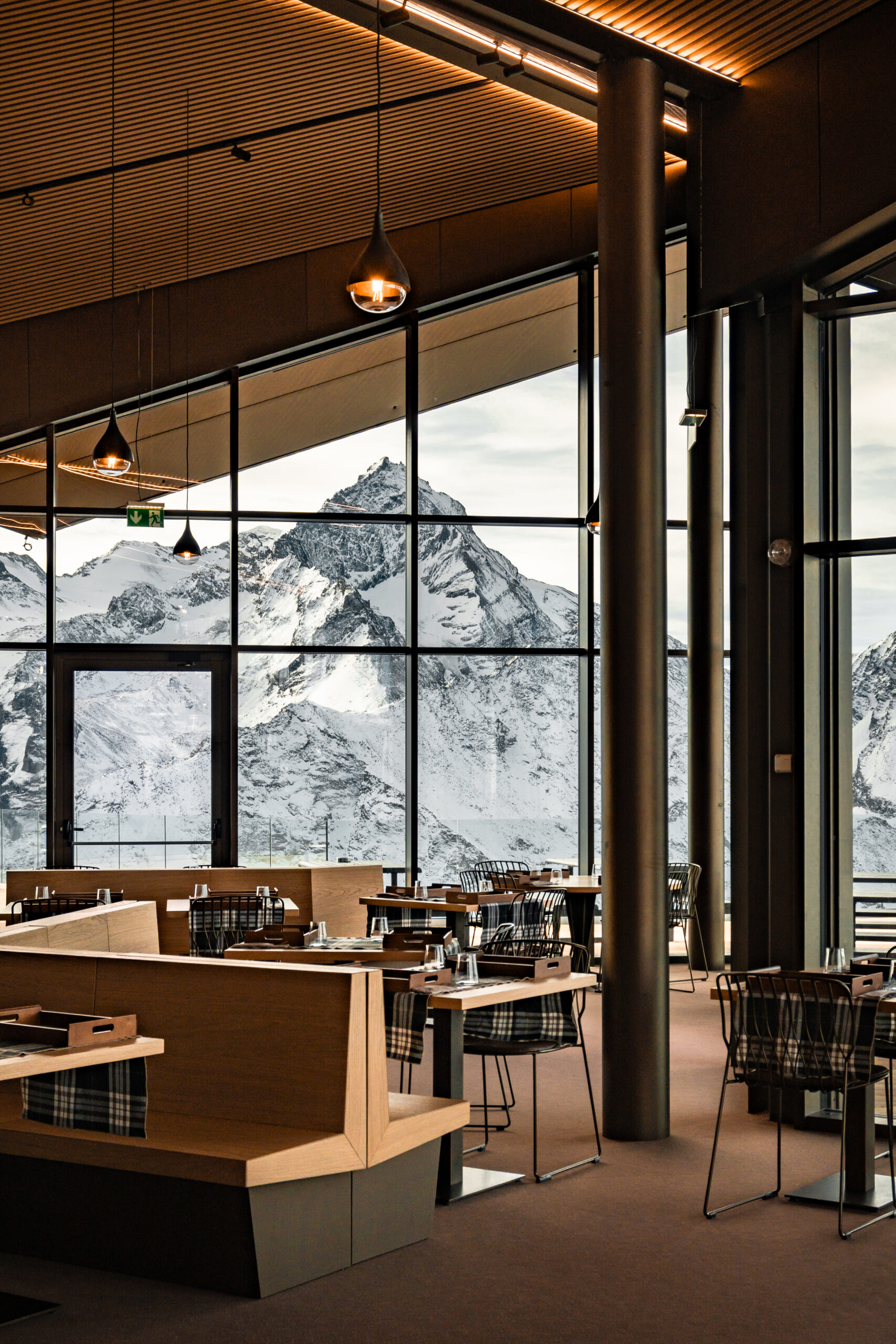
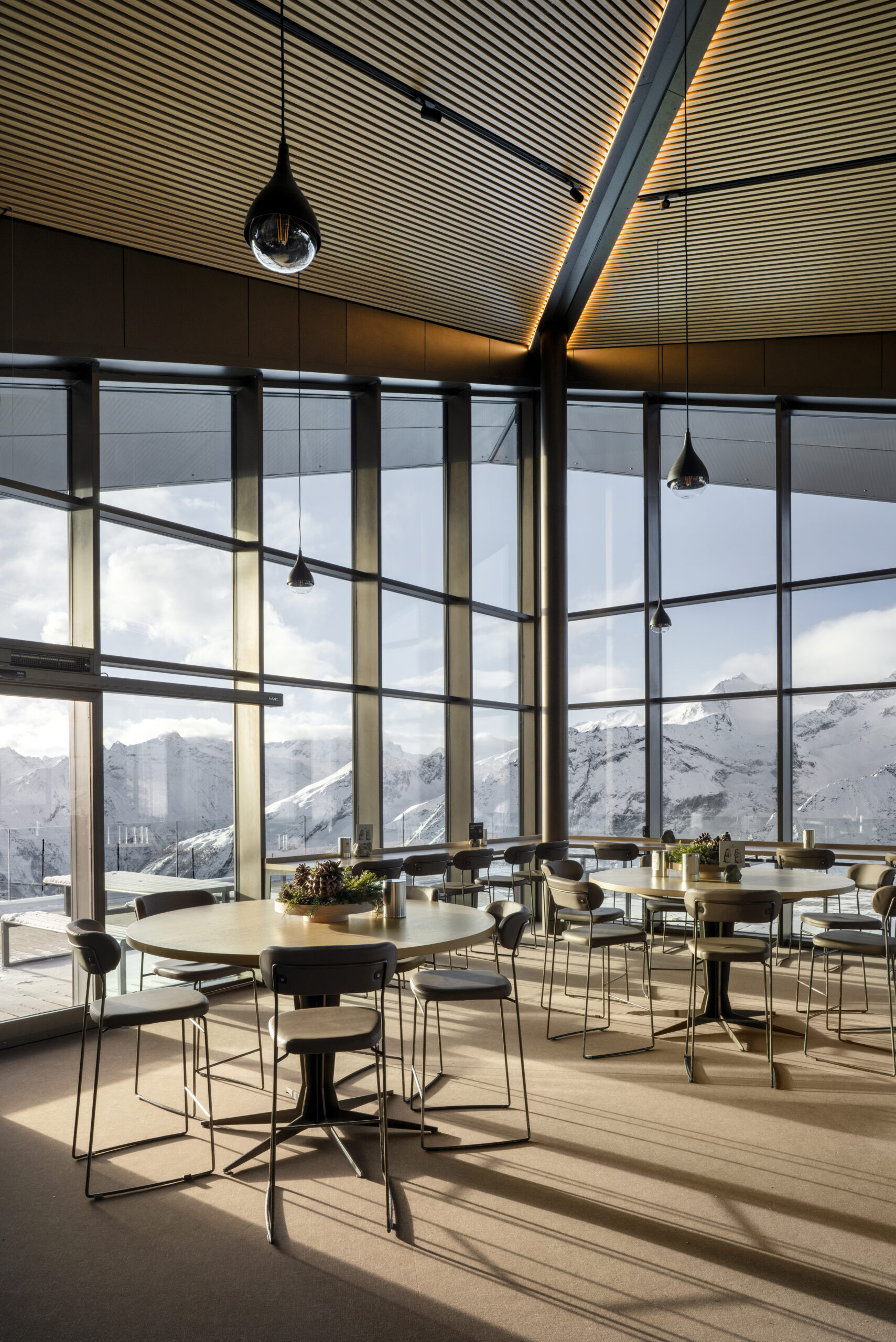
The restaurant develops around a central service core and two rings dedicated to visitors – one climate-controlled indoor area and one panoramic outdoor terrace – emphasizing the continuous relationship with the Alpine landscape. Large glazed surfaces and the timber roof structure amplify the perception of openness and natural light.
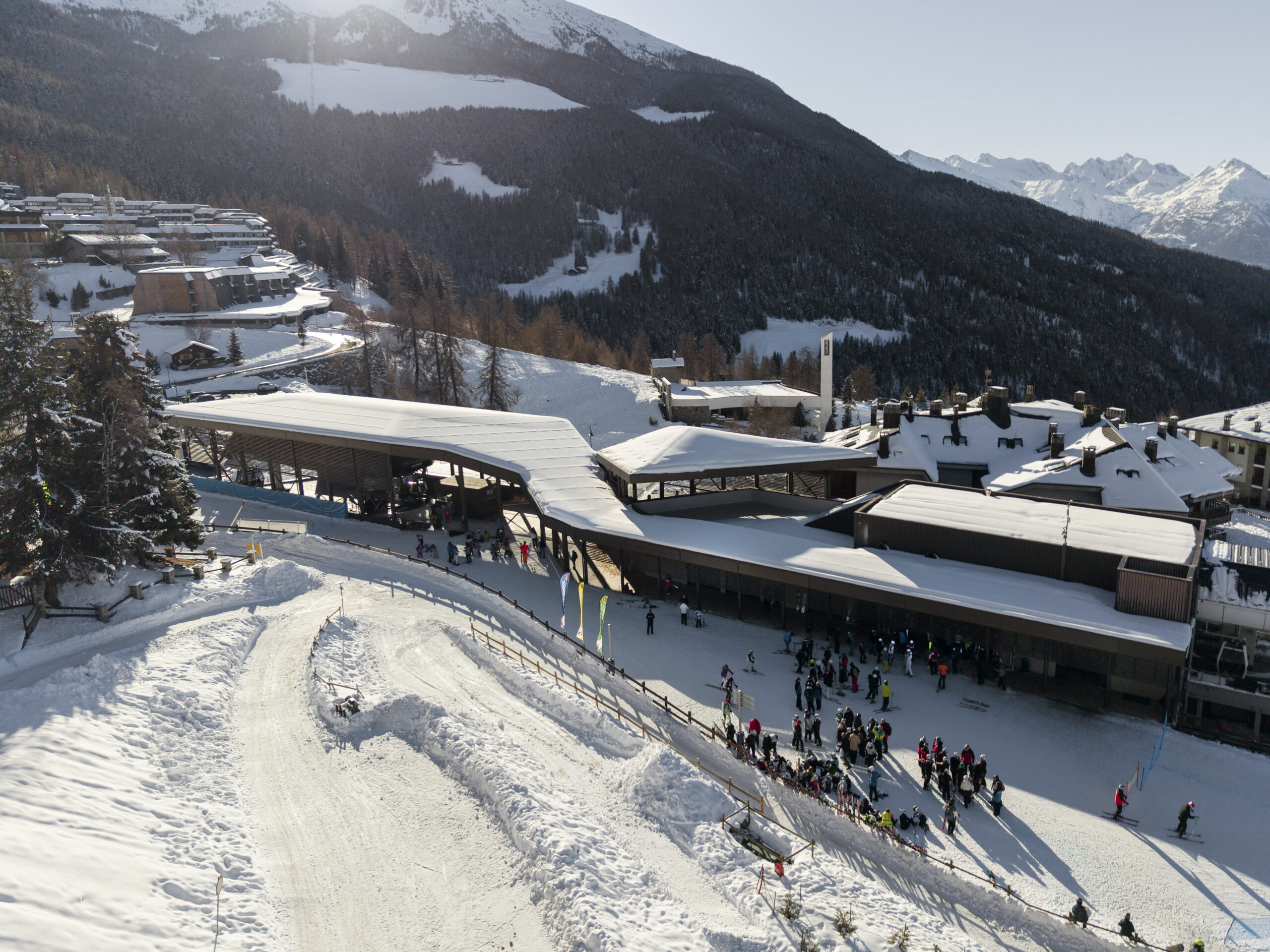
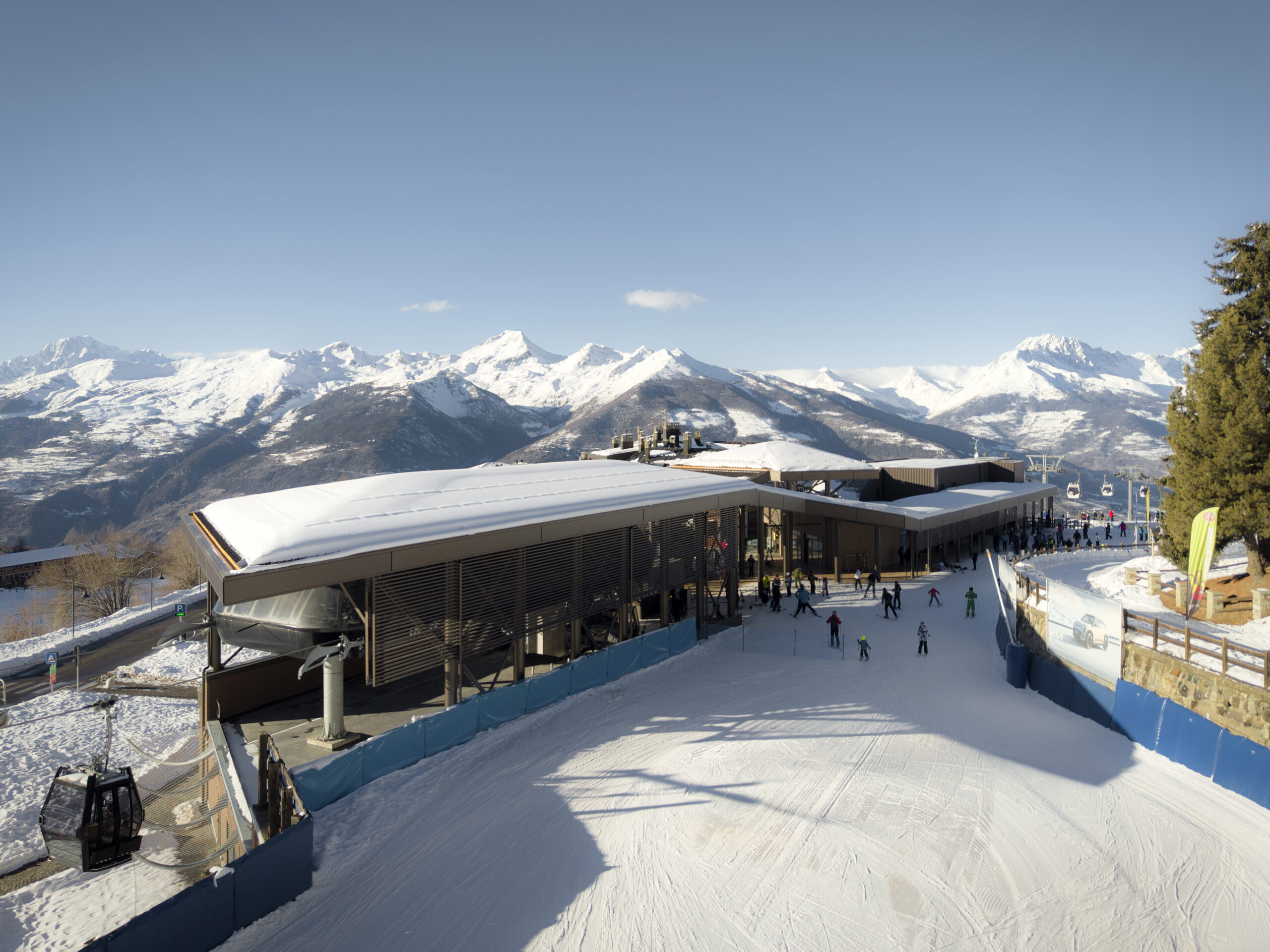
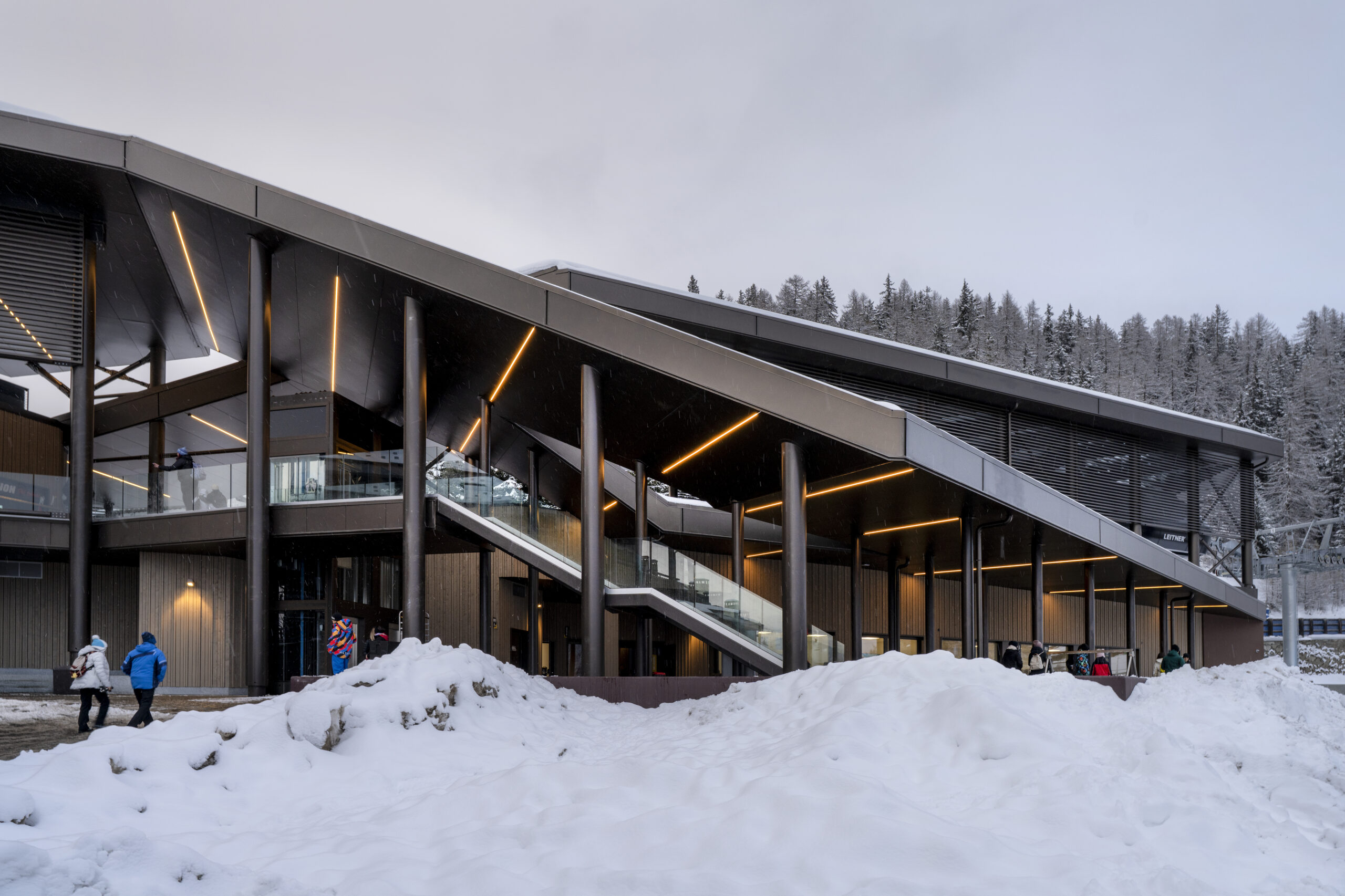
At the valley level, the project addresses the theme of mobility and urban interchange. The new through-station of the Pila-Couis gondola lift is conceived as a dynamic infrastructural hub capable of reconnecting parking areas, pedestrian paths, ski facilities and the existing Aosta-Pila station.
The architecture of the valley station translates the complexity of movement flows into a system of folded roofs and continuous pathways guiding skiers and visitors through access, ascent and distribution areas. Long canopies and glazed surfaces emphasize the dynamic dimension of the project, while the bronze-painted steel cladding creates material continuity between the two stations.
Between structural lightness, sculptural tension and dialogue with the landscape, La Stella del Cuis proposes a new vision of Alpine architecture: not simply a technical building, but a contemporary landmark capable of transforming infrastructure into a spatial and narrative experience.
For more information, visit www.decarlogualla.com
CREDITS
Project: La Stella del Cuis
Studio: De Carlo Gualla
Location: Pila, Valle d’Aosta, Italy
Year: 2026