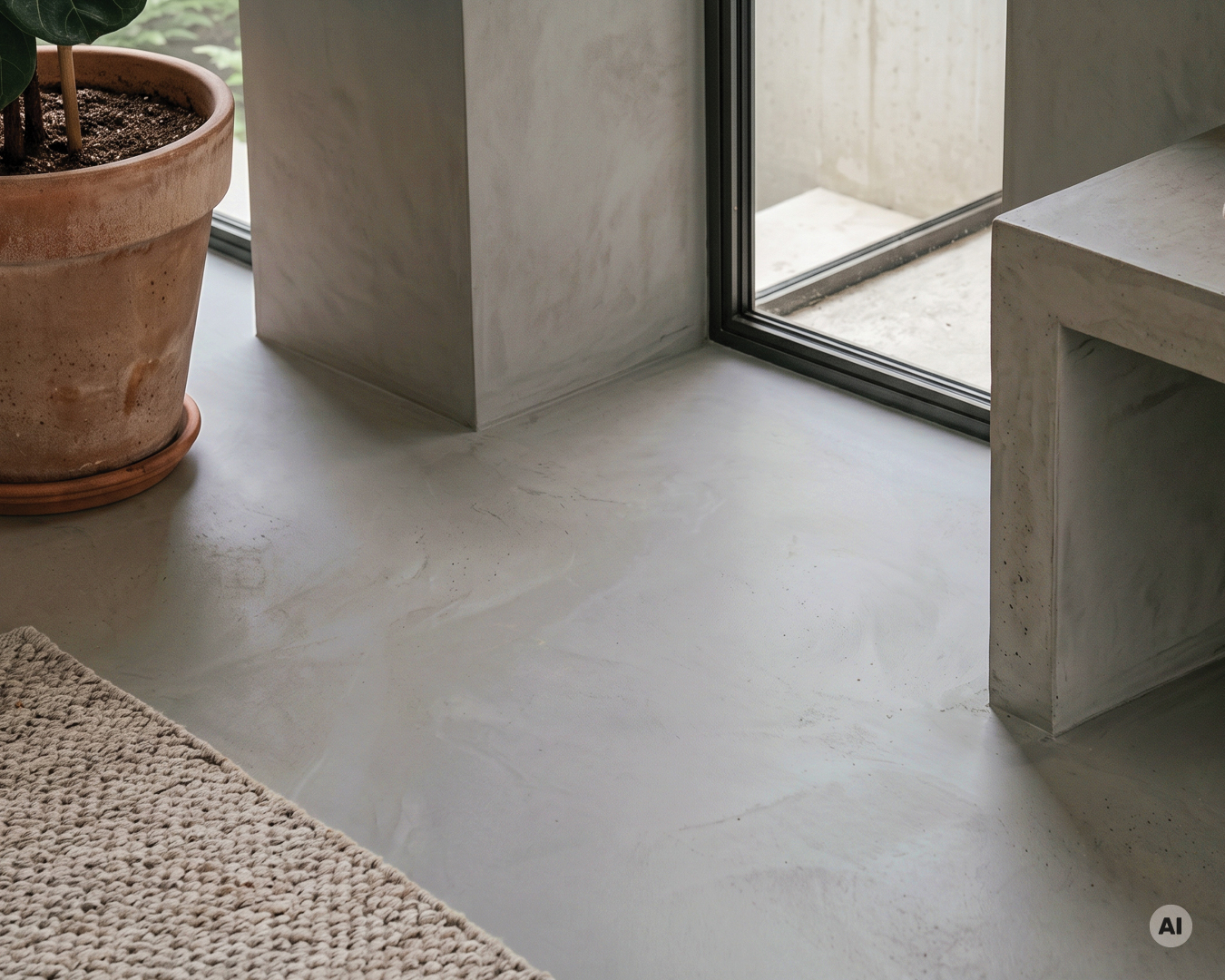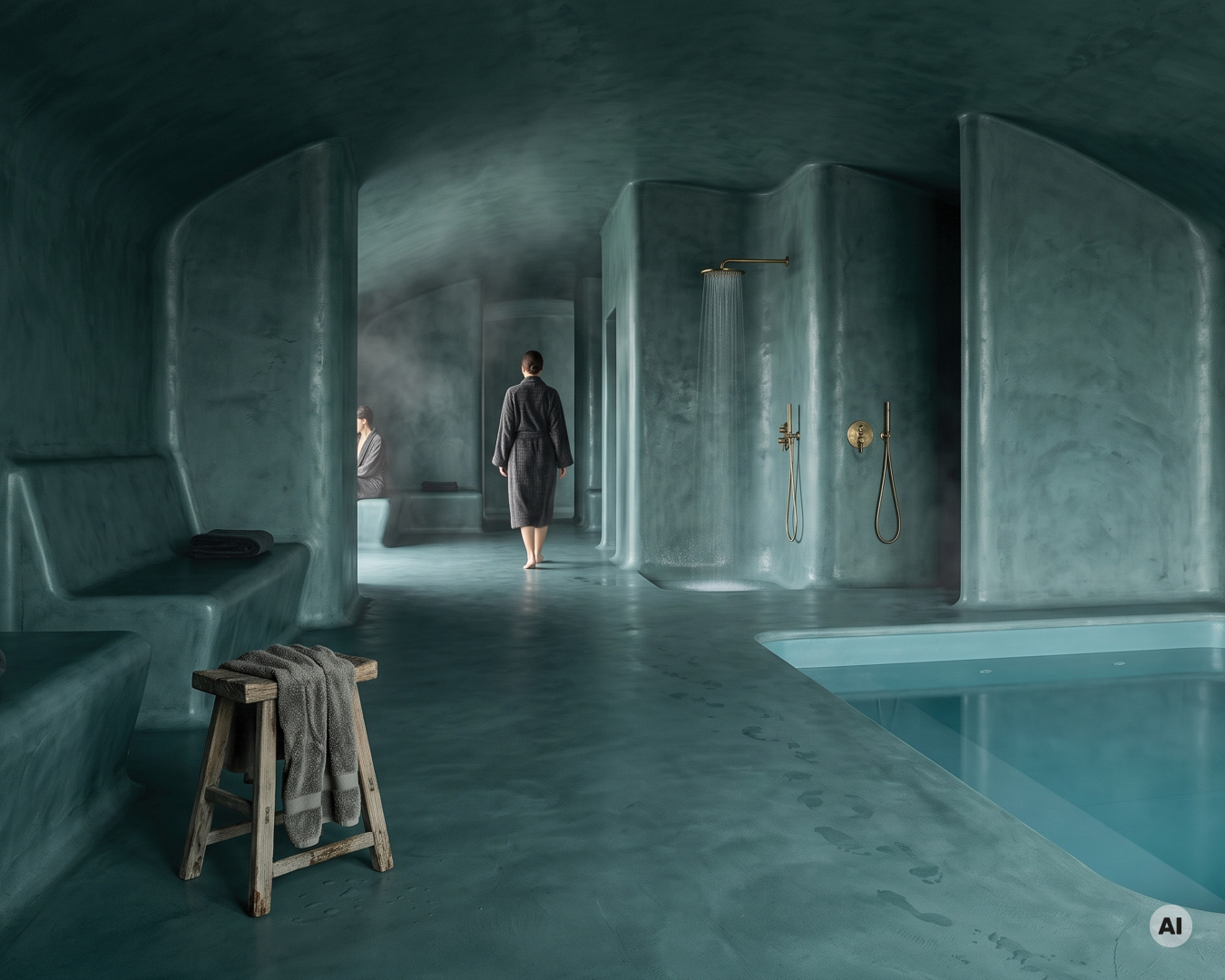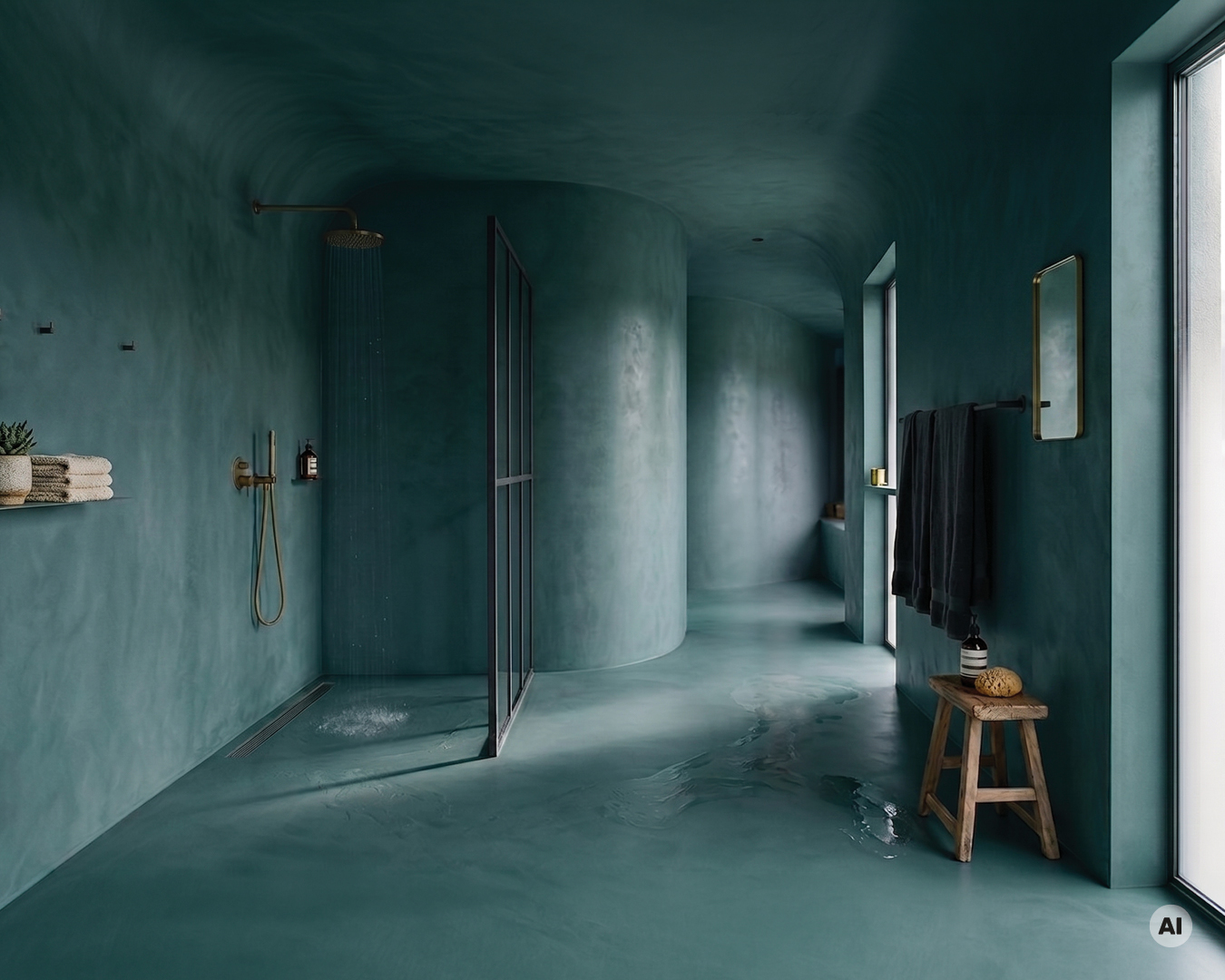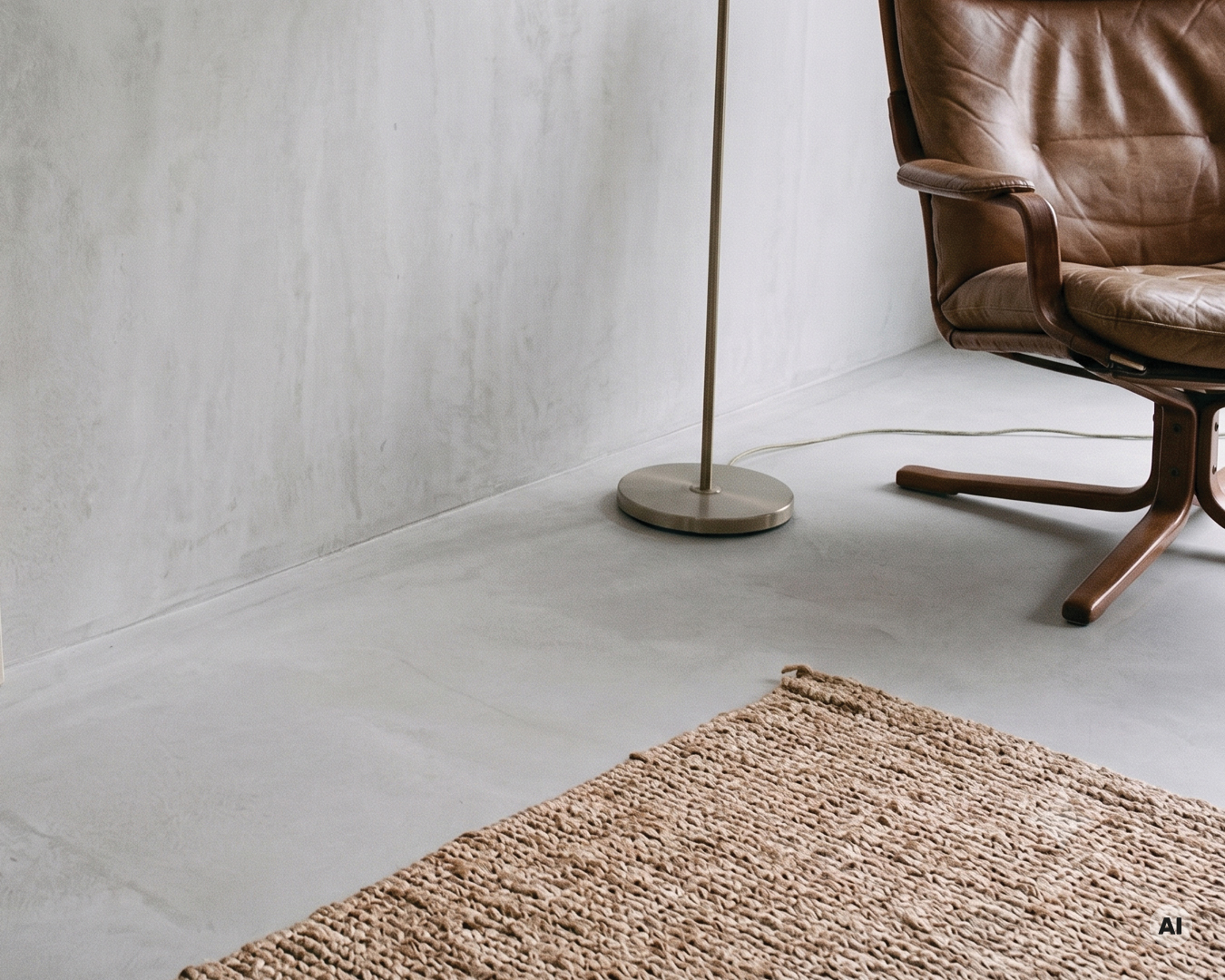

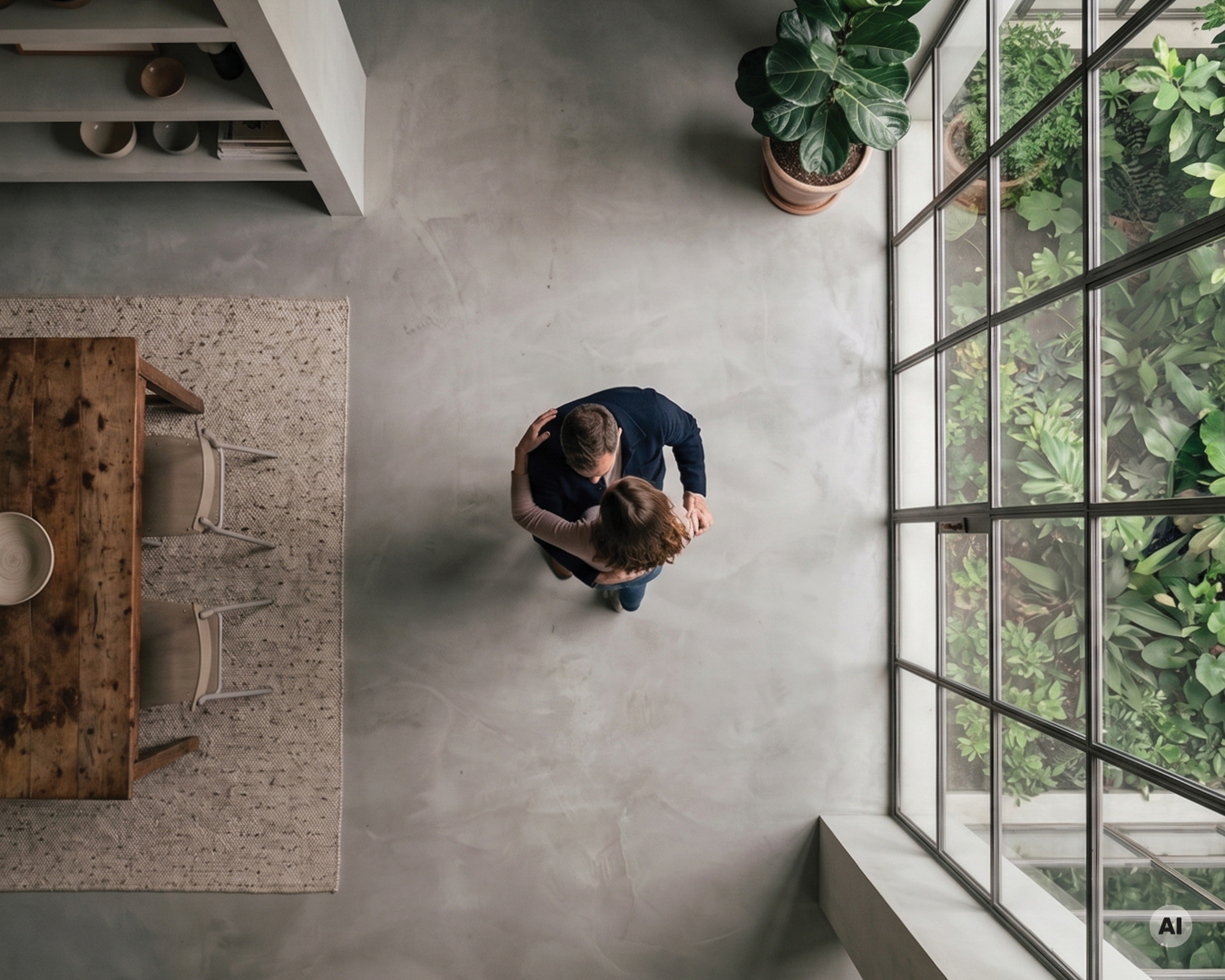
Novacolor’s exploration of materiality takes a further step with Continuous Matter, a design vision that moves beyond the traditional distinction between vertical and horizontal surfaces. Walls and floors become part of a single material landscape, where texture, colour and light flow seamlessly through space, helping to define its volumes, proportions and perception.
At the heart of this research is Wall2Floor, the system through which Novacolor extends its expertise in decorative surfaces into the architectural dimension. The absence of joints and visual interruptions allows material to flow across walls and floors, transforming them into elements of a single composition and turning the surface into a design tool capable of shaping the identity of an interior.
The key innovation is Wall2Floor Base Zero, a ready-to-use, tintable paste that can be applied either as the base of the system or as a visible finish. Subtle variations created during application give each surface a distinctive material character that can never be perfectly replicated, introducing into the project the sense of uniqueness associated with craftsmanship.
Alongside it, Wall2Floor Top Coat is a microcement system in which texture, depth and manual application enhance the tactile quality of the surface, while Wall2Floor Waterproof is a resin system developed for environments requiring water resistance, high performance and easy maintenance without disrupting the visual continuity of the space.
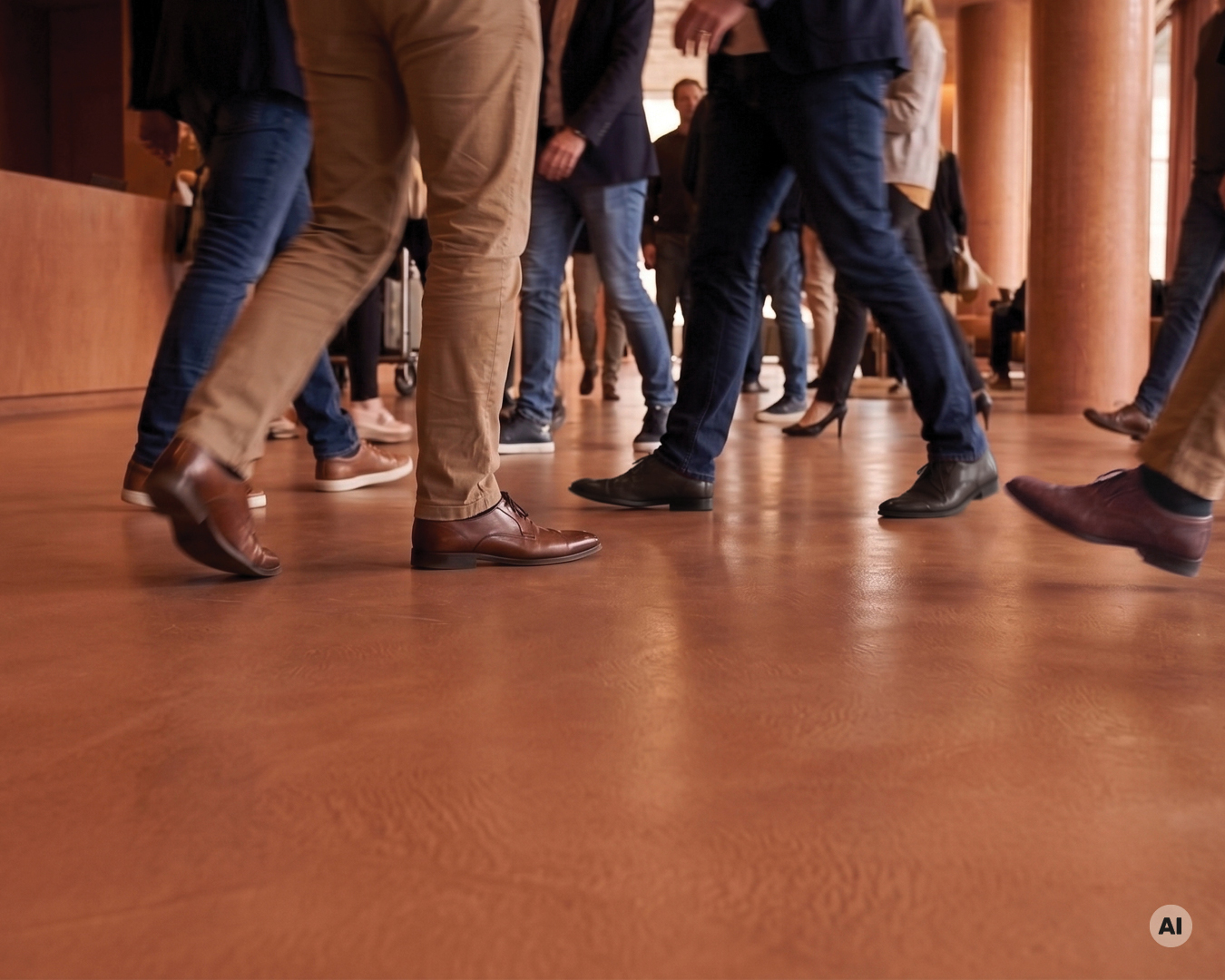
This expressive research is combined with technical characteristics developed for different design contexts. In its horizontal configuration, Wall2Floor achieves a Bfl-s1 fire reaction classification and an A+ rating for volatile organic compound emissions, while also complying with several European protocols for indoor air quality. The Hospitality & Wellness and Commercial configurations are also designed to meet the specific requirements of high-traffic environments.
From residential interiors to hospitality, wellness and commercial spaces, Continuous Matter thus interprets the surface as an integral part of architecture. Walls and floors are no longer perceived as separate elements, but as a continuous material capable of enveloping the space and becoming, each time, a different expression of the project.