
At Sotheby’s Paris, Architalie explores the productive cross contamination between art, architecture and collecting
Architecture rarely exists in isolation. In part, it is a history of contamination: between disciplines, materials, techniques and ways of seeing. Art enters architecture; architecture enhances the way art is perceived. Design borrows from sculpture, sculpture from space, and the domestic interior becomes a testing ground where these influences constantly exchange and redefine one another.
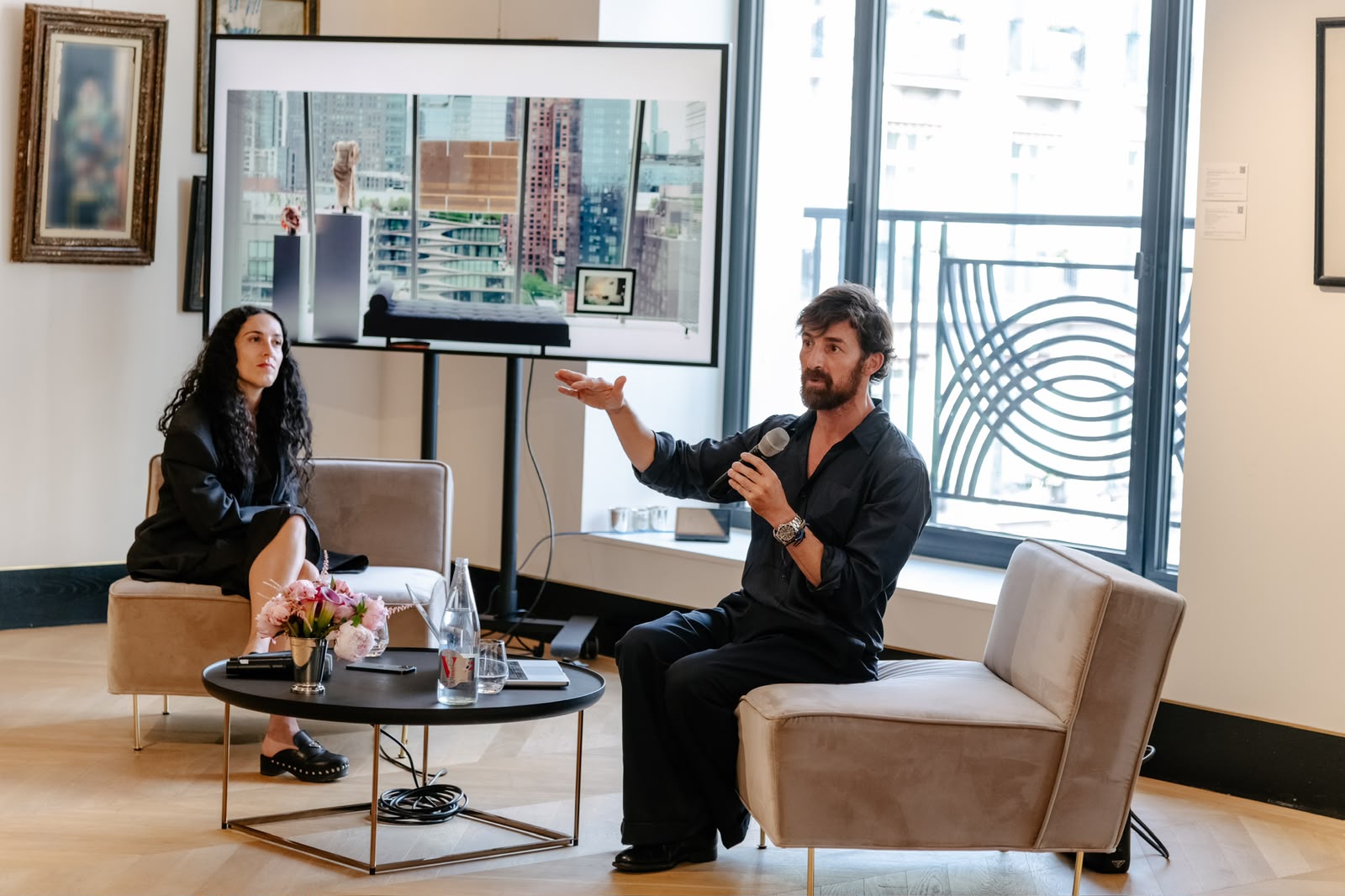
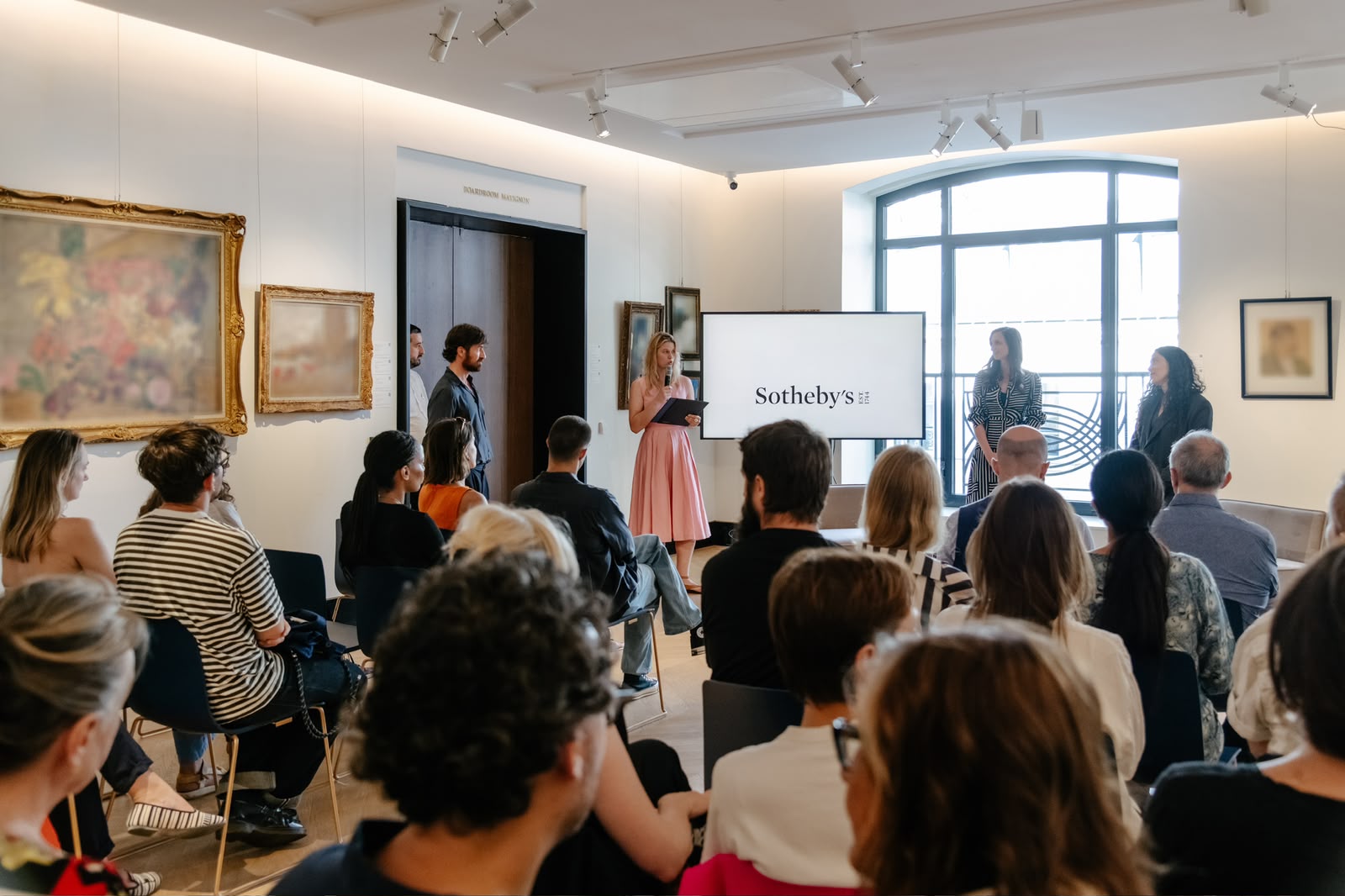
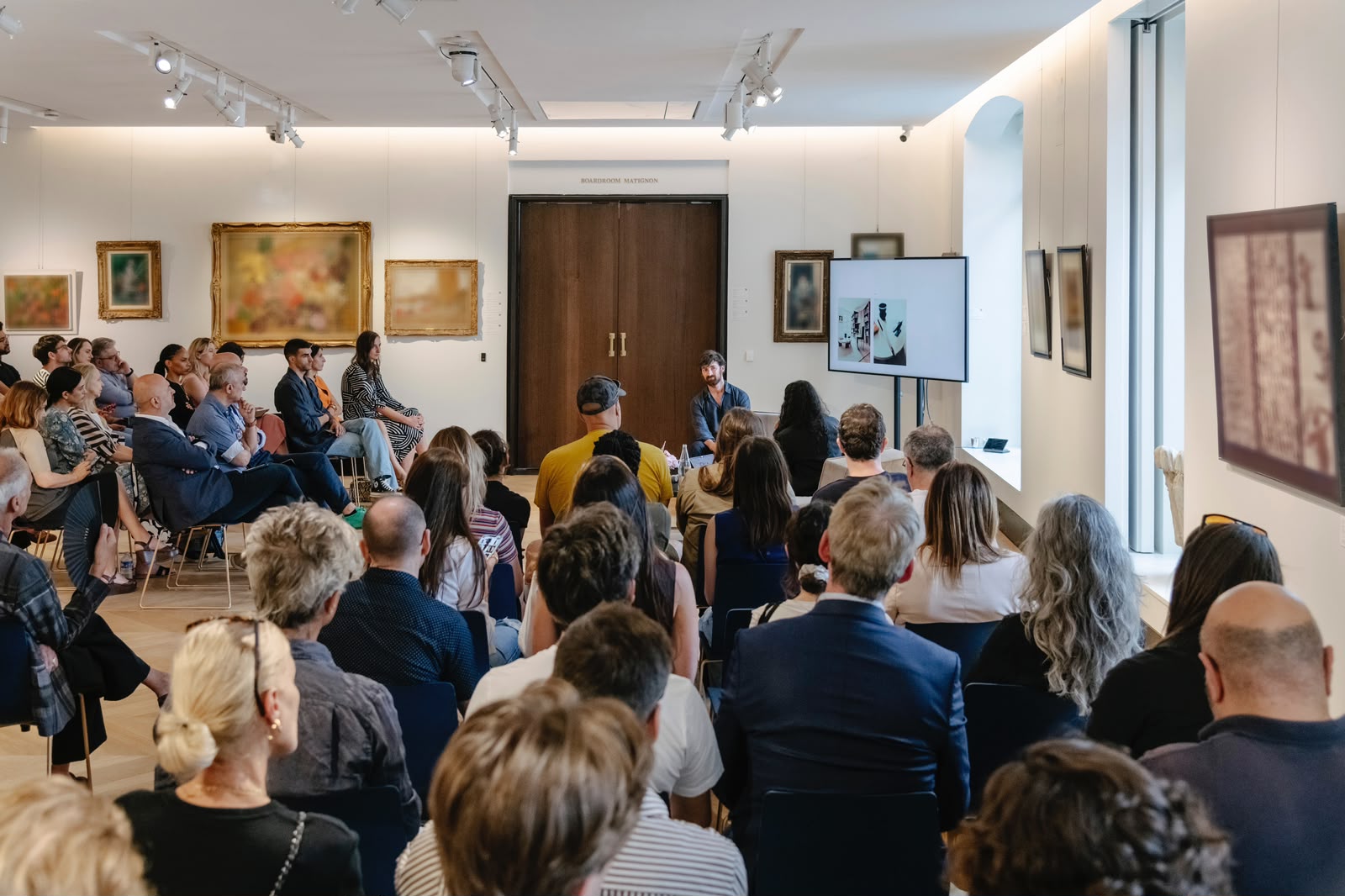
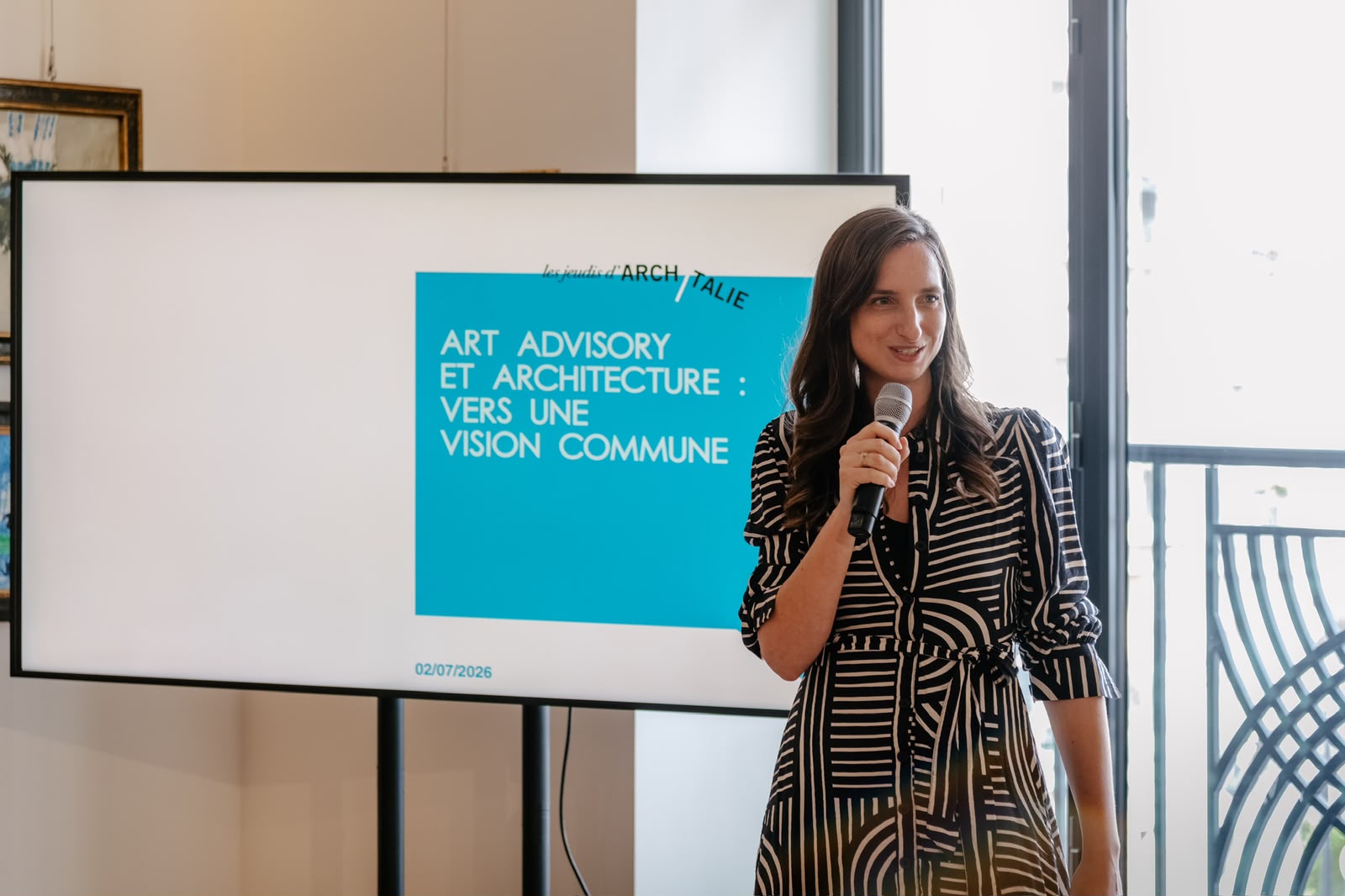
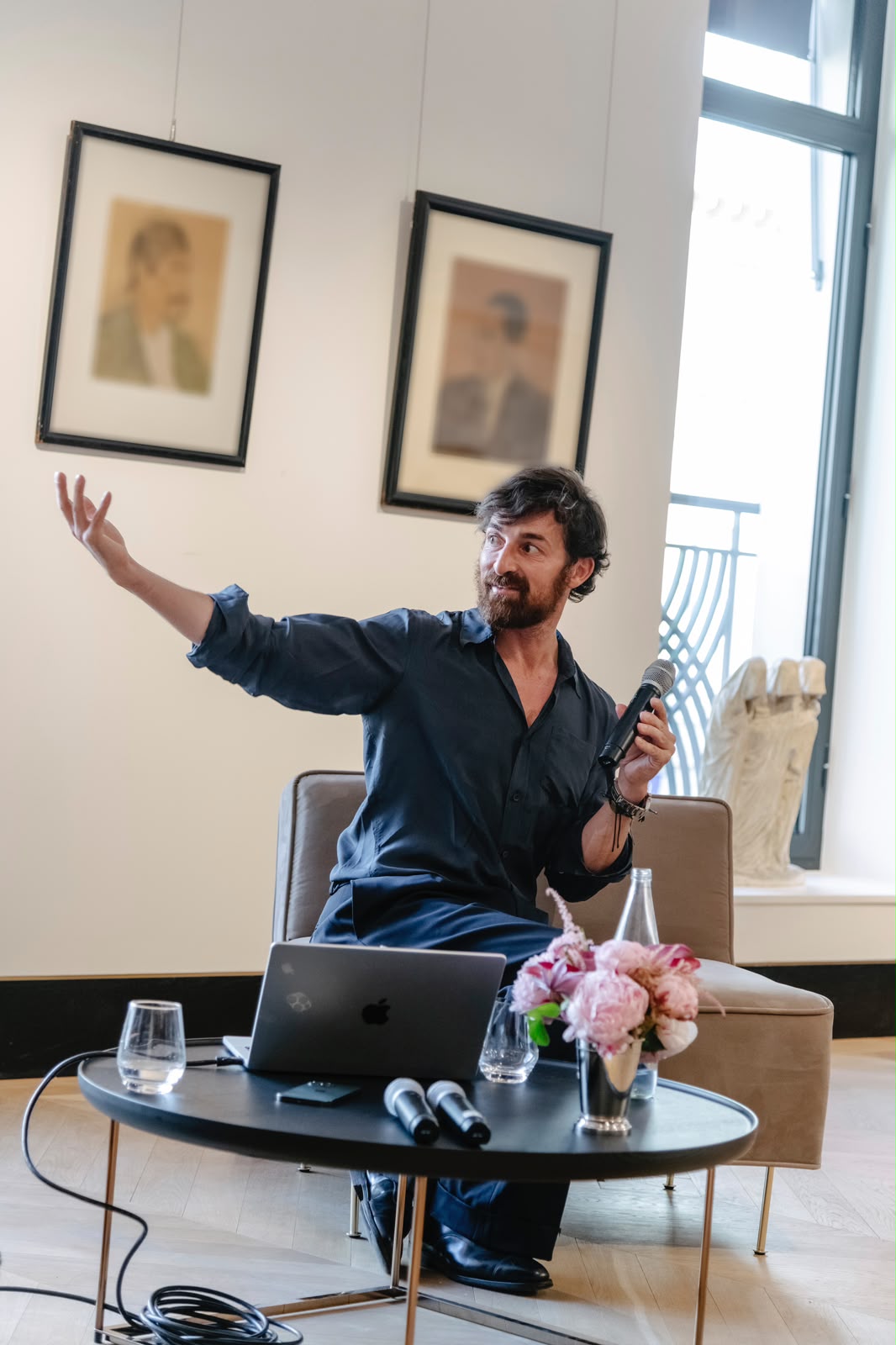
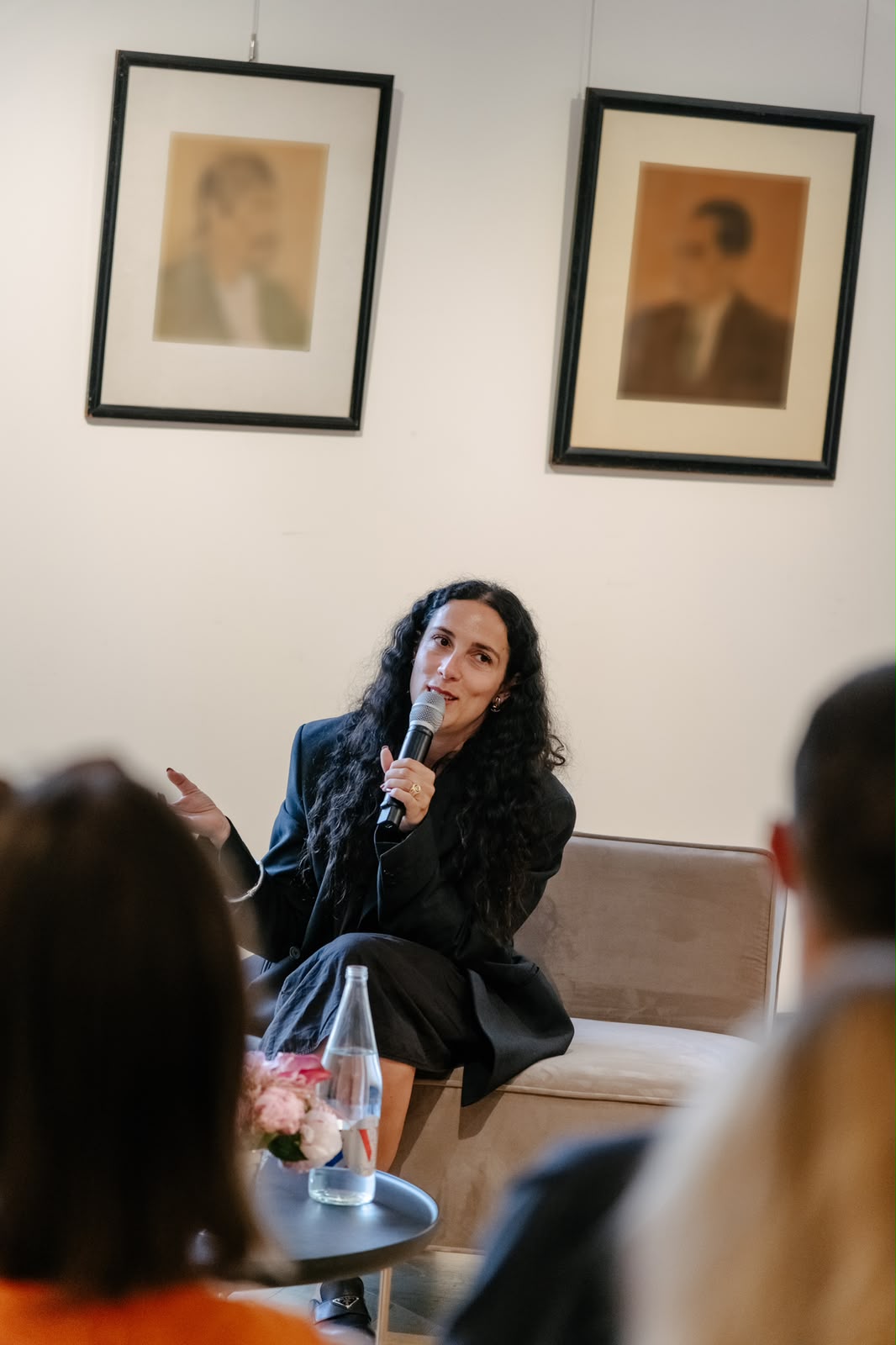
This productive cross contamination lies at the heart of an evening organised by Architalie at Sotheby’s Paris this summer, as part of its Les Jeudis d’Architalie programme. The conversation brought together art advisor and curator Valerio Polimeno and architect and designer Sophie Dries to consider what happens when art is not treated as the final layer of a project, but as one of its generative forces.
The distinction is subtle yet the consequences are significant. An artwork can determine the proportions of a room, introduce a particular chromatic register, establish a material relationship or redirect a line of sight. Architecture, at the same time, can condition the reading of an artwork: a change in scale, natural light, surface or circulation can transform the way an object is experienced.
For Polimeno, this relationship begins with the collection itself. Working with private collectors and institutions, he approaches collecting as an evolving process rather than a mere accumulation of autonomous objects. Works acquire new meanings as they move from one context to another, while the spaces that accommodate them are inevitably reshaped in return. Arrangement becomes a form of curatorial architecture; light, distance, sequence and perspective become part of the work’s experience.
Dries approaches the same territory from the perspective of an architect and designer. Her projects frequently operate across the boundaries of architecture, art, furniture and craftsmanship, allowing one discipline to complement another. An artwork might initiate the material language of a room; a piece of furniture might behave almost as a sculptural element; an architectural detail might acquire the autonomy of an object.
The result is not necessarily a seamless synthesis. In fact, the most interesting relationships may depend on a certain degree of friction. Architecture does not need to become invisible in the presence of art, nor should art simply be subordinated to an interior scheme. What matters is the tension between them, the way one discipline gives resistance to, or amplifies, the other.
This is where the architect’s role becomes less about providing a neutral container and more about constructing relationships. Between the object and the wall, the body and the room, the collection and the everyday life that surrounds it. Space becomes an active participant rather than a backdrop.
Sotheby’s Paris, thanks to the hospitality of Bianca Biaggi, events and art market manager, provided an appropriate setting for this exchange. An auction house is itself a place of continual displacement and recontextualisation, where works from different periods, geographies and disciplines are brought together before entering new lives. Following the conversation, guests moved through Modern & Contemporary Discoveries, the exhibition curated by Sotheby’s contemporary art specialist Isobel Gooder. Paintings, sculptures and design objects offered a more immediate demonstration of the questions raised during the discussion: how an object occupies space, how proximity establishes unexpected correspondences, and how the architectural setting can recalibrate its presence.
Founded in Paris in 2022, Architalie has made this kind of cross-disciplinary exchange central to its identity. Its programme connects Italian architects working in France with French and international practitioners linked to Italy, creating a space where professional networks evolve into opportunities for cultural dialogue.
Through Les Jeudis d’Architalie, architecture encounters art, design, craftsmanship, technology and material culture not as adjacent fields, but as overlapping territories. The value of these encounters lies precisely in their capacity to foster cross-pollination. Ideas migrate. Methods are borrowed. Boundaries become porous.
Photo courtesy of Architalie